Volume 83, Issue 5, 2005
NEBRASKAland
Nebraska Game & Parks Commission June 2005 $2.95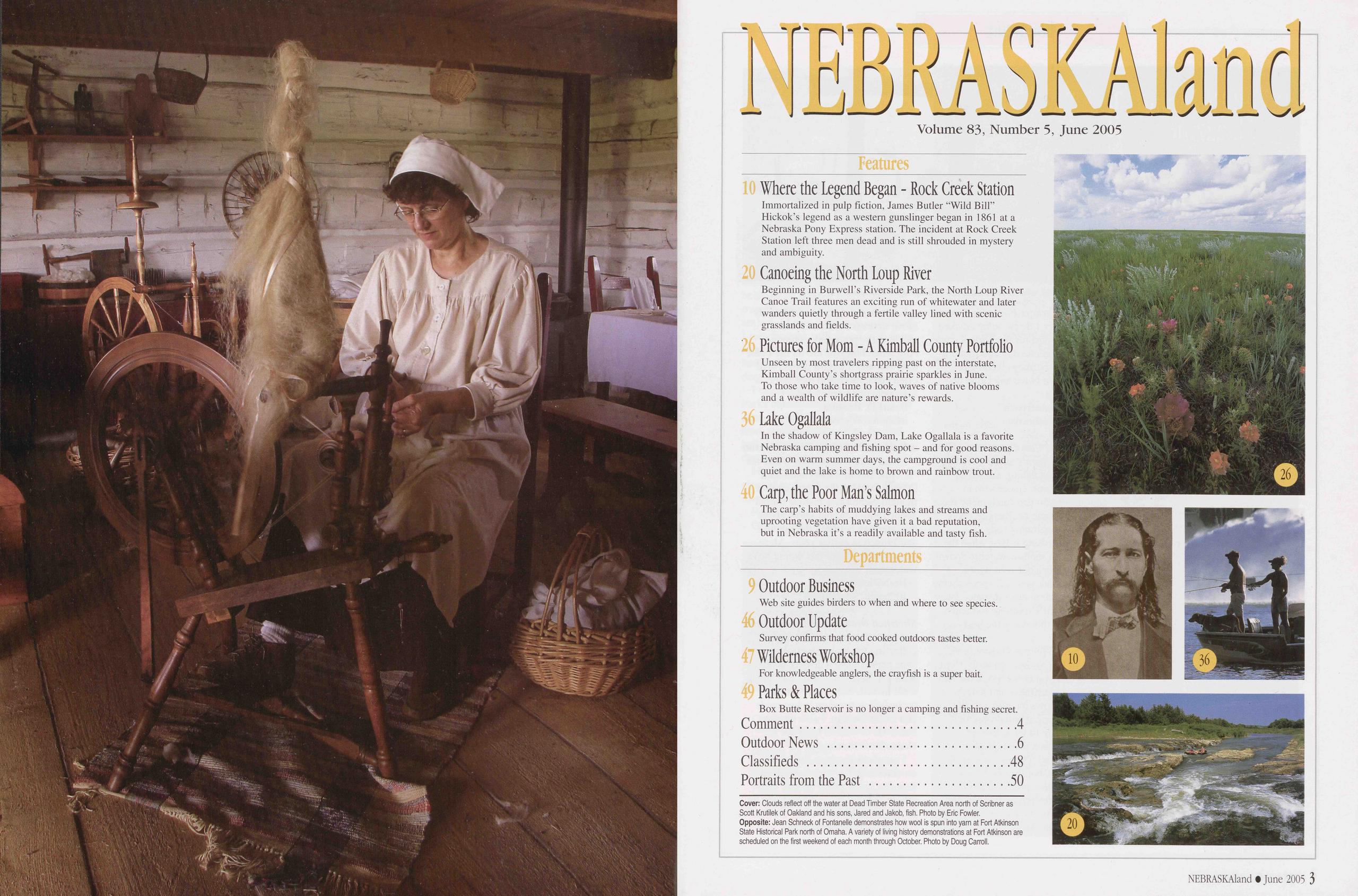
NEBRASKAland
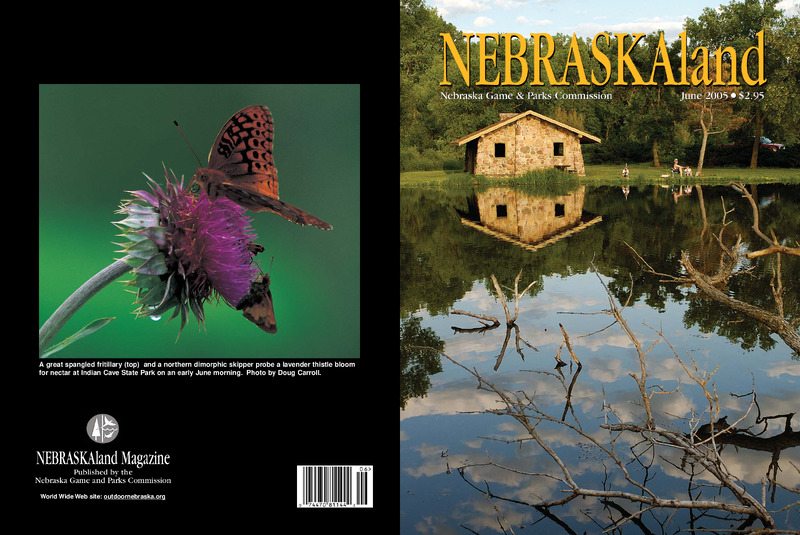
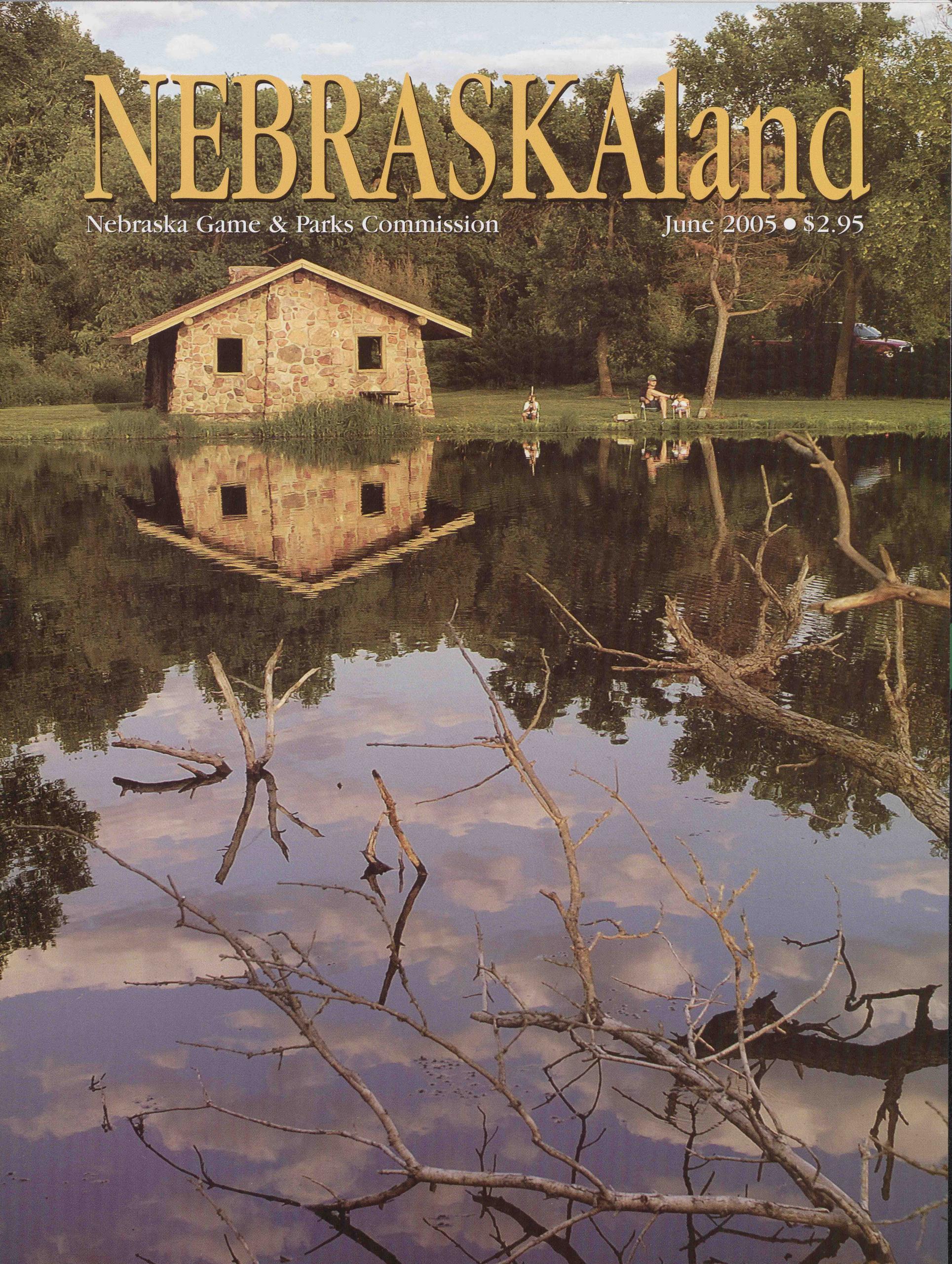
Volume 83, Number 5, June 2005 Features 10 Where the Legend Began - Rock Creek Station Immortalized in pulp fiction, James Butler “Wild Bill” Hickok’s legend as a western gunslinger began in 1861 at a Nebraska Pony Express station. The incident at Rock Creek Station left three men dead and is still shrouded in mystery and ambiguity. 20 Canoeing the North Loup River Beginning in Burwell’s Riverside Park, the North Loup River Canoe Trail features an exciting run of whitewater and later wanders quietly through a fertile valley lined with scenic grasslands and fields. 26 Pictures for Mom - A Kimball County Portfolio Unseen by most travelers ripping past on the interstate, Kimball County’s shortgrass prairie sparkles in June. To those who take time to look, waves of native blooms and a wealth of wildlife are nature’s rewards. 36 Lake Ogallala In the shadow of Kingsley Dam, Lake Ogallala is a favorite Nebraska camping and fishing spot - and for good reasons. Even on warm summer days, the campground is cool and quiet and the lake is home to brown and rainbow trout. 40 Carp, the Poor Man’s Salmon The carp’s habits of muddying lakes and streams and uprooting vegetation have given it a bad reputation, but in Nebraska it’s a readily available and tasty fish. Departments 9 Outdoor Business Web site guides birders to when and where to see species. 46 Outdoor Update Survey confirms that food cooked outdoors tastes better. 47 Wilderness Workshop For knowledgeable anglers, the crayfish is a super bait. 49 Parks & Places Box Butte Reservoir is no longer a camping and fishing secret. Comment........................................4 Outdoor News ..................................6 Classifieds ..................................48 Portraits from the Past ......................50 Cover: Clouds reflect off the water at Dead Timber State Recreation Area north of Scribner as Scott Krutilek of Oakland and his sons, Jared and Jakob, fish. Photo by Eric Fowler. Opposite: Jean Schneck of Fontanelle demonstrates how wool is spun into yarn at Fort Atkinson State Historical Park north of Omaha. A variety of living history demonstrations at Fort Atkinson are scheduled on the first weekend of each month through October. Photo by Doug Carroll.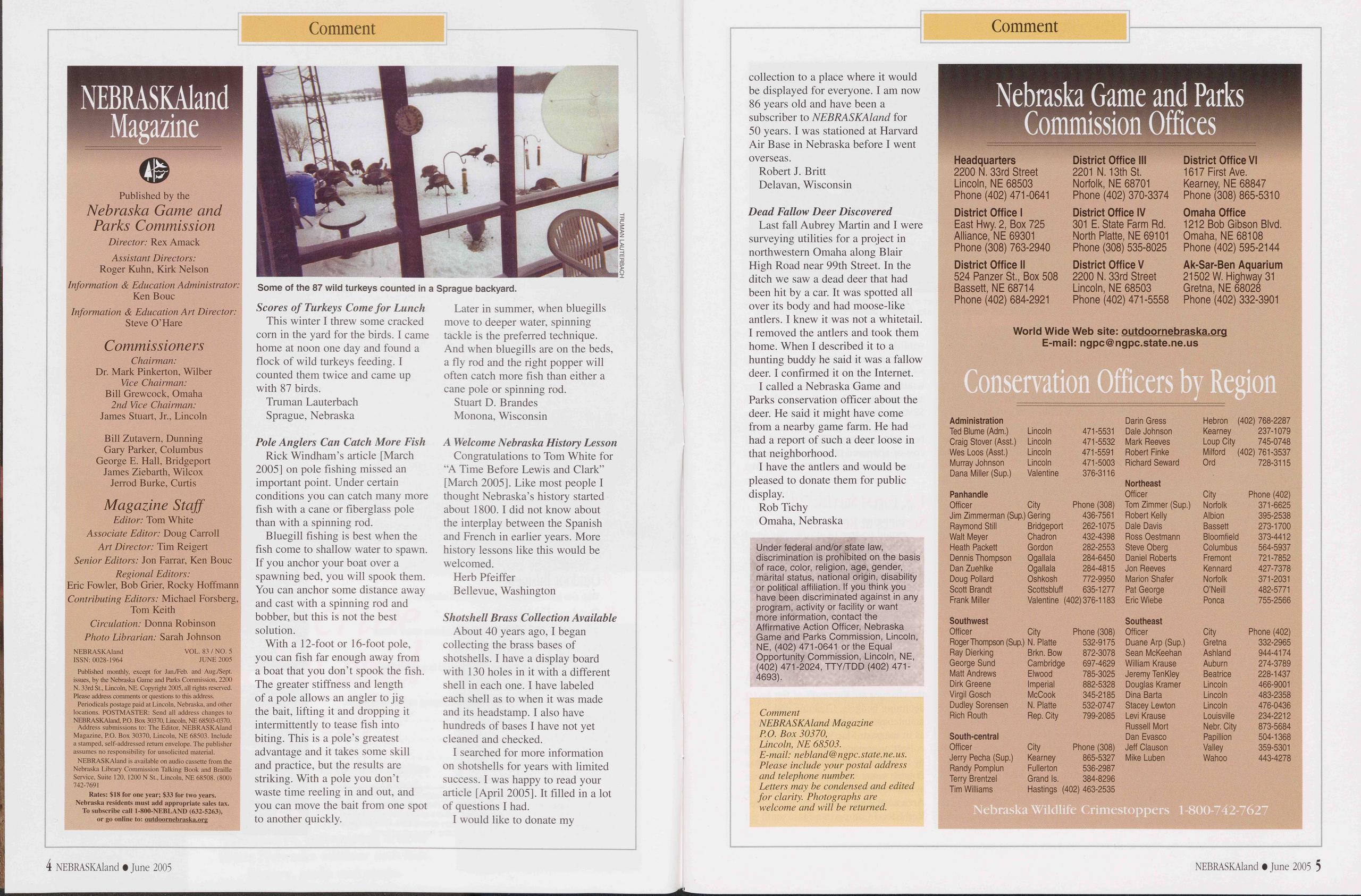
Comment
NEBRASKAland Magazine Published by the Nebraska Game and Parks Commission Director: Rex Amack Assistant Directors: Roger Kuhn, Kirk Nelson Information & Education Administrator: Ken Bouc Information & Education Art Director: Steve O’Hare Commissioners Chairman: Dr. Mark Pinkerton, Wilber Vice Chairman: Bill Grewcock, Omaha 2nd Vice Chairman: James Stuart, Jr., Lincoln Bill Zutavern, Dunning Gary Parker, Columbus George E. Hall, Bridgeport James Ziebarth, Wilcox Jerrod Burke, Curtis Magazine Staff Editor: Tom White Associate Editor: Doug Carroll Art Director: Tim Reigert Senior Editors: Jon Farrar, Ken Bouc Regional Editors: Eric Fowler, Bob Grier, Rocky Hoffmann Contributing Editors: Michael Forsberg, Tom Keith Circulation: Donna Robinson Photo Librarian: Sarah Johnson NEBRASKAland VOL. 83 / NO. 5 ISSN: 0028-1964 JUNE 2005 Published monthly, except for Jan./Feb. and Aug/Sept. issues, by the Nebraska Game and Parks Commission, 2200 N. 33rd St., Lincoln, NE. Copyright 2005, all rights reserved. Please address comments or questions to this address. Periodicals postage paid at Lincoln, Nebraska, and other locations. POSTMASTER: Send all address changes to NEBRASKAland, P.O. Box 30370, Lincoln. NE 68503-0370. Address submissions to: The Editor, NEBRASKAland Magazine, P.O. Box 30370, Lincoln, NE 68503. Include a stamped, self-addressed return envelope. The publisher assumes no responsibility for unsolicited material. NEBRASKAland is available on audio cassette from the Nebraska Library Commission Talking Book and Braille Service, Suite 120, 1200 N St., Lincoln, NE 68508. (800) 742-7691 Rates: $18 for one year; $33 for two years. Nebraska residents must add appropriate sales tax. To subscribe call 1-800-NEBLAND (632-5263), or go online to: outdoornebraska.orgThis winter I threw some cracked corn in the yard for the birds. I came home at noon one day and found a flock of wild turkeys feeding. I counted them twice and came up with 87 birds.
Truman Lauterbach Sprague, Nebraska Pole Anglers Can Catch More FishRick Windham’s article [March 2005] on pole fishing missed an important point. Under certain conditions you can catch many more fish with a cane or fiberglass pole than with a spinning rod.
Bluegill fishing is best when the fish come to shallow water to spawn. If you anchor your boat over a spawning bed, you will spook them. You can anchor some distance away and cast with a spinning rod and bobber, but this is not the best solution.
With a 12-foot or 16-foot pole, you can fish far enough away from a boat that you don’t spook the fish. The greater stiffness and length of a pole allows an angler to jig the bait, lifting it and dropping it intermittently to tease fish into biting. This is a pole’s greatest advantage and it takes some skill and practice, but the results are striking. With a pole you don’t waste time reeling in and out, and you can move the bait from one spot to another quickly.
Later in summer, when bluegills move to deeper water, spinning tackle is the preferred technique. And when bluegills are on the beds, a fly rod and the right popper will often catch more fish than either a cane pole or spinning rod.
Stuart D. Brandes Monona, Wisconsin A Welcome Nebraska History LessonCongratulations to Tom White for "A Time Before Lewis and Clark” [March 2005]. Like most people I thought Nebraska’s history started about 1800.1 did not know about the interplay between the Spanish and French in earlier years. More history lessons like this would be welcomed.
Herb Pfeiffer Bellevue, Washington Shotshell Brass Collection AvailableAbout 40 years ago, I began collecting the brass bases of shotshells. I have a display board with 130 holes in it with a different shell in each one. I have labeled each shell as to when it was made and its headstamp. I also have hundreds of bases I have not yet cleaned and checked.
I searched for more information on shotshells for years with limited success. I was happy to read your article [April 2005]. It filled in a lot of questions I had.
I would like to donate my 4 NEBRASKAland • June 2005 collection to a place where it would be displayed for everyone. I am now 86 years old and have been a subscriber to NEBRASKAland for 50 years. I was stationed at Harvard Air Base in Nebraska before I went overseas.
Robert J. Britt Delavan, Wisconsin Dead Fallow Deer DiscoveredLast fall Aubrey Martin and I were surveying utilities for a project in northwestern Omaha along Blair High Road near 99th Street. In the ditch we saw a dead deer that had been hit by a car. It was spotted all over its body and had moose-like antlers. I knew it was not a whitetail. I removed the antlers and took them home. When I described it to a hunting buddy he said it was a fallow deer. I confirmed it on the Internet.
I called a Nebraska Game and Parks conservation officer about the deer. He said it might have come from a nearby game farm. He had had a report of such a deer loose in that neighborhood.
I have the antlers and would be pleased to donate them for public display.
Rob Tichy Omaha, Nebraska Under federal and/or state law, discrimination is prohibited on the basis of race, color, religion, age, gender, marital status, national origin, disability or political affiliation. If you think you have been discriminated against in any program, activity or facility or want more information, contact the Affirmative Action Officer, Nebraska Game and Parks Commission, Lincoln, NE, (402) 471-0641 or the Equal Opportunity Commission, Lincoln, NE, (402) 471-2024, TTYfTDD (402) 471- 4693). Comment NEBRASKAland Magazine RO. Box 30370, Lincoln, NE 68503. E-mail: nebland@ ngpc. state, ne. us. Please include your postal address and telephone number. Letters may be condensed and edited for clarity. Photographs are welcome and will be returned. Nebraska Game and Parks Commission Offices Headquarters 2200 N. 33rd Street Lincoln, NE 68503 Phone (402) 471-0641 District Office I East Hwy. 2, Box 725 Alliance, NE 69301 Phone (308) 763-2940 District Office II 524 Panzer St., Box 508 Bassett, NE 68714 Phone (402) 684-2921 District Office III 2201 N. 13th St. Norfolk, NE 68701 Phone (402) 370-3374 District Office IV 301 E. State Farm Rd. North Platte, NE 69101 Phone (308) 535-8025 District Office V 2200 N. 33rd Street Lincoln, NE 68503 Phone (402) 471-5558 District Office VI 1617 First Ave. Kearney, NE 68847 Phone (308) 865-5310 Omaha Office 1212 Bob Gibson Blvd. Omaha, NE 68108 Phone (402) 595-2144 Ak-Sar-Ben Aquarium 21502 W. Highway 31 Gretna, NE 68028 Phone (402) 332-3901 World Wide Web site: outdoornebraska.org E-mail: ngpc@ngpc.state.ne.us Conservation Officers by Region Administration Darin Gress Hebron (4 02) 768-2287 Ted Blume (Adm.) Lincoln 471-5531 Dale Johnson Kearney 237-1079 Craig Stover (Asst.) Lincoln 471-5532 Mark Reeves Loup City 745-0748 Wes Loos (Asst.) Lincoln 471-5591 Robert Finke Milford (402) 761-3537 Murray Johnson Lincoln 471-5003 Richard Seward Ord 728-3115 Dana Miller (Sup.) Panhandle Valentine 376-3116 Northeast Officer City Phone (402) Officer City Phone (308) Tom Zimmer (Sup.) Norfolk 371-6625 Jim Zimmerman (Sup.) Gering 436-7561 Robert Kelly Albion 395-2538 Raymond Still Bridgeport 262-1075 Dale Davis Bassett 273-1700 Walt Meyer Chadron 432-4398 Ross Oestmann Bloomfield 373-4412 Heath Packet! Gordon 282-2553 Steve Oberg Columbus 564-5937 Dennis Thompson Ogallala 284-6450 Daniel Roberts Fremont 721-7852 Dan Zuehlke Ogallala 284-4815 Jon Reeves Kennard 427-7378 Doug Pollard Oshkosh 772-9950 Marion Shafer Norfolk 371-2031 Scott Brandt Scottsbluff 635-1277 Pat George O’Neill 482-5771 Frank Miller Southwest Valentine (402)376-1183 Eric Wiebe Southeast Ponca 755-2566 Officer City Phone (308) Officer City Phone (402) Roger Thompson (Sup.) N. Platte 532-9175 Duane Arp (Sup.) Gretna 332-2965 Ray Dierking Brkn. Bow 872-3078 Sean McKeehan Ashland 944-4174 George Sund Cambridge 697-4629 William Krause Auburn 274-3789 Matt Andrews Elwood 785-3025 Jeremy TenKley Beatrice 228-1437 Dirk Greene Imperial 882-5328 Douglas Kramer Lincoln 466-9001 Virgil Gosch McCook 345-2185 Dina Barta Lincoln 483-2358 Dudley Sorensen N. Platte 532-0747 Stacey Lewton Lincoln 476-0436 Rich Routh South-central Rep. City 799-2085 Levi Krause Russell Mort Dan Evasco Louisville Nebr. City Papillion 234-2212 873-5684 504-1368 Officer City Phone (308) Jeff Clauson Valley 359-5301 Jerry Pecha (Sup.) Kearney 865-5327 Mike Luben Wahoo 443-4278 Randy Pomplun Fullerton 536-2987 Terry Brentzel Grand Is. 384-8296 Tim Williams Hastings (402) 463-2535 Wildlife Crimestoppers 1-800-742-7627 NEBRASKAland • June 2005 5
Outdoor News
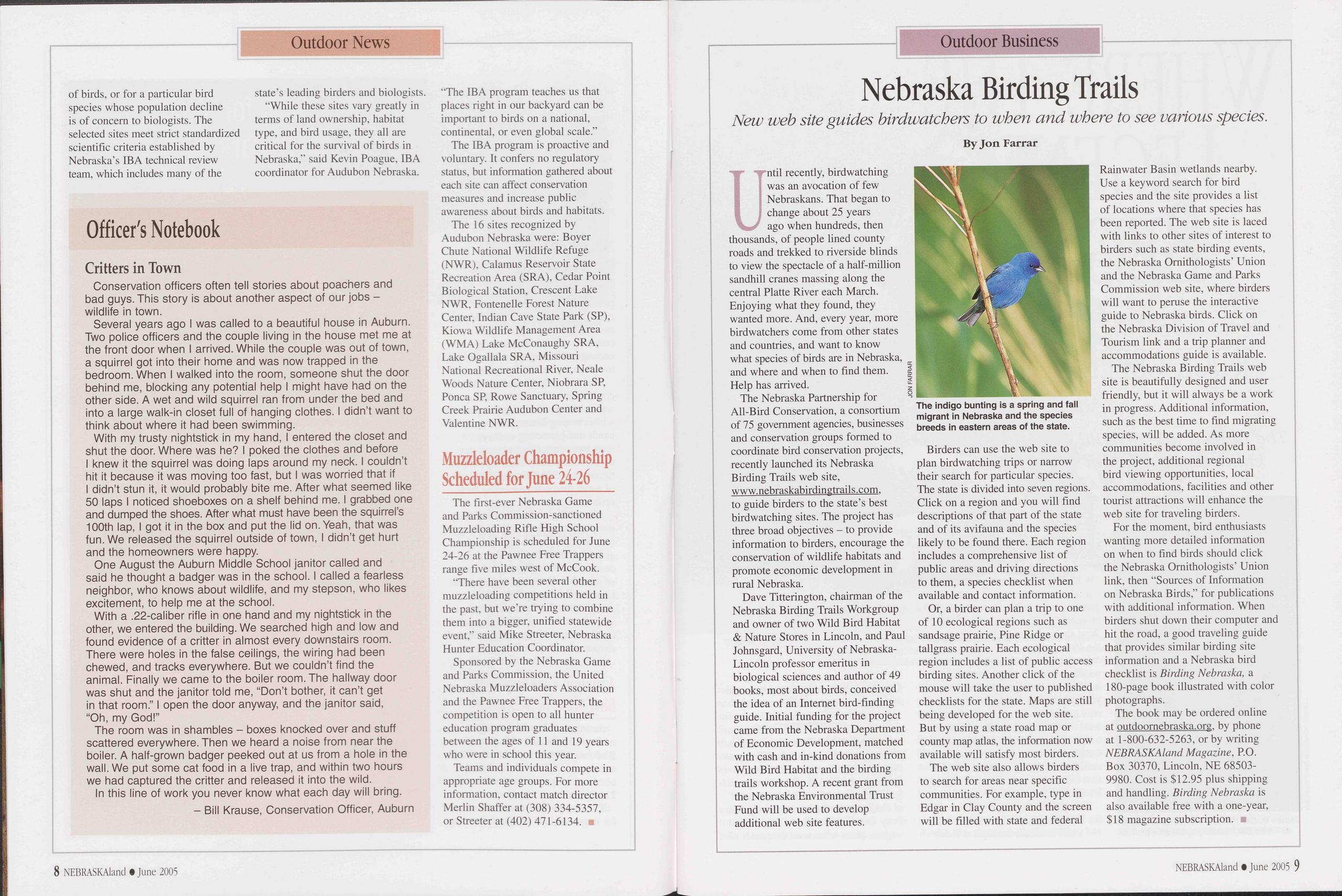
becoming an Outdoors- Woman A three-day outdoor skills workshop designed primarily for women ages 18 or older. Topics and sessions include: •Fishing •Hunting •Firearms •Archery •Field Photography •Orienteering •Reading the Woods •Fly-tying •Canoeing •Kayaking •Dutch-oven Cooking •Camping •Day Hiking •Backyard Wildlife •Bird Identification •Outdoor Skills Sept. 30 - Oct. 2, 2005 Nebraska State 4-H Camp Nebraska National Forest near Halsey. Enrollment is limited, enroll early. For more information, call (402) 471-5482 or (800) 577-8283 to record your request. For online information go to the Nebraska Game and Parks Commission’s web site at outdoornebraska. org Sponsored by the Nebraska Game and Parks CommissionBrett Cooper, a 16-year-old student at Banner County High School, won this year’s best of show at the Nebraska Federal Junior Duck Stamp Contest in March.
Cooper’s acrylic painting of a wood duck was selected from more than 500 entries from across the state and was sent to the national competition. In April Kerissa Nelson of Grantsburg, Wisconsin, won the national contest and will receive $5,000. Her painting of two ringed-neck ducks will be used on the 2005-2006 Junior Duck Stamp. The proceeds from the stamp, which costs $5, are used to support conservation education.
Nebraska Gets $7.4 Million Share of Federal Excise TaxesThe U. S. Fish and Wildlife Service recently announced that state fish and wildlife agencies this year will share more than $530 million in excise taxes paid by hunters, anglers, recreational shooters and boaters.
These funds are used for education programs and for fish and wildlife conservation projects such as habitat improvement, land acquisition, and wildlife monitoring and research.
Nebraska was allocated $3.8 million of the $235 million in wildlife restoration funds collected, and more than $3.6 million of the $295 million collected for sport fish restoration. These allocated funds may be used to pay up to 75 percent of the cost of approved projects, with the states contributing at least 25 percent.
U.S. Forest Service Cuts Services at Recreation SitesVisitors to U.S. Forest Service recreation sites in Nebraska’s Pine Ridge, Oglala National Grassland, Bessey Ranger District and Samuel R. McKelvie National Forest will notice some reduced services and modest fee increases this summer.
According to Charlie Marsh, the district ranger in charge of the Pine Ridge District and Oglala National Grassland in Nebraska’s Panhandle, the changes are the result of flat or declining budgets. Cleaning and maintenance might not be as frequent as in the past, Marsh said, and trash collection services will be replaced by a “pack it in, pack it out” approach. Potable water will no longer be available at the Toadstool Geologic Area northwest of Crawford or at the Red Cloud Campground just south 6 NEBRASKAland • June 2005 of Chadron State Park.
Hours at the Hudson-Meng Bison Bonebed archaeological site northwest of Crawford have also changed. Until Labor Day, the bonebed will be open Wednesday through Saturday from 9 a.m. to 5 p.m. Arrangements for group tours at other times may be made by calling the district forest service office at (308) 432-4475.
Missouri Water Releases Reduced to Protect BirdsThis summer the U.S. Army Corps of Engineers will reduce water releases from Gavins Point Dam on two out of every three days to conserve water and discourage endangered bird species from nesting too close to the Missouri River.
Paul Johnston, spokesman for the corps’ Omaha district, said the goal was to save as much water as possible while meeting downstream navigation needs and protecting endangered least terns and piping plovers that nest near the river. The corps expects to conserve 500,000 more acre-feet of water than last year in the three upstream reservoirs.
Alternating water flows will keep low sandbar areas wet, prompting terns and plovers to nest on higher ground. This will reduce nest destruction during spring rainstorms or when water releases are increased later in the summer. The U.S. Fish and Wildlife Service and the corps will also encourage the birds to nest on high sandbars by using metallic streamers, decoys and barriers.
Make Plans for Your Next State Park Visit Check for available dates and reserve your cabin or campsite online at www.outdoornebraska.org or call (402) 471-1414 between 9 a.m. and 6 p.m. seven days a week. Visit our web site for a virtual tour of Nebraska state parks and recreation areas. While there, you can purchase your 2005 park permit, check the activities happening in our state parks and even reserve your cabin or campsite in a secure environment available 24 hours a day. Stop by our site today, and get set for your next outdoor adventure! 2005 Permit sticker er for windshield outdoornebraska.org NEBRASKA GAME AND PARKS COMMISSION Audubon Lists Important Bird Areas in NebraskaAudubon Nebraska recently
released its first list of Important
Bird Areas (IBA) in Nebraska. The
areas were chosen from public
nominations and include more than
210,000 acres in 13 counties.
The sites provide essential habitat
for large numbers or a high diversity
NEBRASKAland • June 2005 7
 of birds, or for a particular bird
species whose population decline
is of concern to biologists. The
selected sites meet strict standardized
scientific criteria established by
Nebraska’s IB A technical review
team, which includes many of the
state’s leading birders and biologists.
of birds, or for a particular bird
species whose population decline
is of concern to biologists. The
selected sites meet strict standardized
scientific criteria established by
Nebraska’s IB A technical review
team, which includes many of the
state’s leading birders and biologists.
Conservation officers often tell stories about poachers and bad guys. This story is about another aspect of our jobs - wildlife in town.
Several years ago I was called to a beautiful house in Auburn. Two police officers and the couple living in the house met me at the front door when I arrived. While the couple was out of town, a squirrel got into their home and was now trapped in the bedroom. When I walked into the room, someone shut the door behind me, blocking any potential help I might have had on the other side. A wet and wild squirrel ran from under the bed and into a large walk-in closet full of hanging clothes. I didn’t want to think about where it had been swimming.
With my trusty nightstick in my hand, I entered the closet and shut the door. Where was he? I poked the clothes and before I knew it the squirrel was doing laps around my neck. I couldn’t hit it because it was moving too fast, but I was worried that if I didn’t stun it, it would probably bite me. After what seemed like 50 laps I noticed shoeboxes on a shelf behind me. I grabbed one and dumped the shoes. After what must have been the squirrel’s 100th lap, I got it in the box and put the lid on. Yeah, that was fun. We released the squirrel outside of town, I didn’t get hurt and the homeowners were happy.
One August the Auburn Middle School janitor called and said he thought a badger was in the school. I called a fearless neighbor, who knows about wildlife, and my stepson, who likes excitement, to help me at the school.
With a .22-caliber rifle in one hand and my nightstick in the other, we entered the building. We searched high and low and found evidence of a critter in almost every downstairs room. There were holes in the false ceilings, the wiring had been chewed, and tracks everywhere. But we couldn’t find the animal. Finally we came to the boiler room. The hallway door was shut and the janitor told me, “Don’t bother, it can’t get in that room.” I open the door anyway, and the janitor said, “Oh, my God!”
The room was in shambles - boxes knocked over and stuff scattered everywhere. Then we heard a noise from near the boiler. A half-grown badger peeked out at us from a hole in the wall. We put some cat food in a live trap, and within two hours we had captured the critter and released it into the wild. In this line of work you never know what each day will bring.
- Bill Krause, Conservation Officer, Auburn“While these sites vary greatly in terms of land ownership, habitat type, and bird usage, they all are critical for the survival of birds in Nebraska,” said Kevin Poague, IBA coordinator for Audubon Nebraska. “The IBA program teaches us that places right in our backyard can be important to birds on a national, continental, or even global scale.”
The IBA program is proactive and voluntary. It confers no regulatory status, but information gathered about each site can affect conservation measures and increase public awareness about birds and habitats.
The 16 sites recognized by Audubon Nebraska were: Boyer Chute National Wildlife Refuge (NWR), Calamus Reservoir State Recreation Area (SRA), Cedar Point Biological Station, Crescent Lake NWR, Fontenelle Forest Nature Center, Indian Cave State Park (SP), Kiowa Wildlife Management Area (WMA) Lake McConaughy SRA, Lake Ogallala SRA, Missouri National Recreational River, Neale Woods Nature Center, Niobrara SP, Ponca SP, Rowe Sanctuary, Spring Creek Prairie Audubon Center and Valentine NWR.
Muzzleloader Championship Scheduled for June 24-26The first-ever Nebraska Game and Parks Commission-sanctioned Muzzleloading Rifle High School Championship is scheduled for June 24-26 at the Pawnee Free Trappers range five miles west of McCook.
“There have been several other muzzleloading competitions held in the past, but we’re trying to combine them into a bigger, unified statewide event,” said Mike Streeter, Nebraska Hunter Education Coordinator.
Sponsored by the Nebraska Game and Parks Commission, the United Nebraska Muzzleloaders Association and the Pawnee Free Trappers, the competition is open to all hunter education program graduates between the ages of 11 and 19 years who were in school this year.
Teams and individuals compete in appropriate age groups. For more information, contact match director Merlin Shaffer at (308) 334-5357, or Streeter at (402) 471-6134.
8 NEBRASKAland • June 2005Outdoor Business
Nebraska Birding Trails
New web site guides birdwatchers to when and where to see various species.
Until recently, birdwatching was an avocation of few Nebraskans. That began to change about 25 years ago when hundreds, then thousands, of people lined county roads and trekked to riverside blinds to view the spectacle of a half-million sandhill cranes massing along the central Platte River each March. Enjoying what they found, they wanted more. And, every year, more birdwatchers come from other states and countries, and want to know what species of birds are in Nebraska, and where and when to find them. Help has arrived.
The Nebraska Partnership for All-Bird Conservation, a consortium of 75 government agencies, businesses and conservation groups formed to coordinate bird conservation projects, recently launched its Nebraska Birding Trails web site, www.nebraskabirdingtrails.com. to guide birders to the state’s best birdwatching sites. The project has three broad objectives - to provide information to birders, encourage the conservation of wildlife habitats and promote economic development in rural Nebraska.
Dave Titterington, chairman of the Nebraska Birding Trails Workgroup and owner of two Wild Bird Habitat & Nature Stores in Lincoln, and Paul Johnsgard, University of Nebraska- Lincoln professor emeritus in biological sciences and author of 49 books, most about birds, conceived the idea of an Internet bird-finding guide. Initial funding for the project came from the Nebraska Department of Economic Development, matched with cash and in-kind donations from Wild Bird Habitat and the birding trails workshop. A recent grant from the Nebraska Environmental Trust Fund will be used to develop additional web site features.
Birders can use the web site to plan birdwatching trips or narrow their search for particular species. The state is divided into seven regions. Click on a region and you will find descriptions of that part of the state and of its avifauna and the species likely to be found there. Each region includes a comprehensive list of public areas and driving directions to them, a species checklist when available and contact information.
Or, a birder can plan a trip to one of 10 ecological regions such as sandsage prairie, Pine Ridge or tailgrass prairie. Each ecological region includes a list of public access birding sites. Another click of the mouse will take the user to published checklists for the state. Maps are still being developed for the web site. But by using a state road map or county map atlas, the information now available will satisfy most birders.
The web site also allows birders to search for areas near specific communities. For example, type in Edgar in Clay County and the screen will be filled with state and federal Rainwater Basin wetlands nearby. Use a keyword search for bird species and the site provides a list of locations where that species has been reported. The web site is laced with links to other sites of interest to birders such as state birding events, the Nebraska Ornithologists’ Union and the Nebraska Game and Parks Commission web site, where birders will want to peruse the interactive guide to Nebraska birds. Click on the Nebraska Division of Travel and Tourism link and a trip planner and accommodations guide is available.
The Nebraska Birding Trails web site is beautifully designed and user friendly, but it will always be a work in progress. Additional information, such as the best time to find migrating species, will be added. As more communities become involved in the project, additional regional bird viewing opportunities, local accommodations, facilities and other tourist attractions will enhance the web site for traveling birders.
For the moment, bird enthusiasts wanting more detailed information on when to find birds should click the Nebraska Ornithologists’ Union link, then “Sources of Information on Nebraska Birds,” for publications with additional information. When birders shut down their computer and hit the road, a good traveling guide that provides similar birding site information and a Nebraska bird checklist is Birding Nebraska, a 180-page book illustrated with color photographs.
The book may be ordered online at outdoornebraska.org. by phone at 1-800-632-5263, or by writing NEBRASKAland Magazine, P.O. Box 30370, Lincoln, NE 68503- 9980. Cost is $12.95 plus shipping and handling. Birding Nebraska is also available free with a one-year, $18 magazine subscription.
NEBRASKAland • June 2005 9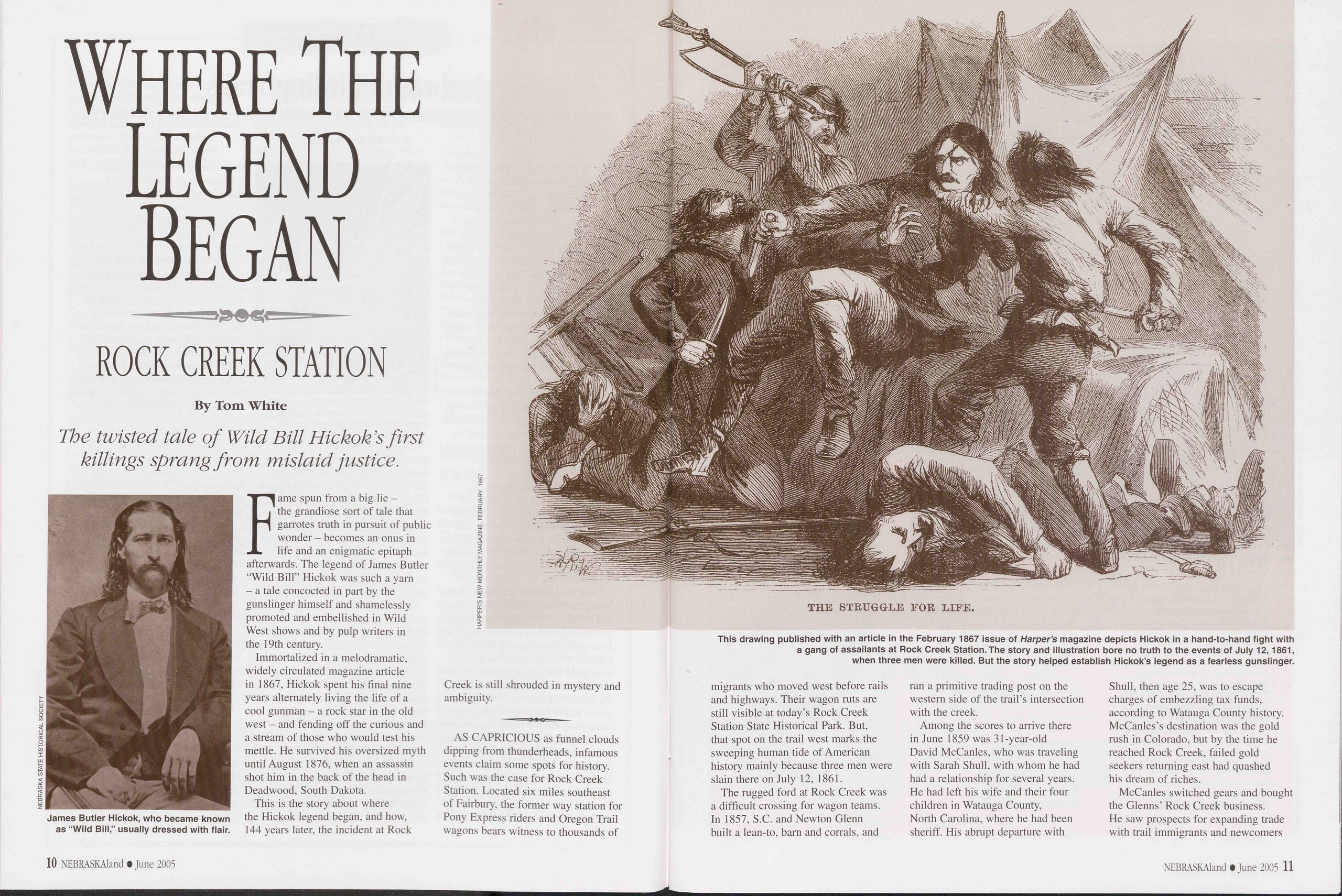
Where The Legend Began
ROCK CREEK STATION
The twisted tale of Wild Bill Hickok’s first killings sprang from mislaid justice.
Fame spun from a big lie - the grandiose sort of tale that garrotes truth in pursuit of public wonder - becomes an onus in life and an enigmatic epitaph afterwards. The legend of James Butler “Wild Bill” Hickok was such a yarn - a tale concocted in part by the gunslinger himself and shamelessly promoted and embellished in Wild West shows and by pulp writers in the 19th century.
Immortalized in a melodramatic, widely circulated magazine article in 1867, Hickok spent his final nine years alternately living the life of a cool gunman - a rock star in the old west — and fending off the curious and a stream of those who would test his mettle. He survived his oversized myth until August 1876, when an assassin shot him in the back of the head in Deadwood, South Dakota.
This is the story about where the Hickok legend began, and how, 144 years later, the incident at Rock Creek is still shrouded in mystery and ambiguity.
AS CAPRICIOUS as funnel clouds dipping from thunderheads, infamous events claim some spots for history. Such was the case for Rock Creek Station. Located six miles southeast of Fairbury, the former way station for Pony Express riders and Oregon Trail wagons bears witness to thousands of 10 NEBRASKAland • June 2005
The rugged ford at Rock Creek was a difficult crossing for wagon teams. In 1857, S.C. and Newton Glenn built a lean-to, barn and corrals, and ran a primitive trading post on the western side of the trail’s intersection with the creek.
Among the scores to arrive there in June 1859 was 31-year-old David McCanles, who was traveling with Sarah Shull, with whom he had had a relationship for several years. He had left his wife and their four children in Watauga County, North Carolina, where he had been sheriff. His abrupt departure with Shull, then age 25, was to escape charges of embezzling tax funds, according to Watauga County history. McCanles’s destination was the gold rush in Colorado, but by the time he reached Rock Creek, failed gold seekers returning east had quashed his dream of riches.
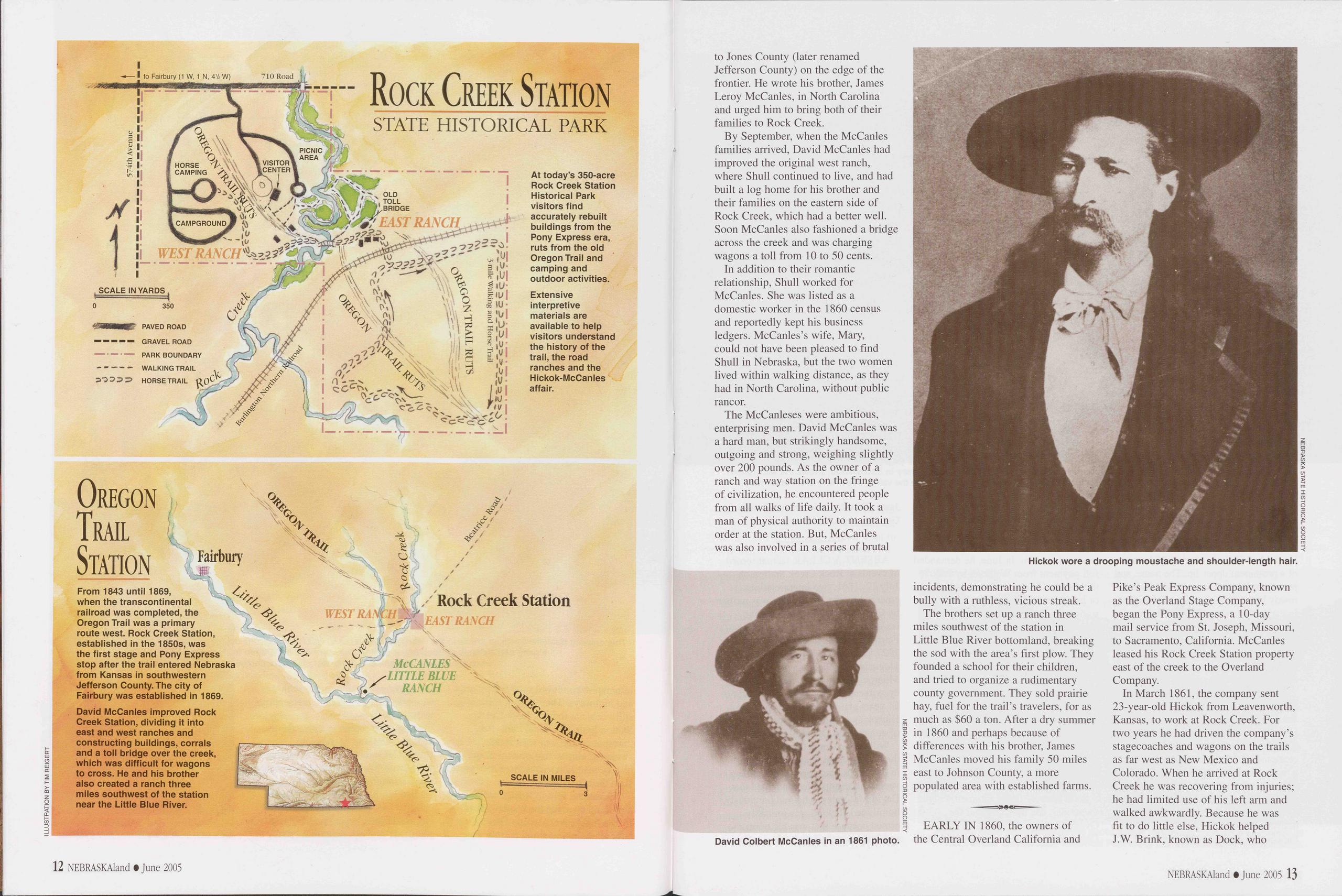
From 1843 until 1869, when the transcontinental railroad was completed, the Oregon Trail was a primary route west. Rock Creek Station, established in the 1850s, was the first stage and Pony Express stop after the trail entered Nebraska from Kansas in southwestern Jefferson County. The city of Fairbury was established in 1869.
David McCanles improved Rock Creek Station, dividing it into east and west ranches and constructing buildings, corrals and a toll bridge over the creek, which was difficult for wagons to cross. He and his brother also created a ranch three miles southwest of the station near the Little Blue River.
At today’s 350-acre Rock Creek Station Historical Park visitors find accurately rebuilt buildings from the Pony Express era, ruts from the old Oregon Trail and camping and outdoor activities.
Extensive interpretive materials are available to help visitors understand the history of the trail, the road ranches and the Hickok-McCanles affair.
By September, when the McCanles families arrived, David McCanles had improved the original west ranch, where Shull continued to live, and had built a log home for his brother and their families on the eastern side of Rock Creek, which had a better well. Soon McCanles also fashioned a bridge across the creek and was charging wagons a toll from 10 to 50 cents.
In addition to their romantic relationship, Shull worked for McCanles. She was listed as a domestic worker in the 1860 census and reportedly kept his business ledgers. McCanles’s wife, Mary, could not have been pleased to find Shull in Nebraska, but the two women lived within walking distance, as they had in North Carolina, without public rancor.
The McCanleses were ambitious, enterprising men. David McCanles was a hard man, but strikingly handsome, outgoing and strong, weighing slightly over 200 pounds. As the owner of a ranch and way station on the fringe of civilization, he encountered people from all walks of life daily. It took a man of physical authority to maintain order at the station. But, McCanles was also involved in a series of brutal
The brothers set up a ranch three miles southwest of the station in Little Blue River bottomland, breaking the sod with the area’s first plow. They founded a school for their children, and tried to organize a rudimentary county government. They sold prairie hay, fuel for the trail’s travelers, for as much as $60 a ton. After a dry summer in 1860 and perhaps because of differences with his brother, James McCanles moved his family 50 miles east to Johnson County, a more populated area with established farms.
EARLY IN 1860, the owners of the Central Overland California and Pike’s Peak Express Company, known as the Overland Stage Company, began the Pony Express, a 10-day mail service from St. Joseph, Missouri, to Sacramento, California. McCanles leased his Rock Creek Station property east of the creek to the Overland Company.
In March 1861, the company sent
23-year-old Hickok from Leavenworth,
Kansas, to work at Rock Creek. For
two years he had driven the company’s
stagecoaches and wagons on the trails
as far west as New Mexico and
Colorado. When he arrived at Rock
Creek he was recovering from injuries;
he had limited use of his left arm and
walked awkwardly. Because he was
fit to do little else, Hickok helped
J.W. Brink, known as Dock, who
NEBRASKAland • June 2005 13
That spring McCanles sold his west Rock Creek ranch to two German men and the bridge to another party. In April, he had agreed to sell the buildings on the eastern side of the creek to the Overland company with a payment of one third down and the balance to be paid in installments over three months.
While the Pony Express successfully delivered 35,000 pieces of mail across the country during its 18 months of existence, it was a financial failure. No doubt McCanles heard the trail rumors of Overland’s financial woes and the company fell behind in its payments to him. In June, he demanded full payment from Wellman by July 1, the date the final installment was due, or he threatened to repossess the station. Wellman told McCanles that he was only the station manager and his orders came from the line superintendent in Brownville.
When McCanles pressed him again in early July, Wellman agreed to go to Brownville for supplies and to get the money. Monroe McCanles, David’s 12-year-old son, accompanied Wellman on the 10-day wagon trip. During Wellman’s absence Hickok was in charge of the station and on at least one occasion McCanles argued with Jane Wellman.
Soon after Wellman returned without the money and the news that the Overland company was bankrupt, David McCanles, his younger cousin, James Woods, and a friend, James Gordon, were killed.
ABSENT A CLEAR factual record of events at Rock Creek Station on July 12, 1861, two interpretations emerged by the 1920s. One was written by George W. Hansen, a longtime resident of Jefferson County and Fairbury banker, in the April-June 1927 issue of Nebraska History Magazine. It relied heavily on Monroe McCanles’s detailed, eyewitness account written in 1925, 54 years after the events. It painted Hickok as a wanton, cowardly shooter of an unarmed David McCanles.
William E. Connelley, secretary of the Kansas State Historical Society in the 1920s, developed a competing version of events. He contended that David McCanles, who had previously humiliated Hickok, was probably armed because that was his norm and that he incited the violence by 14 NEBRASKAland • June 2005 threatening Wellman, who feared him.
In Monroe McCanles’s account, he, his father, Woods and Gordon went to the station unarmed on the afternoon of July 12 demanding return of the property.
He wrote, “Father and I stopped at the house and Woods and Gordon went on down to the barn. Father went to the kitchen door and asked for Wellman. Mrs. Wellman came to the door and Father asked her if Wellman was in the house and she said he was. Father said, ‘Tell him to come out,’ and she said, ‘What do you want with him?’ Father said, I want to settle with him.’ She said, ‘He’ll not come out.’ Father said, ‘Send him out or I’ll come in and drag him out.’
“Now to make this more plain to the reader, while Wellman and I were gone to Brownville, Father and Mrs. Wellman had some words, or a quarrel over the affairs at the ranch and Mrs. Wellman had told Father that when Mr. Wellman came home he would settle with Father for his impudence and that is why Father made the remark that he wanted to settle with him.
“Now when Father made the threat that he ‘would come in and drag him out,’ Jim (or Bill) Hickok stepped to the door and stood by Mrs. Wellman. Father looked him in the face and said, ‘Jim, haven’t we been friends all the time?’ Jim said, ‘Yes.’ Father said, ‘Are we friends now?’ and Jim said, ‘Yes.’ Father said, ‘Will you hand me a drink of water?’ and Jim turned around to the water bucket and brought a dipper of water and handed it to Father. Father drank the water and handed the dipper back and as he did he saw something take place inside that was threatening or dangerous; he stepped up on the step and said, ‘Now, Jim, if you have anything against me come out and fight me fair.’ Just as he uttered these words a gun cracked and he fell, flat on his back. He raised himself up to almost a sitting position and took one last look at me and fell back dead."
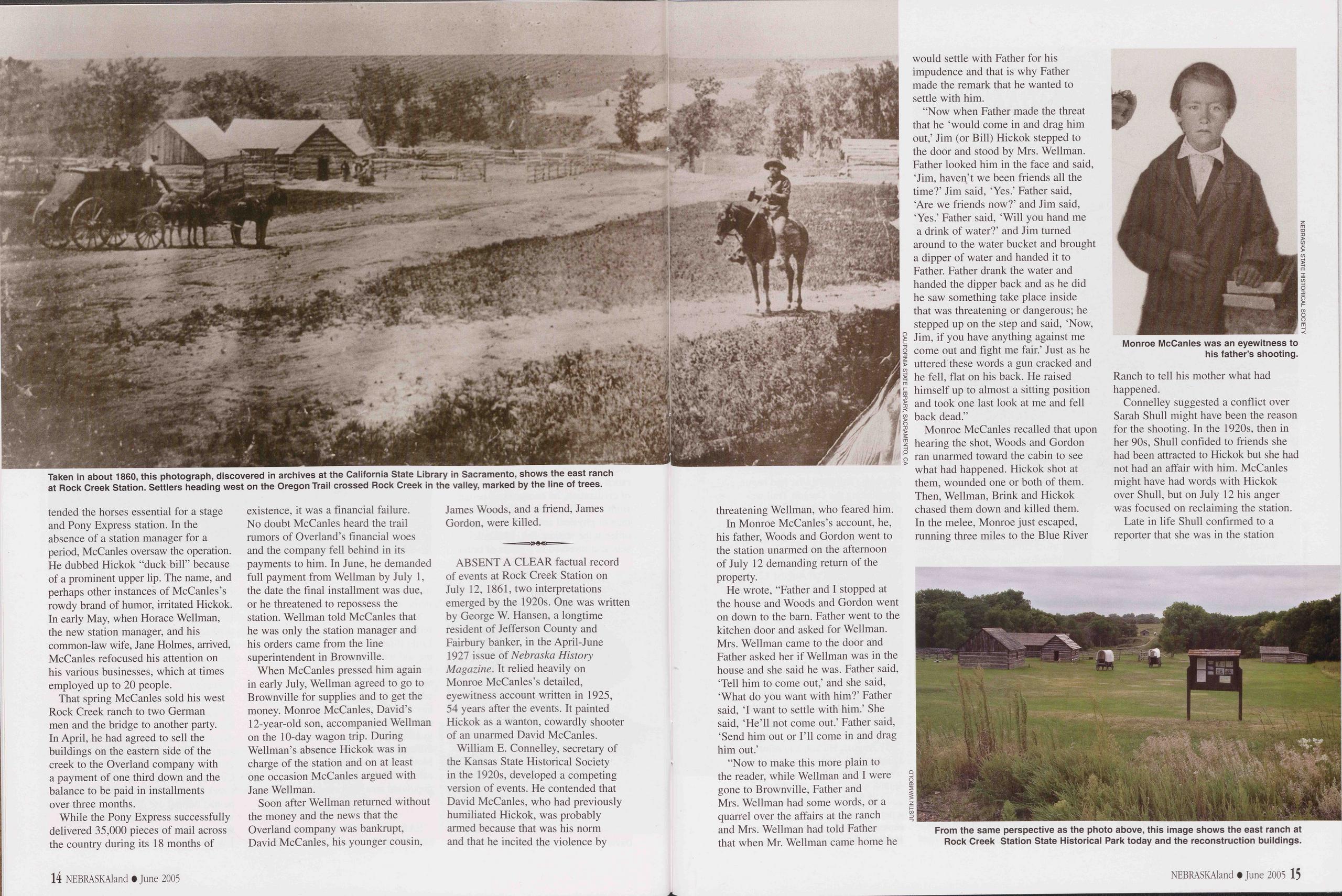
Monroe McCanles recalled that upon hearing the shot, Woods and Gordon ran unarmed toward the cabin to see what had happened. Hickok shot at them, wounded one or both of them. Then, Wellman, Brink and Hickok chased them down and killed them. In the melee, Monroe just escaped, running three miles to the Blue River From the same perspective as the photo above, this image shows the east ranch at Rock Creek Station State Historical Park today and the reconstruction buildings.
Connelley suggested a conflict over Sarah Shull might have been the reason for the shooting. In the 1920s, then in her 90s, Shull confided to friends she had been attracted to Hickok but she had not had an affair with him. McCanles might have had words with Hickok over Shull, but on July 12 his anger was focused on reclaiming the station.
Late in life Shull confirmed to a
reporter that she was in the station
NEBRASKAland • June 2005 15
Questions remain: Were McCanles, Woods and Gordon armed? Why would McCanles put his son in harm’s way? Did Hickok fire the shot that killed McCanles, or did one of the Wellmans?
WITHIN A DAY of the shooting, James McCanles swore out a warrant for Hickok, Wellman and Brink in Beatrice, the site of the closest court to Rock Creek. Hickok was initially identified as “duch [duck] Bill,” as David McCanles had dubbed him. On July 15 the sheriff arrested the three men on murder charges and brought them to Beatrice in a wagon. After a hearing the following week, Justice of the Peace T. M. Coulter dismissed the charges as self-defense in Gage County’s first criminal case.
A trial was never held. At the hearing the defendants and Jane Wellman testified that McCanles incited the fight and that they were defending company property that McCanles had no right to. Monroe McCanles, the other eyewitness, was subpoenaed but not permitted to testify. The rudimentary frontier justice system failed to document the animosities and fears that had led to the deaths of the three young men that July. If a hearing transcript or notes were made, they have not been found. The only court records that still exist are the warrants for arrest, subpoenas and records of a dispute over court costs.
In the void of facts, rumors moved rapidly along the trail. The McCanleses and some area residents believed that even if David McCanles had been a belligerent antagonist, threatening to bodily remove the Overland employees from the station that July day, justice had not been done. But the frontier was unsettled and offered little recourse. The Civil War had begun, travel along the Oregon Trail was declining, and in October 1861 the Pony Express stopped two days after the first transcontinental telegraph line connected East and West.
After the shooting, Shull left Rock Creek, and on August 12 she signed a receipt for $480, when James McCanles paid his brother’s debt to her. Eventually she returned to North Carolina. Mary McCanles and her five children, ages two to 12 when their father was killed, stayed in Nebraska. She later married John Hughes and the family lived in Endicott. James McCanles moved to central Colorado, where he helped establish the town of Florence. He became a banker and served in the Colorado legislature.
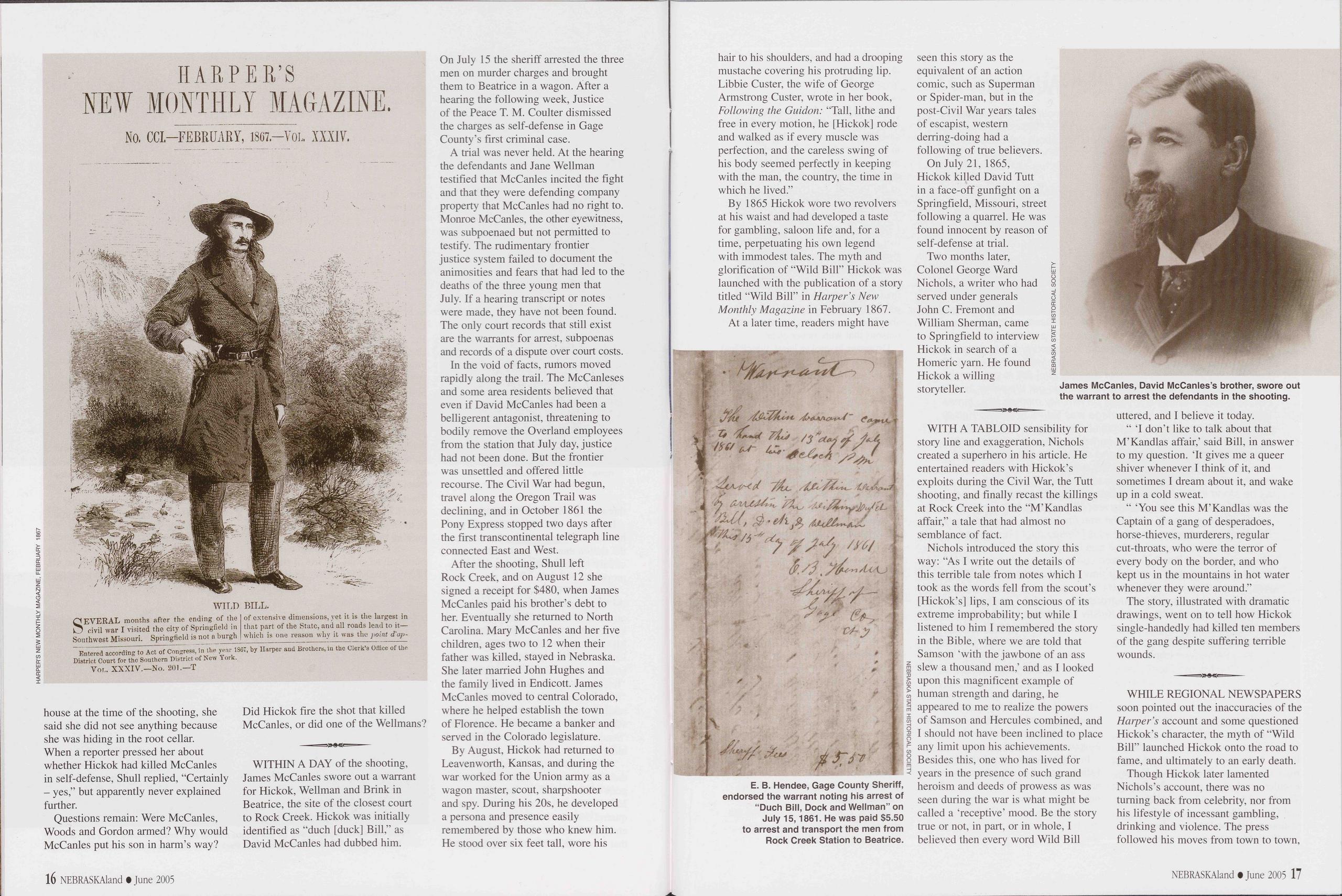
By August, Hickok had returned to Leavenworth, Kansas, and during the war worked for the Union army as a wagon master, scout, sharpshooter and spy. During his 20s, he developed a persona and presence easily remembered by those who knew him. He stood over six feet tall, wore his 16 NEBRASKAland • June 2005 hair to his shoulders, and had a drooping mustache covering his protruding lip. Libbie Custer, the wife of George Armstrong Custer, wrote in her book, Following the Guidon: “Tall, lithe and free in every motion, he [Hickok] rode and walked as if every muscle was perfection, and the careless swing of his body seemed perfectly in keeping with the man, the country, the time in which he lived.”
By 1865 Hickok wore two revolvers at his waist and had developed a taste for gambling, saloon life and, for a time, perpetuating his own legend with immodest tales. The myth and glorification of “Wild Bill” Hickok was launched with the publication of a story titled “Wild Bill” in Harper's New Monthly Magazine in February 1867.
At a later time, readers might have
On July 21, 1865, Hickok killed David Tutt in a face-off gunfight on a Springfield, Missouri, street following a quarrel. He was found innocent by reason of self-defense at trial.
Two months later, Colonel George Ward t Nichols, a writer who had 8 served under generals 3 John C. Fremont and 2 William Sherman, came * to Springfield to interview g Hickok in search of a § Homeric yarn. He found s Hickok a willing storyteller.
WITH A TABLOID sensibility for story line and exaggeration, Nichols created a superhero in his article. He entertained readers with Hickok’s exploits during the Civil War, the Tutt shooting, and finally recast the killings at Rock Creek into the “M’Kandlas affair,” a tale that had almost no semblance of fact.
Nichols introduced the story this way: “As I write out the details of this terrible tale from notes which I took as the words fell from the scout’s [Hickok’s] lips, I am conscious of its extreme improbability; but while I listened to him I remembered the story in the Bible, where we are told that Samson ‘with the jawbone of an ass slew a thousand men,’ and as I looked upon this magnificent example of human strength and daring, he appeared to me to realize the powers of Samson and Hercules combined, and I should not have been inclined to place any limit upon his achievements. Besides this, one who has lived for years in the presence of such grand heroism and deeds of prowess as was seen during the war is what might be called a ‘receptive’ mood. Be the story true or not, in part, or in whole, I believed then every word Wild Bill
“ 'I don’t like to talk about that M’Kandlas affair,’ said Bill, in answer to my question. ‘It gives me a queer shiver whenever I think of it, and sometimes I dream about it, and wake up in a cold sweat.
“ ‘You see this M’Kandlas was the Captain of a gang of desperadoes, horse-thieves, murderers, regular cut-throats, who were the terror of every body on the border, and who kept us in the mountains in hot water whenever they were around.”
The story, illustrated with dramatic drawings, went on to tell how Hickok single-handedly had killed ten members of the gang despite suffering terrible wounds.
WHILE REGIONAL NEWSPAPERS soon pointed out the inaccuracies of the Harper’s account and some questioned Hickok’s character, the myth of “Wild Bill” launched Hickok onto the road to fame, and ultimately to an early death.
Though Hickok later lamented
Nichols’s account, there was no
turning back from celebrity, nor from
his lifestyle of incessant gambling,
drinking and violence. The press
followed his moves from town to town,
NEBRASKAland • June 2005 17
 and western writers gave readers regular,
new installments about “Wild Bill.”
and western writers gave readers regular,
new installments about “Wild Bill.”
Nearly a century and a half after the shootings, Wayne Brandt, superintendent of Rock Creek Station State Historical Park, said he occasionally receives new information about the events. In the 1990s he received an undated account written years earlier by Ida Billingsley Lackland as it was told to her by her mother, Sarah Kelsey Billingsley.
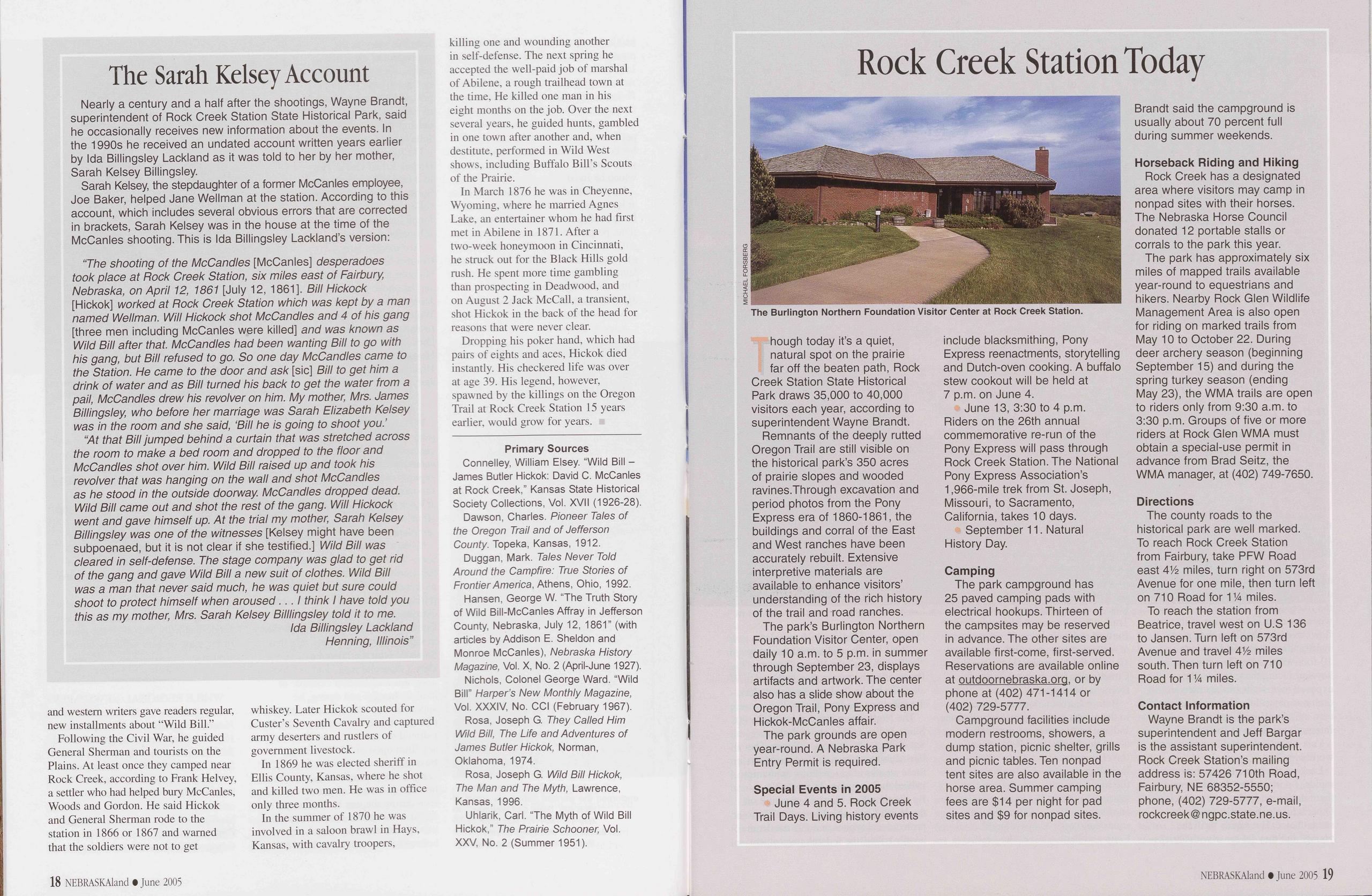
Sarah Kelsey, the stepdaughter of a former McCanles employee, Joe Baker, helped Jane Wellman at the station. According to this account, which includes several obvious errors that are corrected in brackets, Sarah Kelsey was in the house at the time of the McCanles shooting. This is Ida Billingsley Lackland’s version:
“The shooting of the McCandles [McCanles] desperadoes took place at Rock Creek Station, six miles east of Fairbury, Nebraska, on April 12, 1861 [July 12, 1861]. Bill Hickock [Hickok] worked at Rock Creek Station which was kept by a man named Wellman. Will Hickock shot McCandles and 4 of his gang [three men including McCanles were killed] and was known as Wild Bill after that. McCandles had been wanting Bill to go with his gang, but Bill refused to go. So one day McCandles came to the Station. He came to the door and ask [sic] Bill to get him a drink of water and as Bill turned his back to get the water from a pail, McCandles drew his revolver on him. My mother, Mrs. James Billingsley, who before her marriage was Sarah Elizabeth Kelsey was in the room and she said, ‘Bill he is going to shoot you.’
“At that Bill jumped behind a curtain that was stretched across the room to make a bed room and dropped to the floor and McCandles shot over him. Wild Bill raised up and took his revolver that was hanging on the wall and shot McCandles as he stood in the outside doorway. McCandles dropped dead. Wild Bill came out and shot the rest of the gang. Will Hickock went and gave himself up. At the trial my mother, Sarah Kelsey Billingsley was one of the witnesses [Kelsey might have been subpoenaed, but it is not clear if she testified.] Wild Bill was cleared in self-defense. The stage company was glad to get rid of the gang and gave Wild Bill a new suit of clothes. Wild Bill was a man that never said much, he was quiet but sure could shoot to protect himself when aroused... I think I have told you this as my mother, Mrs. Sarah Kelsey Billlingsley told it to me.
Ida Billingsley Lackland Henning, Illinois”Following the Civil War, he guided General Sherman and tourists on the Plains. At least once they camped near Rock Creek, according to Frank Helvey, a settler who had helped bury McCanles, Woods and Gordon. He said Hickok and General Sherman rode to the station in 1866 or 1867 and warned that the soldiers were not to get whiskey. Later Hickok scouted for Custer’s Seventh Cavalry and captured army deserters and rustlers of government livestock.
In 1869 he was elected sheriff in Ellis County, Kansas, where he shot and killed two men. He was in office only three months.
In the summer of 1870 he was involved in a saloon brawl in Hays, Kansas, with cavalry troopers, killing one and wounding another in self-defense. The next spring he accepted the well-paid job of marshal of Abilene, a rough trailhead town at the time, He killed one man in his eight months on the job. Over the next several years, he guided hunts, gambled in one town after another and, when destitute, performed in Wild West shows, including Buffalo Bill’s Scouts of the Prairie.
In March 1876 he was in Cheyenne, Wyoming, where he married Agnes Lake, an entertainer whom he had first met in Abilene in 1871. After a two-week honeymoon in Cincinnati, he struck out for the Black Hills gold rush. He spent more time gambling than prospecting in Deadwood, and on August 2 Jack McCall, a transient, shot Hickok in the back of the head for reasons that were never clear.
Dropping his poker hand, which had pairs of eights and aces, Hickok died instantly. His checkered life was over at age 39. His legend, however, spawned by the killings on the Oregon Trail at Rock Creek Station 15 years earlier, would grow for years.
Primary Sources Connelley, William Elsey. “Wild Bill - James Butler Hickok: David C. McCanles at Rock Creek,” Kansas State Historical Society Collections, Vol. XVII (1926-28). Dawson, Charles. Pioneer Tales of the Oregon Trail and of Jefferson County. Topeka, Kansas, 1912. Duggan, Mark. Tales Never Told Around the Campfire: True Stories of Frontier America, Athens, Ohio, 1992. Hansen, George W. “The Truth Story of Wild Bill-McCanles Affray in Jefferson County, Nebraska, July 12, 1861” (with articles by Addison E. Sheldon and Monroe McCanles), Nebraska History Magazine, Vol. X, No. 2 (April-June 1927). Nichols, Colonel George Ward. “Wild Bill” Harper’s New Monthly Magazine, Vol. XXXIV, No. CCI (February 1967). Rosa, Joseph G. They Called Him Wild Bill, The Life and Adventures of James Butler Hickok, Norman, Oklahoma, 1974. Rosa, Joseph G. Wild Bill Hickok, The Man and The Myth, Lawrence, Kansas, 1996. Uhlarik, Carl. “The Myth of Wild Bill Hickok,” The Prairie Schooner, Vol. XXV, No. 2 (Summer 1951). 18 NEBRASKAland • June 2005Rock Creek Station Today
Though today it’s a quiet, natural spot on the prairie far off the beaten path, Rock Creek Station State Historical Park draws 35,000 to 40,000 visitors each year, according to superintendent Wayne Brandt.
Remnants of the deeply rutted Oregon Trail are still visible on the historical park’s 350 acres of prairie slopes and wooded ravines.Through excavation and period photos from the Pony Express era of 1860-1861, the buildings and corral of the East and West ranches have been accurately rebuilt. Extensive interpretive materials are available to enhance visitors’ understanding of the rich history of the trail and road ranches.
The park’s Burlington Northern Foundation Visitor Center, open daily 10 a.m. to 5 p.m. in summer through September 23, displays artifacts and artwork. The center also has a slide show about the Oregon Trail, Pony Express and Hickok-McCanles affair.
The park grounds are open year-round. A Nebraska Park Entry Permit is required.
Special Events in 2005June 4 and 5. Rock Creek Trail Days. Living history events include blacksmithing, Pony Express reenactments, storytelling and Dutch-oven cooking. A buffalo stew cookout will be held at 7 p.m. on June 4.
June 13, 3:30 to 4 p.m. Riders on the 26th annual commemorative re-run of the Pony Express will pass through Rock Creek Station. The National Pony Express Association’s 1,966-mile trek from St. Joseph, Missouri, to Sacramento, California, takes 10 days.
September 11. Natural History Day.
CampingThe park campground has 25 paved camping pads with electrical hookups. Thirteen of the campsites may be reserved in advance. The other sites are available first-come, first-served. Reservations are available online at outdoornebraska.org. or by phone at (402) 471-1414 or (402) 729-5777.
Campground facilities include modern restrooms, showers, a dump station, picnic shelter, grills and picnic tables. Ten nonpad tent sites are also available in the horse area. Summer camping fees are $14 per night for pad sites and $9 for nonpad sites. Brandt said the campground is usually about 70 percent full during summer weekends.
Horseback Riding and HikingRock Creek has a designated area where visitors may camp in nonpad sites with their horses. The Nebraska Horse Council donated 12 portable stalls or corrals to the park this year.
The park has approximately six miles of mapped trails available year-round to equestrians and hikers. Nearby Rock Glen Wildlife Management Area is also open for riding on marked trails from May 10 to October 22. During deer archery season (beginning September 15) and during the spring turkey season (ending May 23), the WMA trails are open to riders only from 9:30 a.m. to 3:30 p.m. Groups of five or more riders at Rock Glen WMA must obtain a special-use permit in advance from Brad Seitz, the WMA manager, at (402) 749-7650.
DirectionsThe county roads to the historical park are well marked. To reach Rock Creek Station from Fairbury, take PFW Road east 414 miles, turn right on 573rd Avenue for one mile, then turn left on 710 Road for 1¼miles.
To reach the station from Beatrice, travel west on U.S 136 to Jansen. Turn left on 573rd Avenue and travel 4½ miles south. Then turn left on 710 Road for 1¼miles.
Contact InformationWayne Brandt is the park’s superintendent and Jeff Bargar is the assistant superintendent. Rock Creek Station’s mailing address is: 57426 710th Road, Fairbury, NE 68352-5550; phone, (402) 729-5777, e-mail, rockcreek @ngpc.state.ne.us.
NEBRASKAland • June 2005 19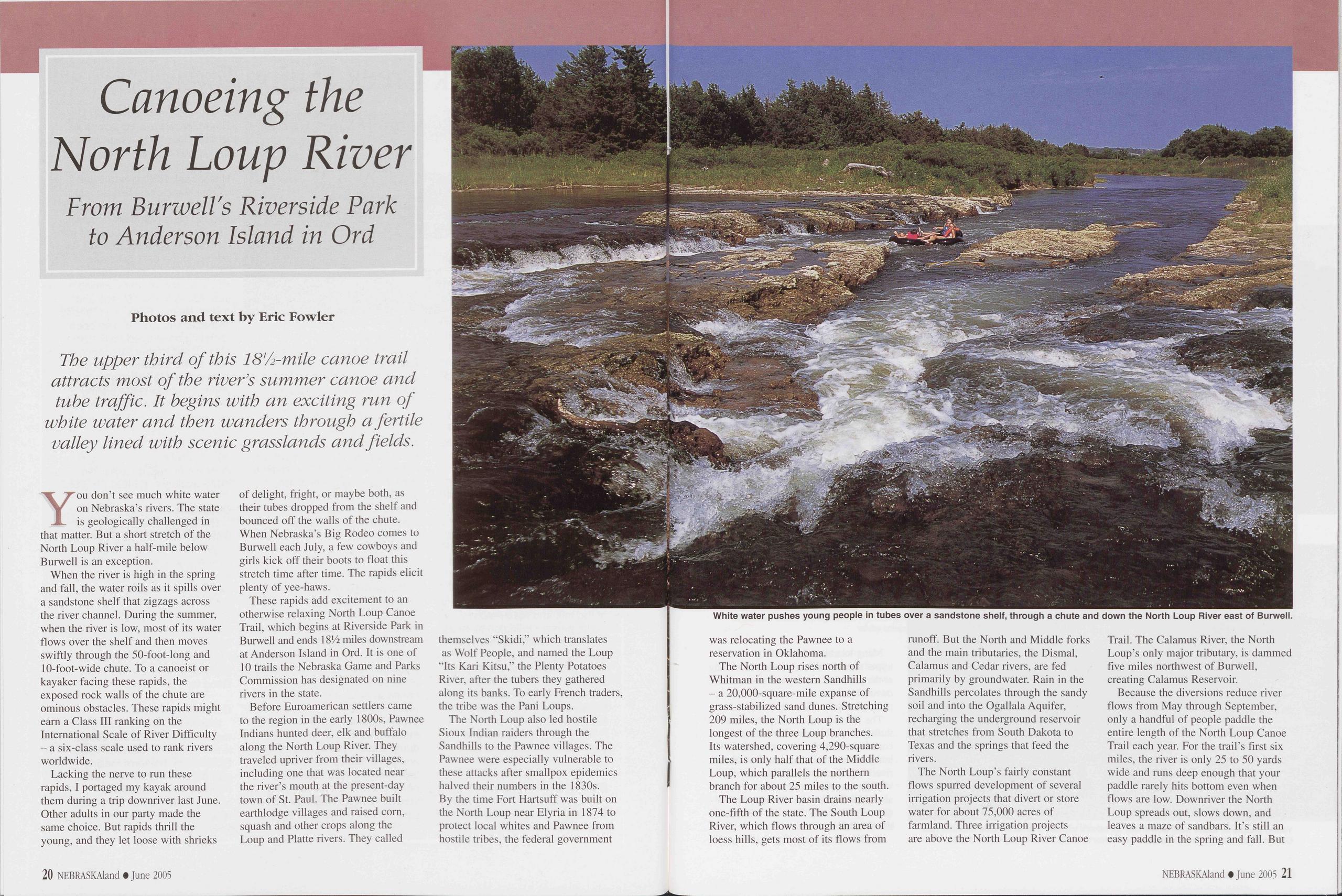
Canoeing the North Loup River
From Burwell's Riverside Park to Anderson Island in Ord
The upper third of this 1872-mile canoe trail attracts most of the river’s summer canoe and tube traffic. It begins with an exciting run of white water and then wanders through a fertile valley lined with scenic grasslands and fields.
You don’t see much white water on Nebraska’s rivers. The state is geologically challenged in that matter. But a short stretch of the North Loup River a half-mile below Burwell is an exception.
When the river is high in the spring and fall, the water roils as it spills over a sandstone shelf that zigzags across the river channel. During the summer, when the river is low, most of its water flows over the shelf and then moves swiftly through the 50-foot-long and 10-foot-wide chute. To a canoeist or kayaker facing these rapids, the exposed rock walls of the chute are ominous obstacles. These rapids might earn a Class III ranking on the International Scale of River Difficulty - a six-class scale used to rank rivers worldwide.
Lacking the nerve to run these rapids, I portaged my kayak around them during a trip downriver last June. Other adults in our party made the same choice. But rapids thrill the young, and they let loose with shrieks of delight, fright, or maybe both, as their tubes dropped from the shelf and bounced off the walls of the chute. When Nebraska’s Big Rodeo comes to Burwell each July, a few cowboys and girls kick off their boots to float this stretch time after time. The rapids elicit plenty of yee-haws.
These rapids add excitement to an otherwise relaxing North Loup Canoe Trail, which begins at Riverside Park in Burwell and ends I8L2 miles downstream at Anderson Island in Ord. It is one of 10 trails the Nebraska Game and Parks Commission has designated on nine rivers in the state.
Before Euroamerican settlers came to the region in the early 1800s, Pawnee Indians hunted deer, elk and buffalo along the North Loup River. They traveled upriver from their villages, including one that was located near the river’s mouth at the present-day town of St. Paul. The Pawnee built earthlodge villages and raised corn, squash and other crops along the Loup and Platte rivers. They called themselves “Skidi,” which translates as Wolf People, and named the Loup “Its Kari Kitsu,” the Plenty Potatoes River, after the tubers they gathered along its banks. To early French traders, the tribe was the Pani Loups.
The North Loup also led hostile Sioux Indian raiders through the Sandhills to the Pawnee villages. The Pawnee were especially vulnerable to these attacks after smallpox epidemics halved their numbers in the 1830s. By the time Fort Hartsuff was built on the North Loup near Elyria in 1874 to protect local whites and Pawnee from hostile tribes, the federal government 20 NEBRASKAland • June 2005
The North Loup rises north of Whitman in the western Sandhills - a 20,000-square-mile expanse of grass-stabilized sand dunes. Stretching 209 miles, the North Loup is the longest of the three Loup branches. Its watershed, covering 4,290-square miles, is only half that of the Middle Loup, which parallels the northern branch for about 25 miles to the south.
The Loup River basin drains nearly one-fifth of the state. The South Loup River, which flows through an area of loess hills, gets most of its flows from runoff. But the North and Middle forks and the main tributaries, the Dismal, Calamus and Cedar rivers, are fed primarily by ground water. Rain in the Sandhills percolates through the sandy soil and into the Ogallala Aquifer, recharging the underground reservoir that stretches from South Dakota to Texas and the springs that feed the rivers.
The North Loup’s fairly constant flows spurred development of several irrigation projects that divert or store water for about 75,000 acres of farmland. Three irrigation projects are above the North Loup River Canoe Trail. The Calamus River, the North Loup’s only major tributary, is dammed five miles northwest of Burwell, creating Calamus Reservoir.
Because the diversions reduce river
flows from May through September,
only a handful of people paddle the
entire length of the North Loup Canoe
Trail each year. For the trail’s first six
miles, the river is only 25 to 50 yards
wide and runs deep enough that your
paddle rarely hits bottom even when
flows are low. Downriver the North
Loup spreads out, slows down, and
leaves a maze of sandbars. It’s still an
easy paddle in the spring and fall. But
NEBRASKAland • June 2005 21
 when flows are lowest, paddlers might
spend more time dragging their canoe
than floating this stretch.
when flows are lowest, paddlers might
spend more time dragging their canoe
than floating this stretch.
For the canoe trail’s first mile, the water moves swiftly in spots as it flows over a bed of sand dotted with outcroppings of sandstone that are part of the Ogallala group of soils that make up the aquifer.
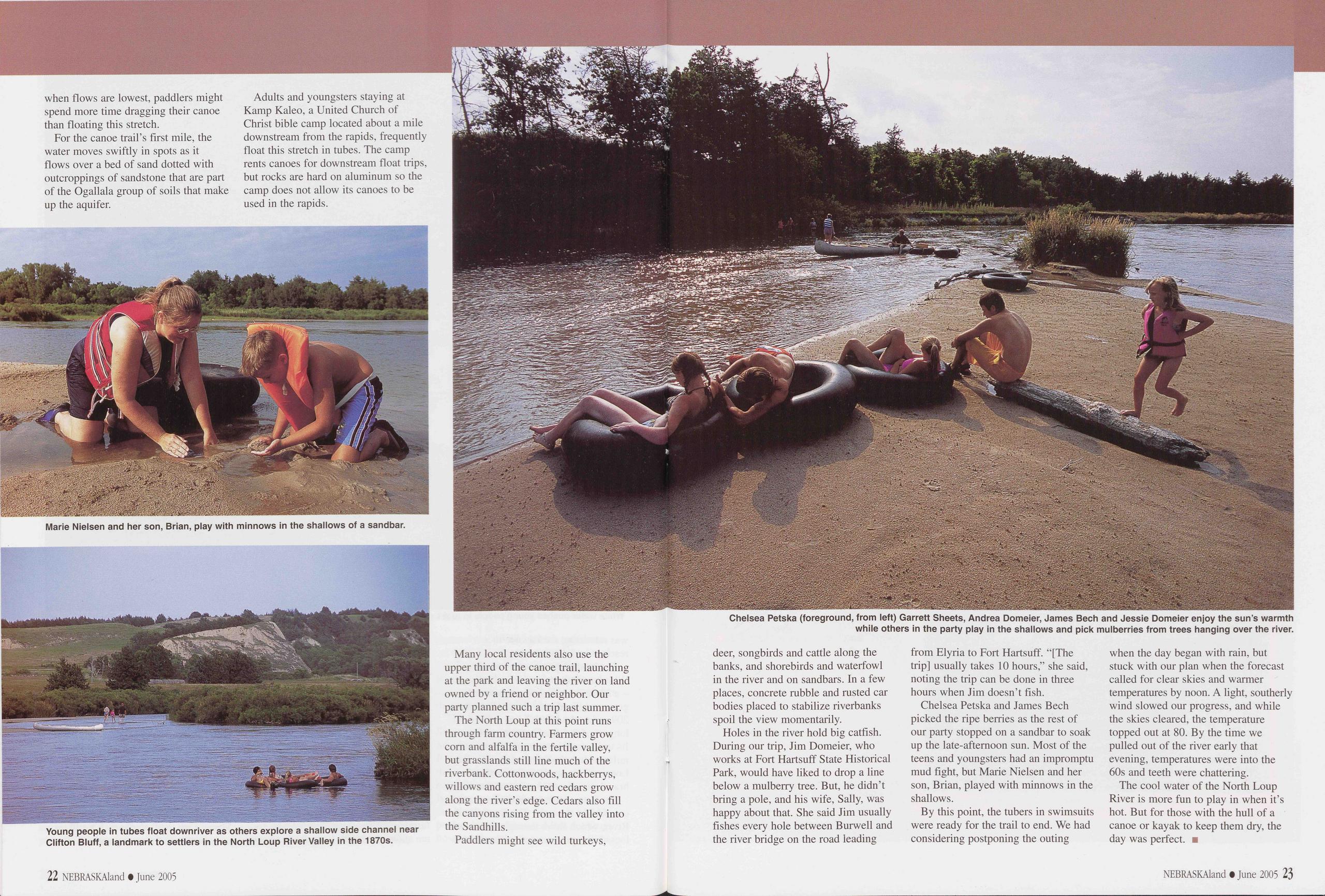
Adults and youngsters staying at Kamp Kaleo, a United Church of Christ bible camp located about a mile downstream from the rapids, frequently float this stretch in tubes. The camp rents canoes for downstream float trips, but rocks are hard on aluminum so the camp does not allow its canoes to be used in the rapids.
Many local residents also use the upper third of the canoe trail, launching at the park and leaving the river on land owned by a friend or neighbor. Our party planned such a trip last summer.
The North Loup at this point runs through farm country. Farmers grow com and alfalfa in the fertile valley, but grasslands still line much of the riverbank. Cottonwoods, hackberrys, willows and eastern red cedars grow along the river’s edge. Cedars also fill the canyons rising from the valley into the Sandhills.
Paddlers might see wild turkeys, 22 NEBRASKAland • June 2005
Holes in the river hold big catfish. During our trip, Jim Domeier, who works at Fort Hartsuff State Historical Park, would have liked to drop a line below a mulberry tree. But, he didn’t bring a pole, and his wife, Sally, was happy about that. She said Jim usually fishes every hole between Burwell and the river bridge on the road leading from Elyria to Fort Hartsuff. “[The trip] usually takes 10 hours,” she said, noting the trip can be done in three hours when Jim doesn’t fish.
Chelsea Petska and James Bech picked the ripe berries as the rest of our party stopped on a sandbar to soak up the late-afternoon sun. Most of the teens and youngsters had an impromptu mud fight, but Marie Nielsen and her son, Brian, played with minnows in the shallows.
By this point, the tubers in swimsuits were ready for the trail to end. We had considering postponing the outing when the day began with rain, but stuck with our plan when the forecast called for clear skies and warmer temperatures by noon. A light, southerly wind slowed our progress, and while the skies cleared, the temperature topped out at 80. By the time we pulled out of the river early that evening, temperatures were into the 60s and teeth were chattering.
The cool water of the North Loup River is more fun to play in when it’s hot. But for those with the hull of a canoe or kayak to keep them dry, the day was perfect.
NEBRASKAland • June 2005 23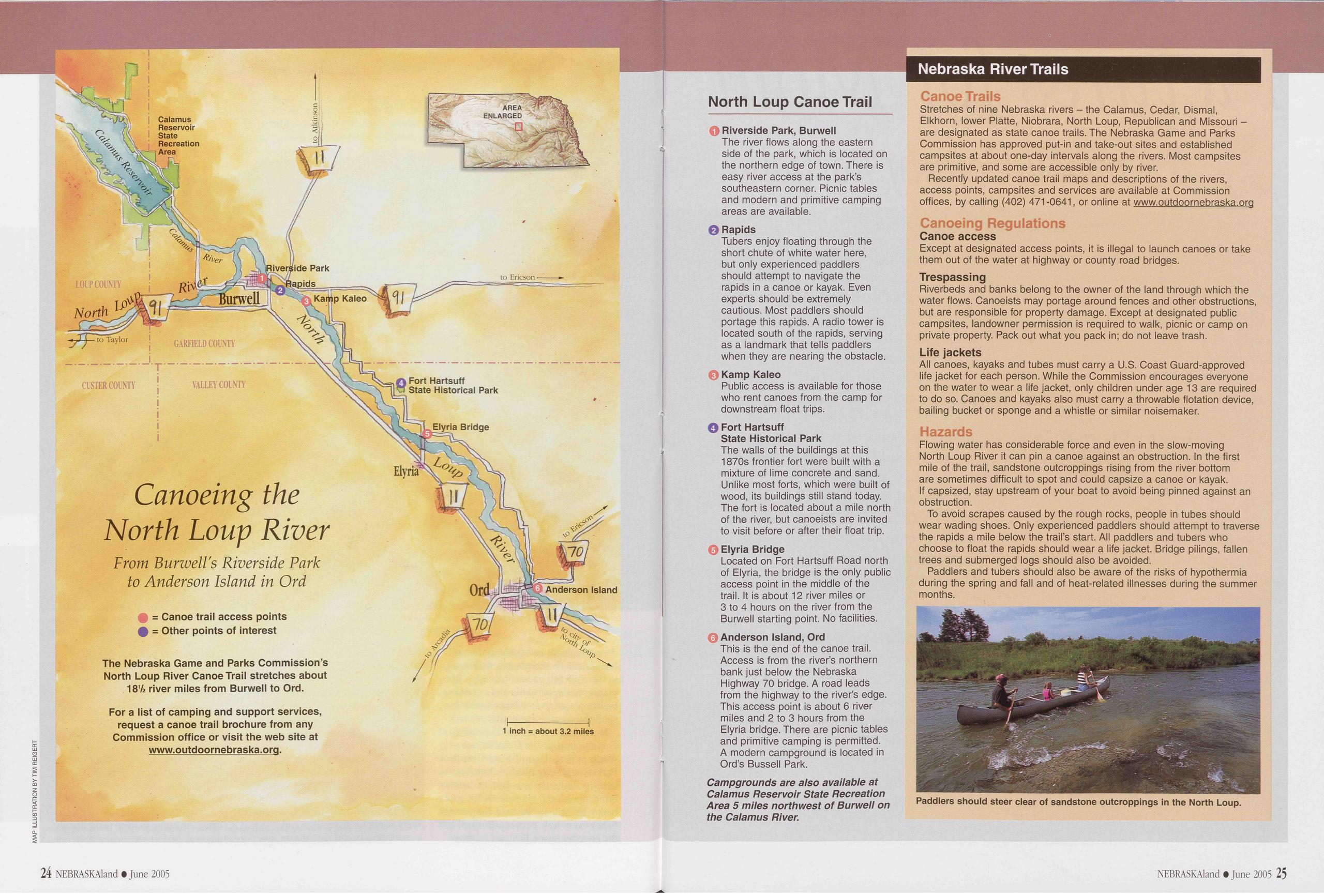
Canoeing the North Loup River
From Butwell's Riverside Park to Andersen Island in Ord
1 Riverside Park, Burwell The river flows along the eastern side of the park, which is located on the northern edge of town. There is easy river access at the park’s southeastern corner. Picnic tables and modern and primitive camping areas are available.
2 Rapids Tubers enjoy floating through the short chute of white water here, but only experienced paddlers should attempt to navigate the rapids in a canoe or kayak. Even experts should be extremely cautious. Most paddlers should portage this rapids. A radio tower is located south of the rapids, serving as a landmark that tells paddlers when they are nearing the obstacle.
3 Kamp Kaleo Public access is available for those who rent canoes from the camp for downstream float trips.
4 Fort Hartsuff State Historical Park The walls of the buildings at this 1870s frontier fort were built with a mixture of lime concrete and sand. Unlike most forts, which were built of wood, its buildings still stand today. The fort is located about a mile north of the river, but canoeists are invited to visit before or after their float trip.
5 Elyria Bridge Located on Fort Hartsuff Road north of Elyria, the bridge is the only public access point in the middle of the trail. It is about 12 river miles or 3 to 4 hours on the river from the Burwell starting point. No facilities.
6 Anderson Island, Ord This is the end of the canoe trail. Access is from the river’s northern bank just below the Nebraska Highway 70 bridge. A road leads from the highway to the river’s edge. This access point is about 6 river miles and 2 to 3 hours from the Elyria bridge. There are picnic tables and primitive camping is permitted. A modern campground is located in Ord’s Bussell Park.
Campgrounds are also available at Calamus Reservoir State Recreation Area 5 miles northwest of Burwell on the Calamus River.
Nebraska River Trails Canoe TrailsStretches of nine Nebraska rivers - the Calamus, Cedar, Dismal, Elkhorn, lower Platte, Niobrara, North Loup, Republican and Missouri — are designated as state canoe trails. The Nebraska Game and Parks Commission has approved put-in and take-out sites and established campsites at about one-day intervals along the rivers. Most campsites are primitive, and some are accessible only by river.
Recently updated canoe trail maps and descriptions of the rivers, access points, campsites and services are available at Commission offices, by calling (402) 471-0641, or online at www.outdoornebraska.org
Canoeing Regulations Canoe accessExcept at designated access points, it is illegal to launch canoes or take them out of the water at highway or county road bridges.
TrespassingRiverbeds and banks belong to the owner of the land through which the water flows. Canoeists may portage around fences and other obstructions, but are responsible for property damage. Except at designated public campsites, landowner permission is required to walk, picnic or camp on private property. Pack out what you pack in; do not leave trash.
Life jacketsAll canoes, kayaks and tubes must carry a U.S. Coast Guard-approved life jacket for each person. While the Commission encourages everyone on the water to wear a life jacket, only children under age 13 are required to do so. Canoes and kayaks also must carry a throwable flotation device, bailing bucket or sponge and a whistle or similar noisemaker.
HazardsFlowing water has considerable force and even in the slow-moving North Loup River it can pin a canoe against an obstruction. In the first mile of the trail, sandstone outcroppings rising from the river bottom are sometimes difficult to spot and could capsize a canoe or kayak. If capsized, stay upstream of your boat to avoid being pinned against an obstruction.
To avoid scrapes caused by the rough rocks, people in tubes should wear wading shoes. Only experienced paddlers should attempt to traverse the rapids a mile below the trail’s start. All paddlers and tubers who choose to float the rapids should wear a life jacket. Bridge pilings, fallen trees and submerged logs should also be avoided.
Paddlers and tubers should also be aware of the risks of hypothermia during the spring and fall and of heat-related illnesses during the summer months.
Pictures for Mom
A Kimball County Portfolio
If you were to take off in an airplane from the lush Missouri River floodplain near Omaha, climb to an altitude of 4,500 feet above sea level, then fly due west at that elevation following Interstate 80, you would plow into the dry stark plains somewhere in Kimball County before you reach the Nebraska-Wyoming state line.
Few think of Nebraska as having high country. But for at least 50 million years, the plains that are now Nebraska have tilted like a giant tabletop, gaining about eight feet in elevation for every mile traveled westward across the state.
In the Panhandle's southwestern corner, Kimball County claims Nebraska's highest elevation - Panorama Point at 5,424 feet above sea level. It is a land with little moisture, short prairie grasses, broad wheat fields, and few people. At the local cafe, the daily question is not if the wind will blow, but how hard.
To most travelers, ripping along the interstate at 80 mph, Kimball County does not register. Its plains lack the drama of the white-ribbed Wildcat Hills that rise to the north in Banner County, or the steep canyon walls, south just across the state line, dropping into the Pawnee National Grasslands. But if you linger and wander over Kimball County's undulating grasslands, you might find them remarkable.
My mom was raised in Kimball County. When, as a young man, I scoffed at these unassuming plains, she would often tell me, "Beauty is where you find it." Stop long enough and look, she said, and you will likely find it right in front of your nose.
Mom grew up in the 1950s and '60s amid the wheat farms and cattle ranches. Her father, a Lutheran pastor in the town of Kimball, had a quiet, soulful connection to the outdoors, and he passed it on to his children. Sometimes, when Mom and I have coffee at her kitchen table now, she talks about her youth - driving through the "Cat Hills," or fishing for trout on vacation in Wyoming's Snowy Range, or visiting her best friend's family ranch west of town.
Once I caught excitement in her eyes when she spoke of the Kimball countryside in early summer and its wildflower bloom, the beauty of the land after a rainstorm and how the birds seemed to dance in the wind.
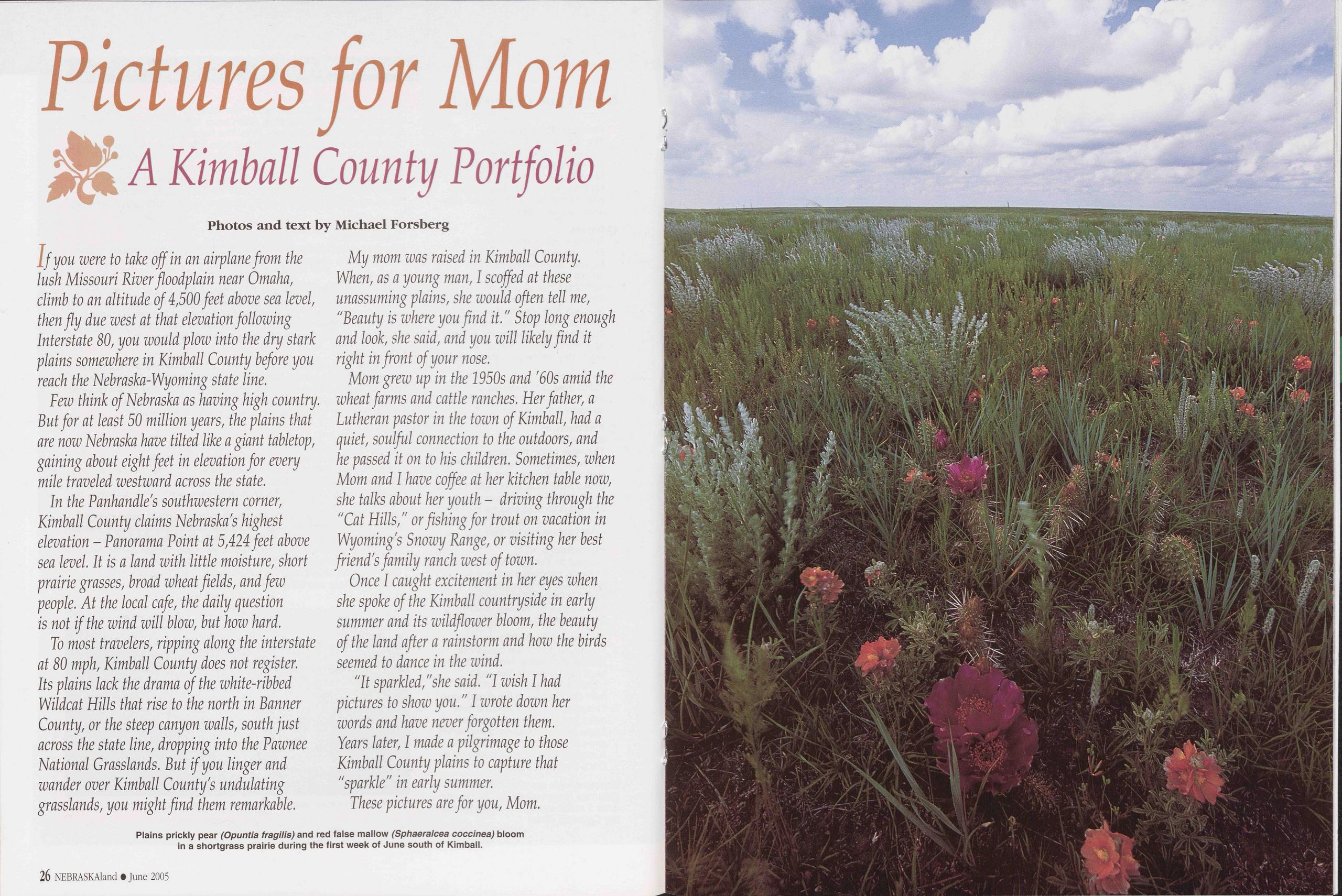
"It sparkled,"she said. "I wish I had pictures to show you." I wrote down her words and have never forgotten them. Years later, I made a pilgrimage to those Kimball County plains to capture that "sparkle" in early summer.
These pictures are for you, Mom.
26 NEBRASKAland • June 2005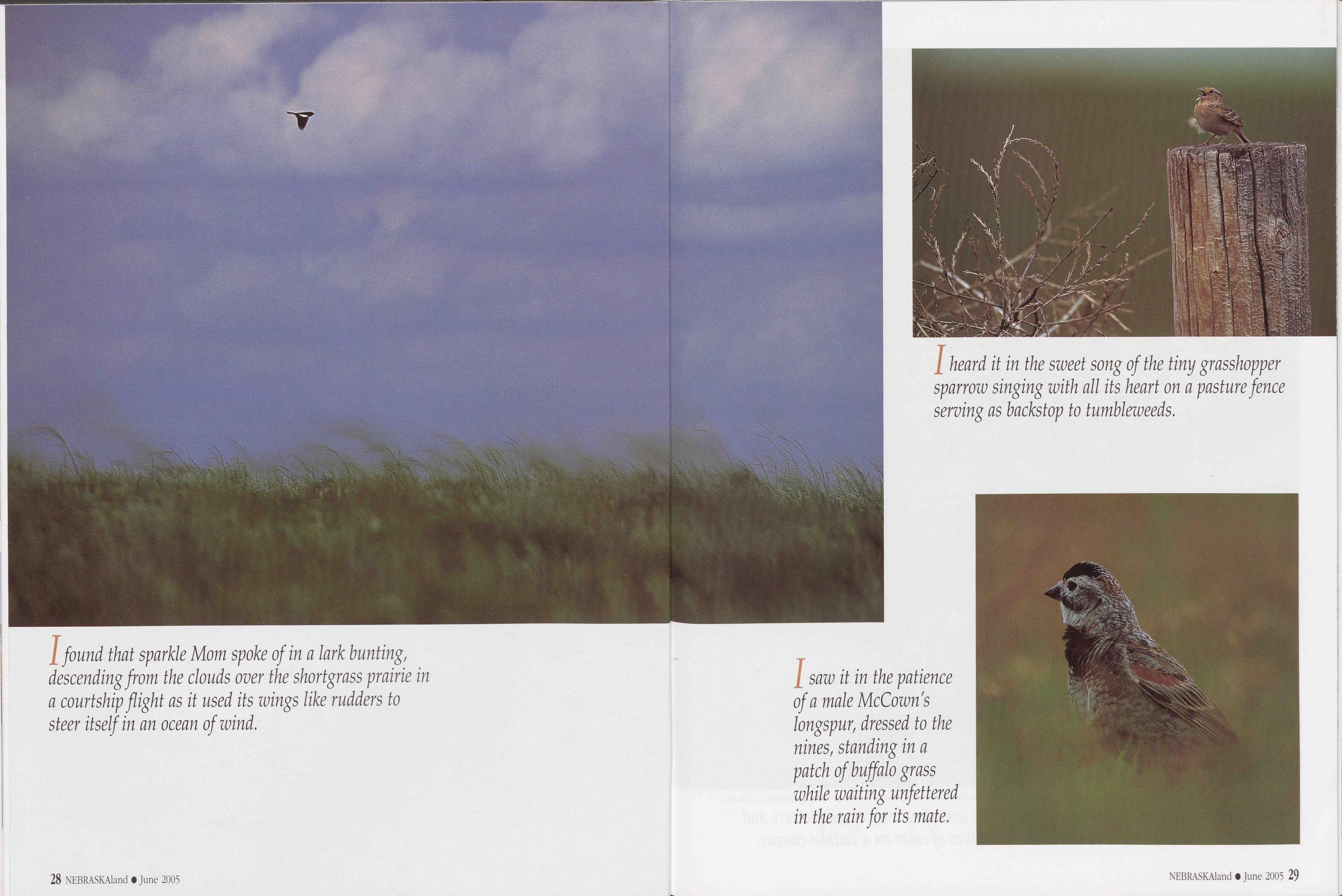
I found that sparkle Mom spoke of in a lark bunting, descending from the clouds over the short grass prairie in a courtship flight as it used its wings like rudders to steer itself in an ocean of wind.
28 NEBRASKAland • June 2005I heard it in the sweet song of the tiny grasshopper sparrow singing with all its heart on a pasture fence serving as backstop to tumbleweeds.
I saw it in the patience of a male McCown's longspur, dressed to the nines, standing in a patch of buffalo grass while waiting unfettered in the rain for its mate.
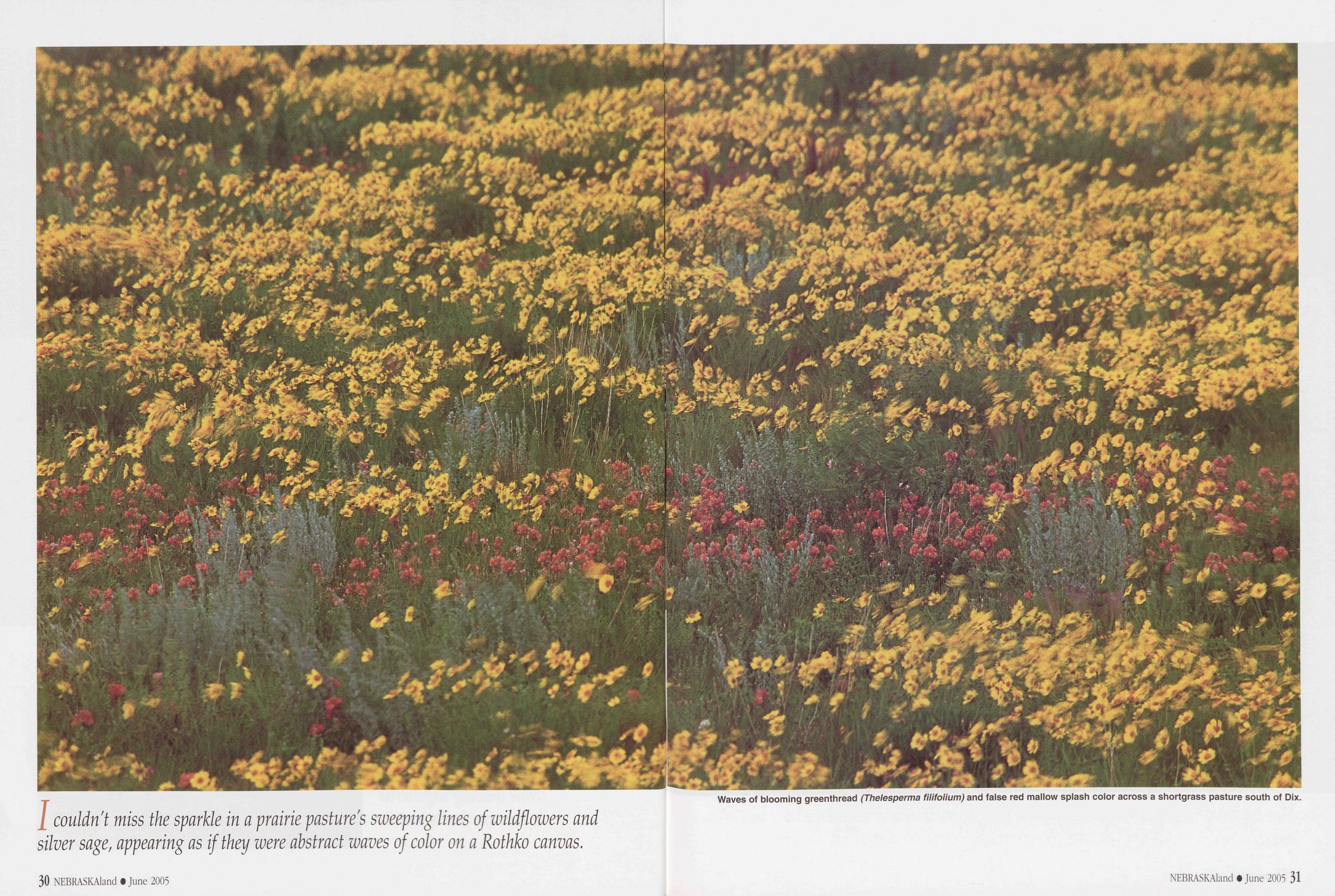
I couldn't miss the sparkle in a prairie pasture's sweeping lines of wildflowers and silver sage, appearing as if they were abstract waves of color on a Rothko canvas.
30 NEBRASKAland • June 2005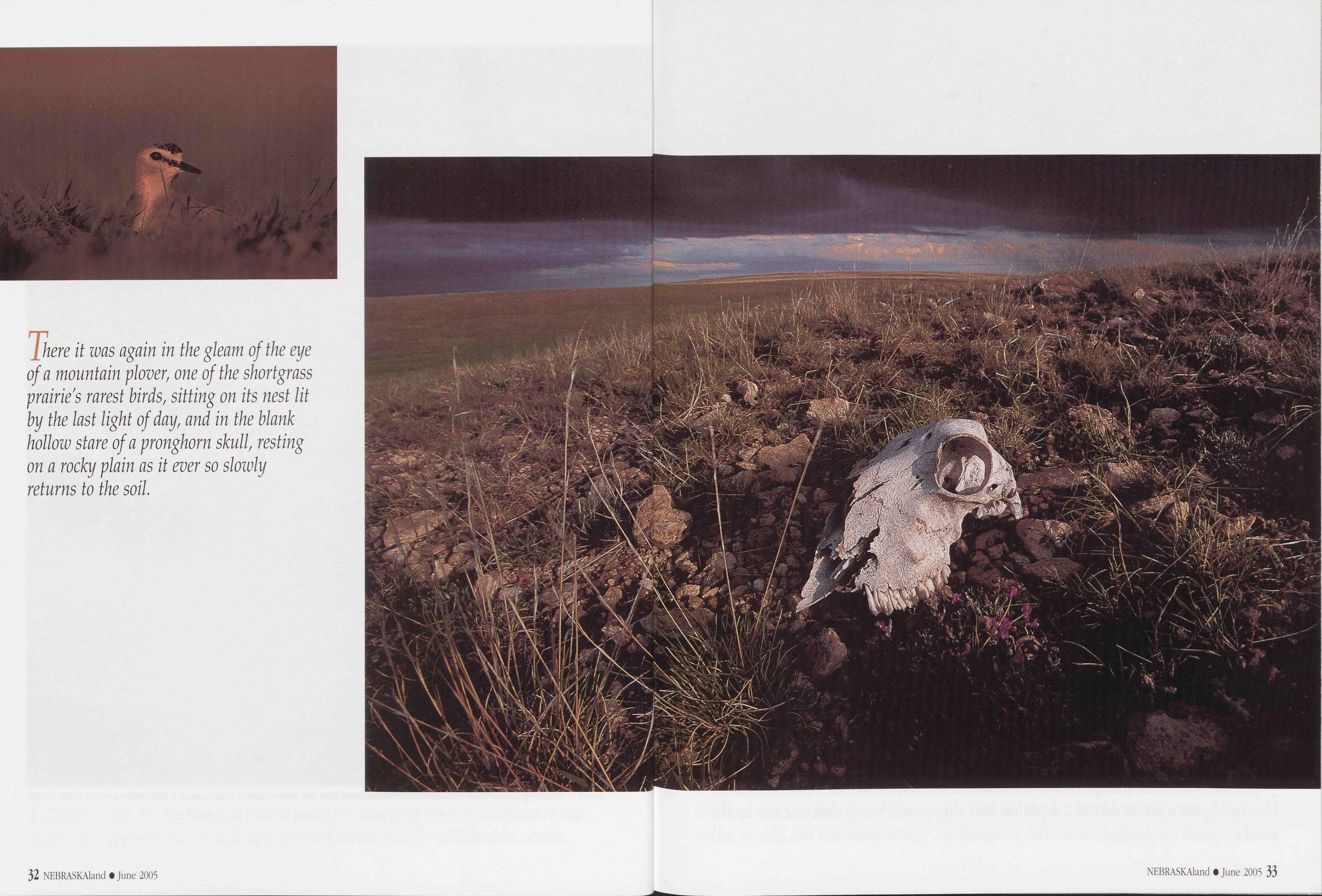
There it was again in the gleam of the eye of a mountain plover, one of the shortgrass prairie's rarest birds, sitting on its nest lit by the last light of day, and in the blank hollow stare of a pronghorn skull, resting on a rocky plain as it ever so slowly returns to the soil.
32 NEBRASKAland • June 2005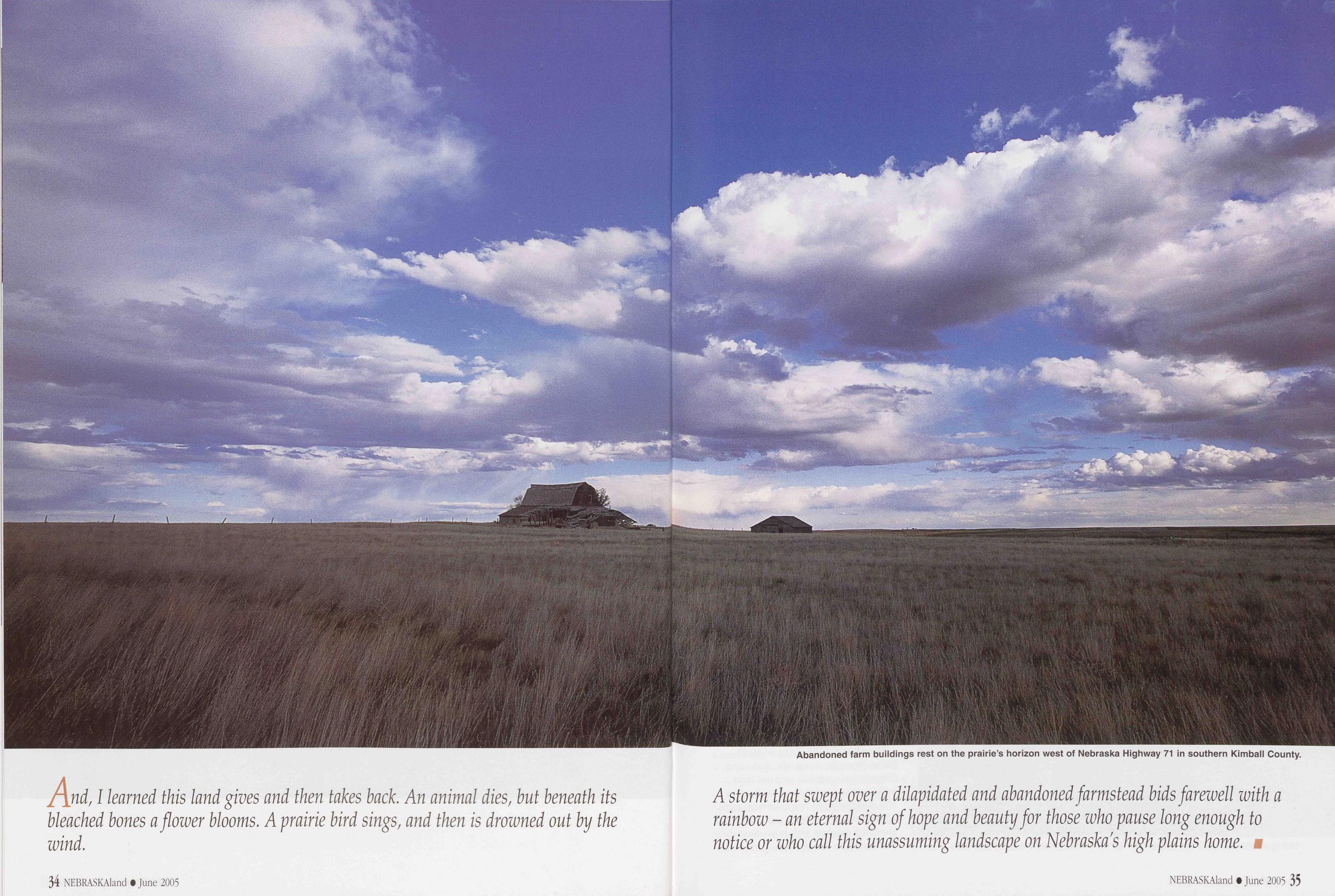
And, I learned this land gives and then takes back. An animal dies, but beneath its bleached bones a flower blooms. A prairie bird sings, and then is drowned out by the wind.
34 NEBRASKAland • June 2005A storm that swept over a dilapidated and abandoned farmstead bids farewell with a rainbow - an eternal sign of hope and beauty for those who pause long enough to notice or who call this unassuming landscape on Nebraska's high plains home.
NEBRASKAland • June 2005 35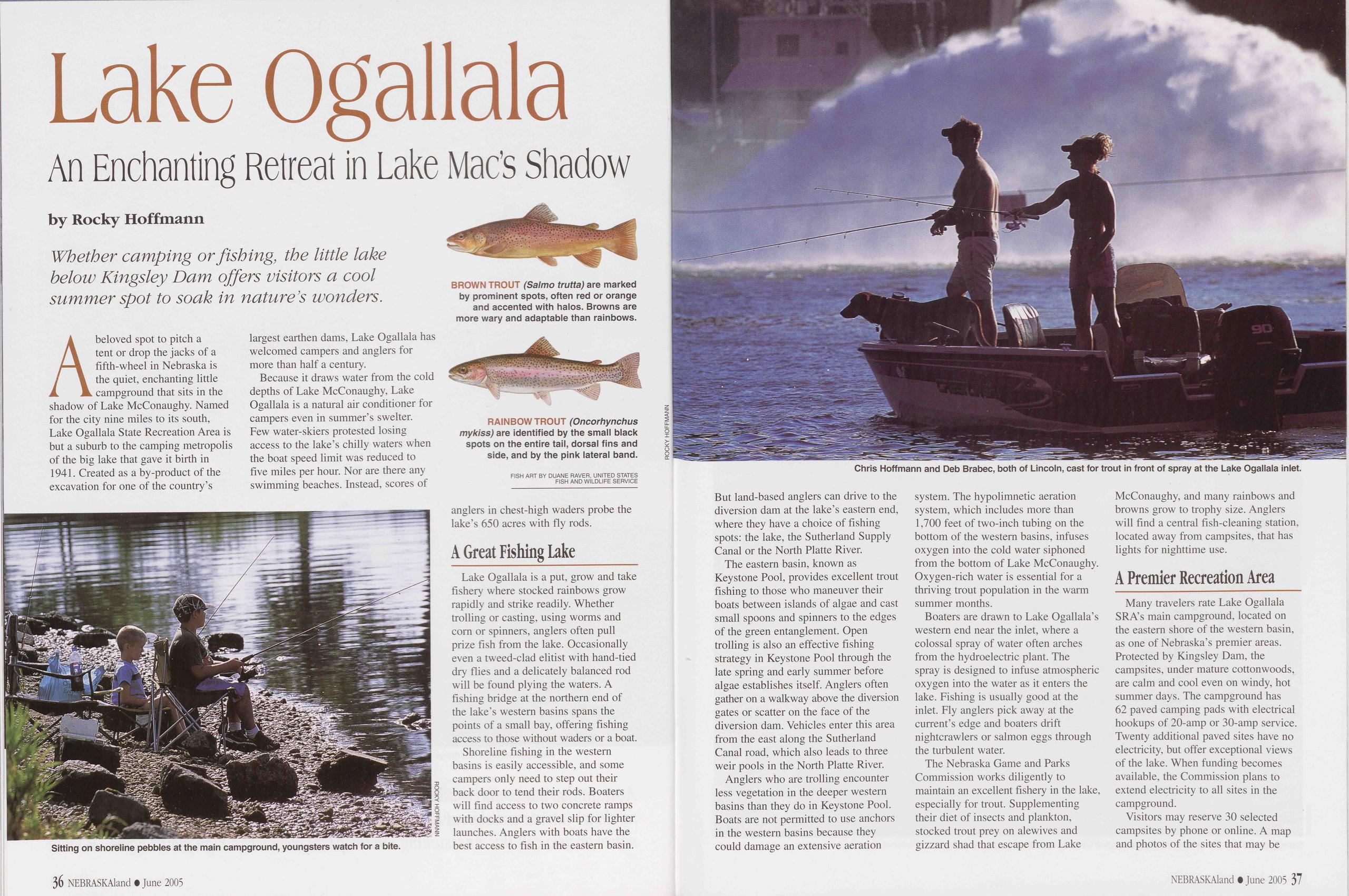
Lake Ogallala
An Enchanting Retreat in Lake Mac’s Shadow
Whether camping or fishing, the little lake below Kingsley Dam offers visitors a cool summer spot to soak in nature’s wonders.
Abeloved spot to pitch a tent or drop the jacks of a fifth-wheel in Nebraska is the quiet, enchanting little campground that sits in the shadow of Lake McConaughy. Named for the city nine miles to its south, Lake Ogallala State Recreation Area is but a suburb to the camping metropolis of the big lake that gave it birth in 1941. Created as a by-product of the excavation for one of the country’s
Because it draws water from the cold depths of Lake McConaughy, Lake Ogallala is a natural air conditioner for campers even in summer’s swelter. Few water-skiers protested losing access to the lake’s chilly waters when the boat speed limit was reduced to five miles per hour. Nor are there any swimming beaches. Instead, scores of
Lake Ogallala is a put, grow and take fishery where stocked rainbows grow rapidly and strike readily. Whether trolling or casting, using worms and corn or spinners, anglers often pull prize fish from the lake. Occasionally even a tweed-clad elitist with hand-tied dry flies and a delicately balanced rod will be found plying the waters. A fishing bridge at the northern end of the lake's western basins spans the points of a small bay, offering fishing access to those without waders or a boat.
Shoreline fishing in the western basins is easily accessible, and some campers only need to step out their back door to tend their rods. Boaters will find access to two concrete ramps with docks and a gravel slip for lighter launches. Anglers with boats have the best access to fish in the eastern basin. 36 NEBRASKAland • June 2005
The eastern basin, known as Keystone Pool, provides excellent trout fishing to those who maneuver their boats between islands of algae and cast small spoons and spinners to the edges of the green entanglement. Open trolling is also an effective fishing strategy in Keystone Pool through the late spring and early summer before algae establishes itself. Anglers often gather on a walkway above the diversion gates or scatter on the face of the diversion dam. Vehicles enter this area from the east along the Sutherland Canal road, which also leads to three weir pools in the North Platte River.
Anglers who are trolling encounter less vegetation in the deeper western basins than they do in Keystone Pool. Boats are not permitted to use anchors in the western basins because they could damage an extensive aeration system. The hypolimnetic aeration system, which includes more than 1,700 feet of two-inch tubing on the bottom of the western basins, infuses oxygen into the cold water siphoned from the bottom of Lake McConaughy. Oxygen-rich water is essential for a thriving trout population in the warm summer months.
Boaters are drawn to Lake Ogallala’s western end near the inlet, where a colossal spray of water often arches from the hydroelectric plant. The spray is designed to infuse atmospheric oxygen into the water as it enters the lake. Fishing is usually good at the inlet. Fly anglers pick away at the current’s edge and boaters drift nightcrawlers or salmon eggs through the turbulent water.
The Nebraska Game and Parks Commission works diligently to maintain an excellent fishery in the lake, especially for trout. Supplementing their diet of insects and plankton, stocked trout prey on alewives and gizzard shad that escape from Lake McConaughy, and many rainbows and browns grow to trophy size. Anglers will find a central fish-cleaning station, located away from campsites, that has lights for nighttime use.
A Premier Recreation AreaMany travelers rate Lake Ogallala SR As main campground, located on the eastern shore of the western basin, as one of Nebraska’s premier areas. Protected by Kingsley Dam, the campsites, under mature cottonwoods, are calm and cool even on windy, hot summer days. The campground has 62 paved camping pads with electrical hookups of 20-amp or 30-amp service. Twenty additional paved sites have no electricity, but offer exceptional views of the lake. When funding becomes available, the Commission plans to extend electricity to all sites in the campground.
Visitors may reserve 30 selected
campsites by phone or online. A map
and photos of the sites that may be
NEBRASKAland • June 2005 37
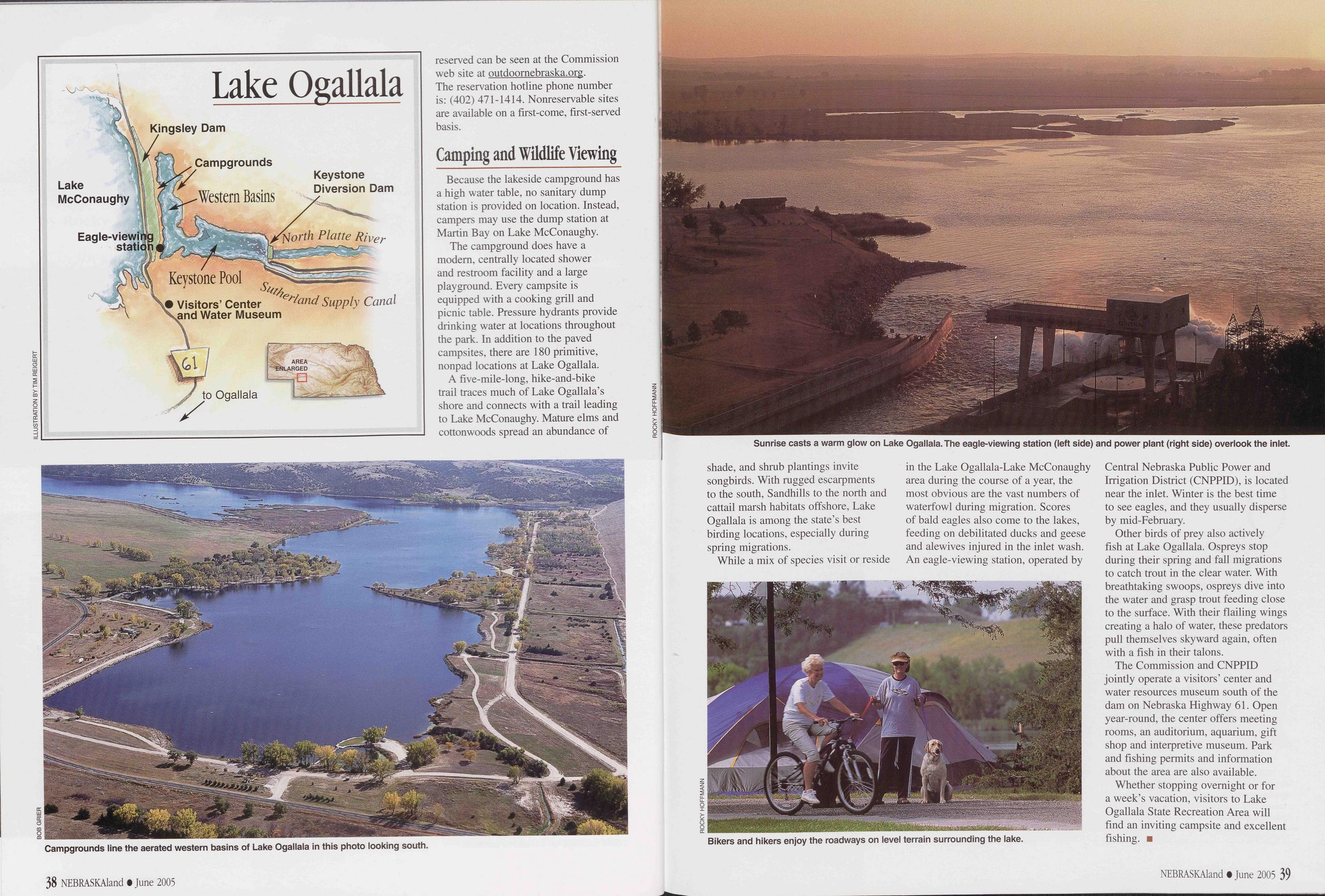
Because the lakeside campground has a high water table, no sanitary dump station is provided on location. Instead, campers may use the dump station at Martin Bay on Lake McConaughy.
The campground does have a modem, centrally located shower and restroom facility and a large playground. Every campsite is equipped with a cooking grill and picnic table. Pressure hydrants provide drinking water at locations throughout the park. In addition to the paved campsites, there are 180 primitive, nonpad locations at Lake Ogallala.
A five-mile-long, hike-and-bike trail traces much of Lake Ogallala’s shore and connects with a trail leading to Lake McConaughy. Mature elms and cottonwoods spread an abundance of
While a mix of species visit or reside
Other birds of prey also actively fish at Lake Ogallala. Ospreys stop during their spring and fall migrations to catch trout in the clear water. With breathtaking swoops, ospreys dive into the water and grasp trout feeding close to the surface. With their flailing wings creating a halo of water, these predators pull themselves skyward again, often with a fish in their talons.
The Commission and CNPPID jointly operate a visitors’ center and water resources museum south of the dam on Nebraska Highway 61. Open year-round, the center offers meeting rooms, an auditorium, aquarium, gift shop and interpretive museum. Park and fishing permits and information about the area are also available.
Whether stopping overnight or for a week’s vacation, visitors to Lake Ogallala State Recreation Area will find an inviting campsite and excellent fishing.
NEBRASKAland • June 2005 39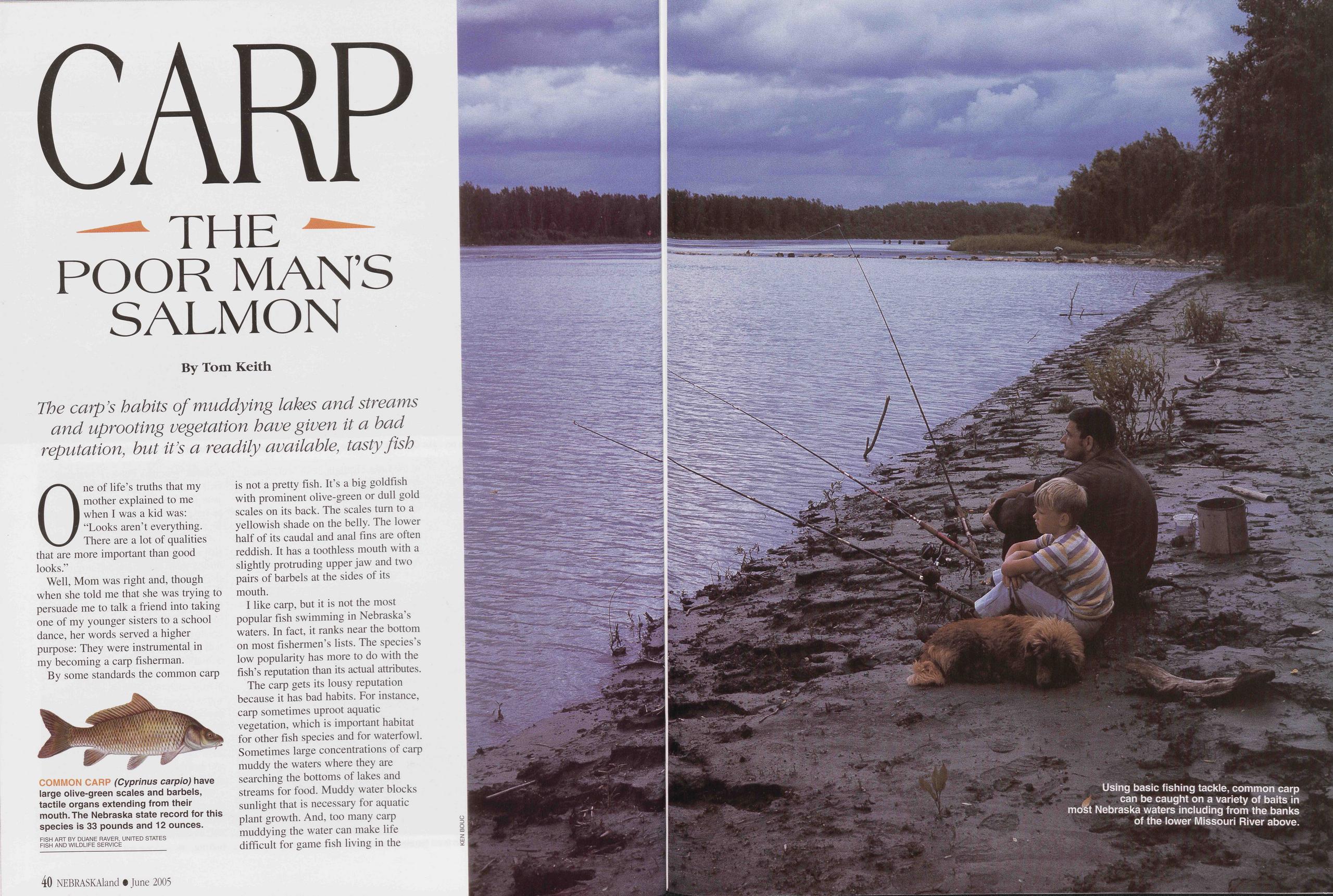
CARP THE POOR MAN’S SALMON
The carp’s habits of muddying lakes and streams and uprooting vegetation have given it a bad reputation, but it’s a readily available, tasty fish
One of life’s truths that my mother explained to me when I was a kid was: “Looks aren’t everything. There are a lot of qualities that are more important than good looks.”
Well, Mom was right and, though when she told me that she was trying to persuade me to talk a friend into taking one of my younger sisters to a school dance, her words served a higher purpose: They were instrumental in my becoming a carp fisherman.
By some standards the common carp
I like carp, but it is not the most popular fish swimming in Nebraska’s waters. In fact, it ranks near the bottom on most fishermen’s lists. The species’s low popularity has more to do with the fish’s reputation than its actual attributes.
The carp gets its lousy reputation because it has bad habits. For instance, carp sometimes uproot aquatic vegetation, which is important habitat for other fish species and for waterfowl. Sometimes large concentrations of carp muddy the waters where they are searching the bottoms of lakes and streams for food. Muddy water blocks sunlight that is necessary for aquatic plant growth. And, too many carp muddying the water can make life difficult for game fish living in the 40 NEBRASKAland • June 2005
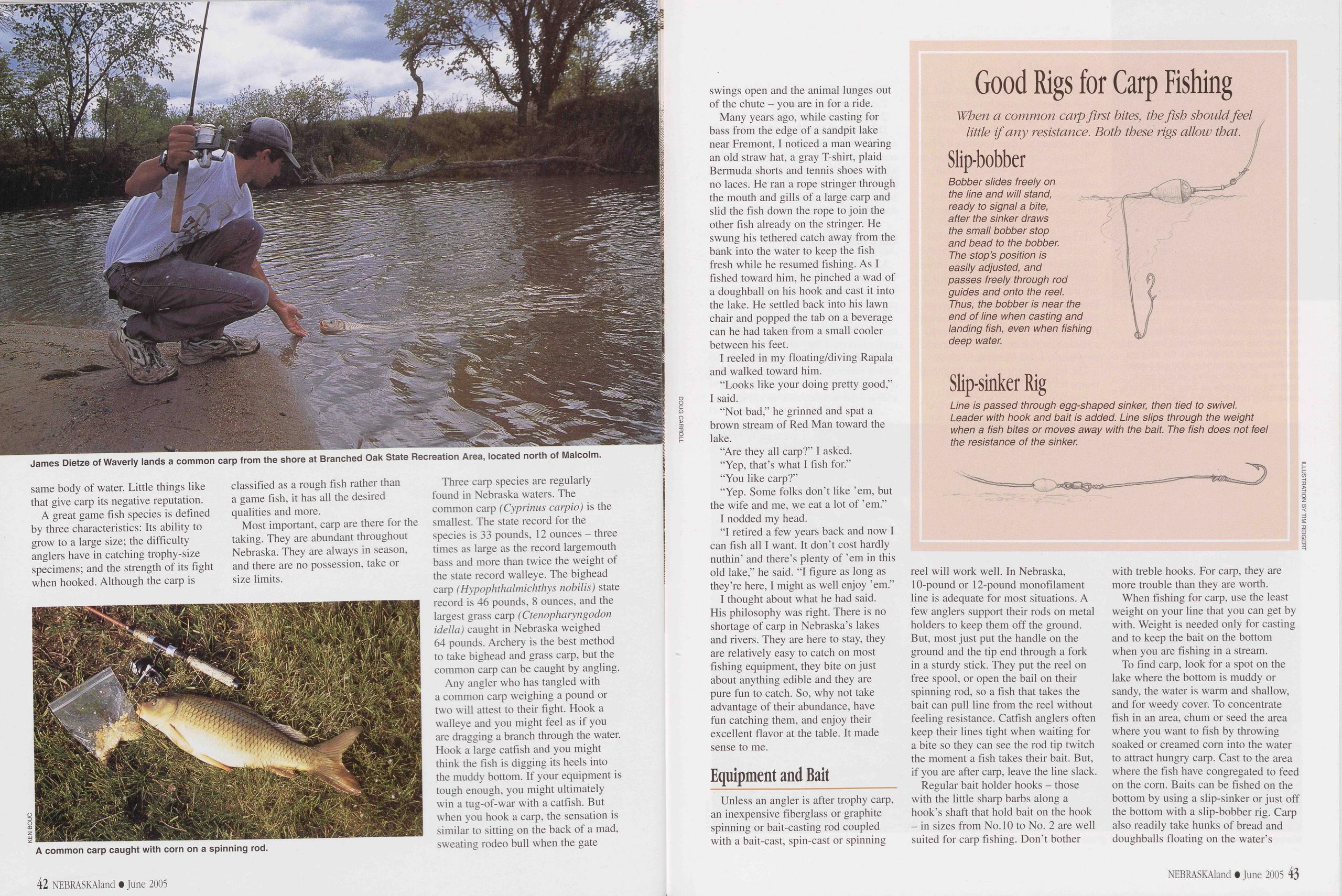
A great game fish species is defined by three characteristics: Its ability to grow to a large size; the difficulty anglers have in catching trophy-size specimens; and the strength of its fight when hooked. Although the carp is
Most important, carp are there for the taking. They are abundant throughout Nebraska. They are always in season, and there are no possession, take or size limits.
Three carp species are regularly found in Nebraska waters. The common carp (Cyprinus carpio) is the smallest. The state record for the species is 33 pounds, 12 ounces - three times as large as the record largemouth bass and more than twice the weight of the state record walleye. The bighead carp (Hypophthalmichthys nobilis) state record is 46 pounds, 8 ounces, and the largest grass carp (Ctenopharyngodon idella) caught in Nebraska weighed 64 pounds. Archery is the best method to take bighead and grass carp, but the common carp can be caught by angling.
Any angler who has tangled with a common carp weighing a pound or two will attest to their fight. Hook a walleye and you might feel as if you are dragging a branch through the water. Hook a large catfish and you might think the fish is digging its heels into the muddy bottom. If your equipment is tough enough, you might ultimately win a tug-of-war with a catfish. But when you hook a carp, the sensation is similar to sitting on the back of a mad, sweating rodeo bull when the gate 42 NEBRASKAland • June 2005 swings open and the animal lunges out of the chute - you are in for a ride.
Many years ago, while casting for bass from the edge of a sandpit lake near Fremont, I noticed a man wearing an old straw hat, a gray T-shirt, plaid Bermuda shorts and tennis shoes with no laces. He ran a rope stringer through the mouth and gills of a large carp and slid the fish down the rope to join the other fish already on the stringer. He swung his tethered catch away from the bank into the water to keep the fish fresh while he resumed fishing. As I fished toward him, he pinched a wad of a doughball on his hook and cast it into the lake. He settled back into his lawn chair and popped the tab on a beverage can he had taken from a small cooler between his feet.
I reeled in my floating/diving Rapala and walked toward him.
"Looks like your doing pretty good,” I said.
"Not bad,” he grinned and spat a brown stream of Red Man toward the lake.
"Are they all carp?” I asked.
"Yep, that’s what I fish for.”
“You like carp?”
"Yep. Some folks don’t like ’em, but the wife and me, we eat a lot of ’em.”
I nodded my head.
"I retired a few years back and now I can fish all I want. It don’t cost hardly nuthin’ and there’s plenty of ’em in this old lake,” he said. "I figure as long as they’re here, I might as well enjoy ’em.”
I thought about what he had said. His philosophy was right. There is no shortage of carp in Nebraska’s lakes and rivers. They are here to stay, they are relatively easy to catch on most fishing equipment, they bite on just about anything edible and they are pure fun to catch. So, why not take advantage of their abundance, have fun catching them, and enjoy their excellent flavor at the table. It made sense to me.
Equipment and BaitBobber slides freely on the line and will stand, ready to signal a bite, after the sinker draws the small bobber stop and bead to the bobber. The stop’s position is easily adjusted, and passes freely through rod guides and onto the reel. Thus, the bobber is near the end of line when casting and landing fish, even when fishing deep water.
Slip-sinker RigLine is passed through egg-shaped sinker, then tied to swivel. Leader with hook and bait is added. Line slips through the weight when a fish bites or moves away with the bait. The fish does not feel the resistance of the sinker.
ILLUSTRATION BY TIM REIGERTRegular bait holder hooks - those with the little sharp barbs along a hook’s shaft that hold bait on the hook - in sizes from No. 10 to No. 2 are well suited for carp fishing. Don’t bother with treble hooks. For carp, they are more trouble than they are worth.
When fishing for carp, use the least weight on your line that you can get by with. Weight is needed only for casting and to keep the bait on the bottom when you are fishing in a stream.
To find carp, look for a spot on the
lake where the bottom is muddy or
sandy, the water is warm and shallow,
and for weedy cover. To concentrate
fish in an area, chum or seed the area
where you want to fish by throwing
soaked or creamed corn into the water
to attract hungry carp. Cast to the area
where the fish have congregated to feed
on the corn. Baits can be fished on the
bottom by using a slip-sinker or just off
the bottom with a slip-bobber rig. Carp
also readily take hunks of bread and
doughballs floating on the water’s
NEBRASKAland • June 2005 43
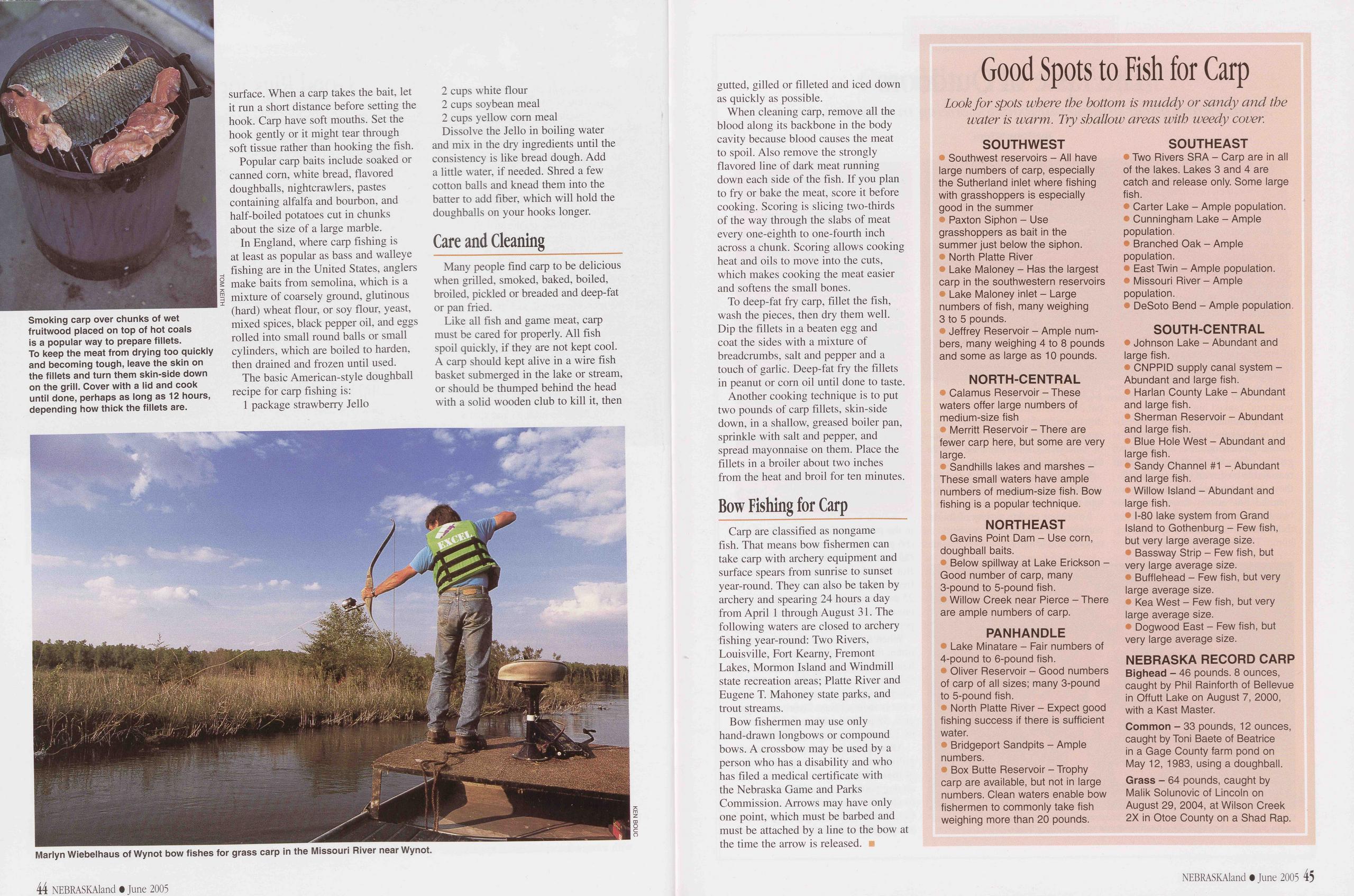
Popular carp baits include soaked or canned corn, white bread, flavored doughballs, nightcrawlers, pastes containing alfalfa and bourbon, and half-boiled potatoes cut in chunks about the size of a large marble.
In England, where carp fishing is at least as popular as bass and walleye fishing are in the United States, anglers make baits from semolina, which is a mixture of coarsely ground, glutinous (hard) wheat flour, or soy flour, yeast, mixed spices, black pepper oil, and eggs rolled into small round balls or small cylinders, which are boiled to harden, then drained and frozen until used.
The basic American-style doughball recipe for carp fishing is: 1 package strawberry Jello
Dissolve the Jello in boiling water and mix in the dry ingredients until the consistency is like bread dough. Add a little water, if needed. Shred a few cotton balls and knead them into the batter to add fiber, which will hold the doughballs on your hooks longer.
Care and CleaningMany people find carp to be delicious when grilled, smoked, baked, boiled, broiled, pickled or breaded and deep-fat or pan fried.
Like all fish and game meat, carp must be cared for properly. All fish spoil quickly, if they are not kept cool. A carp should kept alive in a wire fish basket submerged in the lake or stream, or should be thumped behind the head with a solid wooden club to kill it, then 44 NEBRASKAland • June 2005 gutted, gilled or filleted and iced down as quickly as possible.
When cleaning carp, remove all the blood along its backbone in the body cavity because blood causes the meat to spoil. Also remove the strongly flavored line of dark meat running down each side of the fish. If you plan to fry or bake the meat, score it before cooking. Scoring is slicing two-thirds of the way through the slabs of meat every one-eighth to one-fourth inch across a chunk. Scoring allows cooking heat and oils to move into the cuts, which makes cooking the meat easier and softens the small bones.
To deep-fat fry carp, fillet the fish, wash the pieces, then dry them well. Dip the fillets in a beaten egg and coat the sides with a mixture of breadcrumbs, salt and pepper and a touch of garlic. Deep-fat fry the fillets in peanut or corn oil until done to taste.
Another cooking technique is to put two pounds of carp fillets, skin-side down, in a shallow, greased boiler pan, sprinkle with salt and pepper, and spread mayonnaise on them. Place the fillets in a broiler about two inches from the heat and broil for ten minutes.
Bow Fishing for CarpCarp are classified as nongame fish. That means bow fishermen can take carp with archery equipment and surface spears from sunrise to sunset year-round. They can also be taken by archery and spearing 24 hours a day from April 1 through August 31. The following waters are closed to archery fishing year-round: Two Rivers, Louisville, Fort Kearny, Fremont Lakes, Mormon Island and Windmill state recreation areas; Platte River and Eugene T. Mahoney state parks, and trout streams.
Bow fishermen may use only hand-drawn longbows or compound bows. A crossbow may be used by a person who has a disability and who has filed a medical certificate with the Nebraska Game and Parks Commission. Arrows may have only one point, which must be barbed and must be attached by a line to the bow at the time the arrow is released.
Good Spots to Fish for Carp Look for spots where the bottom is muddy or sandy and the water is warm. Try shallow areas with weedy cover. SOUTHWEST Southwest reservoirs - All have large numbers of carp, especially the Sutherland inlet where fishing with grasshoppers is especially good in the summer Paxton Siphon - Use grasshoppers as bait in the summer just below the siphon. North Platte River Lake Maloney - Has the largest carp in the southwestern reservoirs Lake Maloney inlet - Large numbers of fish, many weighing 3 to 5 pounds. Jeffrey Reservoir - Ample num- bers, many weighing 4 to 8 pounds and some as large as 10 pounds. NORTH-CENTRAL Calamus Reservoir-These waters offer large numbers of medium-size fish • Merritt Reservoir - There are fewer carp here, but some are very large. • Sandhills lakes and marshes - These small waters have ample numbers of medium-size fish. Bow fishing is a popular technique. NORTHEAST Gavins Point Dam - Use corn, doughball baits. Below spillway at Lake Erickson - Good number of carp, many 3- pound to 5-pound fish. O Willow Creek near Pierce - There are ample numbers of carp. PANHANDLE Lake Minatare - Fair numbers of 4- pound to 6-pound fish. Oliver Reservoir - Good numbers of carp of all sizes; many 3-pound to 5-pound fish. • North Platte River - Expect good fishing success if there is sufficient water. G Bridgeport Sandpits - Ample numbers. Box Butte Reservoir-Trophy carp are available, but not in large numbers. Clean waters enable bow fishermen to commonly take fish weighing more than 20 pounds. SOUTHEAST • Two Rivers SRA - Carp are in all of the lakes. Lakes 3 and 4 are catch and release only. Some large fish. • Carter Lake - Ample population. • Cunningham Lake - Ample population O Branched Oak - Ample population. • East Twin - Ample population. Missouri River - Ample population. DeSoto Bend - Ample population SOUTH-CENTRAL • Johnson Lake - Abundant and large fish. O CNPPID supply canal system - Abundant and large fish. • Harlan County Lake - Abundant and large fish. • Sherman Reservoir - Abundant and large fish. • Blue Hole West - Abundant and large fish. • Sandy Channel #1 - Abundant and large fish. • Willow Island - Abundant and large fish. • I-80 lake system from Grand Island to Gothenburg - Few fish, but very large average size. • Bassway Strip - Few fish, but very large average size. • Bufflehead - Few fish, but very large average size. O Kea West - Few fish, but very large average size. O Dogwood East - Few fish, but very large average size. NEBRASKA RECORD CARP Bighead - 46 pounds. 8 ounces, caught by Phil Rainforth of Bellevue in Offutt Lake on August 7, 2000, with a Kast Master. Common - 33 pounds, 12 ounces, caught by Toni Baete of Beatrice in a Gage County farm pond on May 12, 1983, using a doughball. Grass - 64 pounds, caught by Malik Solunovic of Lincoln on August 29, 2004, at Wilson Creek 2X in Otoe County on a Shad Rap. NEBRASKAland • June 2005 45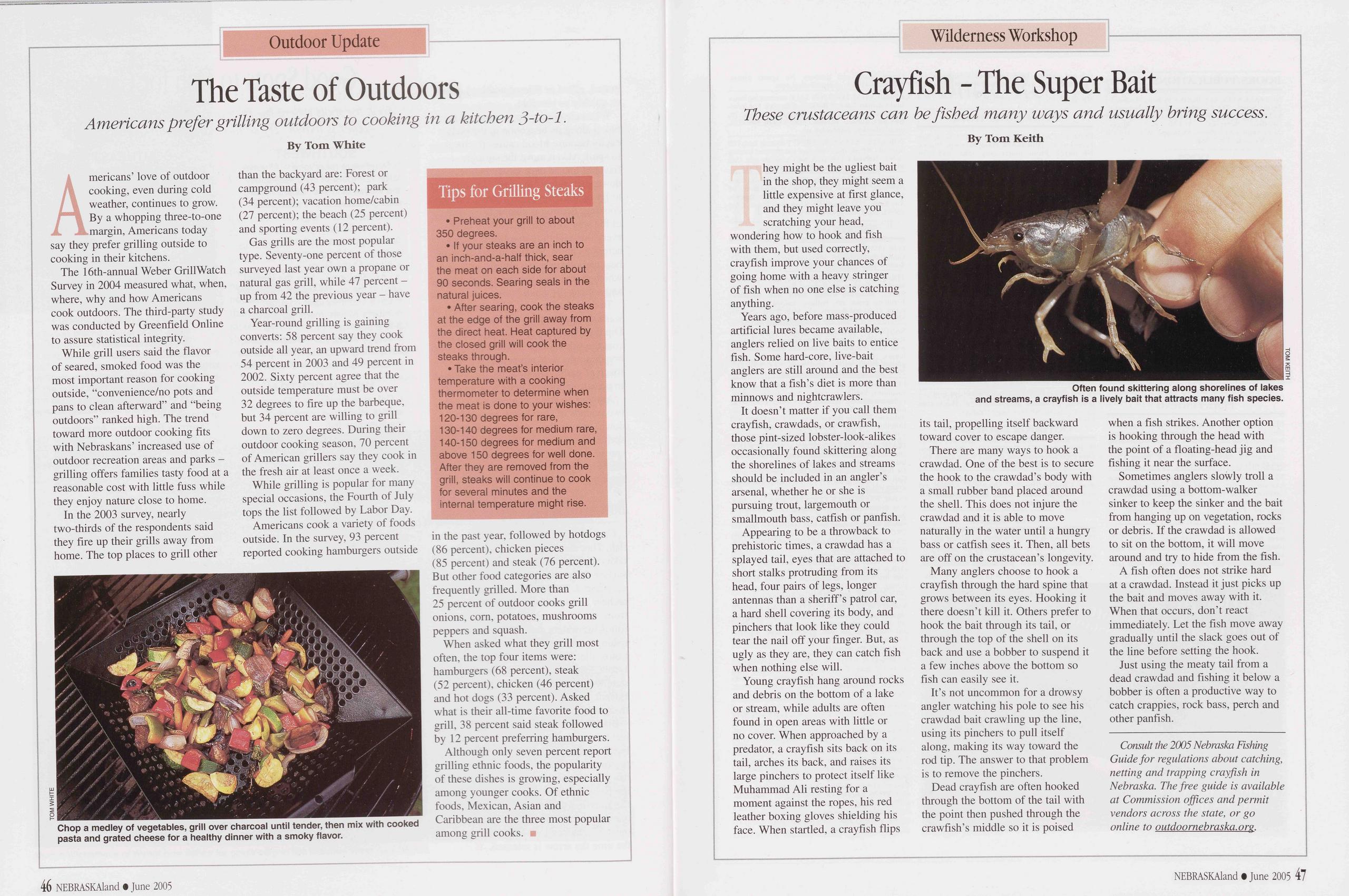
Outdoor Update
The Taste of Outdoors
Americans prefer grilling outdoors to cooking in a kitchen 3-to-1.
Americans’ love of outdoor cooking, even during cold weather, continues to grow. By a whopping three-to-one margin, Americans today say they prefer grilling outside to cooking in their kitchens.
The 16th-annual Weber GrillWatch Survey in 2004 measured what, when, where, why and how Americans cook outdoors. The third-party study was conducted by Greenfield Online to assure statistical integrity.
While grill users said the flavor of seared, smoked food was the most important reason for cooking outside, “convenience/no pots and pans to clean afterward” and "being outdoors” ranked high. The trend toward more outdoor cooking fits with Nebraskans’ increased use of outdoor recreation areas and parks - grilling offers families tasty food at a reasonable cost with little fuss while they enjoy nature close to home.
In the 2003 survey, nearly two-thirds of the respondents said they fire up their grills away from home. The top places to grill other
Gas grills are the most popular type. Seventy-one percent of those surveyed last year own a propane or natural gas grill, while 47 percent - up from 42 the previous year - have a charcoal grill.
Year-round grilling is gaining converts: 58 percent say they cook outside all year, an upward trend from 54 percent in 2003 and 49 percent in 2002. Sixty percent agree that the outside temperature must be over 32 degrees to fire up the barbeque, but 34 percent are willing to grill down to zero degrees. During their outdoor cooking season, 70 percent of American grillers say they cook in the fresh air at least once a week.
While grilling is popular for many special occasions, the Fourth of July tops the list followed by Labor Day.
Americans cook a variety of foods outside. In the survey, 93 percent reported cooking hamburgers outside in the past year, followed by hotdogs (86 percent), chicken pieces (85 percent) and steak (76 percent). But other food categories are also frequently grilled. More than 25 percent of outdoor cooks grill onions, com, potatoes, mushrooms peppers and squash.
When asked what they grill most often, the top four items were: hamburgers (68 percent), steak (52 percent), chicken (46 percent) and hot dogs (33 percent). Asked what is their all-time favorite food to grill, 38 percent said steak followed by 12 percent preferring hamburgers.
Although only seven percent report grilling ethnic foods, the popularity of these dishes is growing, especially among younger cooks. Of ethnic foods, Mexican, Asian and Caribbean are the three most popular among grill cooks.
46 NEBRASKAland • June 2005WIlderness Workshop
Crayfish - The Super Bait
These crustaceans can be fished many ways and usually bring success
They might be the ugliest bait in the shop, they might seem a little expensive at first glance, and they might leave you scratching your head, wondering how to hook and fish with them, but used correctly, crayfish improve your chances of going home with a heavy stringer of fish when no one else is catching anything.
Years ago, before mass-produced artificial lures became available, anglers relied on live baits to entice fish. Some hard-core, live-bait anglers are still around and the best know that a fish’s diet is more than minnows and nightcrawlers.
It doesn’t matter if you call them crayfish, crawdads, or crawfish, those pint-sized lobster-look-alikes occasionally found skittering along the shorelines of lakes and streams should be included in an angler’s arsenal, whether he or she is pursuing trout, largemouth or smallmouth bass, catfish or panfish.
Appearing to be a throwback to prehistoric times, a crawdad has a splayed tail, eyes that are attached to short stalks protruding from its head, four pairs of legs, longer antennas than a sheriff’s patrol car, a hard shell covering its body, and pinchers that look like they could tear the nail off your finger. But, as ugly as they are, they can catch fish when nothing else will.
Young crayfish hang around rocks and debris on the bottom of a lake or stream, while adults are often found in open areas with little or no cover. When approached by a predator, a crayfish sits back on its tail, arches its back, and raises its large pinchers to protect itself like Muhammad Ali resting for a moment against the ropes, his red leather boxing gloves shielding his face. When startled, a crayfish flips
There are many ways to hook a crawdad. One of the best is to secure the hook to the crawdad’s body with a small rubber band placed around the shell. This does not injure the crawdad and it is able to move naturally in the water until a hungry bass or catfish sees it. Then, all bets are off on the crustacean’s longevity.
Many anglers choose to hook a crayfish through the hard spine that grows between its eyes. Hooking it there doesn’t kill it. Others prefer to hook the bait through its tail, or through the top of the shell on its back and use a bobber to suspend it a few inches above the bottom so fish can easily see it.
It’s not uncommon for a drowsy angler watching his pole to see his crawdad bait crawling up the line, using its pinchers to pull itself along, making its way toward the rod tip. The answer to that problem is to remove the pinchers.
Dead crayfish are often hooked through the bottom of the tail with the point then pushed through the crawfish’s middle so it is poised when a fish strikes. Another option is hooking through the head with the point of a floating-head jig and fishing it near the surface.
Sometimes anglers slowly troll a crawdad using a bottom-walker sinker to keep the sinker and the bait from hanging up on vegetation, rocks or debris. If the crawdad is allowed to sit on the bottom, it will move around and try to hide from the fish.
A fish often does not strike hard at a crawdad. Instead it just picks up the bait and moves away with it. When that occurs, don’t react immediately. Let the fish move away gradually until the slack goes out of the line before setting the hook.
Just using the meaty tail from a dead crawdad and fishing it below a bobber is often a productive way to catch crappies, rock bass, perch and other panfish.
Consult the 2005 Nebraska Fishing Guide for regulations about catching, netting and trapping crayfish in Nebraska. The free guide is available at Commission offices and permit vendors across the state, or go online to outdoornebraska.org. NEBRASKAland • June 2005 47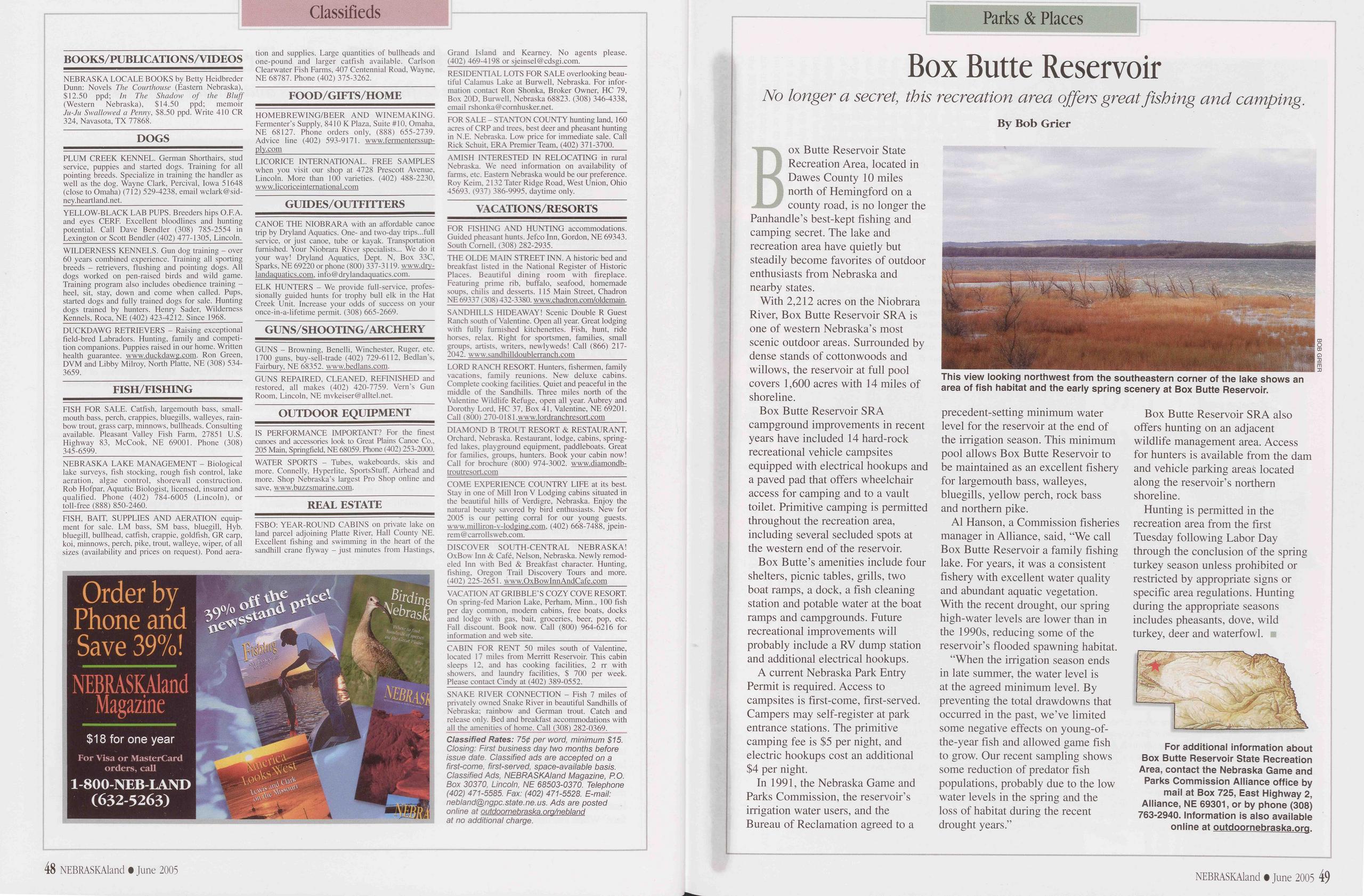
Classifieds
BOOKS/PUBLIC ATION S/VIDEOS NEBRASKA LOCALE BOOKS by Betty Heidbreder Dunn: Novels The Courthouse (Eastern Nebraska), $12.50 ppd; In The Shadow of the Bluff (Western Nebraska), $14.50 ppd; memoir Ju-Ju Swallowed a Penny, $8.50 ppd. Write 410 CR 324, Navasota, TX 77868. DOGS PLUM CREEK KENNEL. German Shorthairs, stud service, puppies and started dogs. Training for all pointing breeds. Specialize in training the handler as well as the dog. Wayne Clark, Percival, Iowa 51648 (close to Omaha) (712) 529-4238, email wclark@sid- ney.heartland.net.___________________________ YELLOW-BLACK LAB PUPS. Breeders hips O.F.A. and eyes CERF. Excellent bloodlines and hunting potential. Call Dave Bendler (308) 785-2554 in Lexington or Scott Bendler (402) 477-1305, Lincoln. WILDERNESS KENNELS. Gun dog training - over 60 years combined experience. Training all sporting breeds - retrievers, flushing and pointing dogs. All dogs worked on pen-raised birds and wild game. Training program also includes obedience training - heel, sit, stay, down and come when called. Pups, started dogs and fully trained dogs for sale. Hunting dogs trained by hunters. Henry Sader, Wilderness Kennels, Roca, NE (402) 423-4212. Since 1968. DUCKDAWG RETRIEVERS - Raising exceptional field-bred Labradors. Hunting, family and competi- tion companions. Puppies raised in our home. Written health guarantee, www.duckdawg.com. Ron Green, DVM and Libby Milroy, North Platte, NE (308) 534- 3659. FISH/FISHING FISH FOR SALE. Catfish, largemouth bass, small- mouth bass, perch, crappies, bluegills, walleyes, rain- bow trout, grass carp, minnows, bullheads. Consulting available. Pleasant Valley Fish Farm, 27851 U.S. Highway 83, McCook, NE 69001. Phone (308) 345-6599. NEBRASKA LAKE MANAGEMENT - Biological lake surveys, fish stocking, rough fish control, lake aeration, algae control, shorewall construction. Rob Hofpar, Aquatic Biologist, licensed, insured and qualified. Phone (402) 784-6005 (Lincoln), or toll-free (888) 850-2460. FISH, BAIT, SUPPLIES AND AERATION equip- ment for sale. LM bass, SM bass, bluegill, Hyb. bluegill, bullhead, catfish, crappie, goldfish, GR carp, koi, minnows, perch, pike, trout, walleye, wiper, of all sizes (availability and prices on request). Pond aera- tion and supplies. Large quantities of bullheads and one-pound and larger catfish available. Carlson Clearwater Fish Farms, 407 Centennial Road, Wayne, NE 68787. Phone (402) 375-3262. FOOD/GIFTS/HOME HOMEBREWING/BEER AND WINEMAKING. Fermenter’s Supply, 8410 K Plaza, Suite #10, Omaha, NE 68127. Phone orders only, (888) 655-2739. Advice line (402) 593-9171. www.fermenterssup- ply.com LICORICE INTERNATIONAL. FREE SAMPLES when you visit our shop at 4728 Prescott Avenue, Lincoln. More than 100 varieties. (402) 488-2230, www.licoriceintemational.com GUIDES/OUTFITTERS CANOE THE NIOBRARA with an affordable canoe trip by Dryland Aquatics. One- and two-day trips...full service, or just canoe, tube or kayak. Transportation furnished. Your Niobrara River specialists... We do it your way! Dryland Aquatics, Dept. N, Box 33C, Sparks, NE 69220 or phone (800) 337-3119. www.drv- landaquatics.com, info@drylandaquatics.com. ELK HUNTERS - We provide full-service, profes- sionally guided hunts for trophy bull elk in the Hat Creek Unit. Increase your odds of success on your once-in-a-lifetime permit. (308) 665-2669. GUNS/SHOOTING/ARCHERY GUNS - Browning, Benelli, Winchester, Ruger, etc. 1700 guns, buy-sell-trade (402) 729-6112, Bedlan’s, Fairbury, NE 68352. www.bedlans.com. GUNS REPAIRED, CLEANED, REFINISHED and restored, all makes (402) 420-7759. Vem’s Gun Room, Lincoln, NE mvkeiser@alltel.net. OUTDOOR EQUIPMENT IS PERFORMANCE IMPORTANT? For the finest canoes and accessories look to Great Plains Canoe Co., 205 Main, Springfield, NE 68059. Phone (402) 253-2000. WATER SPORTS - Tubes, wakeboards, skis and more. Connelly, Hyperlite, SportsStuff, Airhead and more. Shop Nebraska’s largest Pro Shop online and save, www.buzzsmarine.com. REAL ESTATE FSBO: YEAR-ROUND CABINS on private lake on land parcel adjoining Platte River, Hall County NE. Excellent fishing and swimming in the heart of the sandhill crane flyway - just minutes from Hastings, Grand Island and Kearney. No agents please. (402) 469-4198 or sjeinsel@cdsgi.com. RESIDENTIAL LOTS FOR SALE overlooking beau- tiful Calamus Lake at Burwell, Nebraska. For infor- mation contact Ron Shonka, Broker Owner, HC 79, Box 20D, Burwell, Nebraska 68823. (308) 346-4338, email rshonka@comhusker.net. FOR SALE - STANTON COUNTY hunting land, 160 acres of CRP and trees, best deer and pheasant hunting in N.E. Nebraska. Low price for immediate sale. Call Rick Schuit, ERA Premier Team, (402) 371-3700. AMISH INTERESTED IN RELOCATING in rural Nebraska. We need information on availability of farms, etc. Eastern Nebraska would be our preference. Roy Keim, 2132 Tater Ridge Road, West Union, Ohio 45693. (937) 386-9995, daytime only. VACATIONS/RESORTS FOR FISHING AND HUNTING accommodations. Guided pheasant hunts. Jefco Inn, Gordon, NE 69343. South Cornell, (308) 282-2935. THE OLDE MAIN STREET INN. A historic bed and breakfast listed in the National Register of Historic Places. Beautiful dining room with fireplace. Featuring prime rib, buffalo, seafood, homemade soups, chilis and desserts. 115 Main Street, Chadron NE 69337 (308) 432-3380. www.chadron.com/oldemain. SANDHILLS HIDEAWAY! Scenic Double R Guest Ranch south of Valentine. Open all year. Great lodging with fully furnished kitchenettes. Fish, hunt, ride horses, relax. Right for sportsmen, families, small groups, artists, writers, newlyweds! Call (866) 217- 2042. www.sandhilldoublerranch.com LORD RANCH RESORT. Hunters, fishermen, family vacations, family reunions. New deluxe cabins. Complete cooking facilities. Quiet and peaceful in the middle of the Sandhills. Three miles north of the Valentine Wildlife Refuge, open all year. Aubrey and Dorothy Lord, HC 37, Box 41, Valentine, NE 69201. Call (800) 270-018Lwww.lordranchresort.com DIAMOND B TROUT RESORT & RESTAURANT, Orchard, Nebraska. Restaurant, lodge, cabins, spring- fed lakes, playground equipment, paddleboats. Great for families, groups, hunters. Book your cabin now! Call for brochure (800) 974-3002. www.diamondb- troutresort.com COME EXPERIENCE COUNTRY LIFE at its best. Stay in one of Mill Iron V Lodging cabins situated in the beautiful hills of Verdigre, Nebraska. Enjoy the natural beauty savored by bird enthusiasts. New for 2005 is our petting corral for our young guests. www.milliron-v-lodging.com. (402) 668-7488, jpein- rem@carrollsweb.com. DISCOVER SOUTH-CENTRAL NEBRASKA! OxBow Inn & Cafe, Nelson, Nebraska. Newly remod- eled Inn with Bed & Breakfast character. Hunting, fishing, Oregon Trail Discovery Tours and more. (402) 225-2651. www.OxBowInnAndCafe.com VACATION AT GRIBBLE’S COZY COVE RESORT. On spring-fed Marion Lake, Perham, Minn., 100 fish per day common, modem cabins, free boats, docks and lodge with gas, bait, groceries, beer, pop, etc. Fall discount. Book now. Call (800) 964-6216 for information and web site. CABIN FOR RENT 50 miles south of Valentine, located 17 miles from Merritt Reservoir. This cabin sleeps 12, and has cooking facilities, 2 rr with showers, and laundry facilities, $ 700 per week. Please contact Cindy at (402) 389-0552. SNAKE RIVER CONNECTION - Fish 7 miles of privately owned Snake River in beautiful Sandhills of Nebraska; rainbow and German trout. Catch and release only. Bed and breakfast accommodations with all the amenities of home. Call (308) 282-0369. Classified Rates: 750 per word, minimum $15. Closing: First business day two months before issue date. Classified ads are accepted on a first-come, first-served, space-available basis. Classified Ads, NEBRASKAIand Magazine, P.O. Box 30370. Lincoln, NE 68503-0370. Telephone (402) 471-5585. Fax: (402) 471-5528. E-mail: nebland@ngpc.state, ne. us. Ads are posted online at outdoornebraska. ora/nebland at no additional charge. 48 NEBRASKAIand • June 2005Parks & Places
Box Butte Reservoir
No longer a secret, this recreation area offers great fishing and camping.
Box Butte Reservoir State Recreation Area, located in Dawes County 10 miles north of Hemingford on a county road, is no longer the Panhandle’s best-kept fishing and camping secret. The lake and recreation area have quietly but steadily become favorites of outdoor enthusiasts from Nebraska and nearby states.
With 2,212 acres on the Niobrara River, Box Butte Reservoir SRA is one of western Nebraska’s most scenic outdoor areas. Surrounded by dense stands of cottonwoods and willows, the reservoir at full pool covers 1,600 acres with 14 miles of shoreline.
Box Butte Reservoir SRA campground improvements in recent years have included 14 hard-rock recreational vehicle campsites equipped with electrical hookups and a paved pad that offers wheelchair access for camping and to a vault toilet. Primitive camping is permitted throughout the recreation area, including several secluded spots at the western end of the reservoir.
Box Butte’s amenities include four shelters, picnic tables, grills, two boat ramps, a dock, a fish cleaning station and potable water at the boat ramps and campgrounds. Future recreational improvements will probably include a RV dump station and additional electrical hookups.
A current Nebraska Park Entry Permit is required. Access to campsites is first-come, first-served. Campers may self-register at park entrance stations. The primitive camping fee is $5 per night, and electric hookups cost an additional $4 per night.
In 1991, the Nebraska Game and Parks Commission, the reservoir’s irrigation water users, and the Bureau of Reclamation agreed to a
Al Hanson, a Commission fisheries manager in Alliance, said, "We call Box Butte Reservoir a family fishing lake. For years, it was a consistent fishery with excellent water quality and abundant aquatic vegetation. With the recent drought, our spring high-water levels are lower than in the 1990s, reducing some of the reservoir’s flooded spawning habitat.
"When the irrigation season ends in late summer, the water level is at the agreed minimum level. By preventing the total drawdowns that occurred in the past, we’ve limited some negative effects on young-of- the-year fish and allowed game fish to grow. Our recent sampling shows some reduction of predator fish populations, probably due to the low water levels in the spring and the loss of habitat during the recent drought years.”
Box Butte Reservoir SRA also offers hunting on an adjacent wildlife management area. Access for hunters is available from the dam and vehicle parking areas located along the reservoir’s northern shoreline.
Hunting is permitted in the recreation area from the first Tuesday following Labor Day through the conclusion of the spring turkey season unless prohibited or restricted by appropriate signs or specific area regulations. Hunting during the appropriate seasons includes pheasants, dove, wild turkey, deer and waterfowl.
Portraits from the Past
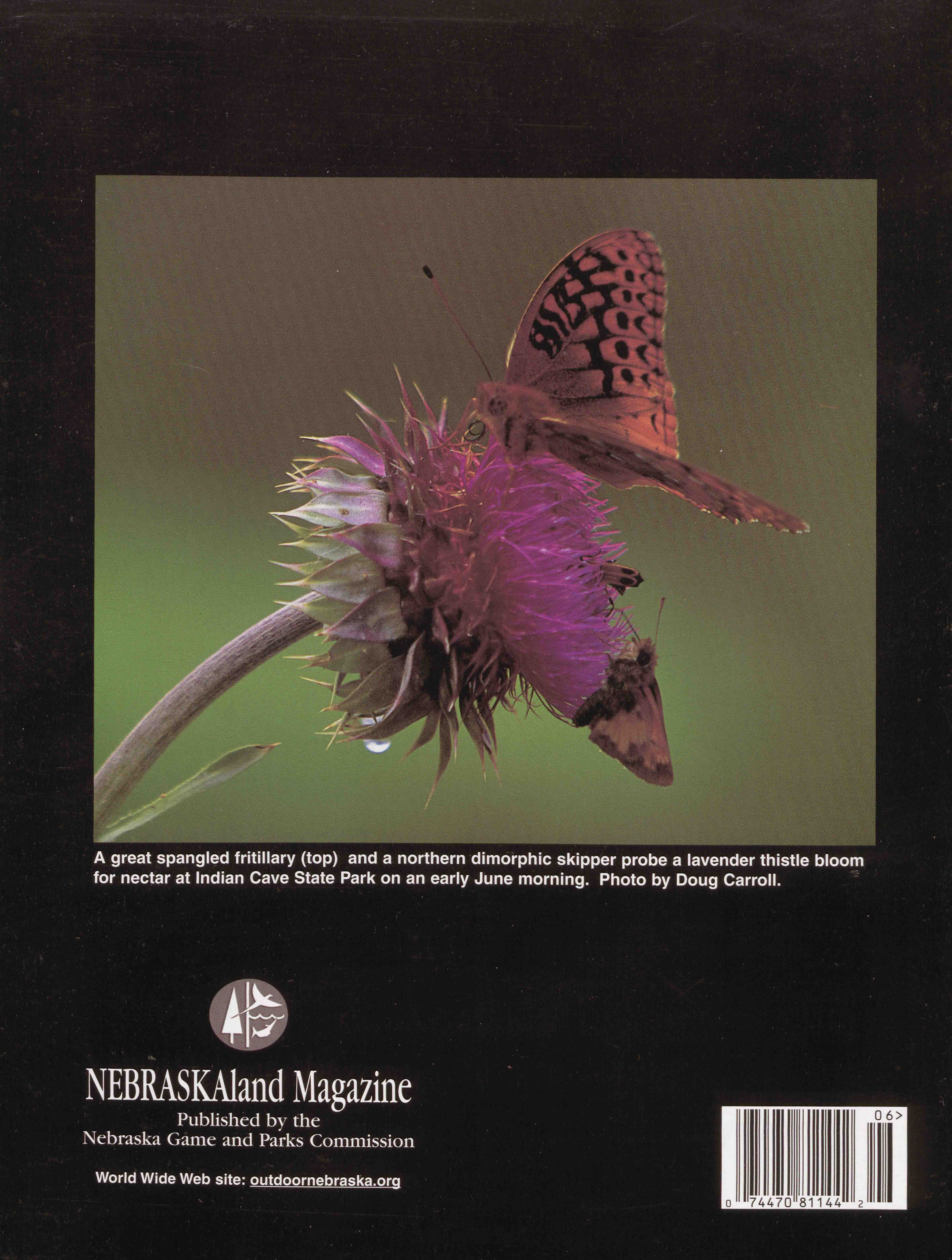
Position: 769 (14 views)