Volume 73, Issue 9, 1995
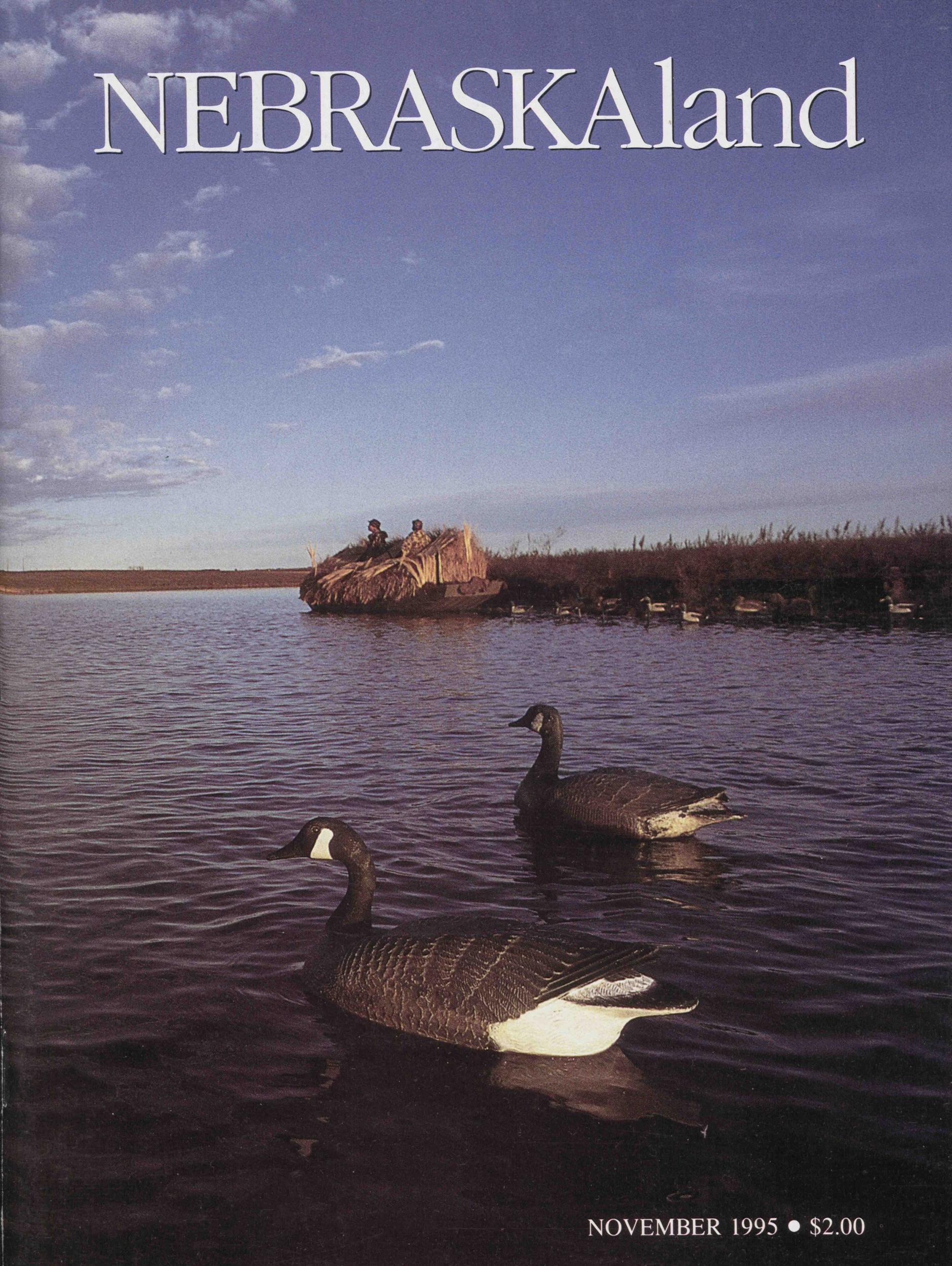
NEBRASKAland
NOVEMBER 1995 $2.00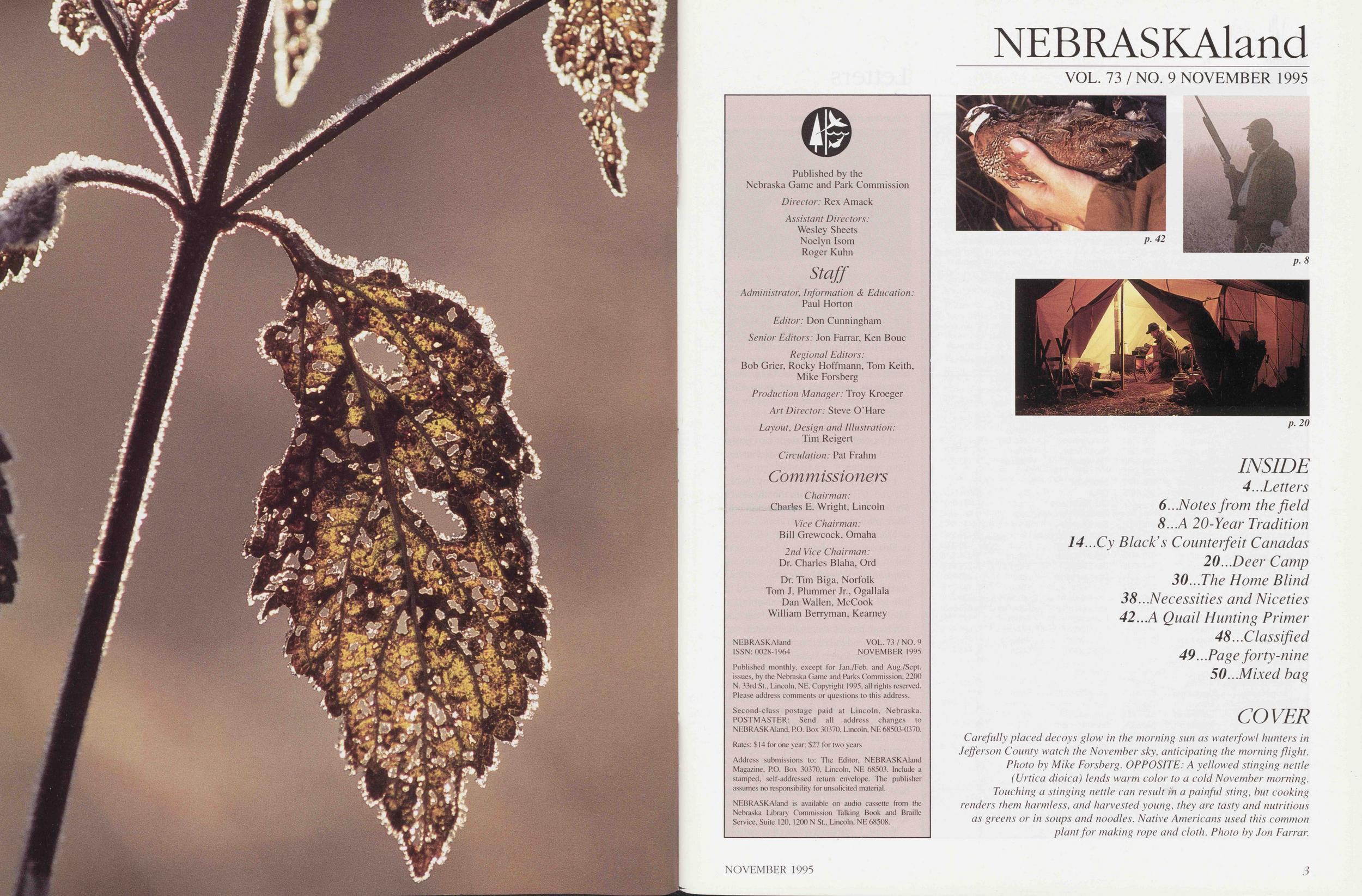
NEBRASKAland
VOL. 73 / NO. 9 NOVEMBER 1995 Published by the Nebraska Game and Park Commission Director: Rex Amack Assistant Directors: Wesley Sheets Noelyn Isom Roger Kuhn Staff Administrator, Information & Education: Paul Horton Editor: Don Cunningham Senior Editors: Jon Farrar, Ken Bouc Regional Editors: Bob Grier, Rocky Hoffmann, Tom Keith, Mike Forsberg Production Manager: Troy Kroeger Art Director: Steve O'Hare Layout, Design and Illustration: Tim Reigert Circulation: Pat Frahm Commissioners Chairman: Charles E. Wright, Lincoln Vice Chairman : Bill Grewcock, Omaha 2nd Vice Chairman: Dr. Charles Blaha, Ord Dr. Tim Biga, Norfolk Tom J. Plummer Jr., Ogallala Dan Wallen, McCook William Berryman, Kearney NEBRASKAIand ISSN: 0028-1964 VOL. 73 / NO. 9 NOVEMBER 1995 Published monthly, except for J an ./Feb. and Aug./Sept. issues, by the Nebraska Game and Parks Commission. 2200 N. 33rd St., Lincoln, NE. Copyright 1995. all rights reserved. Please address comments or questions to this address. Second-class postage paid at Lincoln, Nebraska. POSTMASTER: Send all address changes to NEBRASKAIand. P.O. Box 30370. Lincoln. NE 68503-0370. Rates: $14 for one year; $27 for two years Address submissions to: The Editor, NEBRASKAIand Magazine, P.O. Box 30370, Lincoln. NE 68503. Include a stamped, self-addressed return envelope. The publisher assumes no responsibility for unsolicited material. NEBRASKAIand is available on audio cassette from the Nebraska Library Commission Talking Book and Braille Service, Suite 120, 1200 N St., Lincoln, NE 68508.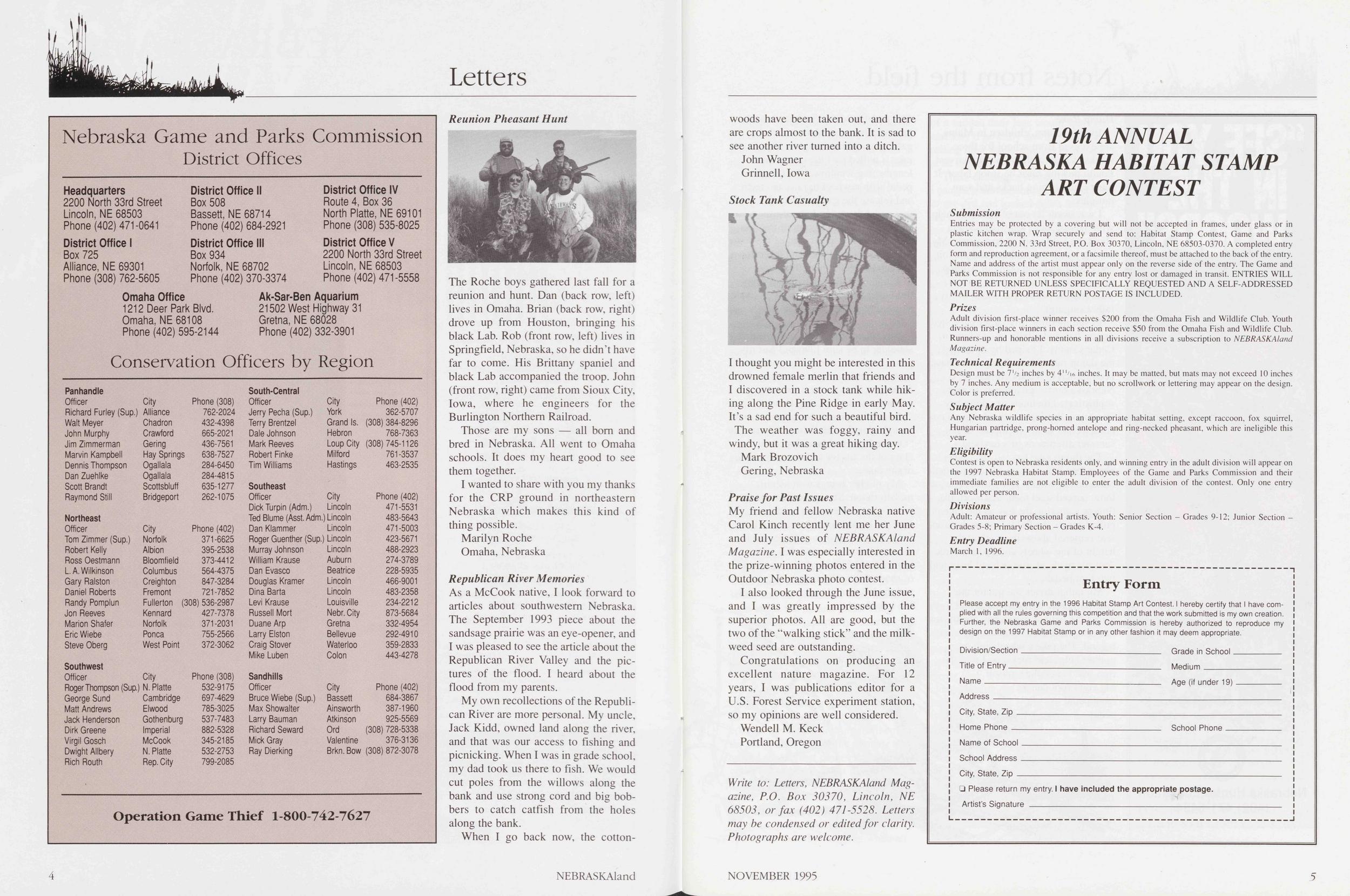
Letters
Headquarters 2200 North 33rd Street Lincoln, NE 68503 Phone (402)471-0641 District Office I Box 725 Alliance, NE 69301 Phone (308)762-5605 District Office II Box 508 Bassett, NE 68714 Phone (402)684-2921 District Office III Box 934 Norfolk, NE 68702 Phone (402)370-3374 District Office IV Route 4, Box 36 North Platte, NE 69101 Phone (308)535-8025 District Office V 2200 North 33rd Street Lincoln, NE 68503 Phone (402)471-5558 Omaha Office 1212 Deer Park Blvd. Omaha, NE 68108 Phone (402) 595-2144 Ak-Sar-Ben Aquarium 21502 West Highway 31 Gretna, NE 68028 Phone (402) 332-3901 Conservation Officers by Region Panhandle South-Central Officer City Phone (308) Officer City Phone (402) Richard Furley (Sup.; Alliance 762-2024 Jerry Pecha (Sup.) York 362-5707 Walt Meyer Chadron 432-4398 Terry Brentzel Grand Is. (308) 384-8296 John Murphy Crawford 665-2021 Dale Johnson Hebron 768-7363 Jim Zimmerman Gering 436-7561 Mark Reeves Loup City (308)745-1126 Marvin Kampbell Hay Springs 638-7527 Robert Finke Milford 761-3537 Dennis Thompson Ogallala 284-6450 Tim Williams Hastings 463-2535 Dan Zuehlke Ogallala 284-4815 Scott Brandt Scottsbluff 635-1277 Southeast Raymond Still Bridgeport 262-1075 Officer City Phone (402) Dick Turpin (Adm.) Lincoln 471-5531 Northeast Ted Blume (Asst. Adm.) Lincoln 483-5643 Officer City Phone (402) Dan Klammer Lincoln 471-5003 Tom Zimmer (Sup.) Norfolk 371-6625 Roger Guenther (Sup.) Lincoln 423-5671 Robert Kelly Albion 395-2538 Murray Johnson Lincoln 488-2923 Ross Oestmann Bloomfield 373-4412 William Krause Auburn 274-3789 L.A.Wilkinson Columbus 564-4375 Dan Evasco Beatrice 228-5935 Gary Ralston Creighton 847-3284 Douglas Kramer Lincoln 466-9001 Daniel Roberts Fremont 721-7852 Dina Barta Lincoln 483-2358 Randy Pomplun Fullerton (308) 536-2987 Levi Krause Louisville 234-2212 Jon Reeves Kennard 427-7378 Russell Mort Nebr. City 873-5684 Marion Shafer Norfolk 371-2031 Duane Arp Gretna 332-4954 Eric Wiebe Ponca 755-2566 Larry Elston Bellevue 292-4910 Steve Oberg West Point 372-3062 Craig Stover Waterloo 359-2833 Mike Luben Colon 443-4278 Southwest Officer City Phone (308) Sandhills Roger Thompson (Sup.) N. Platte 532-9175 Officer City Phone (402) George Sund Cambridge 697-4629 Bruce Wiebe (Sup.) Bassett 684-3867 Matt Andrews Elwood 785-3025 Max Showalter Ainsworth 387-1960 Jack Henderson Gothenburg 537-7483 Larry Bauman Atkinson 925-5569 Dirk Greene Imperial 882-5328 Richard Seward Ord (308) 728-5338 Virgil Gosch McCook 345-2185 Mick Gray Valentine 376-3136 Dwight Allbery N. Platte 532-2753 Ray Dierking Brkn. Bow (308) 872-3078 Rich Routh Rep. City 799-2085 Operation Game Thief 1-800-742-7627 Reunion Pheasant HuntThe Roche boys gathered last fall for a reunion and hunt. Dan (back row, left) lives in Omaha. Brian (back row, right) drove up from Houston, bringing his black Lab. Rob (front row, left) lives in Springfield, Nebraska, so he didn't have far to come. His Brittany spaniel and black Lab accompanied the troop. John (front row, right) came from Sioux City, Iowa, where he engineers for the Burlington Northern Railroad.
Those are my sons — all born and bred in Nebraska. All went to Omaha schools. It does my heart good to see them together.
I wanted to share with you my thanks for the CRP ground in northeastern Nebraska which makes this kind of thing possible.
Marilyn Roche Omaha, Nebraska Republican River MemoriesAs a McCook native, I look forward to articles about southwestern Nebraska. The September 1993 piece about the sandsage prairie was an eye-opener, and I was pleased to see the article about the Republican River Valley and the pictures of the flood. I heard about the flood from my parents.
My own recollections of the Republican River are more personal. My uncle, Jack Kidd, owned land along the river, and that was our access to fishing and picnicking. When I was in grade school, my dad took us there to fish. We would cut poles from the willows along the bank and use strong cord and big bobbers to catch catfish from the holes along the bank.
When I go back now, the cottonwoods 4 NEBRASKAland have been taken out, and there are crops almost to the bank. It is sad to see another river turned into a ditch.
John Wagner Grinnell, Iowa Stock Tank CasualtyI thought you might be interested in this drowned female merlin that friends and I discovered in a stock tank while hiking along the Pine Ridge in early May. It's a sad end for such a beautiful bird.
The weather was foggy, rainy and windy, but it was a great hiking day.
Mark Brozovich Gering, Nebraska Praise for Past IssuesMy friend and fellow Nebraska native Carol Kinch recently lent me her June and July issues of NEBRASKAland Magazine. I was especially interested in the prize-winning photos entered in the Outdoor Nebraska photo contest.
I also looked through the June issue, and I was greatly impressed by the superior photos. All are good, but the two of the "walking stick" and the milkweed seed are outstanding.
Congratulations on producing an excellent nature magazine. For 12 years, I was publications editor for a U.S. Forest Service experiment station, so my opinions are well considered.
Wendell M. Keck Portland, Oregon Write to: Letters, NEBRASKAland Magazine, P.O. Box 30370, Lincoln, NE 68503, or fax (402) 471-5528. Letters may be condensed or edited for clarity. Photographs are welcome. 19th ANNUAL NEBRASKA HABITAT STAMP ART CONTEST Submission Entries may be protected by a covering but will not be accepted in frames, under glass or in plastic kitchen wrap. Wrap securely and send to: Habitat Stamp Contest, Game and Parks Commission, 2200 N. 33rd Street, P.O. Box 30370, Lincoln, NE 68503-0370. A completed entry form and reproduction agreement, or a facsimile thereof, must be attached to the back of the entry. Name and address of the artist must appear only on the reverse side of the entry. The Game and Parks Commission is not responsible for any entry lost or damaged in transit. ENTRIES WILL NOT BE RETURNED UNLESS SPECIFICALLY REQUESTED AND A SELF-ADDRESSED MAILER WITH PROPER RETURN POSTAGE IS INCLUDED. Prizes Adult division first-place winner receives $200 from the Omaha Fish and Wildlife Club. Youth division first-place winners in each section receive $50 from the Omaha Fish and Wildlife Club. Runners-up and honorable mentions in all divisions receive a subscription to NEBRASKAland Magazine. Technical Requirements Design must be 7'/2 inches by 4n/w inches. It may be matted, but mats may not exceed 10 inches by 7 inches. Any medium is acceptable, but no scrollwork or lettering may appear on the design. Color is preferred. Subject Matter Any Nebraska wildlife species in an appropriate habitat setting, except raccoon, fox squirrel, Hungarian partridge, prong-horned antelope and ring-necked pheasant, which are ineligible this year. Eligibility Contest is open to Nebraska residents only, and winning entry in the adult division will appear on the 1997 Nebraska Habitat Stamp. Employees of the Game and Parks Commission and their immediate families are not eligible to enter the adult division of the contest. Only one entry allowed per person. Divisions Adult: Amateur or professional artists. Youth: Senior Section - Grades 9-12; Junior Section Grades 5-8; Primary Section - Grades K-4. Entry Deadline March 1, 1996. Entry Form Please accept my entry in the 1996 Habitat Stamp Art Contest. I hereby certify that I have complied with all the rules governing this competition and that the work submitted is my own creation. Further, the Nebraska Game and Parks Commission is hereby authorized to reproduce my design on the 1997 Habitat Stamp or in any other fashion it may deem appropriate. Division/Section Title of Entry Name Grade in School Medium Age (if under 19) Address City, State, Zip Home Phone School Phone Name of School School Address City, State, Zip Please return my entry. I have included the appropriate postage. Artist's Signature NOVEMBER 1995 5
Notes from the field
Nebraska Hunter Education (402)471-5434 Dump RakeEvery autumn, children in Maine are excused from school for three weeks to help with the potato harvest. Potato picking must be stoop labor. It must cause aching backs and sore muscles.
I was never let out of school to help with harvest, but I know something about the hard work of harvesting. My aching joints and sunburn and the jolt and clatter and iron clang of a dump rake are what I know about harvest. That and the occasional sound of my father singing.
In summertime, my father harvested prairie hay and alfalfa on our farm in Cedar County. I helped by operating the dump rake. Many dump rakes have been retired to weedy corners of Nebraska farms, giving way to more sophisticated methods of raking hay into rows. But for me, the dump rake is at the center of my memories of hot summer afternoons in a hayfield.
The dump rake has tall steel wheels about four feet in diameter. Suspended between the wheels is a 10-foot row of long, curved steel teeth that work like fingers gathering the hay as the rake is pulled across the field. I sit on the iron seat centered above the teeth at the height of the wheels and operate three controls made of iron: a hand lever and two foot pedals.
My father drives the tractor that pulls the rake. We move back and forth across the field of mown hay, the tractor chugging and the rake clattering along behind. The rake's wheels jolt over gopher holes and rocks, so I grip the iron seat to stabilize myself. My right foot dances from pedal to pedal. One pedal holds the rake teeth to the ground where they bounce lightly, gathering and tumbling the hay. As the rake is pulled past the end of each lengthening windrow, I hit the other pedal with my heel to raise the teeth and release the gathered hay. If I hold that pedal down too long, the teeth smash against the bottom of the iron seat. I keep my fingers out of the way. Sometimes I hold the hand lever down to keep the teeth up a little longer.
I'm good at this. The rows of hay my father and I lay across the field are as straight as they can be in a Nebraska wind.
My father often looks at me over his shoulder to be sure I haven't lost my perch on the iron seat. His grin interrupts whatever song he's singing. My father is a baritone who joins the community choir to sing Handel's "Messiah" at Easter. Sometimes I hear him singing the "Hallelujah Chorus" or "On the Road to Mandalay" over the chug of the tractor and the iron clatter of the rake.
My mother brings us lunch in midafternoon. She knows that Dad prefers hot coffee, not a cold drink, to cure the humid heat of the dusty hayfield. She brings orange Kool-Aid for me, and baloney sandwiches and brownies. The three of us sit in the bit of shade thrown by the tractor's body, and the hay stubble pricks our ankles. We talk about the
Those long harvest afternoons taught me something about what my parents did for a living. What I learned in the hayfield would have justified being let out of school.
Carolyn Johns en Close EncountersIt was late November, 15 degrees and windy. Low ragged clouds raced southward across the sun, painting a frigid chiaroscuro on the brown landscape below and against clear blue sky above. Fall rains had filled the Rainwater Basin marshes, and now bulrushes, smartweed and cattails emerged from a clear polished floor of ice.
There were no other hunters on the marsh. The early season out-of-staters had gone back home to flush quail from Kansas Osage-orange fencerows or coax ducks down into the flooded pin-oak flats of Arkansas. The distant whine of a chainsaw told us what at least one local hunter was doing, and unless he was just topping off the woodpile, he had started about three weeks late.
But they weren't missing much. The wind made it hard for the dogs to find scent, and the pheasants were holding tight in the tall upland grass. They would flush unexpectedly, clear the big bluestem heads, then catch the wind. Two seconds later they'd be 400 yards away dropping down among the icebound muskrat lodges and dense vegetation of the marsh.
We had flushed a group of five or six roosters, marking where they landed, and we were searching for them on the ice, walking with that clumsy, armspread shuffle that makes it hard to get collected and take a shot if you do find a bird. The dogs weren't faring any better, but their delicate sidling and dogged, lip-biting concentration were funny to watch. We were careful not to embarrass them by laughing when all of a sudden their legs would splay out and they'd go belly down on the ice, rolling their white-rimmed eyes back at us to see if we were watching.
Then, crossing a stretch of open ice, I caught a movement out of the corner of my eye and looked down in time to see a dark form shoot past under the ice directly between my boots. A moment later I made out a muskrat run, a paler yellow-green trace of slightly deeper water between the ice and the muddy bottom of the marsh or, perhaps, a half tunnel of slightly thinner ice, a vaulted cloister hollowed by the muskrat's back.
It was easy to follow, and I walked carefully, pheasants forgotten, imagining the throb of my footsteps resonating eerily through the ice. The run crossed open ice and plunged into a stand of cattails, a six-inch-wide path of summer foraging or trail clearing. I caught another glimpse of movement ahead of me and hurried forward.
The muskrat swam below me, dense brown fur pressed up against the ice, back legs extended, scaly tail a graceful serpentine trailing out behind. There couldn't have been more than three inches of clear ice between us, and in it, suspended between the muskrat and me, a galaxy of leaves and seeds, planets whirling in an icy void. An empty shotgun shell hung weightless in the ice, a silent, empty capsule, the lifeless, frozen hull of an exploratory mission.
As I approached, the muskrat stopped, trusting stillness for his camouflage. I slowly crouched down for a closer look, a looming shadow, a great cloud blotting out the sun. He was so near the ice that I could see him clearly. His eyes were bright black beads, impenetrable. I can't imagine how mine looked to him.
Then he vanished, passing into some secret universe below the ice, beyond my reach or understanding, the two of us brought momentarily to the icy wall between us, then thrust apart and hurtled off on separate orbits.
Don Cunningham Wear the Patch for Wildlife Wear the 1996 Habitat Donor Patch and let everyone know you've done your part to help acquire and restore wildlife habitat. All proceeds from the Nebraska Habitat Donor Program go to the Wildlife Habitat Fund. Give $5 and receive the 1996 patch. Give $12.50 and receive the patch on a green cloth cap. Wildlife Habitat Donor Program Please send me: Donor Patches Donor Caps (patch attached) Name , Address City State Zip Enclose $5 for each patch (no cap). S12.50 for each cap (patch attached). Nebraska residents please add appropriate sales tax. Mail to: NEBRASKAland Magazine. P.O. Box 30370. Lincoln, NE 68503. For telephone orders (Visa or MasterCard only), call 1-800-NEB-LAND (632-5263) NOVEMBER 1995 7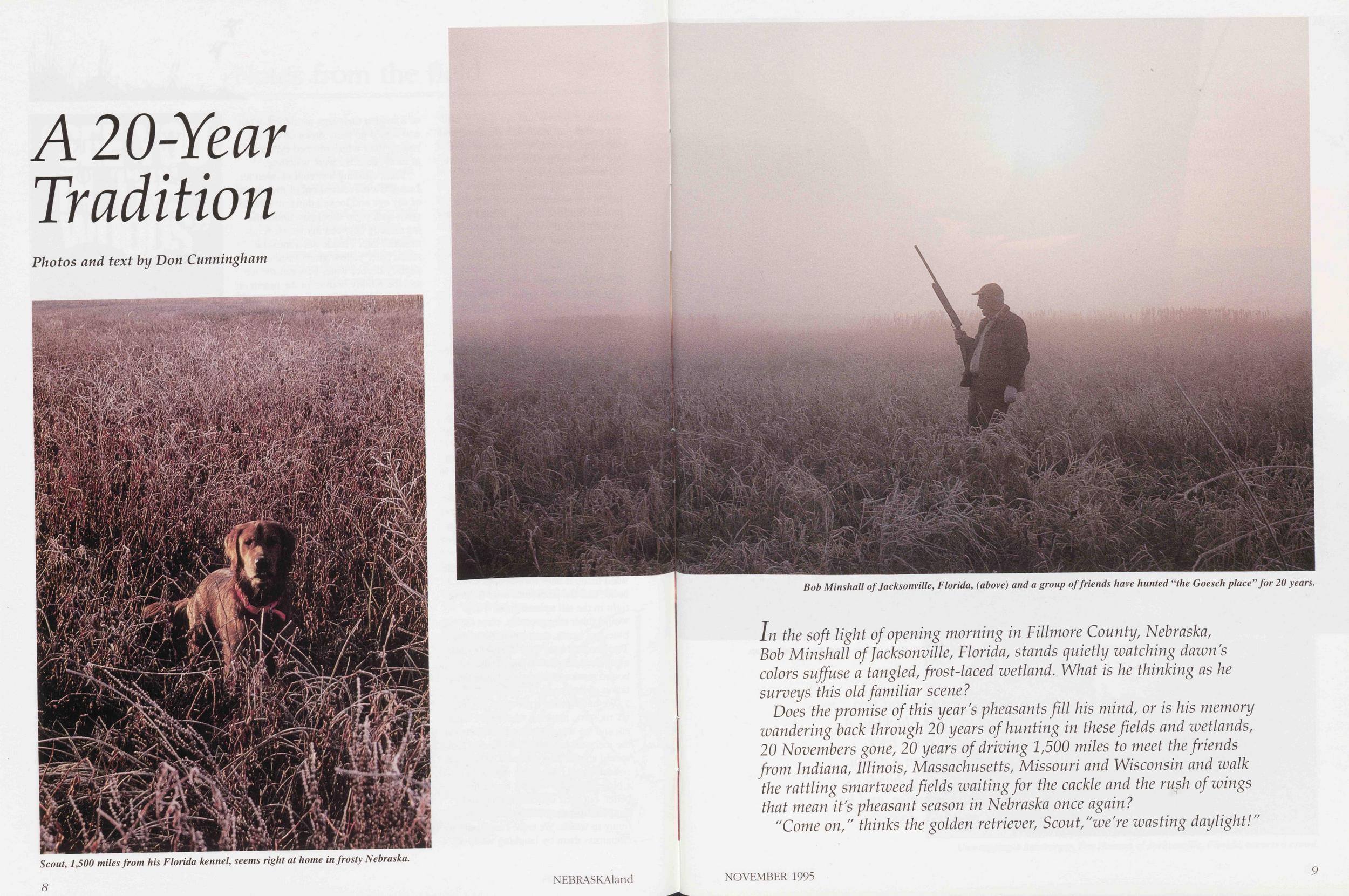
A 2 0-Year Tradition
Photos and text by Don CunninghamIn the soft light of opening morning in Fillmore County, Nebraska, Bob Minshall of Jacksonville, Florida, stands quietly watching dawn's colors suffuse a tangled, frost-laced wetland. What is he thinking as he surveys this old familiar scene?
Does the promise of this year's pheasants fill his mind, or is his memory wandering back through 20 years of hunting in these fields and wetlands, 20 Novembers gone, 20 years of driving 1,500 miles to meet the friends from Indiana, Illinois, Massachusetts, Missouri and Wisconsin and walk the rattling smartweed fields waiting for the cackle and the rush of wings that mean it's pheasant season in Nebraska once again?
"Come on," thinks the golden retriever, Scout,"we're wasting daylight!"
NOVEMBER 1995 9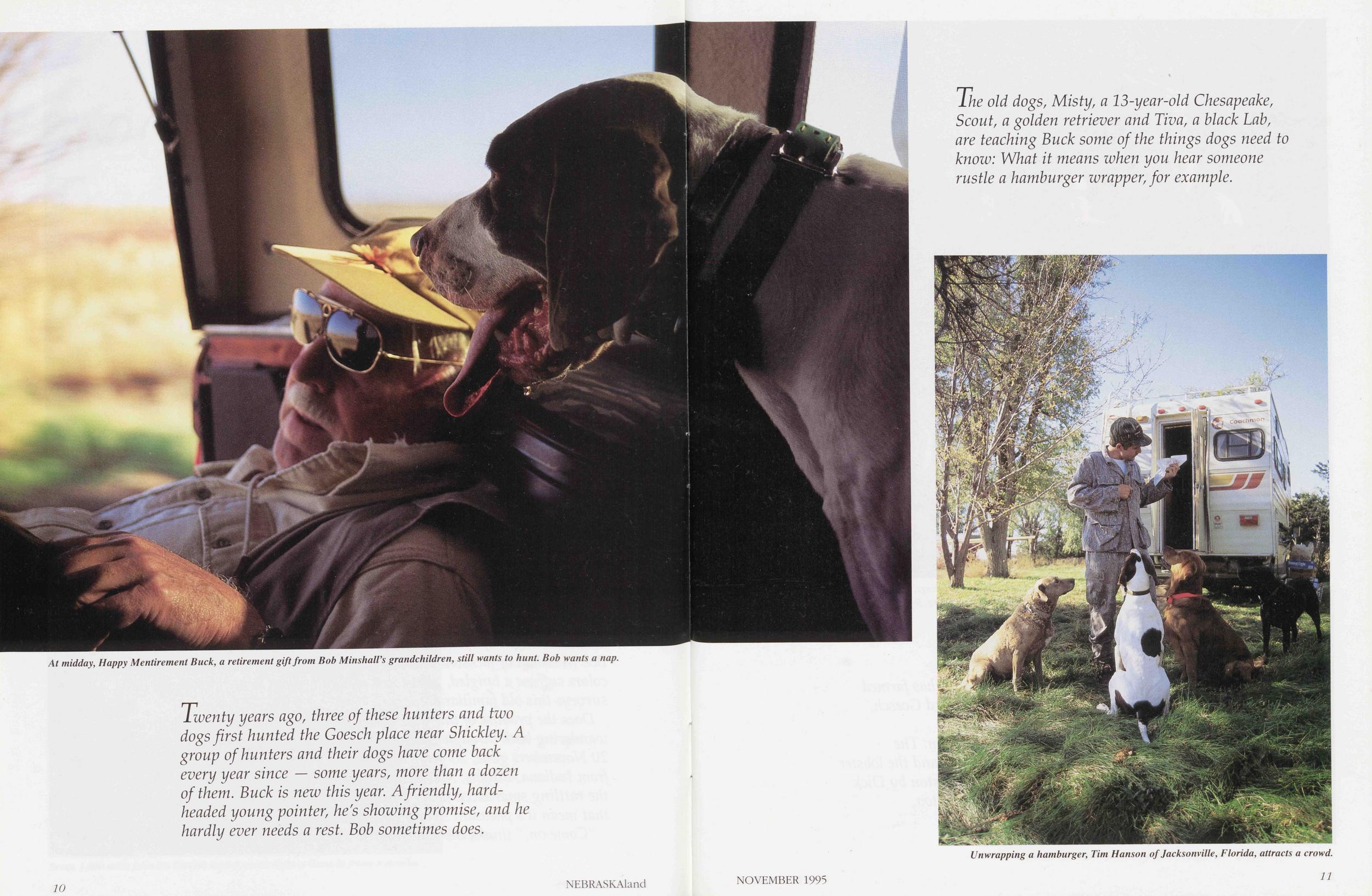
lwenty years ago, three of these hunters and two dogs first hunted the Goesch place near Shickley. A group of hunters and their dogs have come hack every year since — some years, more than a dozen of them. Buck is new this year. A friendly, hardheaded young pointer, he's showing promise, and he hardly ever needs a rest. Boh sometimes does.
10 NEBRASKAlandlhe old dogs, Misty, a 13-year-old Chesapeake, Scout, a golden retriever and Tiva, a black Lab, are teaching Buck some of the things dogs need to know: What it means when you hear someone rustle a hamburger wrapper, for example.
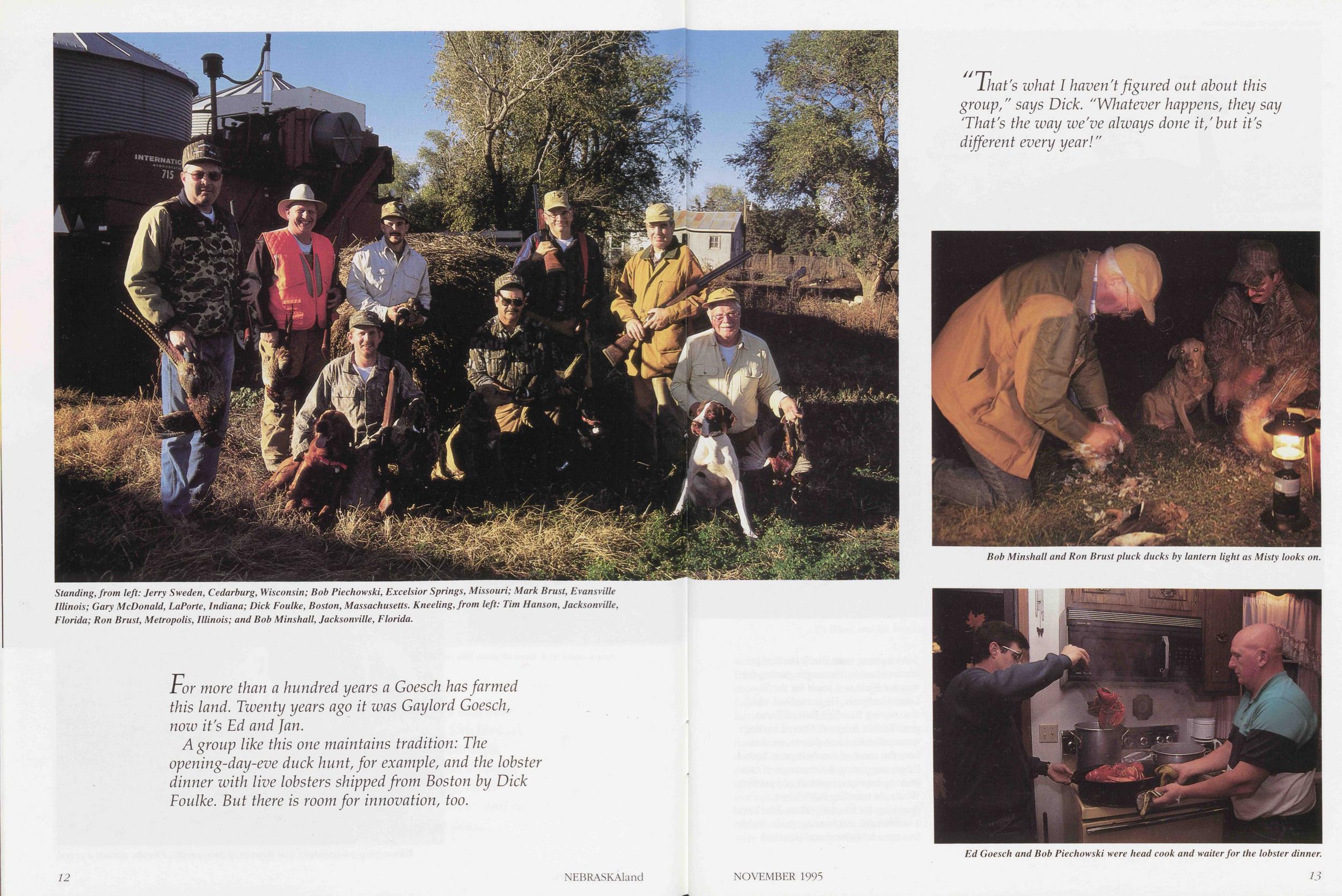
ror more than a hundred years a Goesch has farmed this land. Twenty years ago it was Gaylord Goesch, now it's Ed and Jan.
A group like this one maintains tradition: The opening-day-eve duck hunt, for example, and the lobster dinner with live lobsters shipped from Boston by Dick Foulke. But there is room for innovation, too.
12 NEBRASKAlandlhat's what I haven't figured out about this group," says Dick. "Whatever happens, they say 'That's the way we've always done it,'but it's different every year!"
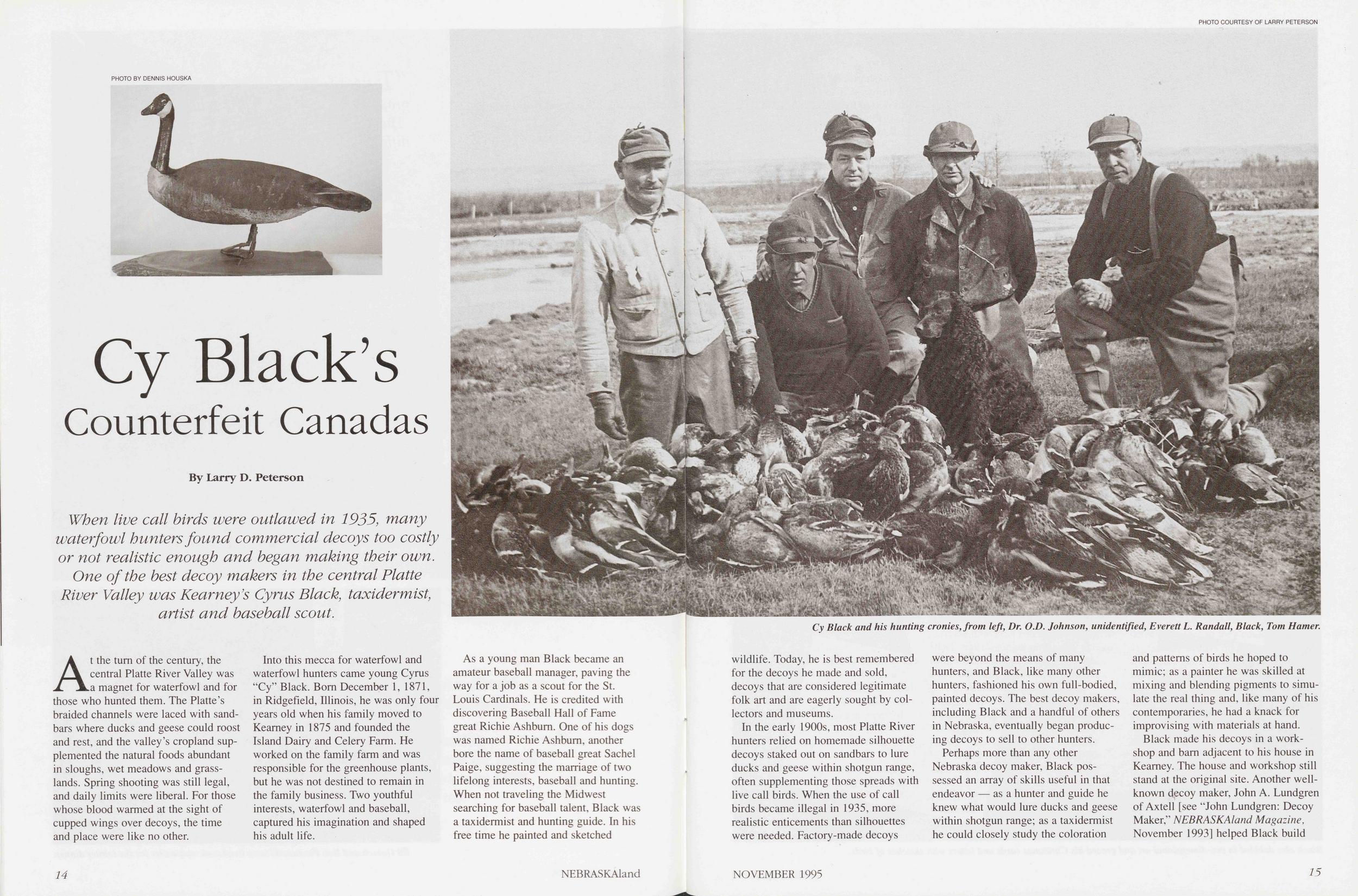
Cy Black's Counterfeit Canadas
By Larry D. Peterson When live call birds were outlawed in 1935, many waterfowl hunters found commercial decoys too costly or not realistic enough and began making their own. One of the best decoy makers in the central Platte River Valley was Kearney's Cyrus Black, taxidermist, artist and baseball scout.At the turn of the century, the central Platte River Valley was a magnet for waterfowl and for those who hunted them. The Platte's braided channels were laced with sandbars where ducks and geese could roost and rest, and the valley's cropland supplemented the natural foods abundant in sloughs, wet meadows and grasslands. Spring shooting was still legal, and daily limits were liberal. For those whose blood warmed at the sight of cupped wings over decoys, the time and place were like no other.
Into this mecca for waterfowl and waterfowl hunters came young Cyrus "Cy" Black. Born December 1, 1871, in Ridgefield, Illinois, he was only four years old when his family moved to Kearney in 1875 and founded the Island Dairy and Celery Farm. He worked on the family farm and was responsible for the greenhouse plants, but he was not destined to remain in the family business. Two youthful interests, waterfowl and baseball, captured his imagination and shaped his adult life.
As a young man Black became an amateur baseball manager, paving the way for a job as a scout for the St. Louis Cardinals. He is credited with discovering Baseball Hall of Fame great Richie Ashburn. One of his dogs was named Richie Ashburn, another bore the name of baseball great Sachel Paige, suggesting the marriage of two lifelong interests, baseball and hunting. When not traveling the Midwest searching for baseball talent, Black was a taxidermist and hunting guide. In his free time he painted and sketched 14 NEBRASKAland
In the early 1900s, most Platte River hunters relied on homemade silhouette decoys staked out on sandbars to lure ducks and geese within shotgun range, often supplementing those spreads with live call birds. When the use of call birds became illegal in 1935, more realistic enticements than silhouettes were needed. Factory-made decoys were beyond the means of many hunters, and Black, like many other hunters, fashioned his own full-bodied, painted decoys. The best decoy makers, including Black and a handful of others in Nebraska, eventually began producing decoys to sell to other hunters.
Perhaps more than any other Nebraska decoy maker, Black possessed an array of skills useful in that endeavor — as a hunter and guide he knew what would lure ducks and geese within shotgun range; as a taxidermist he could closely study the coloration and patterns of birds he hoped to mimic; as a painter he was skilled at mixing and blending pigments to simulate the real thing and, like many of his contemporaries, he had a knack for improvising with materials at hand.
Black made his decoys in a workshop and barn adjacent to his house in
Kearney. The house and workshop still
stand at the original site. Another well-known decoy maker, John A. Lundgren
of Axtell [see "John Lundgren: Decoy
Maker," NEBRASKAland Magazine,
November 1993] helped Black build
NOVEMBER 1995
15
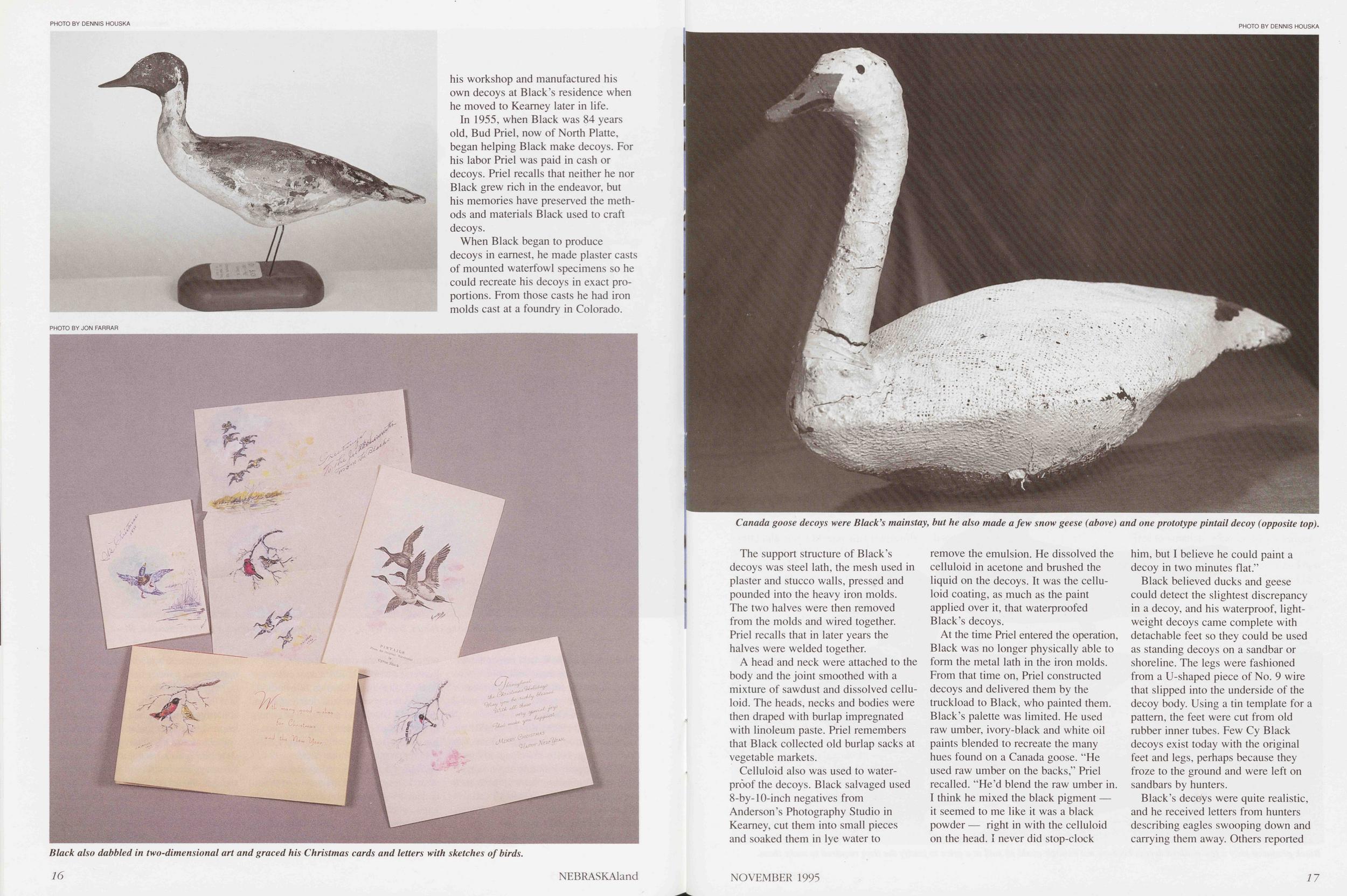
In 1955, when Black was 84 years old, Bud Priel, now of North Platte, began helping Black make decoys. For his labor Priel was paid in cash or decoys. Priel recalls that neither he nor Black grew rich in the endeavor, but his memories have preserved the methods and materials Black used to craft decoys.
When Black began to produce decoys in earnest, he made plaster casts of mounted waterfowl specimens so he could recreate his decoys in exact proportions. From those casts he had iron molds cast at a foundry in Colorado.
The support structure of Black's decoys was steel lath, the mesh used in plaster and stucco walls, pressed and pounded into the heavy iron molds. The two halves were then removed from the molds and wired together. Priel recalls that in later years the halves were welded together.
A head and neck were attached to the body and the joint smoothed with a mixture of sawdust and dissolved celluloid. The heads, necks and bodies were then draped with burlap impregnated with linoleum paste. Priel remembers that Black collected old burlap sacks at vegetable markets.
Celluloid also was used to water-proof the decoys. Black salvaged used 8-by-10-inch negatives from Anderson's Photography Studio in Kearney, cut them into small pieces and soaked them in lye water to remove the emulsion. He dissolved the celluloid in acetone and brushed the liquid on the decoys. It was the celluloid coating, as much as the paint applied over it, that waterproofed Black's decoys.
At the time Priel entered the operation, Black was no longer physically able to form the metal lath in the iron molds. From that time on, Priel constructed decoys and delivered them by the truckload to Black, who painted them. Black's palette was limited. He used raw umber, ivory-black and white oil paints blended to recreate the many hues found on a Canada goose. "He used raw umber on the backs," Priel recalled. "He'd blend the raw umber in. I think he mixed the black pigment it seemed to me like it was a black powder right in with the celluloid on the head. I never did stop-clock him, but I believe he could paint a decoy in two minutes flat."
Black believed ducks and geese could detect the slightest discrepancy in a decoy, and his waterproof, lightweight decoys came complete with detachable feet so they could be used as standing decoys on a sandbar or shoreline. The legs were fashioned from a U-shaped piece of No. 9 wire that slipped into the underside of the decoy body. Using a tin template for a pattern, the feet were cut from old rubber inner tubes. Few Cy Black decoys exist today with the original feet and legs, perhaps because they froze to the ground and were left on sandbars by hunters.
Black's decoys were quite realistic,
and he received letters from hunters
describing eagles swooping down and
carrying them away. Others reported
NOVEMBER 1995
17
 coyotes sneaking up on Black's "birds."
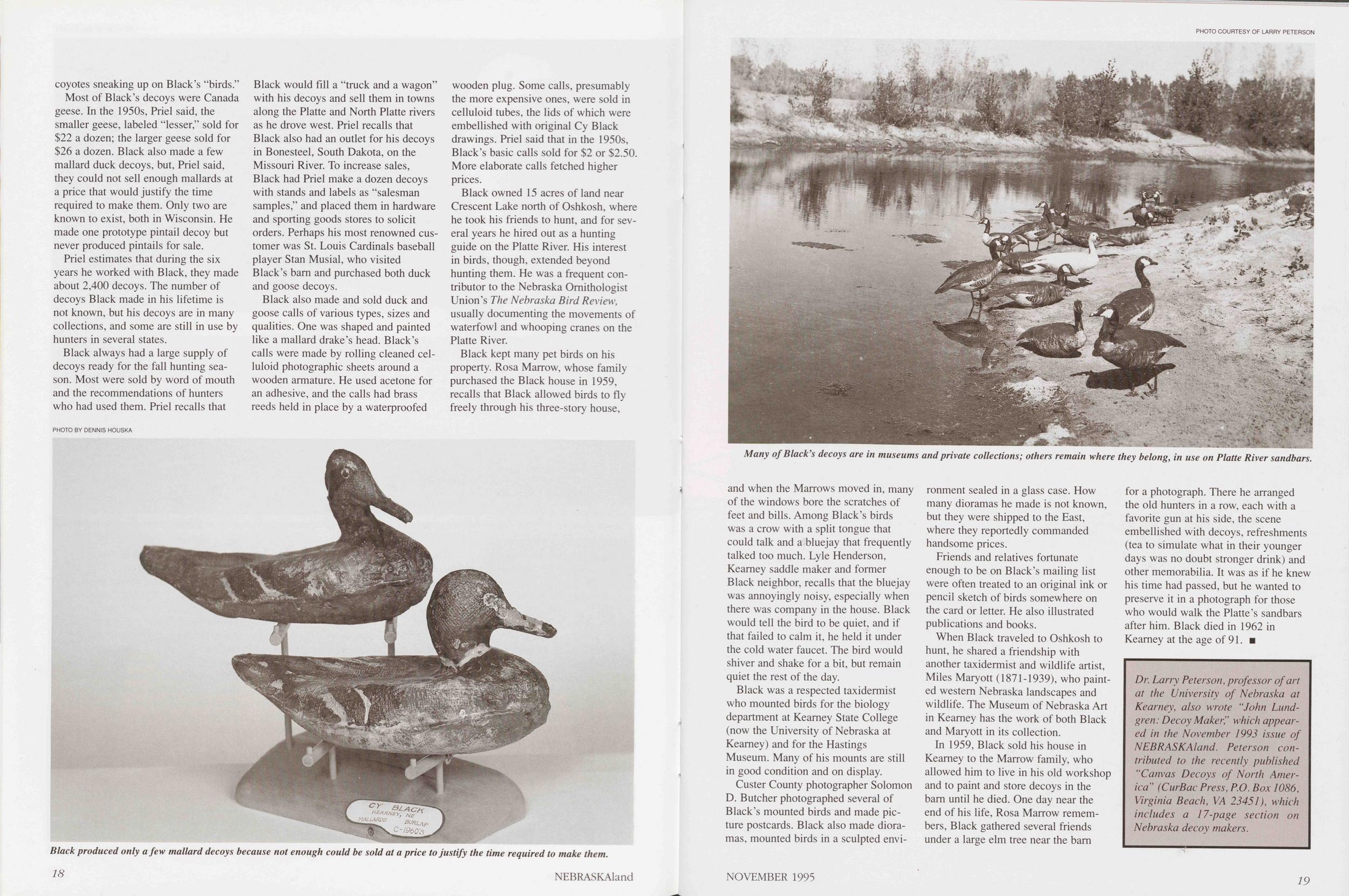
Most of Black's decoys were Canada geese. In the 1950s, Priel said, the smaller geese, labeled "lesser," sold for $22 a dozen; the larger geese sold for $26 a dozen. Black also made a few mallard duck decoys, but, Priel said, they could not sell enough mallards at a price that would justify the time required to make them. Only two are known to exist, both in Wisconsin. He made one prototype pintail decoy but never produced pintails for sale.
Priel estimates that during the six years he worked with Black, they made about 2,400 decoys. The number of decoys Black made in his lifetime is not known, but his decoys are in many collections, and some are still in use by hunters in several states.
Black always had a large supply of decoys ready for the fall hunting season. Most were sold by word of mouth and the recommendations of hunters who had used them. Priel recalls that Black would fill a "truck and a wagon" with his decoys and sell them in towns along the Platte and North Platte rivers as he drove west. Priel recalls that Black also had an outlet for his decoys in Bonesteel, South Dakota, on the Missouri River. To increase sales, Black had Priel make a dozen decoys with stands and labels as "salesman samples," and placed them in hardware and sporting goods stores to solicit orders. Perhaps his most renowned customer was St. Louis Cardinals baseball player Stan Musial, who visited Black's barn and purchased both duck and goose decoys.
Black also made and sold duck and goose calls of various types, sizes and qualities. One was shaped and painted like a mallard drake's head. Black's calls were made by rolling cleaned celluloid photographic sheets around a wooden armature. He used acetone for an adhesive, and the calls had brass reeds held in place by a waterproofed wooden plug. Some calls, presumably the more expensive ones, were sold in celluloid tubes, the lids of which were embellished with original Cy Black drawings. Priel said that in the 1950s, Black's basic calls sold for $2 or $2.50. More elaborate calls fetched higher prices.
Black owned 15 acres of land near Crescent Lake north of Oshkosh, where he took his friends to hunt, and for several years he hired out as a hunting guide on the Platte River. His interest in birds, though, extended beyond hunting them. He was a frequent contributor to the Nebraska Ornithologist Union's The Nebraska Bird Review, usually documenting the movements of waterfowl and whooping cranes on the Platte River.
Black kept many pet birds on his property. Rosa Marrow, whose family purchased the Black house in 1959, recalls that Black allowed birds to fly freely through his three-story house,
Black was a respected taxidermist who mounted birds for the biology department at Kearney State College (now the University of Nebraska at Kearney) and for the Hastings Museum. Many of his mounts are still in good condition and on display.
Custer County photographer Solomon D. Butcher photographed several of Black's mounted birds and made picture postcards. Black also made dioramas, mounted birds in a sculpted environment sealed in a glass case. How many dioramas he made is not known, but they were shipped to the East, where they reportedly commanded handsome prices.
Friends and relatives fortunate enough to be on Black's mailing list were often treated to an original ink or pencil sketch of birds somewhere on the card or letter. He also illustrated publications and books.
When Black traveled to Oshkosh to hunt, he shared a friendship with another taxidermist and wildlife artist, Miles Maryott (1871-1939), who painted western Nebraska landscapes and wildlife. The Museum of Nebraska Art in Kearney has the work of both Black and Maryott in its collection.
In 1959, Black sold his house in Kearney to the Marrow family, who allowed him to live in his old workshop and to paint and store decoys in the barn until he died. One day near the end of his life, Rosa Marrow remembers, Black gathered several friends under a large elm tree near the barn for a photograph. There he arranged the old hunters in a row, each with a favorite gun at his side, the scene embellished with decoys, refreshments (tea to simulate what in their younger days was no doubt stronger drink) and other memorabilia. It was as if he knew his time had passed, but he wanted to preserve it in a photograph for those who would walk the Platte's sandbars after him. Black died in 1962 in Kearney at the age of 91.
Dr. Larry Peterson, professor of art at the University of Nebraska at Kearney, also wrote "John Lundgren: Decoy Maker which appeared in the November 1993 issue of NEBRASKAland. Peterson contributed to the recently published "Canvas Decoys of North America" (CurBac Press, P.O. Box 1086, Virginia Beach, VA 23451), which includes a 17-page section on Nebraska decoy makers. NOVEMBER 1995 19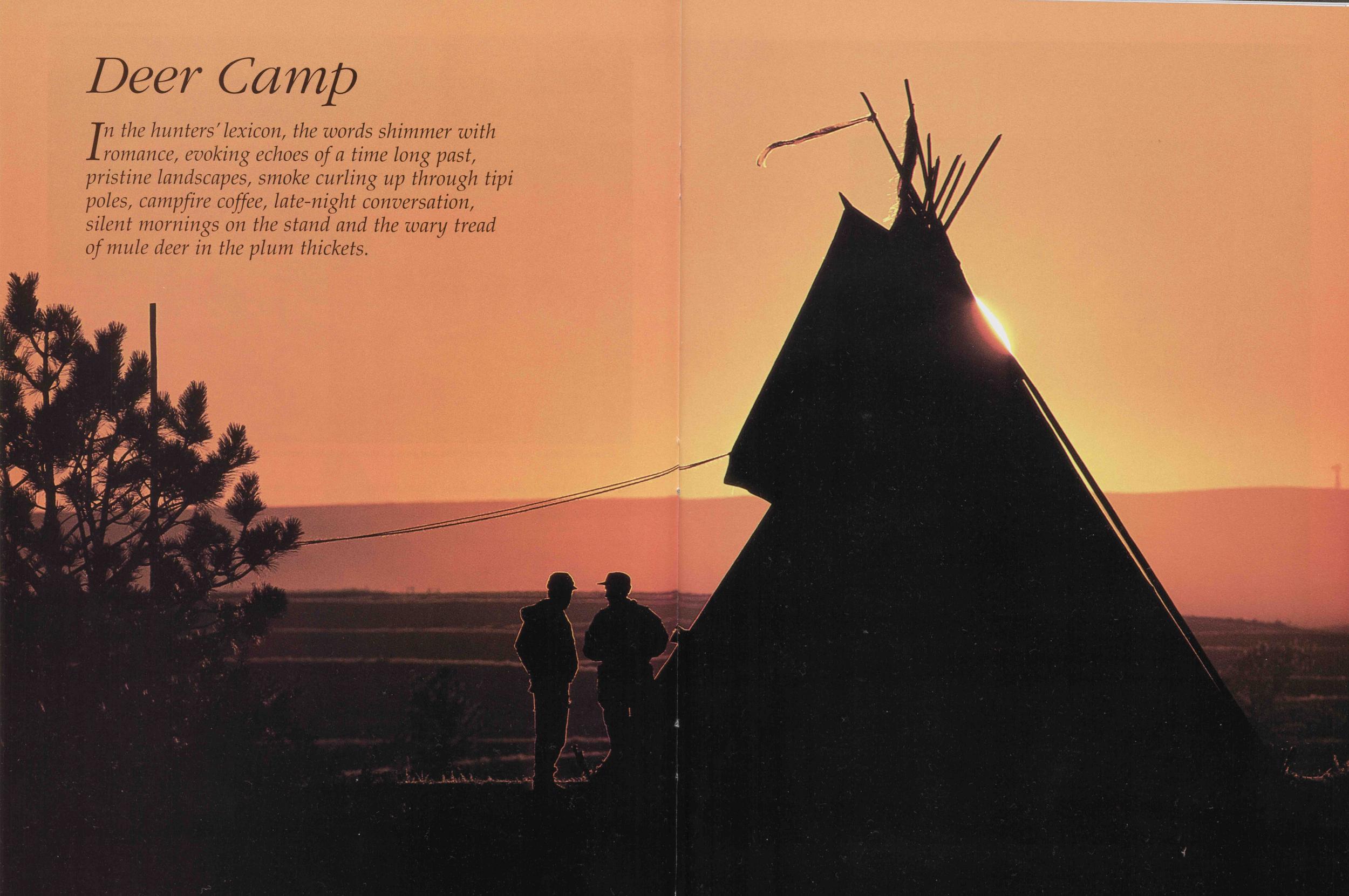
Deer Camp
the hunters'lexicon, the words shimmer with romance, evoking echoes of a time long past, pristine landscapes, smoke curling up through tipi poles, campfire coffee, late-night conversation, silent mornings on the stand and the wary tread of mule deer in the plum thickets.
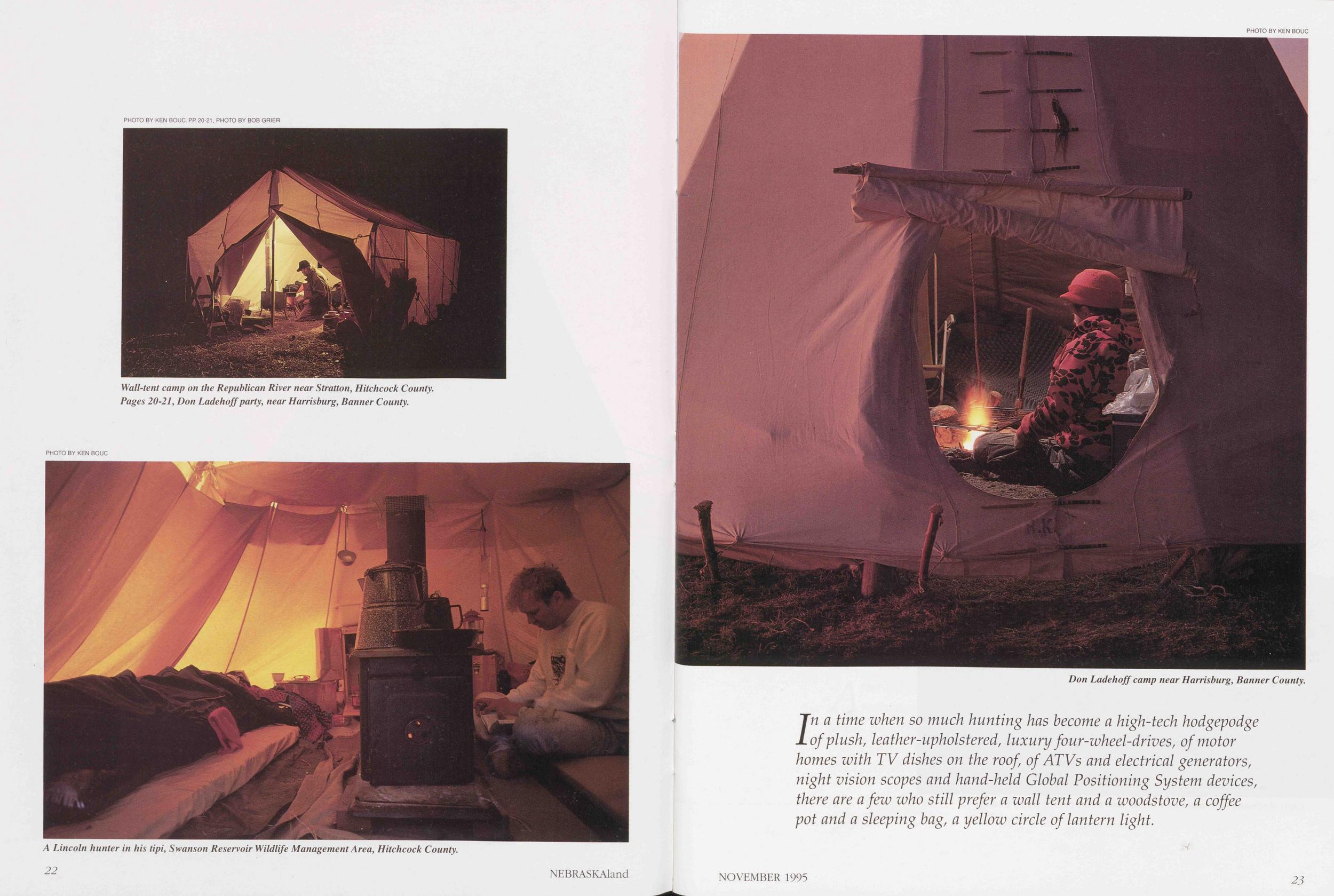
Join a time when so much hunting has become a high-tech hodgepodge of plush, leather-upholstered, luxury four-wheel-drives, of motor homes with TV dishes on the roof, ofATVs and electrical generators, night vision scopes and hand-held Global Positioning System devices, there are a few who still prefer a wall tent and a woodstove, a coffee pot and a sleeping bag, a yellow circle of lantern light.
NOVEMBER 1995 23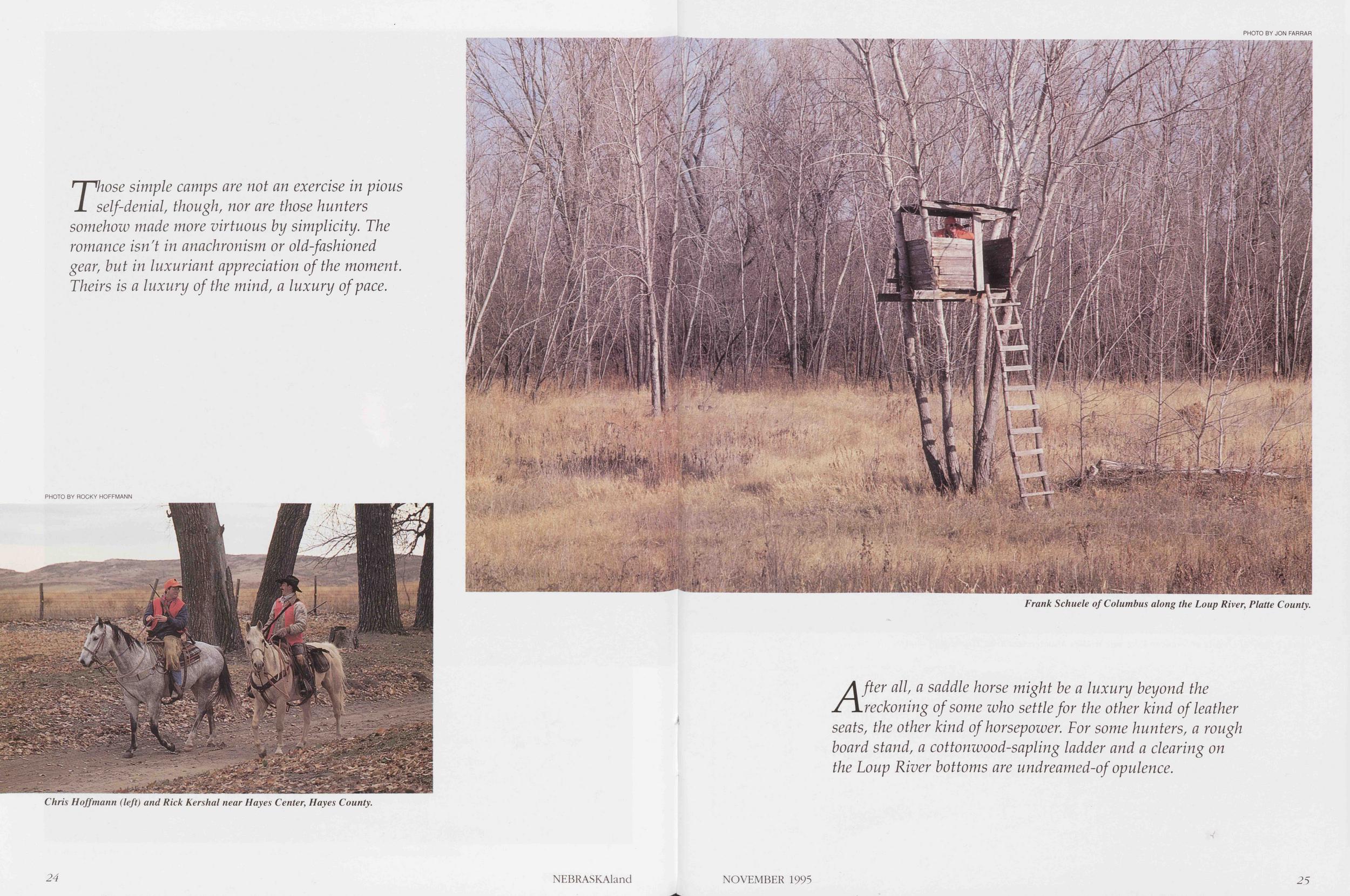
Those simple camps are not an exercise in pious self-denial though, nor are those hunters somehow made more virtuous by simplicity. The romance isn't in anachronism or old-fashioned gear, but in luxuriant appreciation of the moment. Theirs is a luxury of the mind, a luxury of pace.
A fter all, a saddle horse might be a luxury beyond the jLJcreckoning of some who settle for the other kind of leather seats, the other kind of horsepower. For some hunters, a rough board stand, a cottonwood-sapling ladder and a clearing on the Loup River bottoms are undreamed-of opulence.
NOVEMBER 1995 25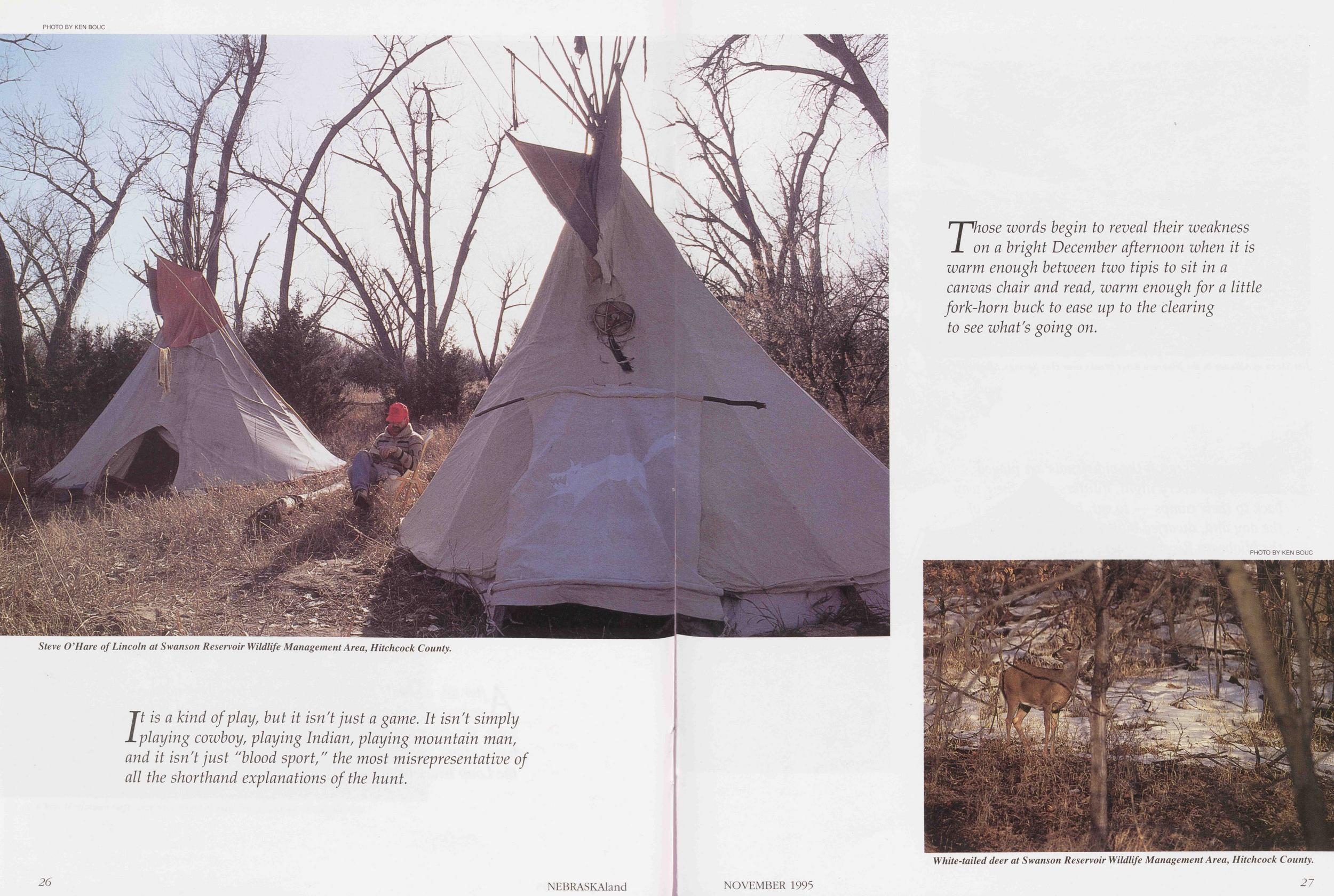
is a kind of play, but it isn't just a game. It isn't simply playing cowboy, playing Indian, playing mountain man, and it isn't just "blood sport," the most misrepresentative of all the shorthand explanations of the hunt.
26 NEBRASKAlandThose words begin to reveal their weakness on a bright December afternoon when it is warm enough between two tipis to sit in a canvas chair and read, warm enough for a little fork-horn buck to ease up to the clearing to see what's going on.
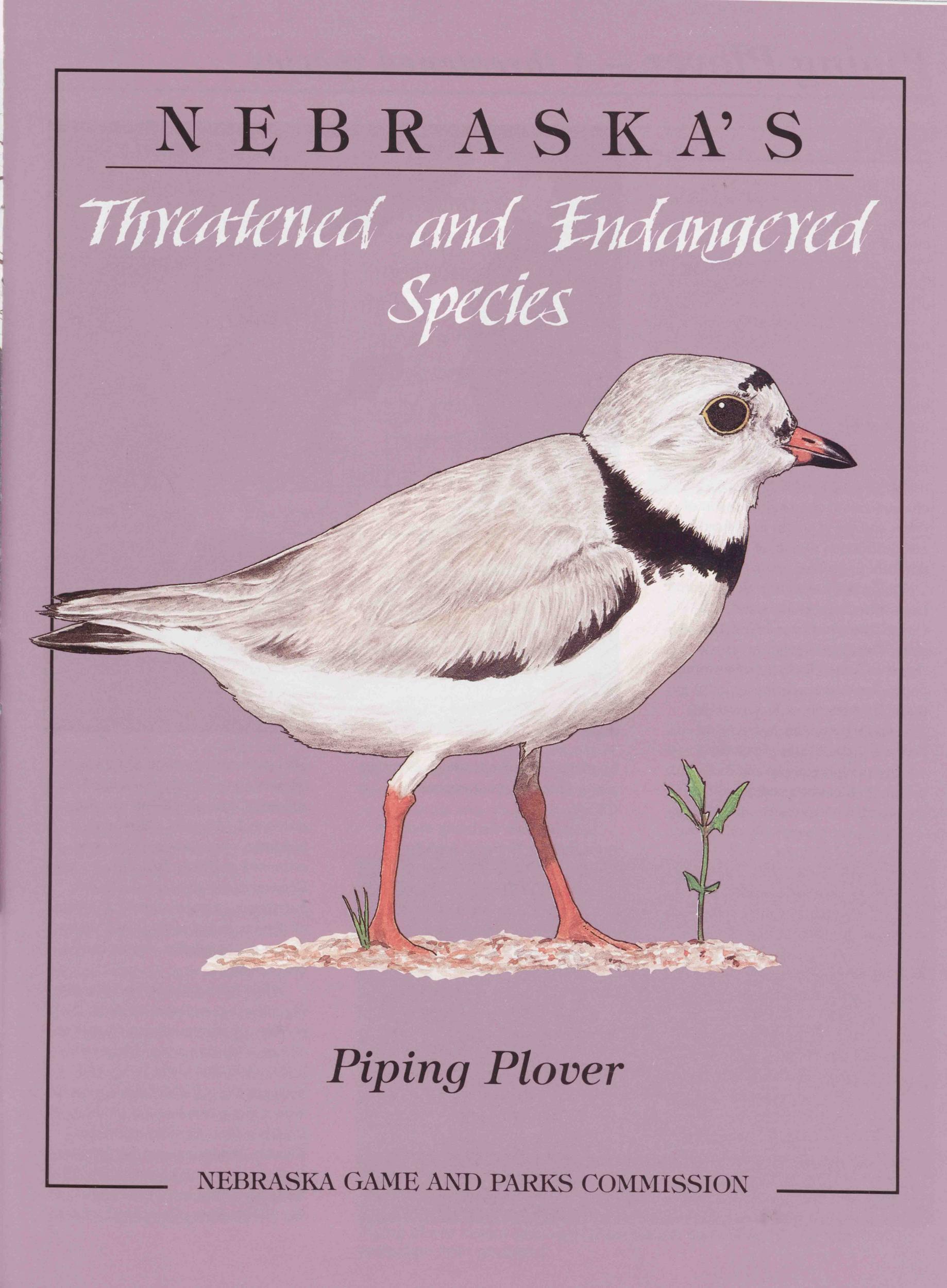
Nebraska's Threatened and Endangered Species
Piping Plover
Nebraska Game and Parks Commission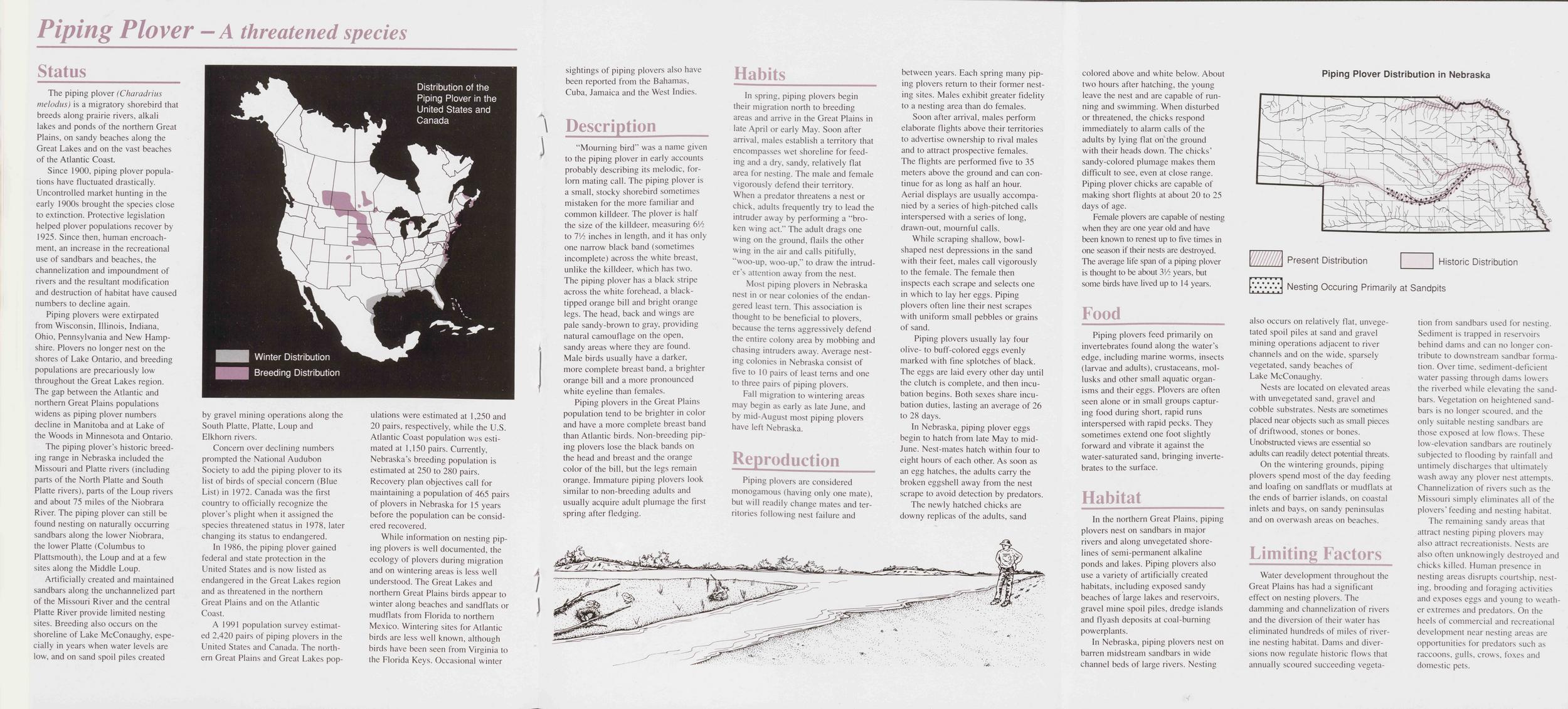 Piping Plover - A threatened species
Status
Piping Plover - A threatened species
Status
The piping plover (Charadrius melodus) is a migratory shorebird that breeds along prairie rivers, alkali lakes and ponds of the northern Great Plains, on sandy beaches along the Great Lakes and on the vast beaches of the Atlantic Coast.
Since 1900, piping plover populations have fluctuated drastically. Uncontrolled market hunting in the early 1900s brought the species close to extinction. Protective legislation helped plover populations recover by 1925. Since then, human encroachment, an increase in the recreational use of sandbars and beaches, the channelization and impoundment of rivers and the resultant modification and destruction of habitat have caused numbers to decline again.
Piping plovers were extirpated from Wisconsin, Illinois, Indiana, Ohio, Pennsylvania and New Hampshire. Plovers no longer nest on the shores of Lake Ontario, and breeding populations are precariously low throughout the Great Lakes region. The gap between the Atlantic and northern Great Plains populations widens as piping plover numbers decline in Manitoba and at Lake of the Woods in Minnesota and Ontario.
The piping plover's historic breeding range in Nebraska included the Missouri and Platte rivers (including parts of the North Platte and South Platte rivers), parts of the Loup rivers and about 75 miles of the Niobrara River. The piping plover can still be found nesting on naturally occurring sandbars along the lower Niobrara, the lower Platte (Columbus to Plattsmouth), the Loup and at a few sites along the Middle Loup.
Artificially created and maintained sandbars along the unchannelized part of the Missouri River and the central Platte River provide limited nesting sites. Breeding also occurs on the shoreline of Lake McConaughy, especially in years when water levels are low, and on sand spoil piles created by gravel mining operations along the South Platte, Platte, Loup and Elkhorn rivers.
Concern over declining numbers prompted the National Audubon Society to add the piping plover to its list of birds of special concern (Blue List) in 1972. Canada was the first country to officially recognize the plover's plight when it assigned the species threatened status in 1978, later changing its status to endangered.
In 1986, the piping plover gained federal and state protection in the United States and is now listed as endangered in the Great Lakes region and as threatened in the northern Great Plains and on the Atlantic Coast.
A 1991 population survey estimated 2,420 pairs of piping plovers in the United States and Canada. The northern Great Plains and Great Lakes populations were estimated at 1,250 and 20 pairs, respectively, while the U.S. Atlantic Coast population was estimated at 1,150 pairs. Currently, Nebraska's breeding population is estimated at 250 to 280 pairs. Recovery plan objectives call for maintaining a population of 465 pairs of plovers in Nebraska for 15 years before the population can be considered recovered.
Distribution of the Piping Plover in the United States and Canada
Winter Distribution Breeding Distribution
"Mourning bird" was a name given to the piping plover in early accounts probably describing its melodic, forlorn mating call. The piping plover is a small, stocky shorebird sometimes mistaken for the more familiar and common killdeer. The plover is half the size of the killdeer, measuring 6/2 to 7/2 inches in length, and it has only one narrow black band (sometimes incomplete) across the white breast, unlike the killdeer, which has two. The piping plover has a black stripe across the white forehead, a blacktipped orange bill and bright orange legs. The head, back and wings are pale sandy-brown to gray, providing natural camouflage on the open, sandy areas where they are found. Male birds usually have a darker, more complete breast band, a brighter orange bill and a more pronounced white eyeline than females.
Piping plovers in the Great Plains population tend to be brighter in color and have a more complete breast band than Atlantic birds. Non-breeding piping plovers lose the black bands on the head and breast and the orange color of the bill, but the legs remain orange. Immature piping plovers look similar to non-breeding adults and usually acquire adult plumage the first spring after fledging.
HabitsIn spring, piping plovers begin their migration north to breeding areas and arrive in the Great Plains in late April or early May. Soon after arrival, males establish a territory that encompasses wet shoreline for feeding and a dry, sandy, relatively flat area for nesting. The male and female vigorously defend their territory. When a predator threatens a nest or chick, adults frequently try to lead the intruder away by performing a "broken wing act." The adult drags one wing on the ground, flails the other wing in the air and calls pitifully, "woo-up, woo-up," to draw the intruder's attention away from the nest.
Most piping plovers in Nebraska nest in or near colonies of the endangered least tern. This association is thought to be beneficial to plovers, because the terns aggressively defend the entire colony area by mobbing and chasing intruders away. Average nesting colonies in Nebraska consist of five to 10 pairs of least terns and one to three pairs of piping plovers.
Fall migration to wintering areas may begin as early as late June, and by mid-August most piping plovers have left Nebraska.
ReproductionPiping plovers are considered monogamous (having only one mate), but will readily change mates and territories following nest failure and between years. Each spring many piping plovers return to their former nesting sites. Males exhibit greater fidelity to a nesting area than do females.
Soon after arrival, males perform elaborate flights above their territories to advertise ownership to rival males and to attract prospective females. The flights are performed five to 35 meters above the ground and can continue for as long as half an hour. Aerial displays are usually accompanied by a series of high-pitched calls interspersed with a series of long, drawn-out, mournful calls.
While scraping shallow, bowlshaped nest depressions in the sand with their feet, males call vigorously to the female. The female then inspects each scrape and selects one in which to lay her eggs. Piping plovers often line their nest scrapes with uniform small pebbles or grains of sand.
Piping plovers usually lay four olive- to buff-colored eggs evenly marked with fine splotches of black. The eggs are laid every other day until the clutch is complete, and then incubation begins. Both sexes share incubation duties, lasting an average of 26 to 28 days.
In Nebraska, piping plover eggs begin to hatch from late May to mid-June. Nest-mates hatch within four to eight hours of each other. As soon as an egg hatches, the adults carry the broken eggshell away from the nest scrape to avoid detection by predators.
The newly hatched chicks are downy replicas of the adults, sand colored above and white below. About two hours after hatching, the young leave the nest and are capable of running and swimming. When disturbed or threatened, the chicks respond immediately to alarm calls of the adults by lying flat on the ground with their heads down. The chicks' sandy-colored plumage makes them difficult to see, even at close range. Piping plover chicks are capable of making short flights at about 20 to 25 days of age.
Female plovers are capable of nesting when they are one year old and have been known to renest up to five times in one season if their nests are destroyed. The average life span of a piping plover is thought to be about 3/2 years, but some birds have lived up to 14 years.
FoodPiping plovers feed primarily on invertebrates found along the water's edge, including marine worms, insects (larvae and adults), crustaceans, mollusks and other small aquatic organisms and their eggs. Plovers are often seen alone or in small groups capturing food during short, rapid runs interspersed with rapid pecks. They sometimes extend one foot slightly forward and vibrate it against the water-saturated sand, bringing invertebrates to the surface.
Habitat In the northern Great Plains, piping plovers nest on sandbars in major rivers and along unvegetated shorelines of semi-permanent alkaline ponds and lakes. Piping plovers also use a variety of artificially created habitats, including exposed sandy beaches of large lakes and reservoirs, gravel mine spoil piles, dredge islands and flyash deposits at coal-burning powerplants.Piping Plover Distribution in Nebraska Present Distribution Historic Distribution
Nests are located on elevated areas with unvegetated sand, gravel and cobble substrates. Nests are sometimes placed near objects such as small pieces of driftwood, stones or bones. Unobstructed views are essential so adults can readily detect potential threats. On the wintering grounds, piping plovers spend most of the day feeding and loafing on sandflats or mudflats at the ends of barrier islands, on coastal inlets and bays, on sandy peninsulas and on overwash areas on beaches.
Limiting Factors Water development throughout the Great Plains has had a significant effect on nesting plovers. The damming and channelization of rivers and the diversion of their water has eliminated hundreds of miles of riverine nesting habitat. Dams and diversions now regulate historic flows that annually scoured succeeding vegetation from sandbars used for nesting. Sediment is trapped in reservoirs behind dams and can no longer contribute to downstream sandbar formation. Over time, sediment-deficient water passing through dams lowers the riverbed while elevating the sandbars. Vegetation on heightened sandbars is no longer scoured, and the only suitable nesting sandbars are those exposed at low flows. These low-elevation sandbars are routinely subjected to flooding by rainfall and untimely discharges that ultimately wash away any plover nest attempts. Channelization of rivers such as the Missouri simply eliminates all of the plovers feeding and nesting habitat.The remaining sandy areas that attract nesting piping plovers may also attract recreationists. Nests are also often unknowingly destroyed and chicks killed. Human presence in nesting areas disrupts courtship, nesting, brooding and foraging activities and exposes eggs and young to weather extremes and predators. On the heels of commercial and recreational development near nesting areas are opportunities for predators such as raccoons, gulls, crows, foxes and domestic pets.
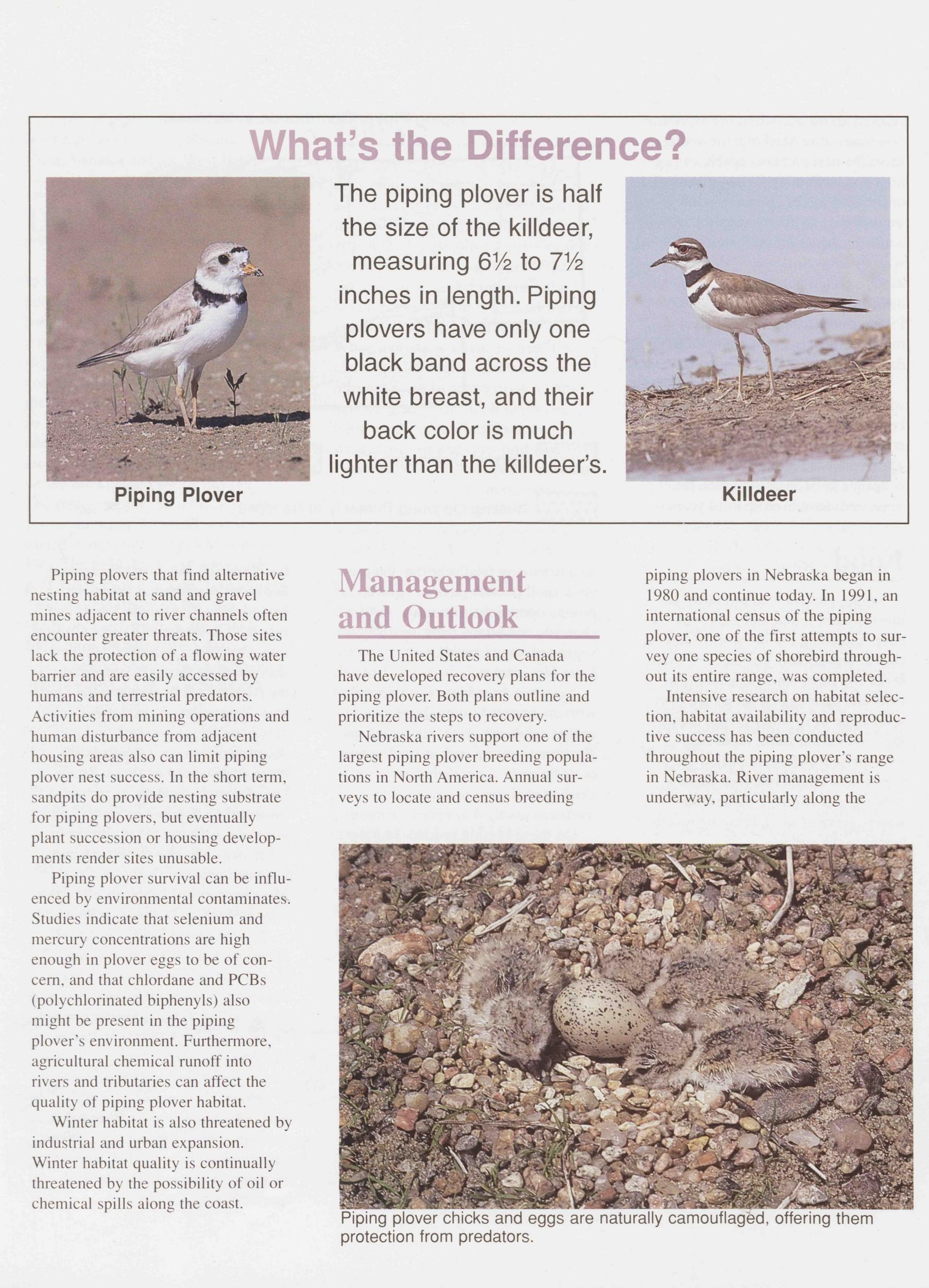
What's the Difference?
The piping plover is half the size of the killdeer, measuring 61/2 to 71/2 inches in length. Piping plovers have only one black band across the white breast, and their back color is much lighter than the killdeer's.
Piping Plover
Killdeer
Piping plovers that find alternative nesting habitat at sand and gravel mines adjacent to river channels often encounter greater threats. Those sites lack the protection of a flowing water barrier and are easily accessed by humans and terrestrial predators. Activities from mining operations and human disturbance from adjacent housing areas also can limit piping plover nest success. In the short term, sandpits do provide nesting substraie for piping plovers, but eventually plant succession or housing developments render sites unusable.
Piping plover survival can be influenced by environmental contaminates. Studies indicate that selenium and mercury concentrations are high enough in plover eggs to be of concern, and that chlordane and PCBs (polychlorinated biphenyls) also might be present in the piping plover's environment. Furthermore, agricultural chemical runoff into rivers and tributaries can affect the quality of piping plover habitat.
Winter habitat is also threatened by industrial and urban expansion. Winter habitat quality is continually threatened by the possibility of oil or chemical spills along the coast.
Management and OutlookThe United States and Canada have developed recovery plans for the piping plover. Both plans outline and prioritize the steps to recovery.
Nebraska rivers support one of the largest piping plover breeding populations in North America. Annual surveys to locate and census breeding piping plovers in Nebraska began in 1980 and continue today. In 1991, an international census of the piping plover, one of the first attempts to survey one species of shorebird throughout its entire range, was completed.
Piping plover chicks and eggs are naturally camouflaged, offering them protection from predators.
Biologists are working with landowners and gravel mine owners and operators to help alleviate conflicts between the nesting birds and mining activities. Experiments to reduce predation at those vulnerable sites are being conducted.
Steps to increase public awareness include news releases, brochures, posters, volunteer monitor programs and nest site patrols. Some nesting sites and river access points are posted with signs to alert recreationists of the plover's plight. Because of the conflicts between human recreational use and the nesting and feeding requirements of the piping plover, public support and cooperation with temporary use restrictions and conservation measures is imperative.
Nebraska law requires state agencies to consult with the Nebraska Game and Parks Commission on any proposed action they authorize, fund or carry out. The law ensures that such actions do not jeopardize the continued existence of threatened or endangered species or result in the destruction or modification of habitat. Piping Plovers use barren, midstream sandbars, like these on the Platte River, for nesting and rearing young.
Piping plovers continue to compete for secure, safe and undisturbed places to winter, nest and raise their young. By understanding their habitat needs, population dynamics and limiting factors, biologists, with public support, hope to ensure that piping plovers remain an integral part of Nebraska's natural diversity.
Piping Plover is one in a series of Nebraska's Threatened and Endangered Species brochures published by NEBRASKAland Magazine and the Nebraska Game and Parks Commission with funds from Nebraska ingame Wildlife Tax Checkoff. Piping Plover was also supported by contributions from the Nebraska forest Service's Forest Stewardship Program. Text by Nongame Bird Biologist Jeanine Lackey. Nebraska Game and Parks Commission. Photos: Page 5, top left and top right, Jon Farrar; bottom, Gary Lingle; Page 6. Mike Forsberg. Layout, design and illustrations by Randall Bright. November 1995.
Note: New data on the occurrence and distribution of this species are beinu collected constantly, and some of the information in this publication may be outdated. It should be used for a general understanding of the status of this species in Nebraska and not as the sole source of locational information for any report, project, regional/local planning or environmental impact assessment. For current information on this or other threatened and endangered species, or for additional copies of this publication, contact the Wildlife Division, Nebraska Game and Parks Commission, P.O. Box 30370, Lincoln, NL 68503.
Forest Stewardship Program
A CHECK FOR WILDLIFE Nongame Wildlife Tax Checkoff Fund
Nebraska Game and Parks Commission
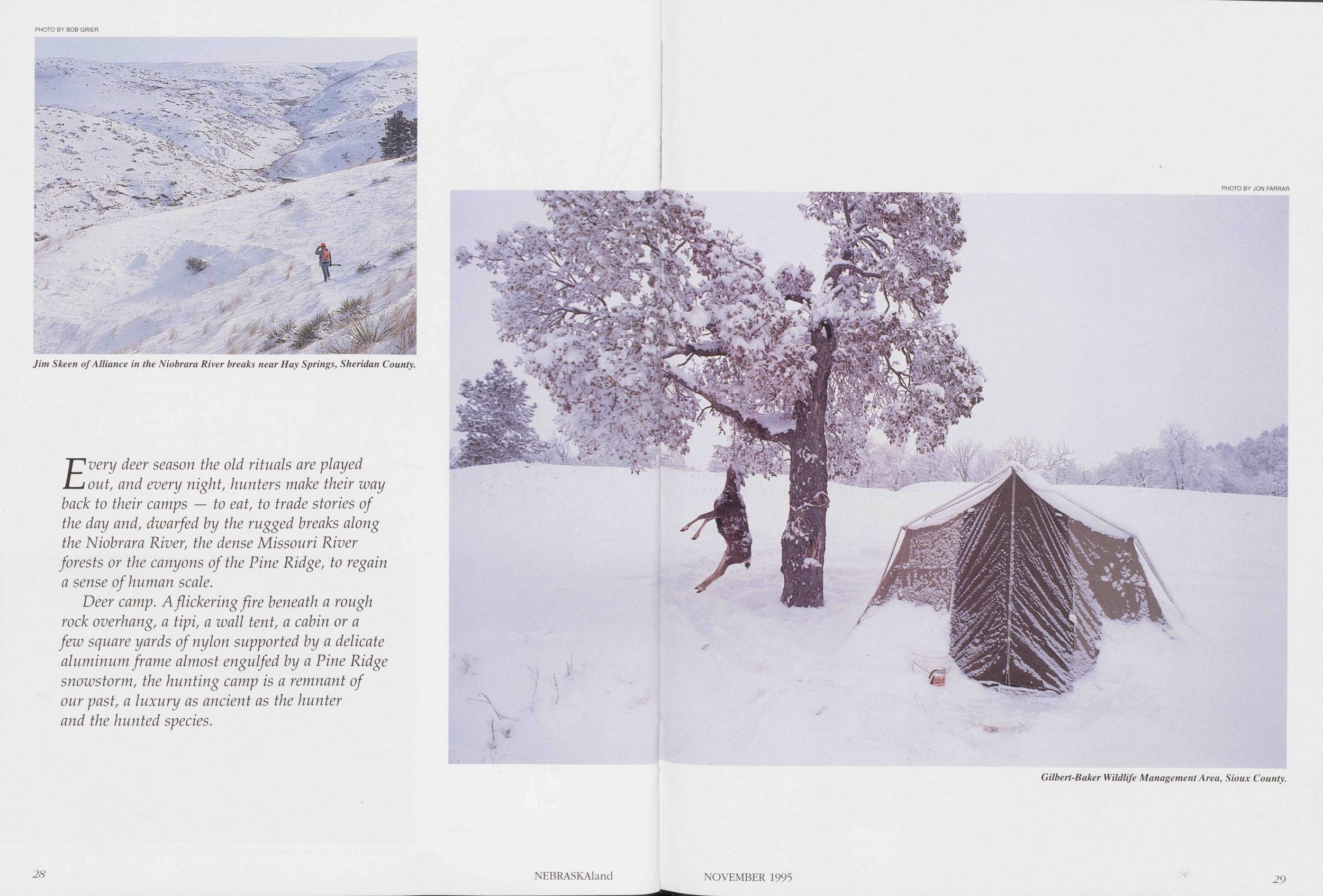
Jim Skeen of Alliance in the Niobrara River breaks near Hay Springs, Sheridan County.
Every deer season the old rituals are played out, and every night, hunters make their way back to their camps — to eat, to trade stories of the day and, dwarfed by the rugged breaks along the Niobrara River, the dense Missouri River forests or the canyons of the Pine Ridge, to regain a sense of human scale.
Deer camp. A flickering fire beneath a rough rock overhang, a tipi, a wall tent, a cabin or a few square yards of nylon supported by a delicate aluminum frame almost engulfed by a Pine Ridge snowstorm, the hunting camp is a remnant of our past, a luxury as ancient as the hunter and the hunted species.
28 NEBRASKAland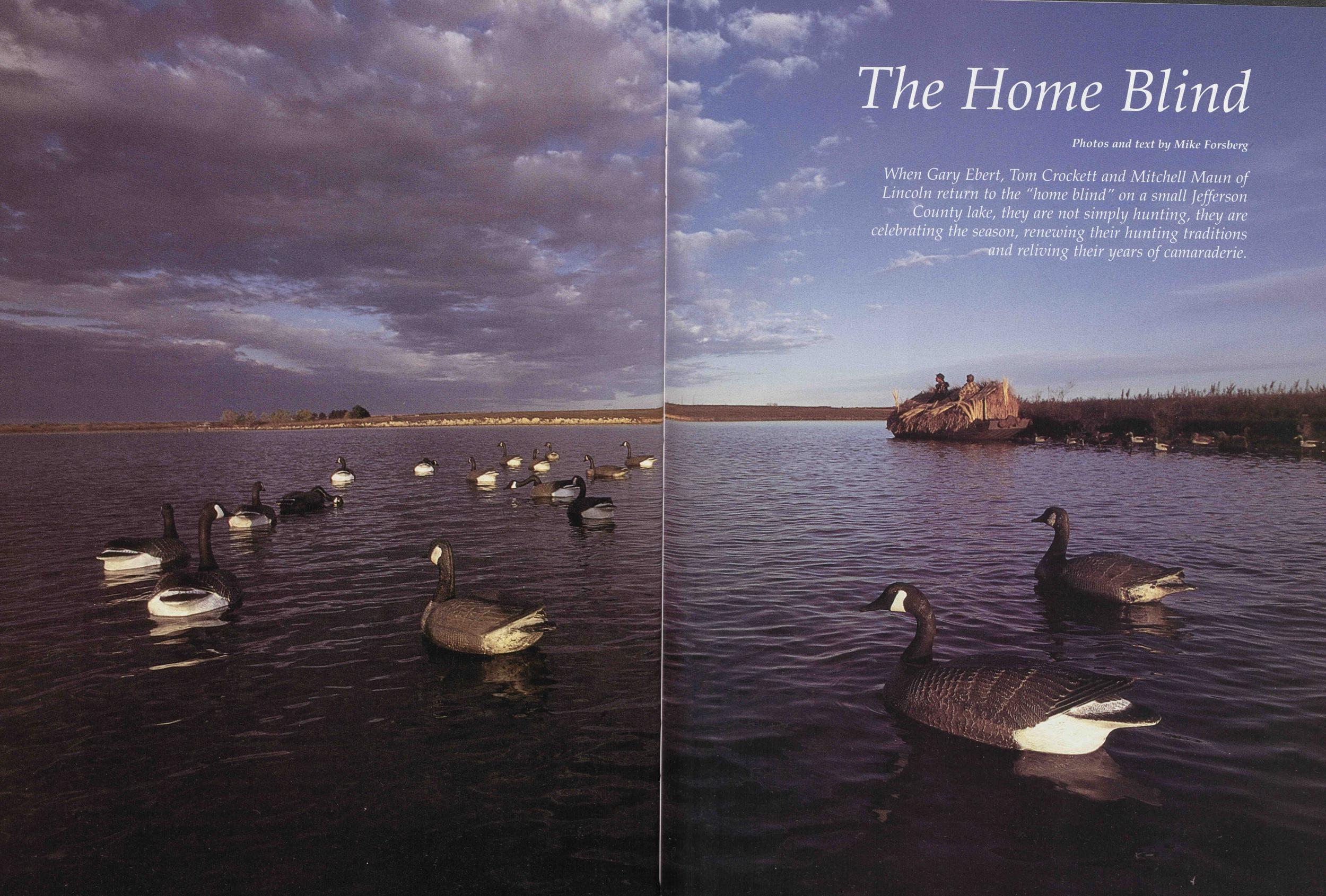
The Home Blind
Photos and text by Mike Forsberg fyfhen Gary "Ebert, Tom Crockett and Mitchell Maun of Lincoln return to the "home blind" on a small Jefferson County lake, they are not simply hunting, they are celebrating the season, renewing their hunting traditions and reliving their years of camaraderie.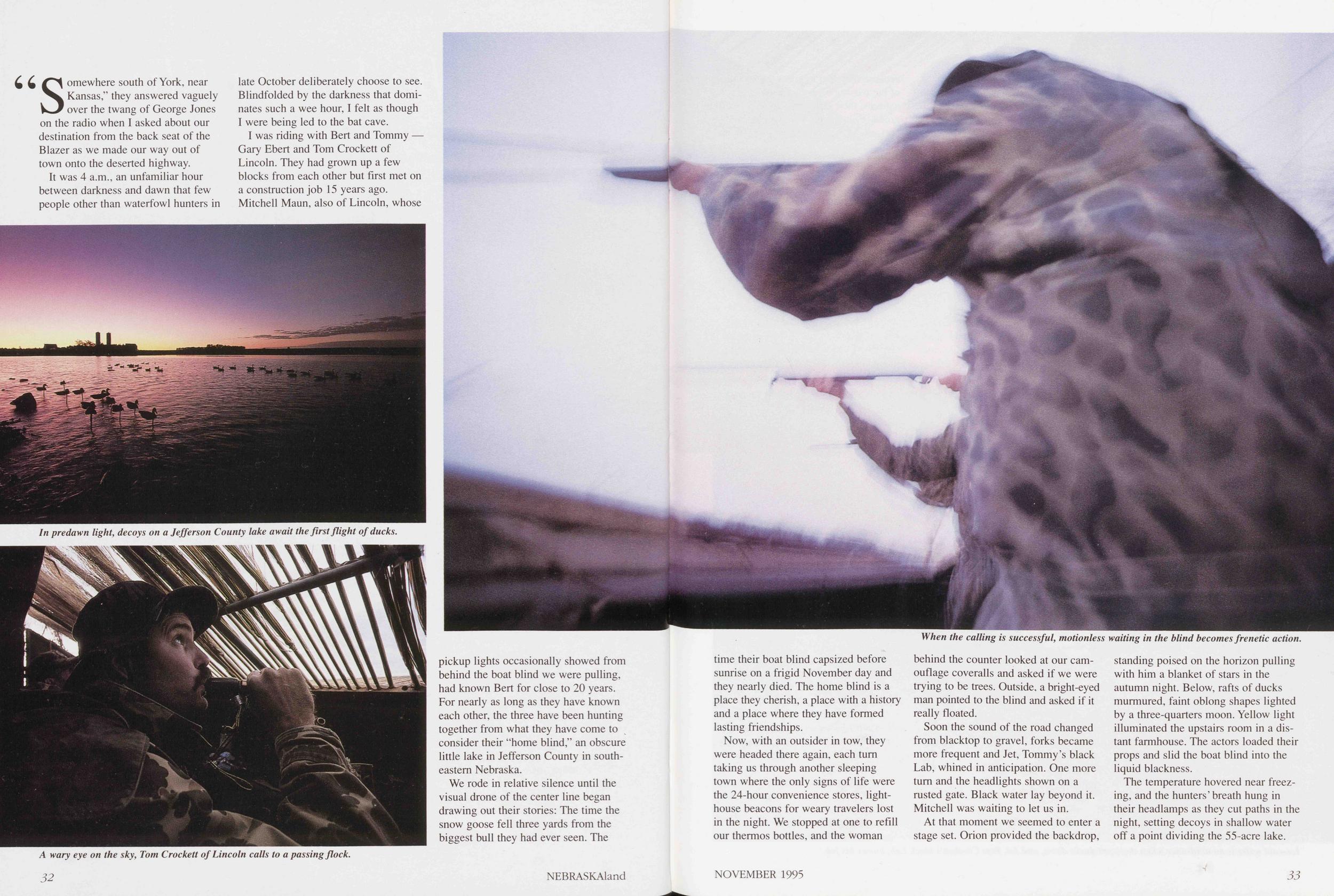
omewhere south of York, near Kansas," they answered vaguely over the twang of George Jones on the radio when I asked about our destination from the back seat of the Blazer as we made our way out of town onto the deserted highway.
It was 4 a.m., an unfamiliar hour between darkness and dawn that few people other than waterfowl hunters in late October deliberately choose to see. Blindfolded by the darkness that dominates such a wee hour, I felt as though I were being led to the bat cave.
I was riding with Bert and Tommy Gary Ebert and Tom Crockett of Lincoln. They had grown up a few blocks from each other but first met on a construction job 15 years ago. Mitchell Maun, also of Lincoln, whose pickup lights occasionally showed from behind the boat blind we were pulling, had known Bert for close to 20 years. For nearly as long as they have known each other, the three have been hunting together from what they have come to consider their "home blind," an obscure little lake in Jefferson County in southeastern Nebraska.
We rode in relative silence until the visual drone of the center line began drawing out their stories: The time the snow goose fell three yards from the biggest bull they had ever seen. The
Now, with an outsider in tow, they were headed there again, each turn taking us through another sleeping town where the only signs of life were the 24-hour convenience stores, lighthouse beacons for weary travelers lost in the night. We stopped at one to refill our thermos bottles, and the woman behind the counter looked at our camouflage coveralls and asked if we were trying to be trees. Outside, a bright-eyed man pointed to the blind and asked if it really floated.
Soon the sound of the road changed from blacktop to gravel, forks became more frequent and Jet, Tommy's black Lab, whined in anticipation. One more turn and the headlights shown on a rusted gate. Black water lay beyond it. Mitchell was waiting to let us in.
At that moment we seemed to enter a stage set. Orion provided the backdrop, standing poised on the horizon pulling with him a blanket of stars in the autumn night. Below, rafts of ducks murmured, faint oblong shapes lighted by a three-quarters moon. Yellow light illuminated the upstairs room in a distant farmhouse. The actors loaded their props and slid the boat blind into the liquid blackness.
The temperature hovered near freezing, and the hunters' breath hung in
their headlamps as they cut paths in the
night, setting decoys in shallow water
off a point dividing the 55 -acre lake.
NOVEMBER 1995
33
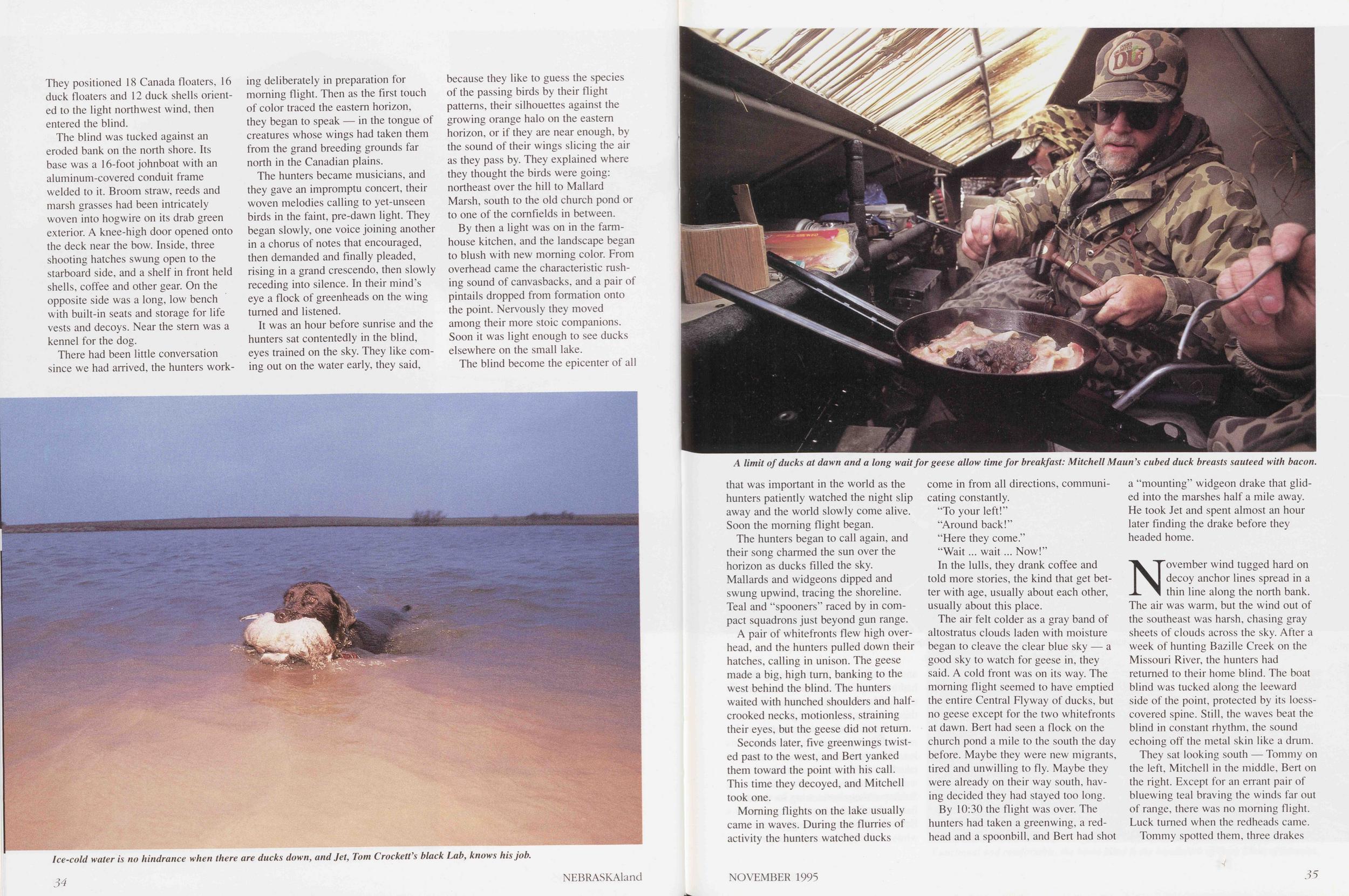 They positioned 18 Canada floaters, 16
duck floaters and 12 duck shells oriented to the light northwest wind, then
entered the blind.
They positioned 18 Canada floaters, 16
duck floaters and 12 duck shells oriented to the light northwest wind, then
entered the blind.
The blind was tucked against an eroded bank on the north shore. Its base was a 16-foot johnboat with an aluminum-covered conduit frame welded to it. Broom straw, reeds and marsh grasses had been intricately woven into hogwire on its drab green exterior. A knee-high door opened onto the deck near the bow. Inside, three shooting hatches swung open to the starboard side, and a shelf in front held shells, coffee and other gear. On the opposite side was a long, low bench with built-in seats and storage for life vests and decoys. Near the stern was a kennel for the dog.
There had been little conversation since we had arrived, the hunters working deliberately in preparation for morning flight. Then as the first touch of color traced the eastern horizon, they began to speak — in the tongue of creatures whose wings had taken them from the grand breeding grounds far north in the Canadian plains.
The hunters became musicians, and they gave an impromptu concert, their woven melodies calling to yet-unseen birds in the faint, pre-dawn light. They began slowly, one voice joining another in a chorus of notes that encouraged, then demanded and finally pleaded, rising in a grand crescendo, then slowly receding into silence. In their mind's eye a flock of greenheads on the wing turned and listened.
It was an hour before sunrise and the hunters sat contentedly in the blind, eyes trained on the sky. They like coming out on the water early, they said, because they like to guess the species of the passing birds by their flight patterns, their silhouettes against the growing orange halo on the eastern horizon, or if they are near enough, by the sound of their wings slicing the air as they pass by. They explained where they thought the birds were going: northeast over the hill to Mallard Marsh, south to the old church pond or to one of the cornfields in between.
By then a light was on in the farmhouse kitchen, and the landscape began to blush with new morning color. From overhead came the characteristic rushing sound of canvasbacks, and a pair of pintails dropped from formation onto the point. Nervously they moved among their more stoic companions. Soon it was light enough to see ducks elsewhere on the small lake.
The blind become the epicenter of all
The hunters began to call again, and their song charmed the sun over the horizon as ducks filled the sky. Mallards and widgeons dipped and swung upwind, tracing the shoreline. Teal and "spooners" raced by in compact squadrons just beyond gun range.
A pair of whitefronts flew high overhead, and the hunters pulled down their hatches, calling in unison. The geese made a big, high turn, banking to the west behind the blind. The hunters waited with hunched shoulders and halfcrooked necks, motionless, straining their eyes, but the geese did not return.
Seconds later, five greenwings twisted past to the west, and Bert yanked them toward the point with his call. This time they decoyed, and Mitchell took one.
Morning flights on the lake usually came in waves. During the flurries of activity the hunters watched ducks come in from all directions, communicating constantly.
To your left!"
'Around back!"
'Here they come."
'Wait wait Now!"
In the lulls, they drank coffee and told more stories, the kind that get better with age, usually about each other, usually about this place.
The air felt colder as a gray band of altostratus clouds laden with moisture began to cleave the clear blue sky a good sky to watch for geese in, they said. A cold front was on its way. The morning flight seemed to have emptied the entire Central Flyway of ducks, but no geese except for the two whitefronts at dawn. Bert had seen a flock on the church pond a mile to the south the day before. Maybe they were new migrants, tired and unwilling to fly. Maybe they were already on their way south, having decided they had stayed too long.
By 10:30 the flight was over. The hunters had taken a greenwing, a redhead and a spoonbill, and Bert had shot a "mounting" widgeon drake that glided into the marshes half a mile away. He took Jet and spent almost an hour later finding the drake before they headed home.
November wind tugged hard on decoy anchor lines spread in a thin line along the north bank. The air was warm, but the wind out of the southeast was harsh, chasing gray sheets of clouds across the sky. After a week of hunting Bazille Creek on the Missouri River, the hunters had returned to their home blind. The boat blind was tucked along the leeward side of the point, protected by its loess-covered spine. Still, the waves beat the blind in constant rhythm, the sound echoing off the metal skin like a drum.
They sat looking south — Tommy on the left, Mitchell in the middle, Bert on the right. Except for an errant pair of bluewing teal braving the winds far out of range, there was no morning flight. Luck turned when the redheads came.
Tommy spotted them, three drakes
NOVEMBER 1995
35
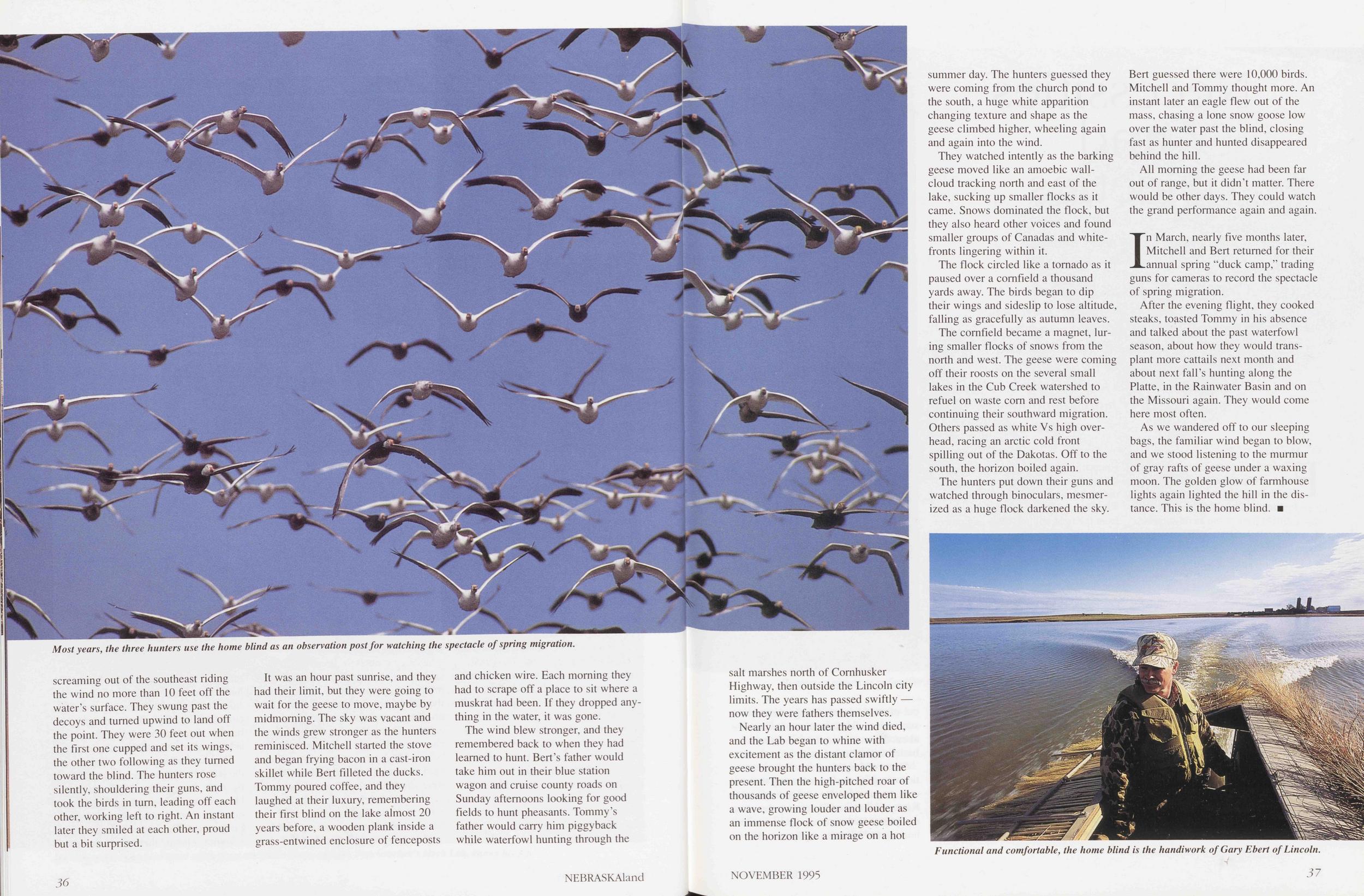
It was an hour past sunrise, and they had their limit, but they were going to wait for the geese to move, maybe by midmorning. The sky was vacant and the winds grew stronger as the hunters reminisced. Mitchell started the stove and began frying bacon in a cast-iron skillet while Bert filleted the ducks. Tommy poured coffee, and they laughed at their luxury, remembering their first blind on the lake almost 20 years before, a wooden plank inside a grass-entwined enclosure of fenceposts and chicken wire. Each morning they had to scrape off a place to sit where a muskrat had been. If they dropped anything in the water, it was gone.
The wind blew stronger, and they remembered back to when they had learned to hunt. Bert's father would take him out in their blue station wagon and cruise county roads on Sunday afternoons looking for good fields to hunt pheasants. Tommy's father would carry him piggyback while waterfowl hunting through the 36 NEBRASKAland salt marshes north of Cornhusker Highway, then outside the Lincoln city limits. The years has passed swiftly now they were fathers themselves.
Nearly an hour later the wind died, and the Lab began to whine with excitement as the distant clamor of geese brought the hunters back to the present. Then the high-pitched roar of thousands of geese enveloped them like a wave, growing louder and louder as an immense flock of snow geese boiled on the horizon like a mirage on a hot summer day. The hunters guessed they were coming from the church pond to the south, a huge white apparition changing texture and shape as the geese climbed higher, wheeling again and again into the wind.
They watched intently as the barking geese moved like an amoebic wallcloud tracking north and east of the lake, sucking up smaller flocks as it came. Snows dominated the flock, but they also heard other voices and found smaller groups of Canadas and white-fronts lingering within it.
The flock circled like a tornado as it paused over a cornfield a thousand yards away. The birds began to dip their wings and sideslip to lose altitude, falling as gracefully as autumn leaves.
The cornfield became a magnet, luring smaller flocks of snows from the north and west. The geese were coming off their roosts on the several small lakes in the Cub Creek watershed to refuel on waste corn and rest before continuing their southward migration. Others passed as white Vs high overhead, racing an arctic cold front spilling out of the Dakotas. Off to the south, the horizon boiled again.
The hunters put down their guns and watched through binoculars, mesmerized as a huge flock darkened the sky. Bert guessed there were 10,000 birds. Mitchell and Tommy thought more. An instant later an eagle flew out of the mass, chasing a lone snow goose low over the water past the blind, closing fast as hunter and hunted disappeared behind the hill.
All morning the geese had been far out of range, but it didn't matter. There would be other days. They could watch the grand performance again and again.
In March, nearly five months later, Mitchell and Bert returned for their annual spring "duck camp," trading guns for cameras to record the spectacle of spring migration.
After the evening flight, they cooked steaks, toasted Tommy in his absence and talked about the past waterfowl season, about how they would transplant more cattails next month and about next fall's hunting along the Platte, in the Rainwater Basin and on the Missouri again. They would come here most often.
As we wandered off to our sleeping bags, the familiar wind began to blow, and we stood listening to the murmur of gray rafts of geese under a waxing moon. The golden glow of farmhouse lights again lighted the hill in the distance. This is the home blind.
Necessities and Niceties
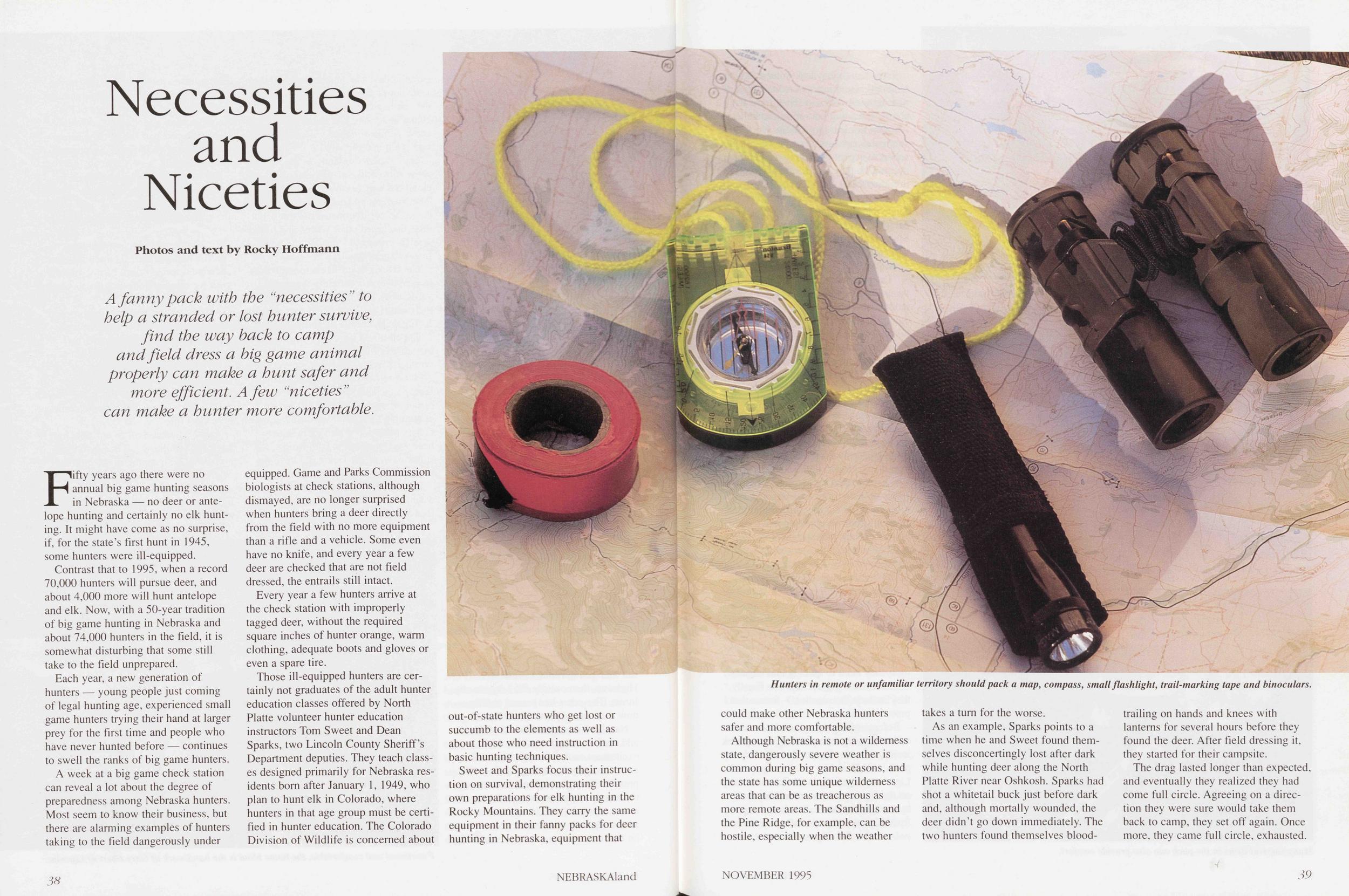
Photos and text by Rocky Hoffmann A fanny pack with the "necessities" to help a stranded or lost hunter survive, find the way back to camp and field dress a big game animal properly can make a hunt safer and more efficient. A few "niceties" can make a hunter more comfortable.Fifty years ago there were no annual big game hunting seasons in Nebraska — no deer or antelope hunting and certainly no elk hunting. It might have come as no surprise, if, for the state's first hunt in 1945, some hunters were ill-equipped.
Contrast that to 1995, when a record 70,000 hunters will pursue deer, and about 4,000 more will hunt antelope and elk. Now, with a 50-year tradition of big game hunting in Nebraska and about 74,000 hunters in the field, it is somewhat disturbing that some still take to the field unprepared.
Each year, a new generation of hunters — young people just coming of legal hunting age, experienced small game hunters trying their hand at larger prey for the first time and people who have never hunted before — continues to swell the ranks of big game hunters.
A week at a big game check station can reveal a lot about the degree of preparedness among Nebraska hunters. Most seem to know their business, but there are alarming examples of hunters taking to the field dangerously under equipped. Game and Parks Commission biologists at check stations, although dismayed, are no longer surprised when hunters bring a deer directly from the field with no more equipment than a rifle and a vehicle. Some even have no knife, and every year a few deer are checked that are not field dressed, the entrails still intact.
Every year a few hunters arrive at the check station with improperly tagged deer, without the required square inches of hunter orange, warm clothing, adequate boots and gloves or even a spare tire.
Those ill-equipped hunters are certainly not graduates of the adult hunter education classes offered by North Platte volunteer hunter education instructors Tom Sweet and Dean Sparks, two Lincoln County Sheriff's Department deputies. They teach classes designed primarily for Nebraska residents born after January 1, 1949, who plan to hunt elk in Colorado, where hunters in that age group must be certified in hunter education. The Colorado Division of Wildlife is concerned about out-of-state hunters who get lost or succumb to the elements as well as about those who need instruction in basic hunting techniques.
Sweet and Sparks focus their instruction on survival, demonstrating their own preparations for elk hunting in the Rocky Mountains. They carry the same equipment in their fanny packs for deer hunting in Nebraska, equipment that 38 NEBRASKAland
Although Nebraska is not a wilderness state, dangerously severe weather is common during big game seasons, and the state has some unique wilderness areas that can be as treacherous as more remote areas. The Sandhills and the Pine Ridge, for example, can be hostile, especially when the weather takes a turn for the worse.
As an example, Sparks points to a time when he and Sweet found themselves disconcertingly lost after dark while hunting deer along the North Platte River near Oshkosh. Sparks had shot a whitetail buck just before dark and, although mortally wounded, the deer didn't go down immediately. The two hunters found themselves bloodtrailing on hands and knees with lanterns for several hours before they found the deer. After field dressing it, they started for their campsite.
The drag lasted longer than expected, and eventually they realized they had come full circle. Agreeing on a direction they were sure would take them back to camp, they set off again. Once more, they came full circle, exhausted.
NOVEMBER 1995 39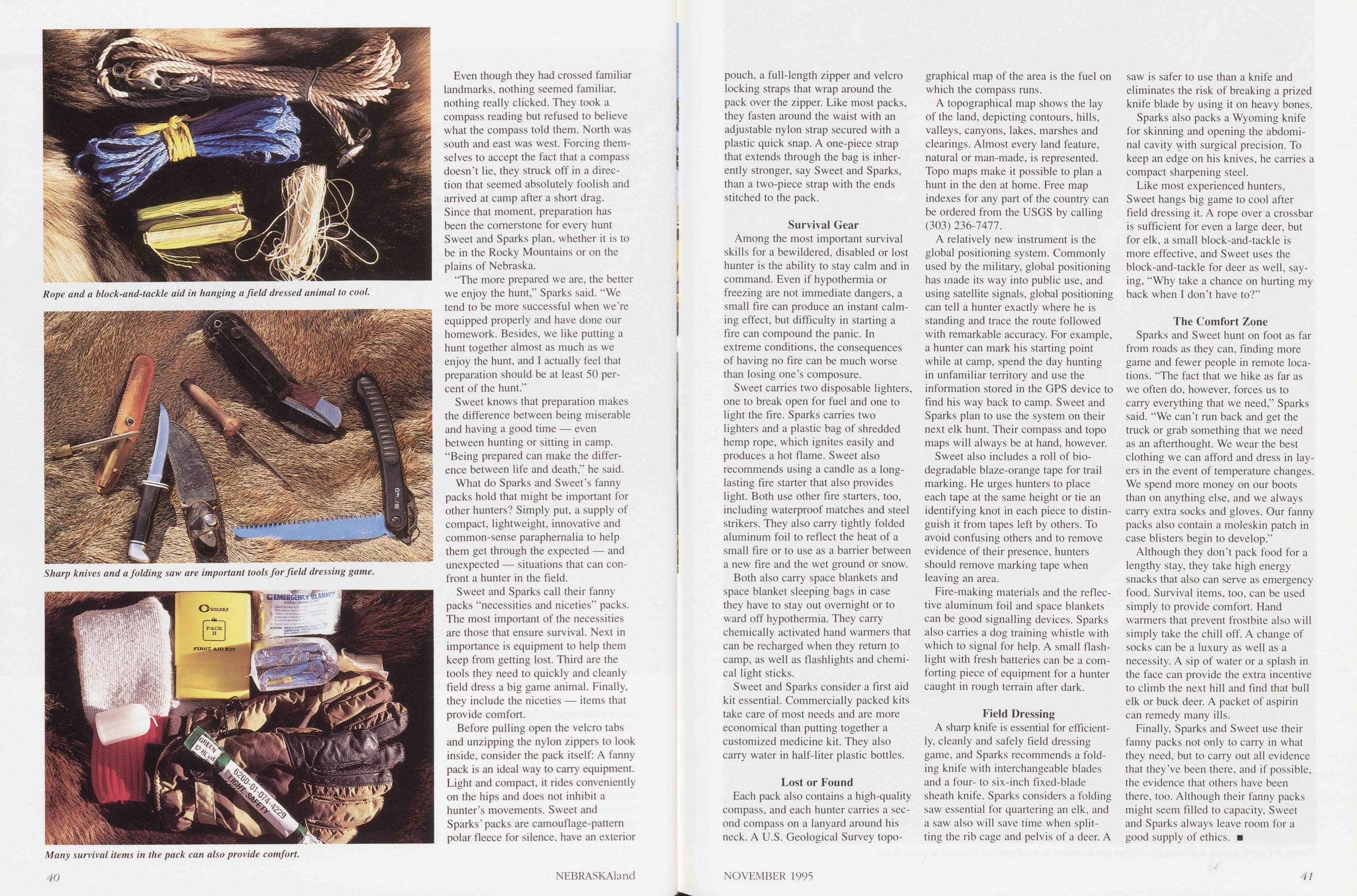
Even though they had crossed familiar landmarks, nothing seemed familiar, nothing really clicked. They took a compass reading but refused to believe what the compass told them. North was south and east was west. Forcing themselves to accept the fact that a compass doesn't lie, they struck off in a direction that seemed absolutely foolish and arrived at camp after a short drag. Since that moment, preparation has been the cornerstone for every hunt Sweet and Sparks plan, whether it is to be in the Rocky Mountains or on the plains of Nebraska.
"The more prepared we are, the better we enjoy the hunt," Sparks said. "We tend to be more successful when we're equipped properly and have done our homework. Besides, we like putting a hunt together almost as much as we enjoy the hunt, and I actually feel that preparation should be at least 50 percent of the hunt."
Sweet knows that preparation makes the difference between being miserable and having a good time — even between hunting or sitting in camp. "Being prepared can make the difference between life and death," he said.
What do Sparks and Sweet's fanny packs hold that might be important for other hunters? Simply put, a supply of compact, lightweight, innovative and common-sense paraphernalia to help them get through the expected — and unexpected — situations that can confront a hunter in the field.
Sweet and Sparks call their fanny packs "necessities and niceties" packs. The most important of the necessities are those that ensure survival. Next in importance is equipment to help them keep from getting lost. Third are the tools they need to quickly and cleanly field dress a big game animal. Finally, they include the niceties — items that provide comfort.
Before pulling open the velcro tabs and unzipping the nylon zippers to look inside, consider the pack itself: A fanny pack is an ideal way to carry equipment. Light and compact, it rides conveniently on the hips and does not inhibit a hunter's movements. Sweet and Sparks'packs are camouflage-pattern polar fleece for silence, have an exterior 40 NEBRASKAland pouch, a full-length zipper and velcro locking straps that wrap around the pack over the zipper. Like most packs, they fasten around the waist with an adjustable nylon strap secured with a plastic quick snap. A one-piece strap that extends through the bag is inherently stronger, say Sweet and Sparks, than a two-piece strap with the ends stitched to the pack.
Survival GearAmong the most important survival skills for a bewildered, disabled or lost hunter is the ability to stay calm and in command. Even if hypothermia or freezing are not immediate dangers, a small fire can produce an instant calming effect, but difficulty in starting a fire can compound the panic. In extreme conditions, the consequences of having no fire can be much worse than losing one's composure.
Sweet carries two disposable lighters, one to break open for fuel and one to light the fire. Sparks carries two lighters and a plastic bag of shredded hemp rope, which ignites easily and produces a hot flame. Sweet also recommends using a candle as a longlasting fire starter that also provides light. Both use other fire starters, too, including waterproof matches and steel strikers. They also carry tightly folded aluminum foil to reflect the heat of a small fire or to use as a barrier between a new fire and the wet ground or snow.
Both also carry space blankets and space blanket sleeping bags in case they have to stay out overnight or to ward off hypothermia. They carry chemically activated hand warmers that can be recharged when they return to camp, as well as flashlights and chemical light sticks.
Sweet and Sparks consider a first aid kit essential. Commercially packed kits take care of most needs and are more economical than putting together a customized medicine kit. They also carry water in half-liter plastic bottles.
Lost or FoundEach pack also contains a high-quality compass, and each hunter carries a second compass on a lanyard around his neck. A U.S. Geological Survey topographical map of the area is the fuel on which the compass runs.
A topographical map shows the lay of the land, depicting contours, hills, valleys, canyons, lakes, marshes and clearings. Almost every land feature, natural or man-made, is represented. Topo maps make it possible to plan a hunt in the den at home. Free map indexes for any part of the country can be ordered from the USGS by calling (303) 236-7477.
A relatively new instrument is the global positioning system. Commonly used by the military, global positioning has made its way into public use, and using satellite signals, global positioning can tell a hunter exactly where he is standing and trace the route followed with remarkable accuracy. For example, a hunter can mark his starting point while at camp, spend the day hunting in unfamiliar territory and use the information stored in the GPS device to find his way back to camp. Sweet and Sparks plan to use the system on their next elk hunt. Their compass and topo maps will always be at hand, however.
Sweet also includes a roll of biodegradable blaze-orange tape for trail marking. He urges hunters to place each tape at the same height or tie an identifying knot in each piece to distinguish it from tapes left by others. To avoid confusing others and to remove evidence of their presence, hunters should remove marking tape when leaving an area.
Fire-making materials and the reflective aluminum foil and space blankets can be good signalling devices. Sparks also carries a dog training whistle with which to signal for help. A small flashlight with fresh batteries can be a comforting piece of equipment for a hunter caught in rough terrain after dark.
Field DressingA sharp knife is essential for efficiently, cleanly and safely field dressing game, and Sparks recommends a folding knife with interchangeable blades and a four- to six-inch fixed-blade sheath knife. Sparks considers a folding saw essential for quartering an elk, and a saw also will save time when splitting the rib cage and pelvis of a deer. A saw is safer to use than a knife and eliminates the risk of breaking a prized knife blade by using it on heavy bones.
Sparks also packs a Wyoming knife for skinning and opening the abdominal cavity with surgical precision. To keep an edge on his knives, he carries a compact sharpening steel.
Like most experienced hunters, Sweet hangs big game to cool after field dressing it. A rope over a crossbar is sufficient for even a large deer, but for elk, a small block-and-tackle is more effective, and Sweet uses the block-and-tackle for deer as well, saying, "Why take a chance on hurting my back when I don't have to?"
The Comfort ZoneSparks and Sweet hunt on foot as far from roads as they can, finding more game and fewer people in remote locations. "The fact that we hike as far as we often do, however, forces us to carry everything that we need," Sparks said. "We can't run back and get the truck or grab something that we need as an afterthought. We wear the best clothing we can afford and dress in layers in the event of temperature changes. We spend more money on our boots than on anything else, and we always carry extra socks and gloves. Our fanny packs also contain a moleskin patch in case blisters begin to develop."
Although they don't pack food for a lengthy stay, they take high energy snacks that also can serve as emergency food. Survival items, too, can be used simply to provide comfort. Hand warmers that prevent frostbite also will simply take the chill off. A change of socks can be a luxury as well as a necessity. A sip of water or a splash in the face can provide the extra incentive to climb the next hill and find that bull elk or buck deer. A packet of aspirin can remedy many ills.
Finally, Sparks and Sweet use their fanny packs not only to carry in what they need, but to carry out all evidence that they've been there, and if possible, the evidence that others have been there, too. Although their fanny packs might seem filled to capacity, Sweet and Sparks always leave room for a good supply of ethics.
NOVEMBER 1995 41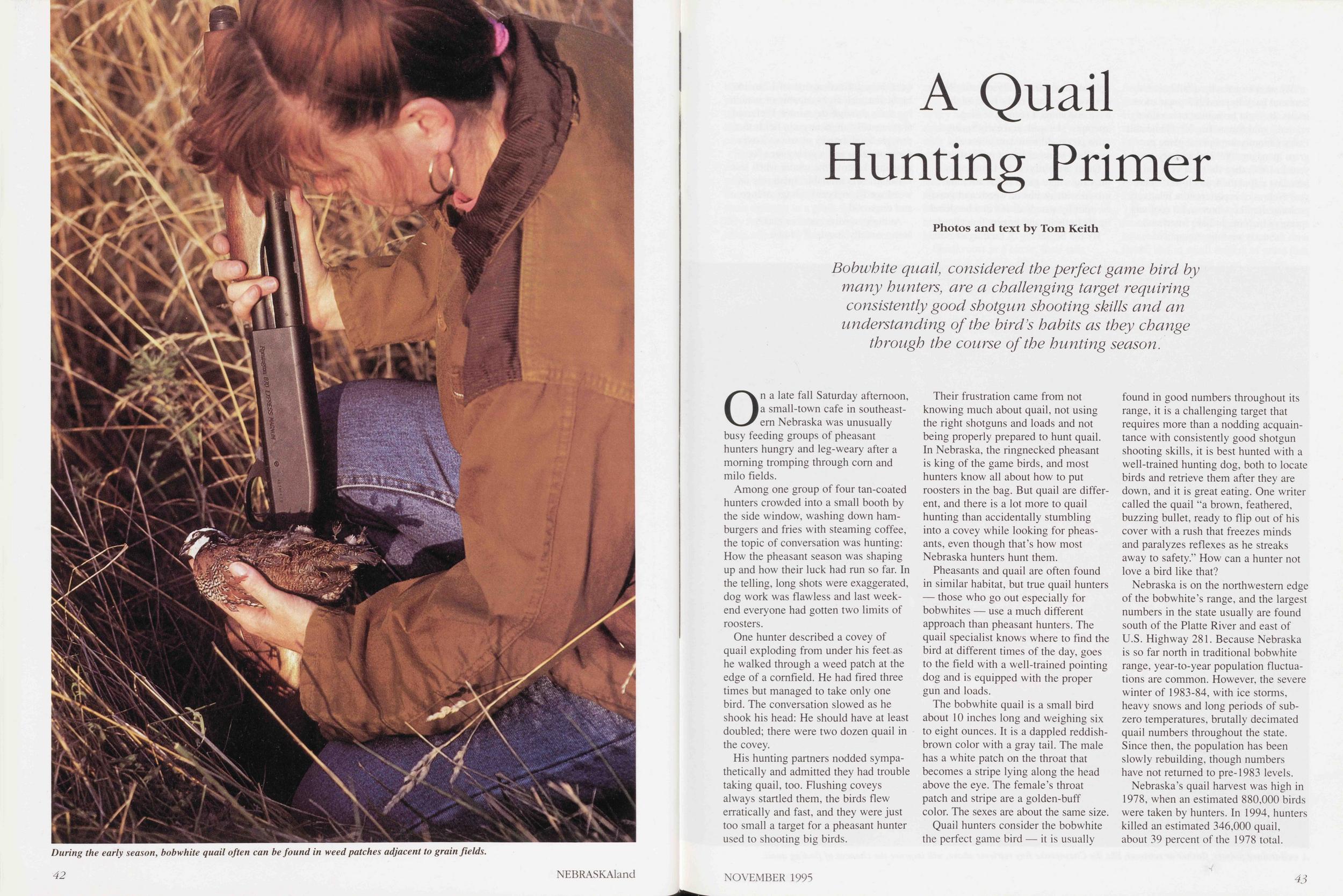
A Quail Hunting Primer
Photos and text by Tom Keith Bobwhite quail, considered the perfect game bird by many hunters, are a challenging target requiring consistently good shotgun shooting skills and an understanding of the bird's habits as they change through the course of the hunting season.On a late fall Saturday afternoon, a small-town cafe in southeastern Nebraska was unusually busy feeding groups of pheasant hunters hungry and leg-weary after a morning tromping through corn and milo fields.
Among one group of four tan-coated hunters crowded into a small booth by the side window, washing down hamburgers and fries with steaming coffee, the topic of conversation was hunting: How the pheasant season was shaping up and how their luck had run so far. In the telling, long shots were exaggerated, dog work was flawless and last weekend everyone had gotten two limits of roosters.
One hunter described a covey of quail exploding from under his feet as he walked through a weed patch at the edge of a cornfield. He had fired three times but managed to take only one bird. The conversation slowed as he shook his head: He should have at least doubled; there were two dozen quail in the covey.
His hunting partners nodded sympathetically and admitted they had trouble taking quail, too. Flushing coveys always startled them, the birds flew erratically and fast, and they were just too small a target for a pheasant hunter used to shooting big birds.
Their frustration came from not knowing much about quail, not using the right shotguns and loads and not being properly prepared to hunt quail. In Nebraska, the ringnecked pheasant is king of the game birds, and most hunters know all about how to put roosters in the bag. But quail are different, and there is a lot more to quail hunting than accidentally stumbling into a covey while looking for pheasants, even though that's how most Nebraska hunters hunt them.
Pheasants and quail are often found in similar habitat, but true quail hunters — those who go out especially for bobwhites — use a much different approach than pheasant hunters. The quail specialist knows where to find the bird at different times of the day, goes to the field with a well-trained pointing dog and is equipped with the proper gun and loads.
The bobwhite quail is a small bird about 10 inches long and weighing six to eight ounces. It is a dappled reddishbrown color with a gray tail. The male has a white patch on the throat that becomes a stripe lying along the head above the eye. The female's throat patch and stripe are a golden-buff color. The sexes are about the same size.
Quail hunters consider the bobwhite the perfect game bird — it is usually found in good numbers throughout its range, it is a challenging target that requires more than a nodding acquaintance with consistently good shotgun shooting skills, it is best hunted with a well-trained hunting dog, both to locate birds and retrieve them after they are down, and it is great eating. One writer called the quail "a brown, feathered, buzzing bullet, ready to flip out of his cover with a rush that freezes minds and paralyzes reflexes as he streaks away to safety." How can a hunter not love a bird like that?
Nebraska is on the northwestern edge of the bobwhite's range, and the largest numbers in the state usually are found south of the Platte River and east of U.S. Highway 281. Because Nebraska is so far north in traditional bobwhite range, year-to-year population fluctuations are common. However, the severe winter of 1983-84, with ice storms, heavy snows and long periods of subzero temperatures, brutally decimated quail numbers throughout the state. Since then, the population has been slowly rebuilding, though numbers have not returned to pre-1983 levels.
Nebraska's quail harvest was high in 1978, when an estimated 880,000 birds were taken by hunters. In 1994, hunters killed an estimated 346,000 quail, about 39 percent of the 1978 total.
NOVEMBER 1993 43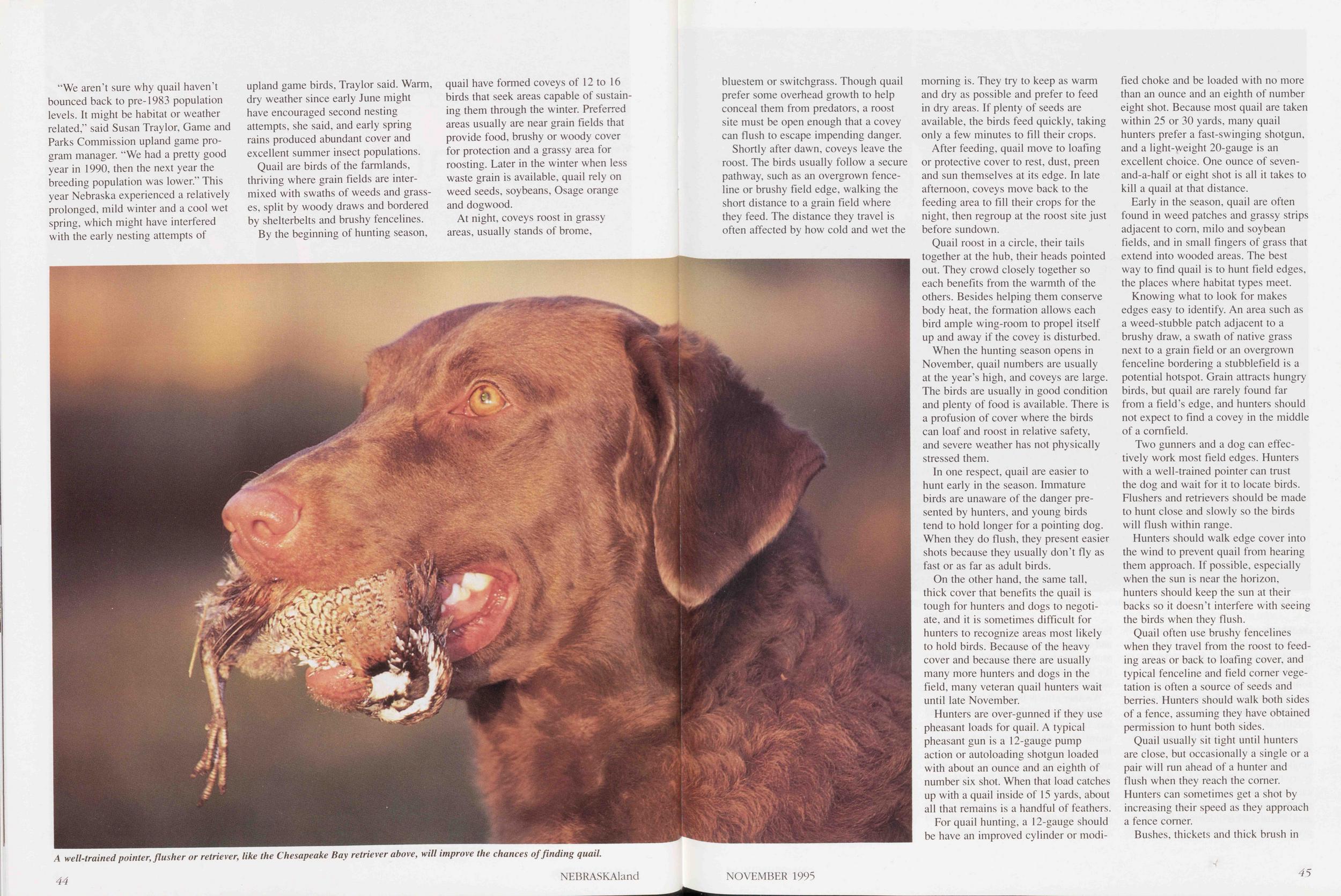
"We aren't sure why quail haven't bounced back to pre-1983 population levels. It might be habitat or weather related," said Susan Traylor, Game and Parks Commission upland game program manager. "We had a pretty good year in 1990, then the next year the breeding population was lower." This year Nebraska experienced a relatively prolonged, mild winter and a cool wet spring, which might have interfered with the early nesting attempts of upland game birds, Traylor said. Warm, dry weather since early June might have encouraged second nesting attempts, she said, and early spring rains produced abundant cover and excellent summer insect populations.
Quail are birds of the farmlands, thriving where grain fields are intermixed with swaths of weeds and grasses, split by woody draws and bordered by shelterbelts and brushy fencelines.
By the beginning of hunting season, quail have formed coveys of 12 to 16 birds that seek areas capable of sustain ing them through the winter. Preferred areas usually are near grain fields that provide food, brushy or woody cover for protection and a grassy area for roosting. Later in the winter when less waste grain is available, quail rely on weed seeds, soybeans, Osage orange and dogwood.
At night, coveys roost in grassy areas, usually stands of brome,
Shortly after dawn, coveys leave the roost. The birds usually follow a secure pathway, such as an overgrown fenceline or brushy field edge, walking the short distance to a grain field where they feed. The distance they travel is often affected by how cold and wet the morning is. They try to keep as warm and dry as possible and prefer to feed in dry areas. If plenty of seeds are available, the birds feed quickly, taking only a few minutes to fill their crops.
After feeding, quail move to loafing or protective cover to rest, dust, preen and sun themselves at its edge. In late afternoon, coveys move back to the feeding area to fill their crops for the night, then regroup at the roost site just before sundown.
Quail roost in a circle, their tails together at the hub, their heads pointed out. They crowd closely together so each benefits from the warmth of the others. Besides helping them conserve body heat, the formation allows each bird ample wing-room to propel itself up and away if the covey is disturbed.
When the hunting season opens in November, quail numbers are usually at the year's high, and coveys are large. The birds are usually in good condition and plenty of food is available. There is a profusion of cover where the birds can loaf and roost in relative safety, and severe weather has not physically stressed them.
In one respect, quail are easier to hunt early in the season. Immature birds are unaware of the danger presented by hunters, and young birds tend to hold longer for a pointing dog. When they do flush, they present easier shots because they usually don't fly as fast or as far as adult birds.
On the other hand, the same tall, thick cover that benefits the quail is tough for hunters and dogs to negotiate, and it is sometimes difficult for hunters to recognize areas most likely to hold birds. Because of the heavy cover and because there are usually many more hunters and dogs in the field, many veteran quail hunters wait until late November.
Hunters are over-gunned if they use pheasant loads for quail. A typical pheasant gun is a 12-gauge pump action or autoloading shotgun loaded with about an ounce and an eighth of number six shot. When that load catches up with a quail inside of 15 yards, about all that remains is a handful of feathers.
For quail hunting, a 12-gauge should be have an improved cylinder or modified choke and be loaded with no more than an ounce and an eighth of number eight shot. Because most quail are taken within 25 or 30 yards, many quail hunters prefer a fast-swinging shotgun, and a light-weight 20-gauge is an excellent choice. One ounce of seven-and-a-half or eight shot is all it takes to kill a quail at that distance.
Early in the season, quail are often found in weed patches and grassy strips adjacent to corn, milo and soybean fields, and in small fingers of grass that extend into wooded areas. The best way to find quail is to hunt field edges, the places where habitat types meet.
Knowing what to look for makes edges easy to identify. An area such as a weed-stubble patch adjacent to a brushy draw, a swath of native grass next to a grain field or an overgrown fenceline bordering a stubblefield is a potential hotspot. Grain attracts hungry birds, but quail are rarely found far from a field's edge, and hunters should not expect to find a covey in the middle of a cornfield.
Two gunners and a dog can effectively work most field edges. Hunters with a well-trained pointer can trust the dog and wait for it to locate birds. Flushers and retrievers should be made to hunt close and slowly so the birds will flush within range.
Hunters should walk edge cover into the wind to prevent quail from hearing them approach. If possible, especially when the sun is near the horizon, hunters should keep the sun at their backs so it doesn't interfere with seeing the birds when they flush.
Quail often use brushy fencelines when they travel from the roost to feeding areas or back to loafing cover, and typical fenceline and field corner vegetation is often a source of seeds and berries. Hunters should walk both sides of a fence, assuming they have obtained permission to hunt both sides.
Quail usually sit tight until hunters are close, but occasionally a single or a pair will run ahead of a hunter and flush when they reach the corner. Hunters can sometimes get a shot by increasing their speed as they approach a fence corner.
Bushes, thickets and thick brush in
NOVEMBER 1995
45
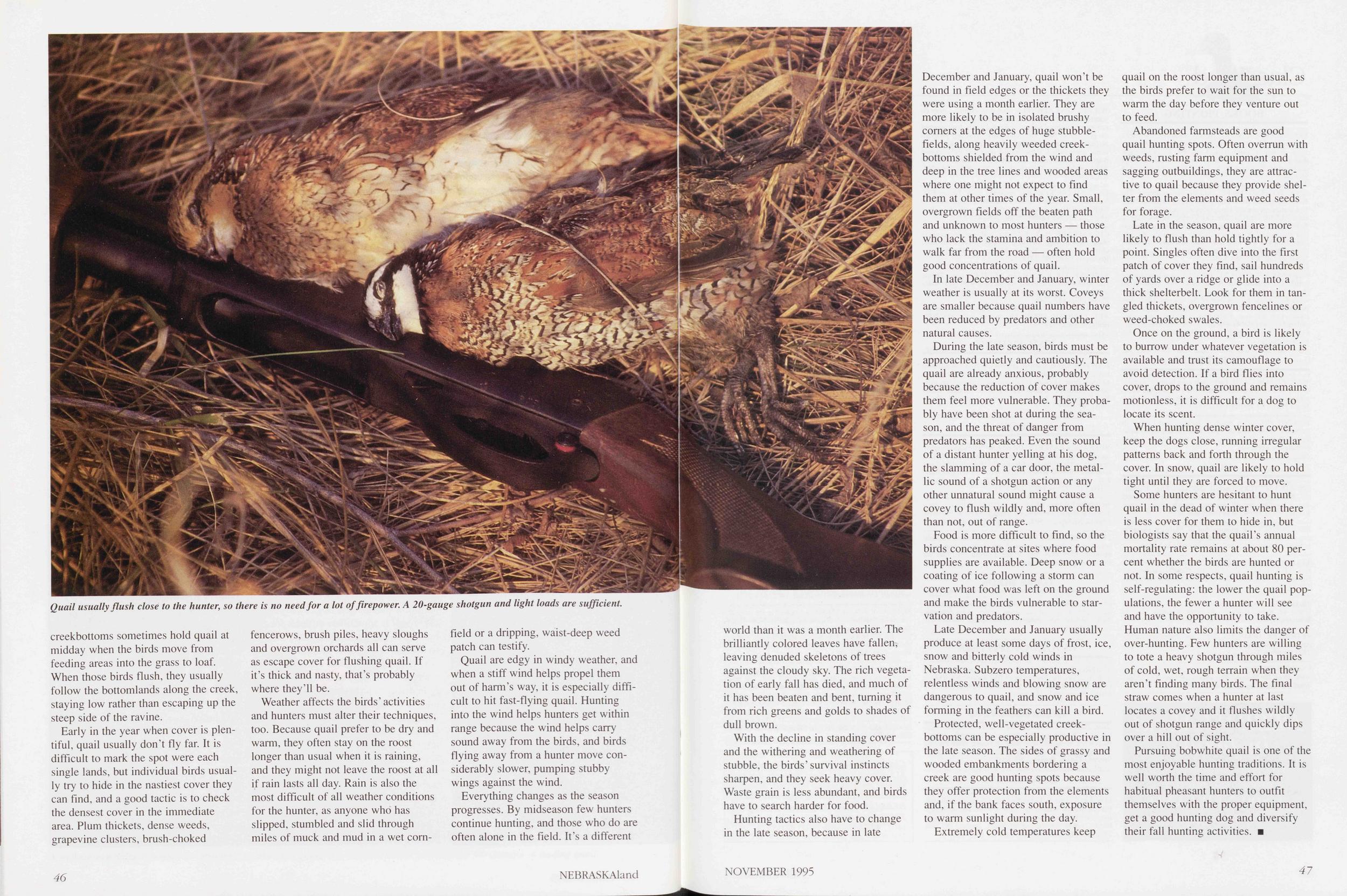
Early in the year when cover is plentiful, quail usually don't fly far. It is difficult to mark the spot were each single lands, but individual birds usually try to hide in the nastiest cover they can find, and a good tactic is to check the densest cover in the immediate area. Plum thickets, dense weeds, grapevine clusters, brush-choked fencerows, brush piles, heavy sloughs and overgrown orchards all can serve as escape cover for flushing quail. If it's thick and nasty, that's probably where they'll be.
Weather affects the birds'activities and hunters must alter their techniques, too. Because quail prefer to be dry and warm, they often stay on the roost longer than usual when it is raining, and they might not leave the roost at all if rain lasts all day. Rain is also the most difficult of all weather conditions for the hunter, as anyone who has slipped, stumbled and slid through miles of muck and mud in a wet cornfield or a dripping, waist-deep weed patch can testify.
Quail are edgy in windy weather, and when a stiff wind helps propel them out of harm's way, it is especially difficult to hit fast-flying quail. Hunting into the wind helps hunters get within range because the wind helps carry sound away from the birds, and birds flying away from a hunter move considerably slower, pumping stubby wings against the wind.
Everything changes as the season progresses. By midseason few hunters continue hunting, and those who do are often alone in the field. It's a different 46 NEBRASKAland world than it was a month earlier. The brilliantly colored leaves have fallen, leaving denuded skeletons of trees against the cloudy sky. The rich vegetation of early fall has died, and much of it has been beaten and bent, turning it from rich greens and golds to shades of dull brown.
With the decline in standing cover and the withering and weathering of stubble, the birds' survival instincts sharpen, and they seek heavy cover. Waste grain is less abundant, and birds have to search harder for food.
Hunting tactics also have to change in the late season, because in late December and January, quail won't be found in field edges or the thickets they were using a month earlier. They are more likely to be in isolated brushy corners at the edges of huge stubblefields, along heavily weeded creekbottoms shielded from the wind and deep in the tree lines and wooded areas where one might not expect to find them at other times of the year. Small, overgrown fields off the beaten path and unknown to most hunters those who lack the stamina and ambition to walk far from the road often hold good concentrations of quail.
In late December and January, winter weather is usually at its worst. Coveys are smaller because quail numbers have been reduced by predators and other natural causes.
During the late season, birds must be approached quietly and cautiously. The quail are already anxious, probably because the reduction of cover makes them feel more vulnerable. They probably have been shot at during the season, and the threat of danger from predators has peaked. Even the sound of a distant hunter yelling at his dog, the slamming of a car door, the metallic sound of a shotgun action or any other unnatural sound might cause a covey to flush wildly and, more often than not, out of range.
Food is more difficult to find, so the birds concentrate at sites where food supplies are available. Deep snow or a coating of ice following a storm can cover what food was left on the ground and make the birds vulnerable to starvation and predators.
Late December and January usually produce at least some days of frost, ice, snow and bitterly cold winds in Nebraska. Subzero temperatures, relentless winds and blowing snow are dangerous to quail, and snow and ice forming in the feathers can kill a bird.
Protected, well-vegetated creekbottoms can be especially productive in the late season. The sides of grassy and wooded embankments bordering a creek are good hunting spots because they offer protection from the elements and, if the bank faces south, exposure to warm sunlight during the day.
Extremely cold temperatures keep quail on the roost longer than usual, as the birds prefer to wait for the sun to warm the day before they venture out to feed.
Abandoned farmsteads are good quail hunting spots. Often overrun with weeds, rusting farm equipment and sagging outbuildings, they are attractive to quail because they provide shelter from the elements and weed seeds for forage.
Late in the season, quail are more likely to flush than hold tightly for a point. Singles often dive into the first patch of cover they find, sail hundreds of yards over a ridge or glide into a thick shelterbelt. Look for them in tangled thickets, overgrown fencelines or weed-choked swales.
Once on the ground, a bird is likely to burrow under whatever vegetation is available and trust its camouflage to avoid detection. If a bird flies into cover, drops to the ground and remains motionless, it is difficult for a dog to locate its scent.
When hunting dense winter cover, keep the dogs close, running irregular patterns back and forth through the cover. In snow, quail are likely to hold tight until they are forced to move.
Some hunters are hesitant to hunt quail in the dead of winter when there is less cover for them to hide in, but biologists say that the quail's annual mortality rate remains at about 80 percent whether the birds are hunted or not. In some respects, quail hunting is self-regulating: the lower the quail populations, the fewer a hunter will see and have the opportunity to take. Human nature also limits the danger of over-hunting. Few hunters are willing to tote a heavy shotgun through miles of cold, wet, rough terrain when they aren't finding many birds. The final straw comes when a hunter at last locates a covey and it flushes wildly out of shotgun range and quickly dips over a hill out of sight.
Pursuing bobwhite quail is one of the most enjoyable hunting traditions. It is well worth the time and effort for habitual pheasant hunters to outfit themselves with the proper equipment, get a good hunting dog and diversify their fall hunting activities.
NOVEMBER 1995 47
Classified
BOOKS/PRINTINGFREE BOOK CATALOG. Novels, westerns, romances, children's; old out of print, found bams, attic. Authors: Grey, Bower, Condor, Fox. Curwood, Raine. Wright, Aldrige. Pollyanna, Freckles, many others. Postage appreciated. Pierce. 4400 N. Pine Cluster, Oroville, CA 95965.
HOW TO FIND MORE outdoor opportunities! The Nebraska Sportsman's Atlas. Locations of all public lands and waters on county transportation maps. These maps show ALL the roads in Nebraska. Listings include federal, Nebraska Game and Parks, NRD holdings, hotels and motels and Nebraska's endless attractions. At only $18.75/copy, a true time and frustration saver. To order, write: Sportsman's Atlas Co.. P.O. Box 132, Lytton, IA 50561 or call (800) 568-8334.
NEBRASKA PHOTO CELEBRATION available for the holidays, this hardcover coffee table book captures all that is best about Nebraska in over 120 full-color photographs. Deluxe presentation of the seasons, landscape, people and events that will be cherished for years to come. Call toll-free 1-800-654-1105 for credit card orders or write: American & World Geographic Publishing P.O. Box 5630 Helena MT 59604. $29.95 plus $2.50 shipping.
COLLECTIBLESWANTED FOR CASH. Early Nebraska hunting permits, federal and state hunting stamps, 1901 to date, old duck, goose calls related items. Lanny Golden PO Box 1504, North Platte, NE 69103. (308) 534-4242.
BUYING PRE-1950s baseball, football and basketball uniforms, leather helmets and other related equipment. Especially early 1900s items. Call collect (402) 573-0938 evenings or weekends.
DOGSENGLISH SETTERS. German shorthairs. English pointers. Brittany spaniels - stud service, puppies and started dogs. Training for all pointing breeds. Plum Creek Kennel. (712) 529-4238 or (402) 298-8153.
ENGLISH SETTER puppies out of Midwest shooting dog champion the last four vears. Other gun dogs are also available. Phone (402) 862-2168 or (402) 862-2886.
YELLOW-CHOCOLATE-BLACK LAB pups. Breeders hips O.F.A. and eyes c.e.r.f./ed. Excellent bloodlines and hunting potential. Call Mr. Bendler, Lexington. NE (308) 324-4247 or Lincoln (402) 477-1305.
TRAINING ALL BREEDS bird dogs - Vizslas for sale. Home of Rebel Rousers. Rozanek Kennels, RR 2. Schuyler, NE 68661. Phone (402) 352-8769.
RETRIEVER TRAINING. Area's top "retrievers only'' trainer. Field trial and hunting dogs. Non-slip duck dogs! TKO Retriever Training Kennel (402) 623-4311.
ENGLISH SETTERS and Labradors from outstanding lines. Bred for hunters who appreciate fine bird dogs! Wind Fall Gun Dogs, (402) 421-4693.
NEBRASKAland byphone! For Visa and MasterCard orders, call toll free 1-800-NEB-LAND (632-5263)WILDERNESS KENNELS. Gun dog training - over 60 years combined experience. Training all sporting breeds retrievers, flushing and pointing dogs. All dogs worked on pen raised birds and wild game. Training program includes obedience training - heel, sit, stay, down and come when called. Pups, started dogs and fully trained dogs for sale. Hunting dogs trained by hunters. Henry Sader, Wilderness Kennels. Roca, NE (402) 423-4212. Since 1968.
ENGLISH COCKER pups, imported stock, British FTC bloodlines. Many colors available. Featured in NEBRASKAland November 1991. Sawtooth Oaks, Box 443, Orleans. NE 68966. Phone (308) 473-5265.
CHESAPEAKE BAY, Labrador and golden retriever pups, started dogs and stud service. 16-time national champion pedigree. Visa & Mastercard. Platte Valley Retrievers (308) 995-2318.
RESERVE YOUR ENGLISH SETTERS now. Thistle Hill Setters bred intelligent, stylish pups with great noses and lots of class. A Thistle Hill setter is a friend for life. Phone (402) 487-2648.
AKC ENGLISH SPRINGER spaniel pups AFC/NFC pedigree. (402) 924-3423.
FISH/FISHINGFISH FOR SALE. Catfish, largemouth bass, smallmouth bass, perch, crappie, bluegill, walleye, northern pike, rainbow trout, Donaldson rainbow trout, grass carp, minnows, bullheads. Consulting available. Pleasant Valley Fish Farm. RR 1, Box 147, McCook, NE 69001. Phone (308) 345-6599.
FOODNEBRASKA BASKETS: The original Nebraska company specializing in fine foods from Nebraska since 1984. A beautiful array of baskets filled with ethnic, healthful and long-time favorite foods. Call or write for our brochure: P.O. Box 22985, Lincoln. NE 68542. Phone 1-800-345-7725 or (402)-438-3111.
HOMEBREWING/BEER & WINEMAKING - New 1995 catalogue. Fermenter's Supply, 8410 K Plz. #10. Omaha, NE 68127. (402) 593-9171. Mail order welcome.
FROM NEBRASKA GIFT SHOP the world's largest selection of Nebraska-made food products and gifts. Historic Haymarket. 140 N. 8th, Lincoln. NE. Call for free catalog 1-800-399-5693.
GAME BIRDSQUAIL. PHEASANTS. Wild Turkeys pen raised, all sizes, live or dressed reasonable prices. Also domestic ducks and lavender guineas. Cedar Ridge Game Farm (402) 352-5863.
GUIDES/OlJTFITTERSMAD RIVER CANOES offers the finest quality and performance. For the finest canoes and accessories look to Great Plains Canoe Co., 205 Main. Springfield, NE. 68059. Phone (402) 253-2001.
GUNS/SHOOTINGGUNS - Browning, Winchester, Remington, others. Hi-powers, shotguns, new, used, antiques. Want Pre-'64 Winchesters. Buy-Sell-Trade. (402) 729-6112. Bedlan's Sporting Goods, Fairbury, NE 68352.
REAL ESTATEFOR SALE: One of Nebraska's top fishing-recreational-hunting resorts with home, cabins, store and all equipment needed goes. Set on very large lake. Call Swett Realty, 1-800-585-1626. Fred Swett, Broker, PO Box 265, Ainsworth, NE 69210.
LAKE McCONAUGHY development for sale. Class development property on beautiful lake McConaughv, NE. 140 lots for $297,000 on the lake. Call Bill Hine's. (308)284-6701.
81 ACRES PLATTE RIVER bottom, duck pond, blind. Yi-mile wooded stream, 76 acres native grass, over 10,000 trees planted. 20 minutes west of Omaha, $149,000. Phone (402) 895-4469 or (402) 625-2589.
PARIS RANCH - This scenic ranch is located in the Pine Ridge area of NW Nebraska. There are approximately 2,560 acres, 1,366 are deeded and approximately 1,200 are leased, (private, state and U.S.A.) The ranch has live water, an older, extremely comfortable ranch home, bunk house, good barns, corrals, shops and sheds. Included in the lease land are 640 acres of State of Nebraska School Lease Land. (The owners would be willing to divide this ranch.) Madden Brothers Frontier Realty of Wyoming (307) 532-7079.
TAXIDERMYALLISONS TAXIDERMY STUDIO & Gift Gallery. Specializing in fish, birds and small game. Mounted 35 State Record Fish. Pheasant mounts for sale. 421 N. Dewey, North Platte, NE 69101. (308) 534-2324 or (308) 534-4267.
VACATION/RESORTSFOR FISHING and hunting accommodations. Jefco Inn, Gordon. NE 69343. South Cornell, (308) 282-2935.
BED & BREAKFAST. Historic 1890s hotel. Located in the beautiful Pine Ridge area of Northwest Nebraska. Short drive to Chadron State Park, Fort Robinson and the Black Hills. Beautiful dining room with fireplace and fountain. Room service available. The Olde Main Street Inn, 115 Main St., Chadron. NE 69337. (308) 432-3380.
NE NEBRASKA TROUT FISHING. Mon-Thurs or Fri-Sun. 3 modern cottages. 5 spring-fed lakes. Trout, bass and bluegill. Diamond E Trout Resort, Box B. Orchard, NE 1-800-658-3244.
HUNTER QUARTERS in Milligan. NE. Welcome hunters. Excellent hunting territory. Quarters sleep 5-6 with cooking and refrigeration facilities. Very clean and comfortable. $20/person five or more. Under five $25/person. For arrangements call (402) 629-4501.
NEBRASKA STATE PARK vacations. For a free color brochure listing all park facilities, call 1-800-826-7275.
BUFFALO HUNTS in scenic Pine Ridge country. Mature bulls with fine head and robe. Rustic log home bed-and-breakfast accommodations available. (402) 643-2574.
RODEWAY INN, THEDFORD. Located in the beautiful Nebraska Sandhills on Highways 2 & 83. New 42 unit facility featuring spa, complimentary continental breakfast, and RV parking. Stay with us when fishing, hunting, golfing or canoeing the Dismal and Niobrara Rivers. Phone (800) 373-1648.
BED & BREAKFAST. Historic Argo Hotel built in 1912. Just minutes from hunting, fishing and golf. Ten miles south of Lewis & Clark Lake and Yankton. Full service steakhouse - cocktail lounge. Brass chandeliers and tin ceilings. Twenty rooms includes cable TV, phone and AC. Honeymoon suite with poster bed and Jacuzzi. Affordable rates. Historic Argo Hotel. 211 W. Kansas St., Box 260, Crofton, NE 68730. (402) 388-2400 or (800) 607-ARGO (2746).
Classified rates: 75f per word, minimum $15. Closing date: First business day two months preceding issue date. Ads accepted first-come, first-served, space-available. NEBRASKAland Magazine, P.O. Box 30370, Lincoln, NE 68503-0370. Telephone (402) 471-5478. Fax (402) 471-5528. 48 NEBRASKAlandPage forty-nine
Lost HunterLast year, a few days before Christmas, I took the old man out for a run. It wasn't a real hunt, but more of a simulated hunt so he could carry his shotgun and stretch his legs. He's past his prime, no doubt about that, but he still likes the idea of hunting birds.
That's the way it is with hunters: Just when they settle down and quit being knotheads, their bodies go to hell. In part, it's my fault. I let him lie around nine months of the year and then expect him to jump out of the recliner and be in shape for a day of up-and-down-the- ridges grouse hunting. I'm no spring chicken, pushing 14 years, up there for a bird dog, but I'm still up to chasing the wooden rabbit around the track for a lap or two if the opportunity presents itself.
He's put on some pounds since we started hunting together, and is groaney and stiff for a couple of days after we hunt. His hearing is shot, and he can't see like he used to. Before he hit 40, he had a fair set of eyes for a two-legged, and he'd see incoming ducks not long after I did. He never had much of a nose, though. Well, it is impressive in stature, but his sense of smell doesn't amount to much. From the odors emanating from the kitchen when he cooks, I suspect garlic, Limburger cheese, Tabasco and strong drink have seared off just about all his nerve endings.
We weren't a hundred yards from the truck before he hobbled off into a headhigh sunflower patch and disappeared. I kept on running in the direction we started, figuring he'd show up with the sheepish grin he wears when he's been off doing some freelance hunting. I was concerned though. Twice in October he had drifted off for a couple of hours in a marsh up in Cherry County. Both times I found him wandering aimlessly on the hay meadow blowing his whistle. He does that when he can't keep up.
Pretty soon, sure enough, I heard two short blasts on that damn referee whistle. By the time I got to where he'd been, he was gone. The least he could do is stay in one place, but he never does blow the whistle and move on, blow the whistle and move on. By late afternoon we'd covered most of the area.
About four o'clock I heard him shoot. A few seconds later he shot again, then a third time. I knew he wasn't shooting at a bird, because he's never been able to find one on his own. He's always been tight with his ammunition, too, so when he started using it to signal me, I knew he was getting pretty worried. It was getting close to feed time by then.
I went back to the truck, hoping he had enough sense to go there and wait for me. But he didn't, and there weren't any fresh tracks in the snow. When I was just a pup, I remember older dogs saying that when their hunters got lost they left some scent where they last saw them, and eventually the hunter would come back, lie down and wait to be found. I didn't put much stock in that, particularly given the old guy's sense of smell, but I spread a little scent on the ground as best I could, then headed for the creekbottom looking for him.
Before long I could hear his pickup driving down the minimum maintenance road. No doubt about it. I could hear those gushes of unmufflered exhaust squirting out where he had the tail pipe wired up to the frame. This was serious. Trouble enough trying to track the old geezer down when he's afoot, and now he's driving. Hard telling how far he'd ramble off. But he didn't. He was so disoriented he just kept going round and round the same section. Every once in a while he'd shut the engine off, slam the door, blow the whistle and shoot his gun. I'd never known him to get this worried.
By the time it was full dark, I was dog tired from running from one side of the section to the other trying to catch the old fool. Then I saw him up on the hill, his headlights hitting the tops of the willow trees in the creekbottom, yelling and whistling and honking. Once I saw his truck pull into a farmstead and stay a while. I suppose he asked directions, but he probably forgot them by the time he got back on the county road. That went on until after 10 o'clock; then it got quiet.
It was one of the longest nights of my life. We've been through a lot — blizzards, falling through the ice, barbed wire gashes, pee spots on the carpet and such. And you wouldn't believe what it's cost to keep him up and running. The last day of our Sandhills duck hunt two years ago, for example: The old guy was wearing those 40-pound, rubber chest waders, and he stepped wrong on a sedge tussock and fractured a vertebra. Took him quite a while to come back from that. Ruined our pheasant and quail shooting for the season, and the vet bill so big my friends kidded me about them naming the new wing of the clinic after him. But he'd never been lost overnight.
I tossed and turned. All I could think about was how upset he must be out there alone in the dark, the coyotes howling and unidentified rustling sounds coming from the grass. It was going to get cold, and he never did have a good coat of hair. I couldn't put out of my mind the thought that he might be dead. That wouldn't have been so hard to take if I knew he died quickly, painlessly, just after he'd made a slick double on a brace of roosters. That's the way he'd have wanted to go. But what if he was hurt, had a broken leg or stepped in a trap? Did he die thinking I had abandoned him? It broke my heart just to think about it.
I was up before the sun and out on the minimum maintenance road where I'd last seen his truck lights the night before. Before long an old pickup came bouncing down the road. It wasn't the old man, but a friend of his who lives a few miles north of where we'd been hunting. Knowing the way the old man picks his friends, I figured this guy was lost too, so I stopped him before he wandered any farther from home.
It wasn't much longer before I could hear the putt-putt of leaking exhaust. Sure enough, it was the boss, and did he look like hell — baggy-eyed, grim-faced, a mat of mud and cockleburs on his pant legs. He never was a very good hunter, but when I pick one out of a litter I keep him until he gives up the ghost. I sure was happy to find the old cuss.
Molly Farrar OCTOBER 1995 49
Mixed bag
Owl at the End of TimeHe got out of the pickup an hour after sunup and walked under dark hanging branches onto the trail, the season's first heavy dew on the grass like the edge of death. The sun warming his chest and the sweat chill on his back under a flannel shirt and shell vest would carry him into his annual refresher course in fall. He felt lucky.
He carried his open-choked dove gun over his shoulder, short barrels forward in the manner of an elephant hunter knowing he had a ways to go and wouldn't need it yet. He'd brought it because he liked the feel of walking with a gun, the easy weight of a shell vest. Milo edged the trail, brown heads still as the breathless air. Together with the shelterbelts of Russian olive and cedar, they comprise the Game Commission's current divine plan for the wildlife in these several hundred acres.
Yesterday's rain had cleared the trail of tracks. Deer had already retraced old routes this morning, and he followed an unseen small buck half a mile to where it had thrashed leaves off a small willow. The coming hard freezes would make it keep its distance from the big bucks, but now the spike was enjoying the mistaken notion it would meet a big-eyed doe just around the next bush.
He came back to the trail through chest-high sumac, upper leaves summer green, lower leaves dark blood in the sunlight. A crease in the grass showed him the trail that would edge high above a swamp filled with cottonwoods and top out overlooking one of sweeping bends that make the Elkhorn four times longer than the highway that parallels it most of the way to Omaha. Siberian elm, ash, cottonwood, hackberry and oak put him near the northwestern edge of hardwood country and on the eastern edge of that geological phenomenon, the Sandhills.
White clouds like upside down snowdrifts moved east, stitched by the contrail of a 747 from St. Louis bound for Seattle. He wondered if Meriwether Lewis, even in his wildest moments, could have imagined what a vast land he would help to shrink when he left St. Louis on that same route more than a century and a half ago. He recalled reading a treatise on the "facts" of Sacajawea's having guided Lewis and Clark "only about 400 miles" instead of their whole trip. Poor sap who wrote that, he thought — only someone who'd been no farther out from behind his cushy professorial desk than the research library could think of such a feat across uncharted Louisiana Purchase territory as "only" 400 miles.
He wound along the ridge, stooping under oak branches, and came to the base of an oak as old as the century. Sixty feet above, the leaves began to move in the rising breeze. He struck a match and the flame did not waver. He puffed the fire into the tobacco in the bowl, the smoke rising straight up the trunk to disappear among the still black undersides of the leaves.
Ahead, the trail followed the trunk of a downed oak. Perfect firewood, he thought. He also saw where the trail passed through the middle of two garden-size beds of poison ivy. Great. I get to try out my allergy.
The trail topped out on the clay bank. Years before, he had brought his kids for picnics, even packing 70 pounds of rocks to make a stone-lined fire pit. The pit was still there, filled with broken glass and rusted cans. He leaned the gun against an oak and sat at its base in the shade. He knocked the ashes from the pipe, loaded it again and lighted it.
He watched the smoke rise. Straight up the trunk where the gun barrels stared like two black eye sockets in a prophet's head, a horned owl stared blankly back. He imagined the owl pleased as he was that each of them had come quietly enough not to disturb the other. "You feel as lucky as I do to be here?" he said aloud. The owl turned its head as if it knew nothing in these woods but old age could touch it.
Now the sky's snowdrifts were beginning to pile up. There would be rain again later, no matter what the prophets at the weather bureau said. Now the wind was rising and the oak leaves rustled weather.
In front of him, far below the bank, cottonwoods had grown to 80 feet, making a green wall between him and the river. When the kids were small, they could sit here and watch the river. When Dad had grown up, in the two decades after the turn of the century, there were hardly any trees. He'd seen a picture of his parents sitting on a flood-downed cottonwood, the picture taken directly below where he sat now. The background showed only yellow clay banks and willows.
Dad had seen the long and narrow of it, to the coast and back during the war, 60 years with the same woman. The son had been to the coast and back and stopped several places in between. Now he came back here each fall. Once or twice they'd come together, once or twice he'd come with others.
He felt lucky to have a place to come to, even it was only half way between two roads two miles apart. Lor the moment, it was 400 miles from anywhere. He didn't hear another 747 stitching Seattle and St. Louis more tightly together. He heard only the chickadees in the green wall. He could feel again the straps of the pack loaded with rocks cut into his shoulders, and he felt the weight of all the other packs he'd carried in all that other country.
The knee-deep grass had soaked his jeans and boots on the way in. He had sat long enough now that they were almost dry. The sun, and the wind that rose with it, would have dried the grass for the hike back. He knocked his pipe against the tree bole, watched the round ember roll onto a dry oak leaf. The coal smoldered its way through the leaf, smoke like a contrail rising up the trunk. He got up and rubbed the coal out with his boot.
"I hope luck holds for both of us, owl." Raindrops shattered on oak leaves. The owl drifted off its branch quiet as smoke on the wind, over the bank and through the trees below.
Larry Holland 50 NEBRASKAland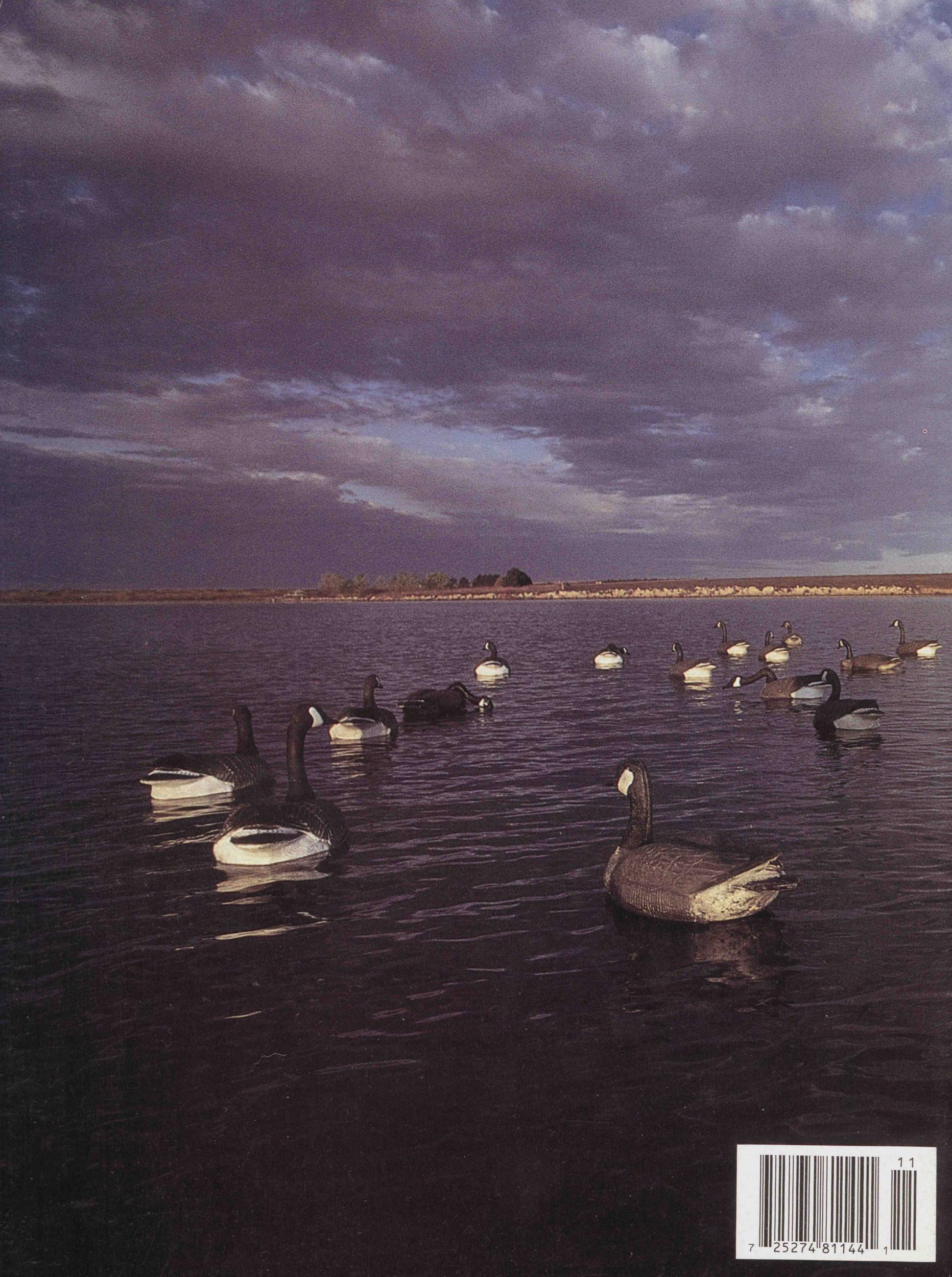
Position: 664 (17 views)