Volume 73, Issue 1, 1995
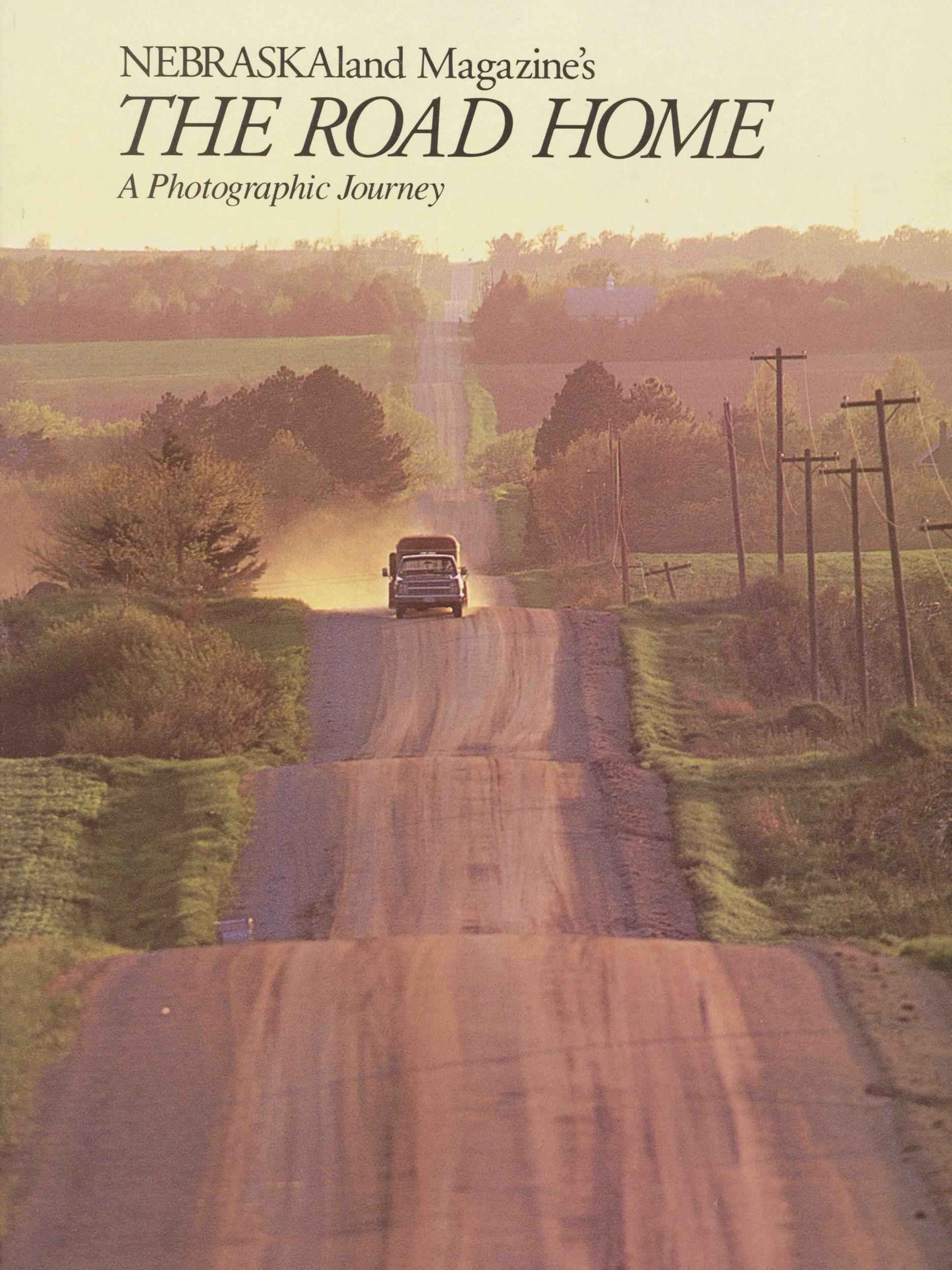
NEBRASKAland Magazine's THE ROAD HOME
A Photographic Journey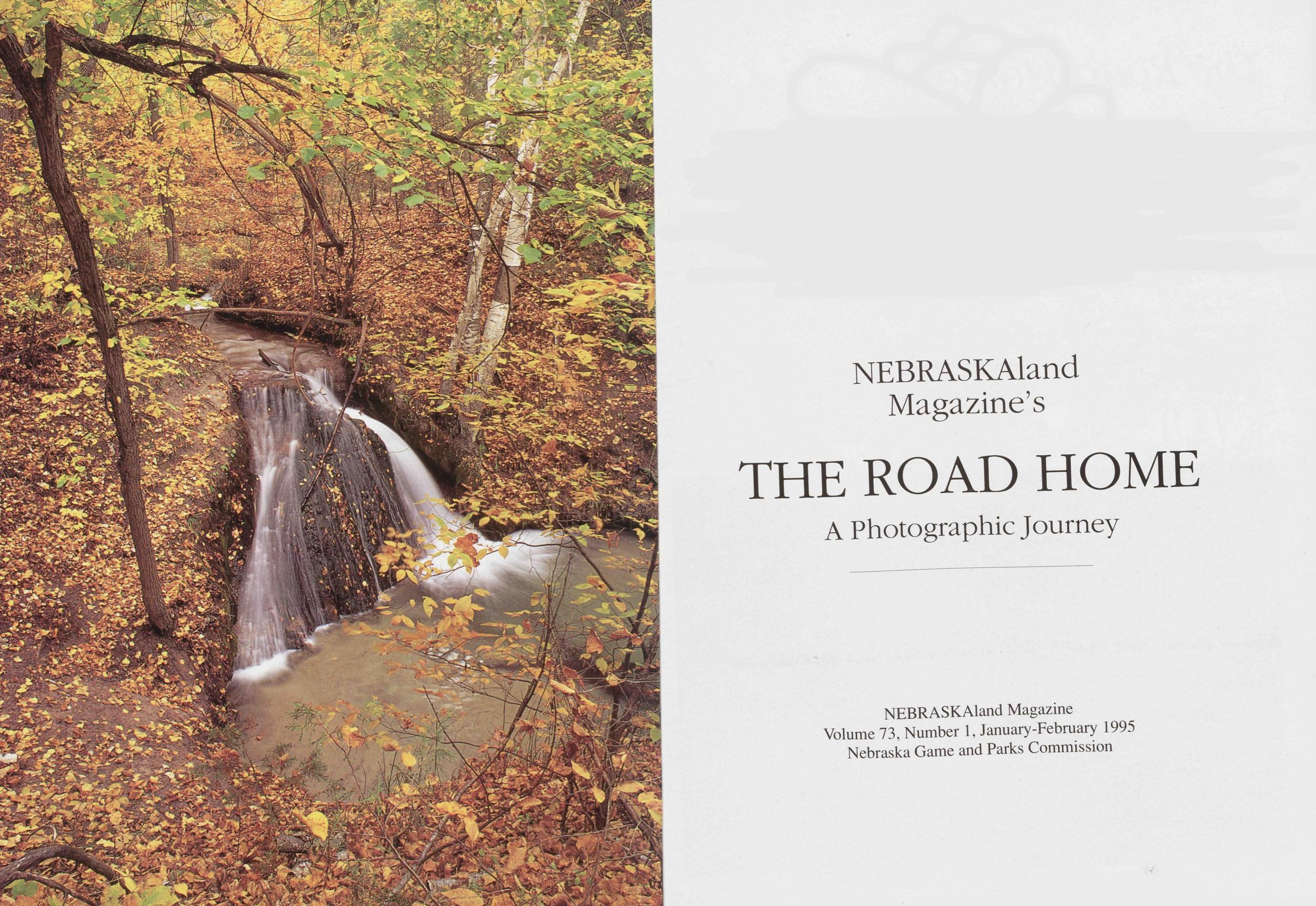
NEBRASKAland Magazine's THE ROAD HOME
A Photographic Journey NEBRASKAland Magazine Volume 73, Number 1, January-February 1995 Nebraska Game and Parks Commission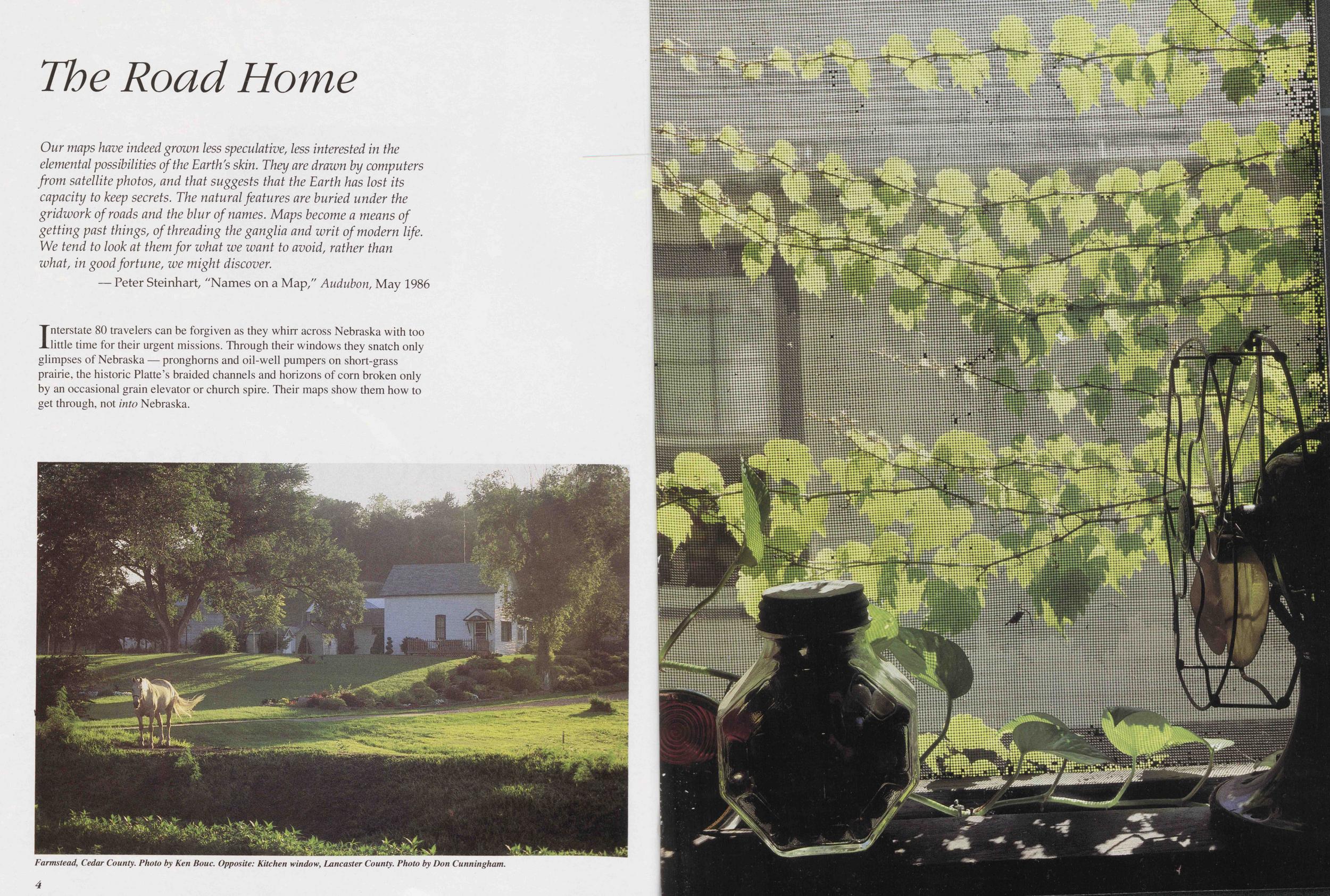
The Road Home
Our maps have indeed grown less speculative, less interested in the elemental possibilities of the Earth's skin. They are drawn by computers from satellite photos, and that suggests that the Earth has lost its capacity to keep secrets. The natural features are buried under the gridwork of roads and the blur of names. Maps become a means of getting past things, of threading the ganglia and writ of modern life. We tend to look at them for what we want to avoid, rather than what, in good fortune, we might discover. — Peter Steinhart, "Names on a Map," Audubon, May 1986Interstate 80 travelers can be forgiven as they whirr across Nebraska with too little time for their urgent missions. Through their windows they snatch only glimpses of Nebraska — pronghorns and oil-well pumpers on short-grass prairie, the historic Platte's braided channels and horizons of corn broken only by an occasional grain elevator or church spire. Their maps show them how to get through, not into Nebraska.
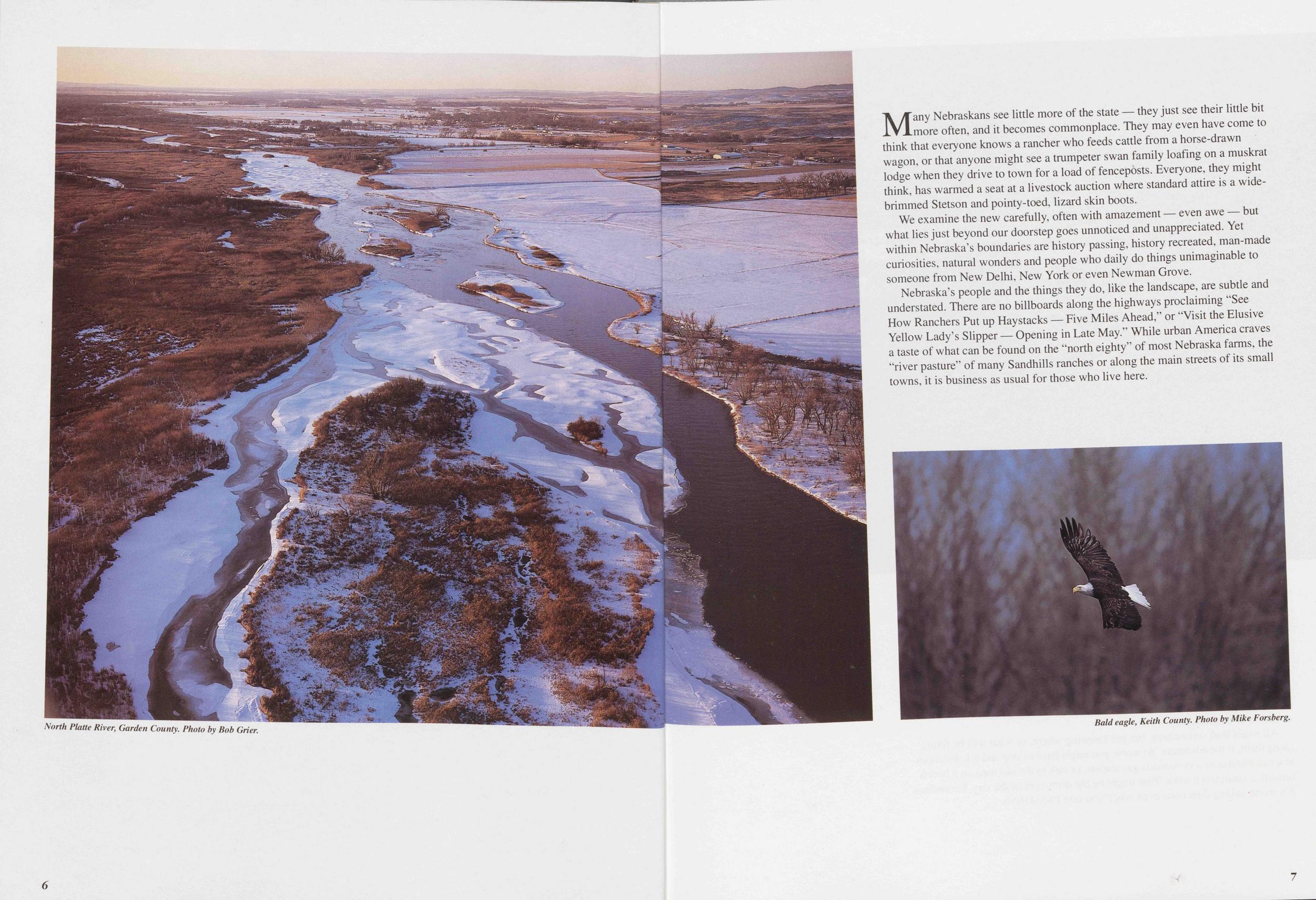
Many Nebraskans see little more of the state — they just see their little bit more often, and it becomes commonplace. They may even have come to think that everyone knows a rancher who feeds cattle from a horse-drawn wagon, or that anyone might see a trumpeter swan family loafing on a muskrat lodge when they drive to town for a load of fenceposts. Everyone, they might think, has warmed a seat at a livestock auction where standard attire is a widebrimmed Stetson and pointy-toed, lizard skin boots.
We examine the new carefully, often with amazement — even awe — but what lies just beyond our doorstep goes unnoticed and unappreciated. Yet within Nebraska's boundaries are history passing, history recreated, man-made curiosities, natural wonders and people who daily do things unimaginable to someone from New Delhi, New York or even Newman Grove.
Nebraska's people and the things they do, like the landscape, are subtle and understated. There are no billboards along the highways proclaiming "See How Ranchers Put up Haystacks — Five Miles Ahead," or "Visit the Elusive Yellow Lady's Slipper — Opening in Late May." While urban America craves a taste of what can be found on the "north eighty" of most Nebraska farms, the "river pasture" of many Sandhills ranches or along the main streets of its small towns, it is business as usual for those who live here.
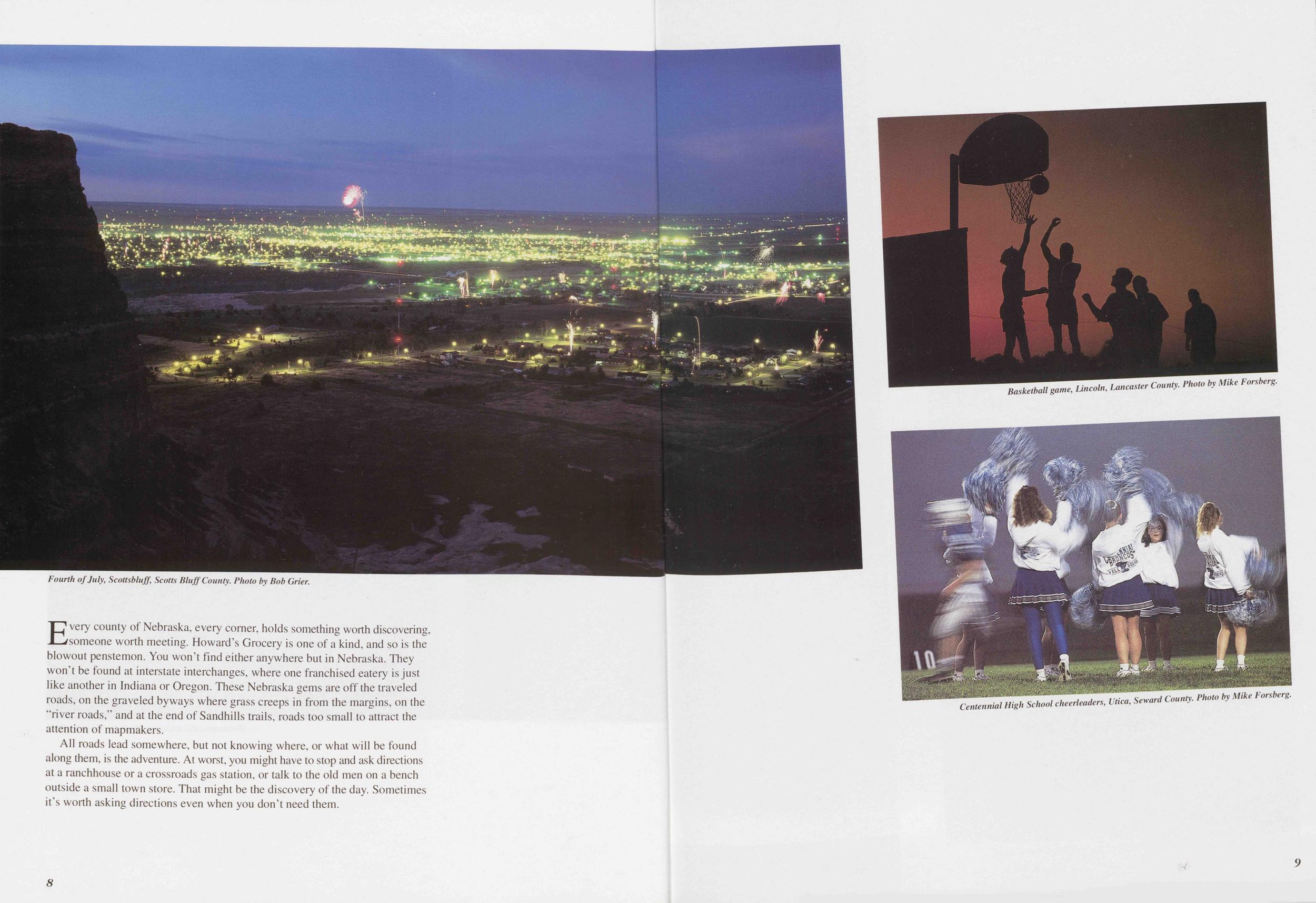
Every county of Nebraska, every corner, holds something worth discovering, someone worth meeting. Howard's Grocery is one of a kind, and so is the blowout penstemon. You won't find either anywhere but in Nebraska. They won't be found at interstate interchanges, where one franchised eatery is just like another in Indiana or Oregon. These Nebraska gems are off the traveled roads, on the graveled byways where grass creeps in from the margins, on the "river roads," and at the end of Sandhills trails, roads too small to attract the attention of mapmakers.
All roads lead somewhere, but not knowing where, or what will be found along them, is the adventure. At worst, you might have to stop and ask directions at a ranchhouse or a crossroads gas station, or talk to the old men on a bench outside a small town store. That might be the discovery of the day. Sometimes it's worth asking directions even when you don't need them.
8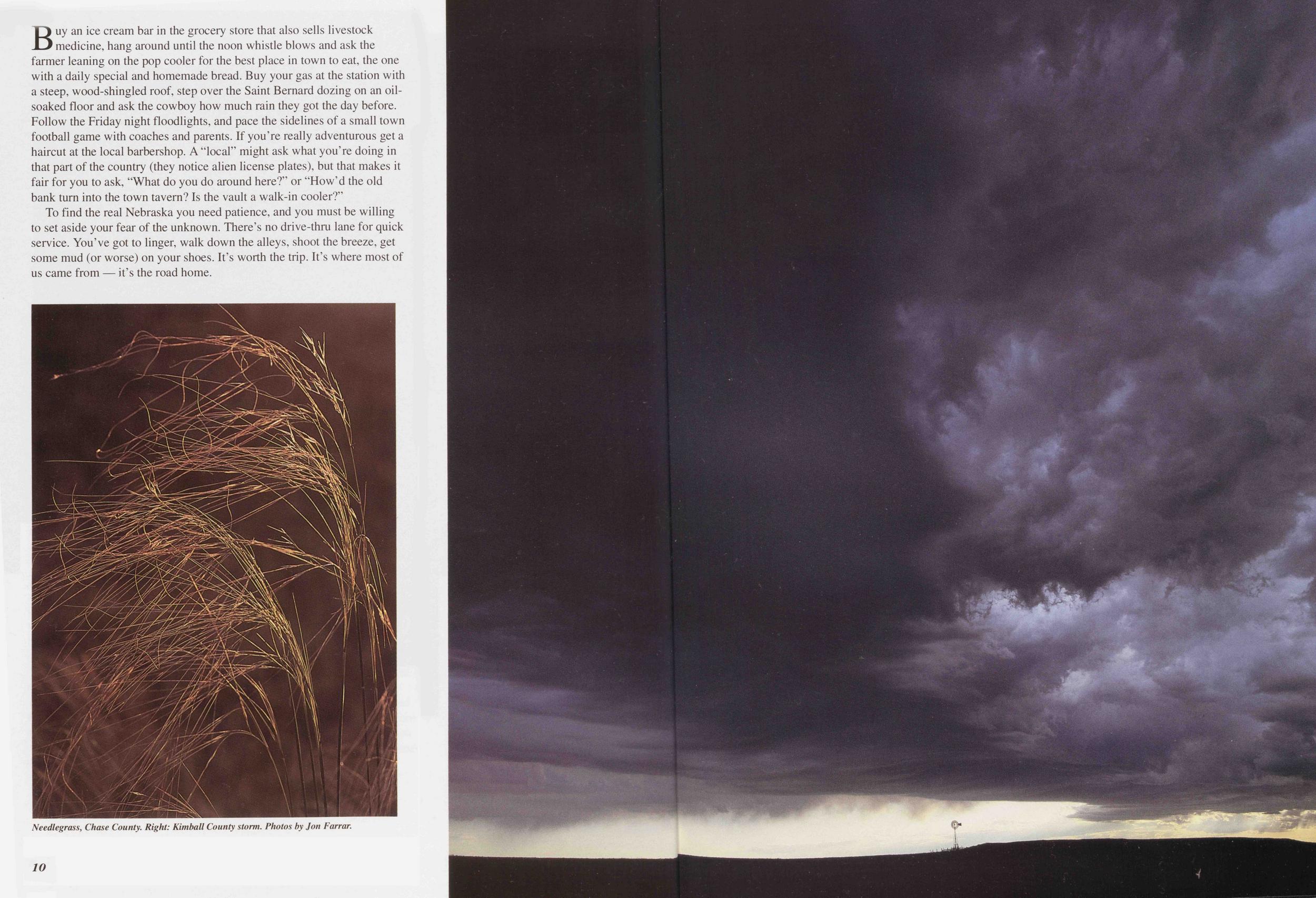
Buy an ice cream bar in the grocery store that also sells livestock medicine, hang around until the noon whistle blows and ask the farmer leaning on the pop cooler for the best place in town to eat, the one with a daily special and homemade bread. Buy your gas at the station with a steep, wood-shingled roof, step over the Saint Bernard dozing on an oilsoaked floor and ask the cowboy how much rain they got the day before. Follow the Friday night floodlights, and pace the sidelines of a small town football game with coaches and parents. If you're really adventurous get a haircut at the local barbershop. A "local" might ask what you're doing in that part of the country (they notice alien license plates), but that makes it fair for you to ask, "What do you do around here?" or "How'd the old bank turn into the town tavern? Is the vault a walk-in cooler?"
To find the real Nebraska you need patience, and you must be willing to set aside your fear of the unknown. There's no drive-thru lane for quick service. You've got to linger, walk down the alleys, shoot the breeze, get some mud (or worse) on your shoes. It's worth the trip. It's where most of us came from — it's the road home.
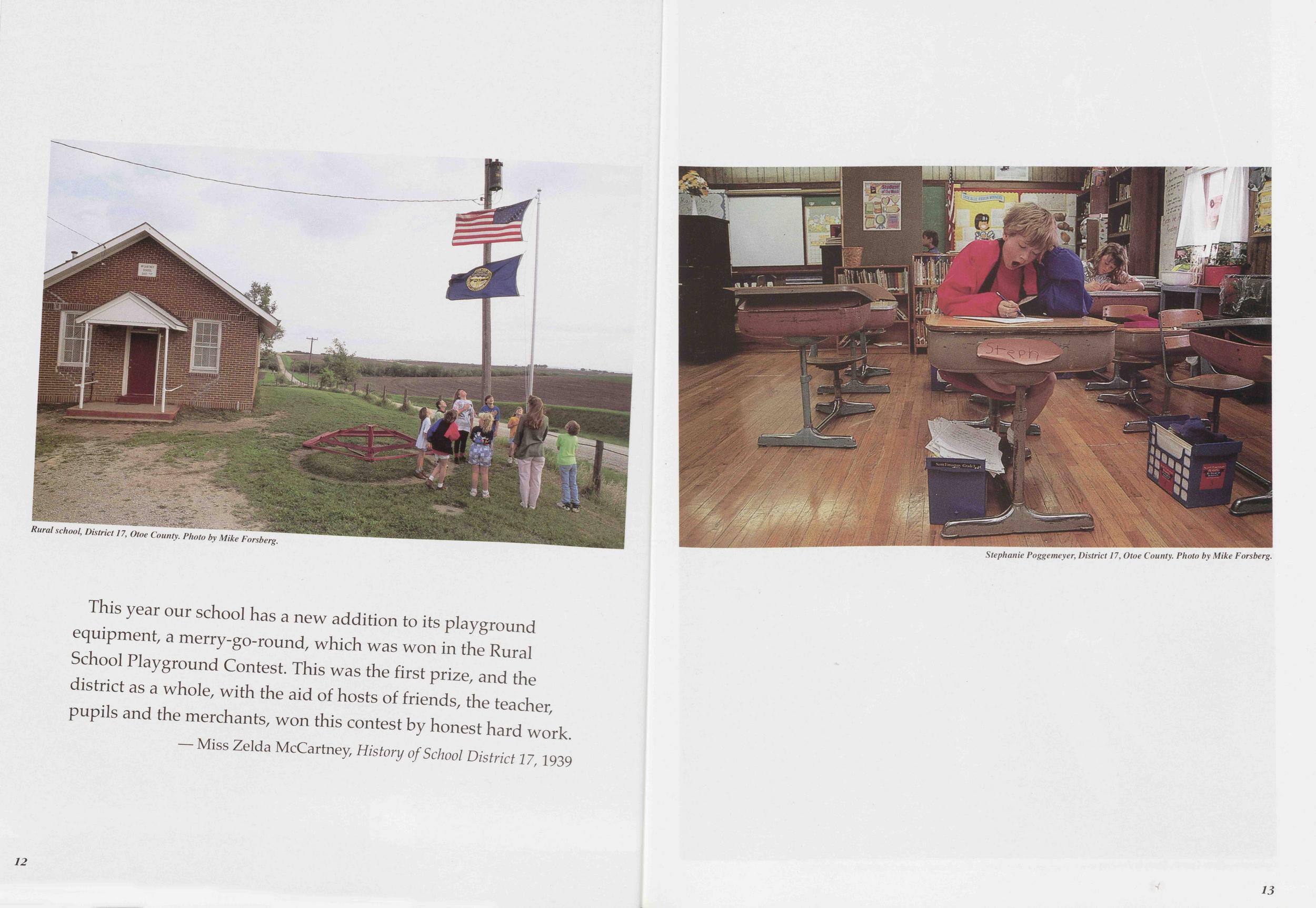
addition to its Pound eqmpment a merry-go-round, which was won in the Rural School Playground Contest. This was the first prize, and the dtstnet as a whole, with the aid of hosts of friends, the teacher puptls and the merchants, won this contest by honest hard work
- Miss Zelda McCartney, History of School District 17,1939 12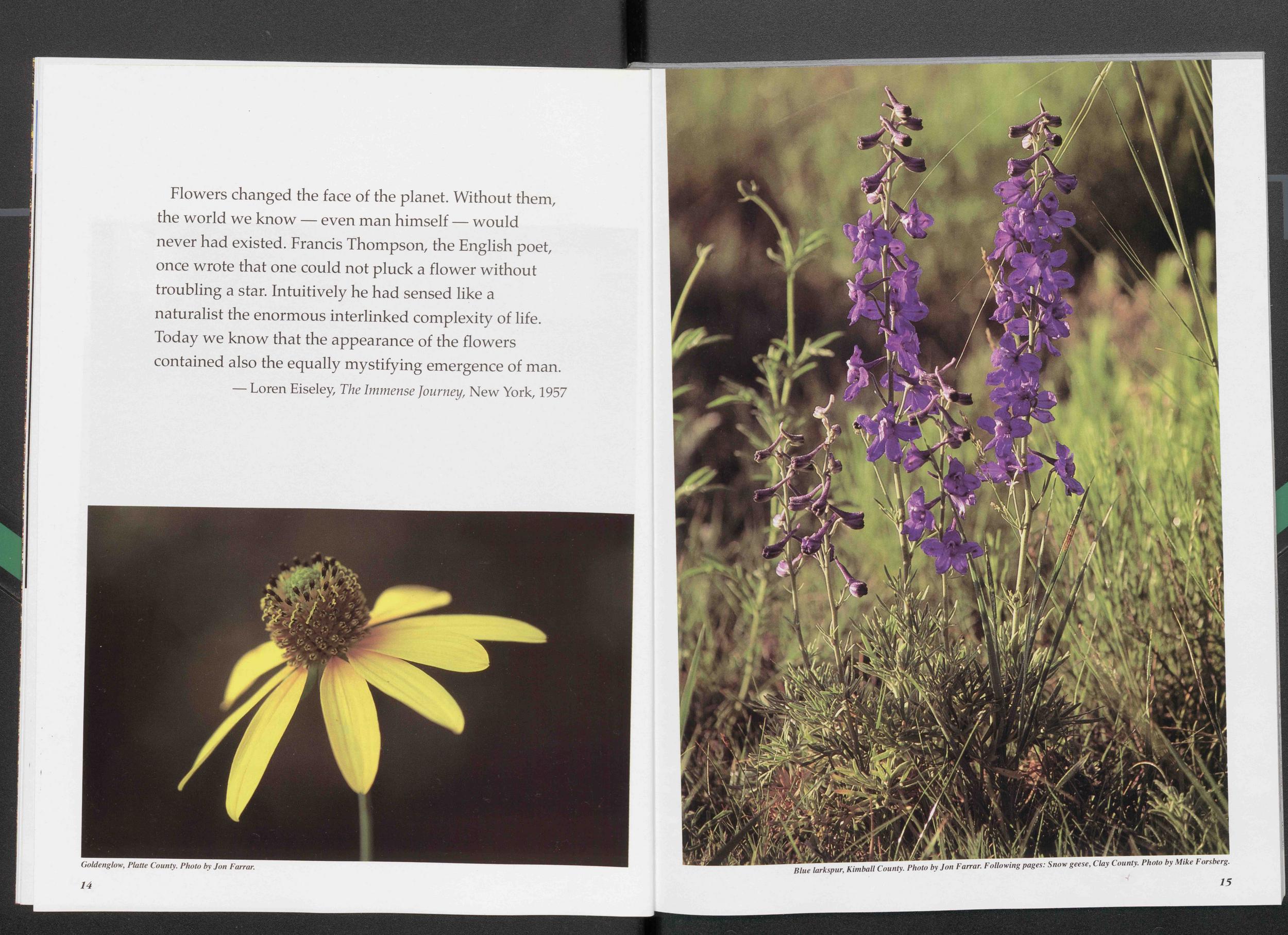
Flowers changed the face of the planet. Without them, the world we know — even man himself — would never had existed. Francis Thompson, the English poet, once wrote that one could not pluck a flower without troubling a star. Intuitively he had sensed like a naturalist the enormous interlinked complexity of life. Today we know that the appearance of the flowers contained also the equally mystifying emergence of man.
— Loren Eiseley, The Immense Journey, New York, 1957
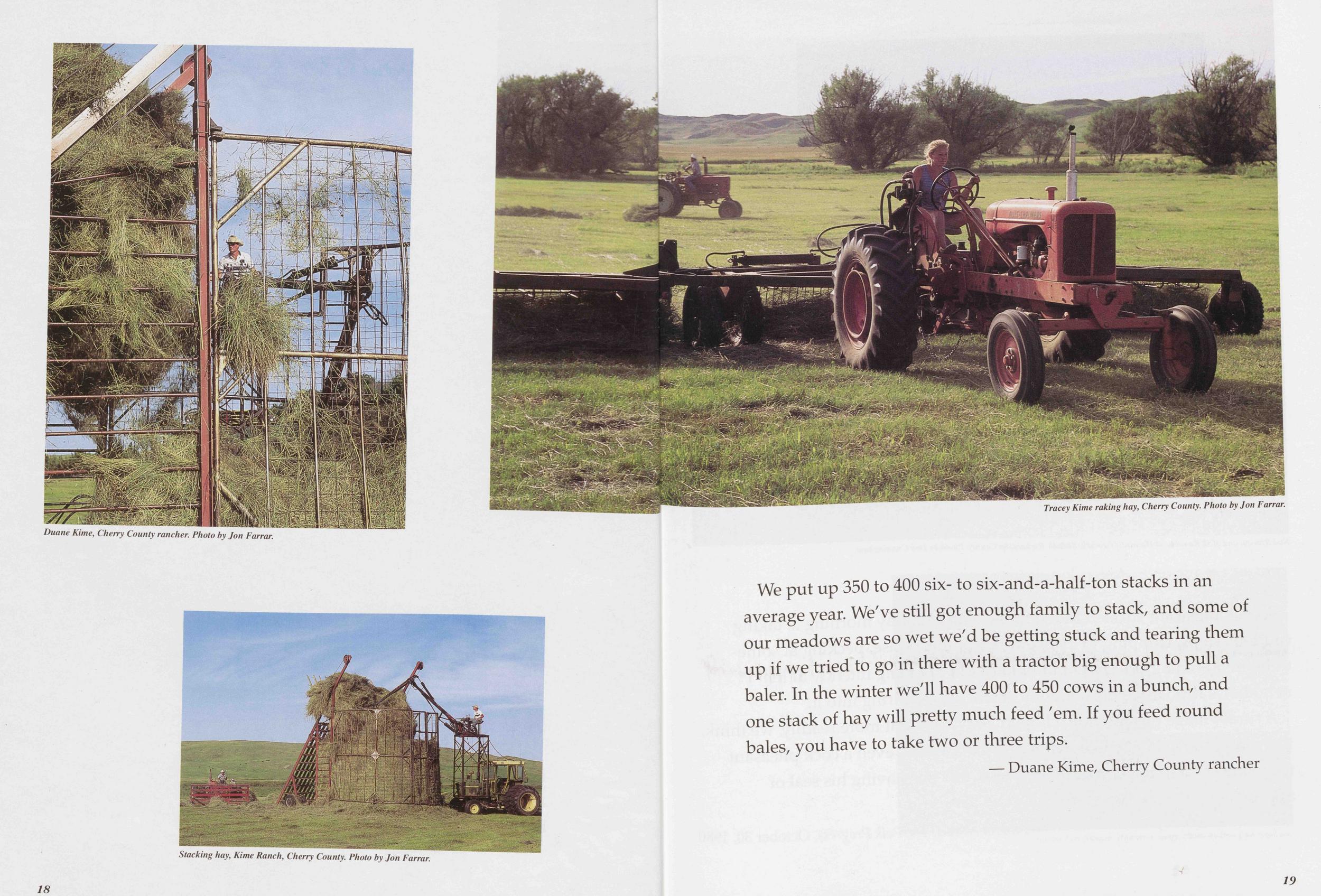
We put up 350 to 400 six- to six-and-a-half-ton stacks in an average year. We've still got enough family to stack, and some of our meadows are so wet we'd be getting stuck and tearing them up if we tried to go in there with a tractor big enough to pull a baler. In the winter we'll have 400 to 450 cows in a bunch, and one stack of hay will pretty much feed 'em. If you feed round bales, you have to take two or three trips.
— Duane Kime, Cherry County rancher 19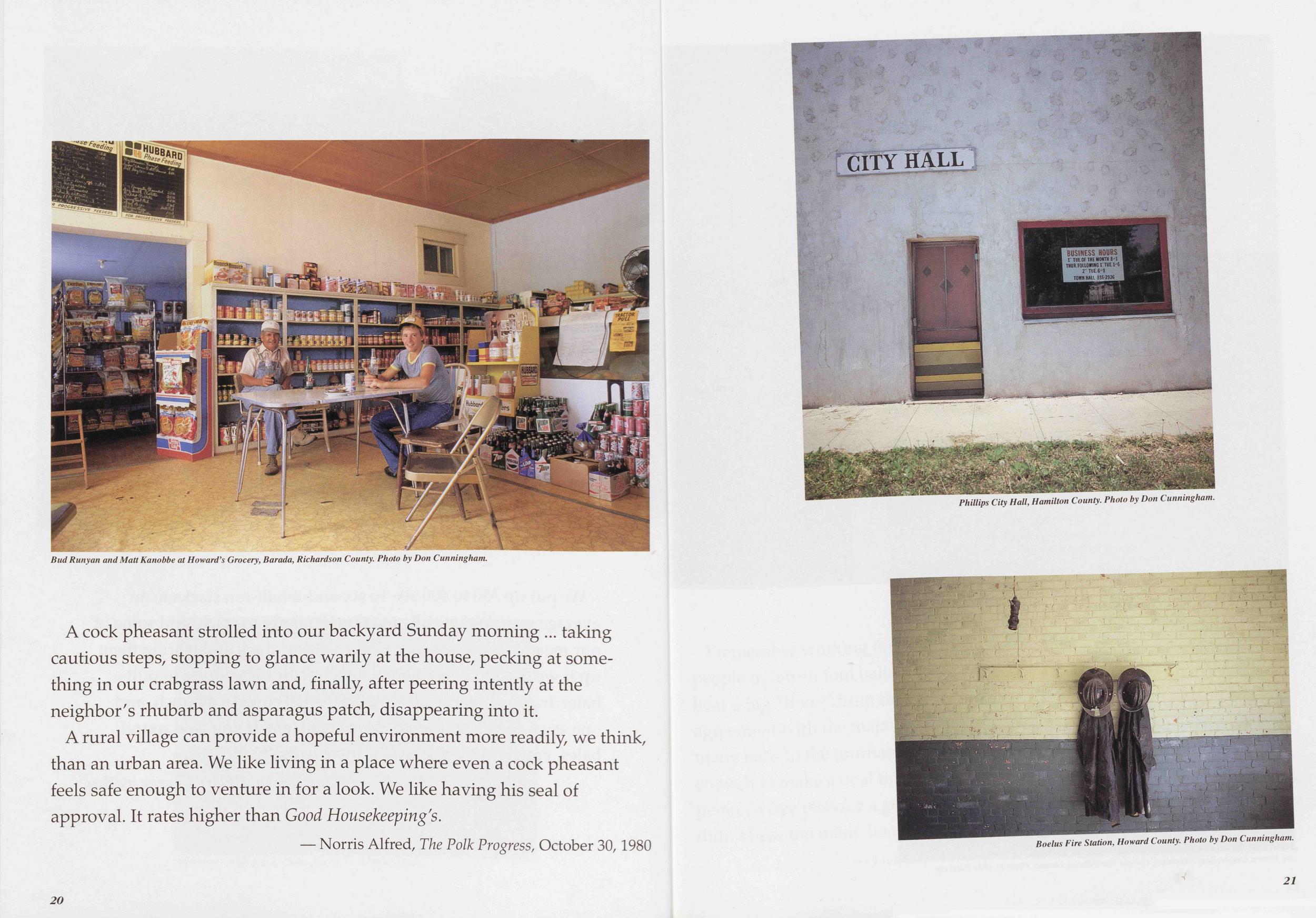
A cock pheasant strolled into our backyard Sunday morning taking cautious steps, stopping to glance warily at the house, pecking at something in our crabgrass lawn and, finally, after peering intently at the neighbor's rhubarb and asparagus patch, disappearing into it.
A rural village can provide a hopeful environment more readily, we think, than an urban area. We like living in a place where even a cock pheasant feels safe enough to venture in for a look. We like having his seal of approval. It rates higher than Good Housekeeping's.
— Norris Alfred, The Polk Progress, October 30,1980 20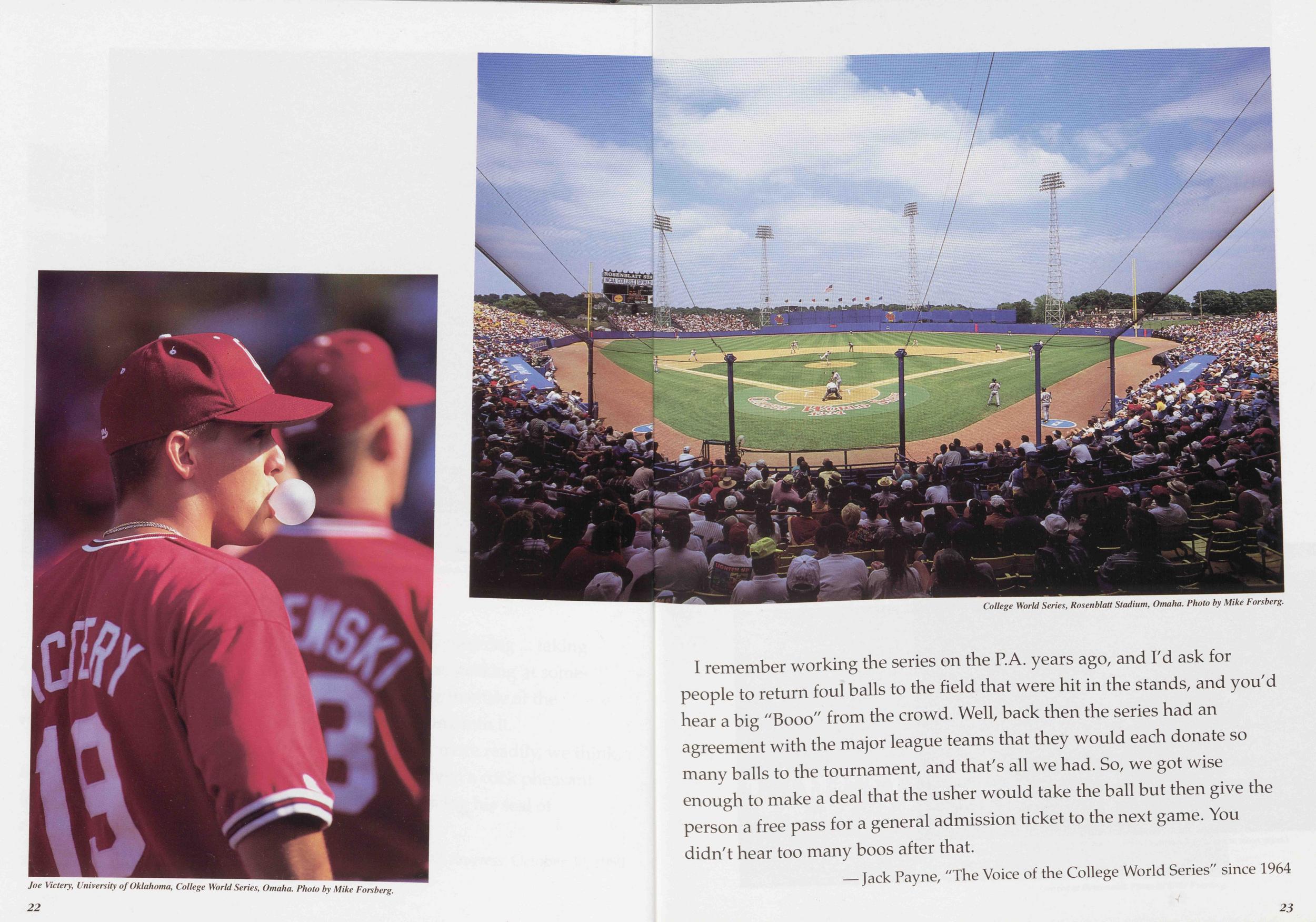
I remember working the series on the P.A. years ago, and I'd ask for people to return foul balls to the field that were hit in the stands, and you'd hear a big "Booo" from the crowd. Well, back then the series had an agreement with the major league teams that they would each donate so many balls to the tournament, and that's all we had. So, we got wise enough to make a deal that the usher would take the ball but then give the person a free pass for a general admission ticket to the next game. You didn't hear too many boos after that.
— Jack Payne, "The Voice of the College World Series" since 1964 23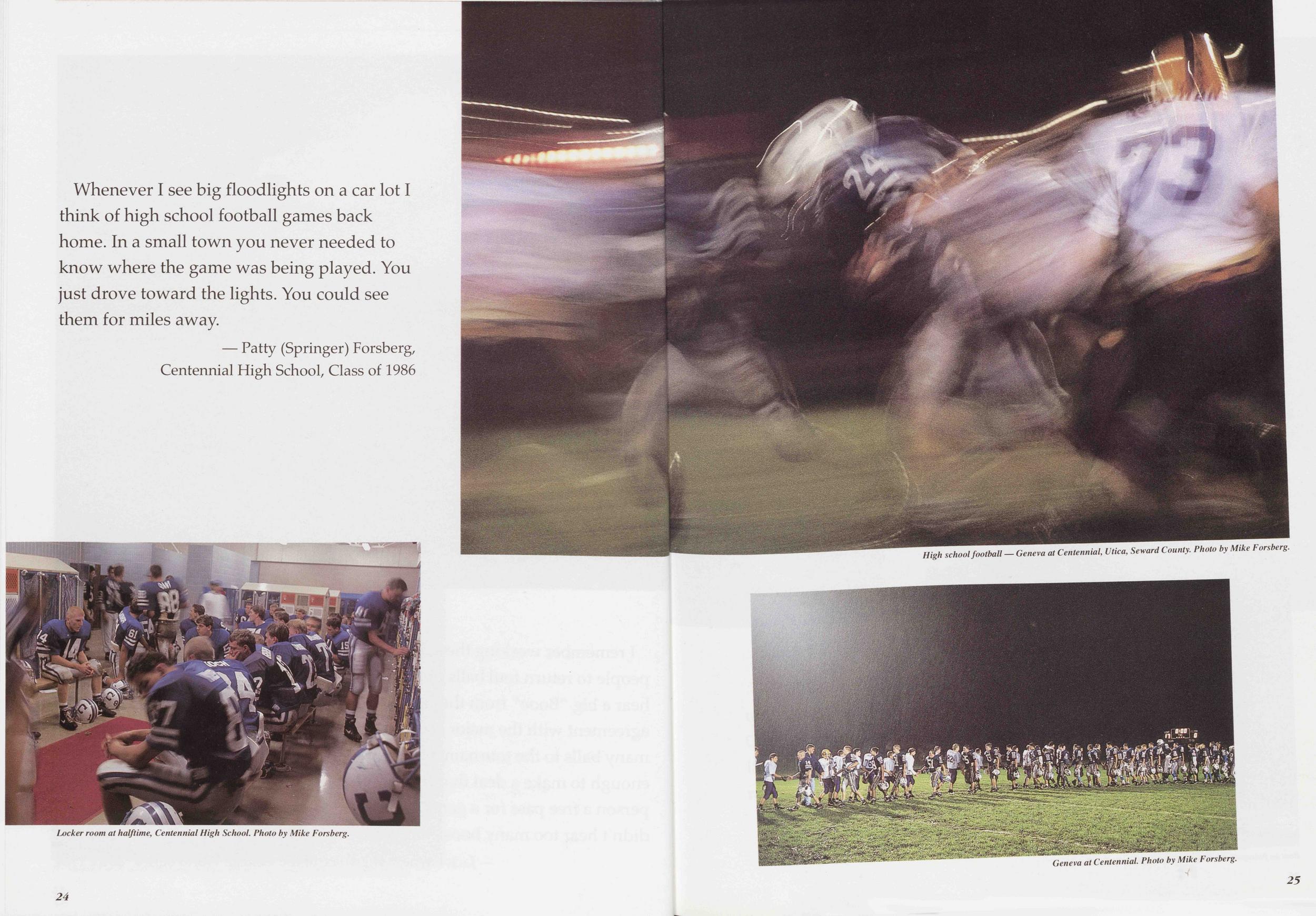
Whenever I see big floodlights on a car lot I think of high school football games back home. In a small town you never needed to know where the game was being played. You just drove toward the lights. You could see them for miles away.
— Patty (Springer) Forsberg, Centennial High School, Class of 1986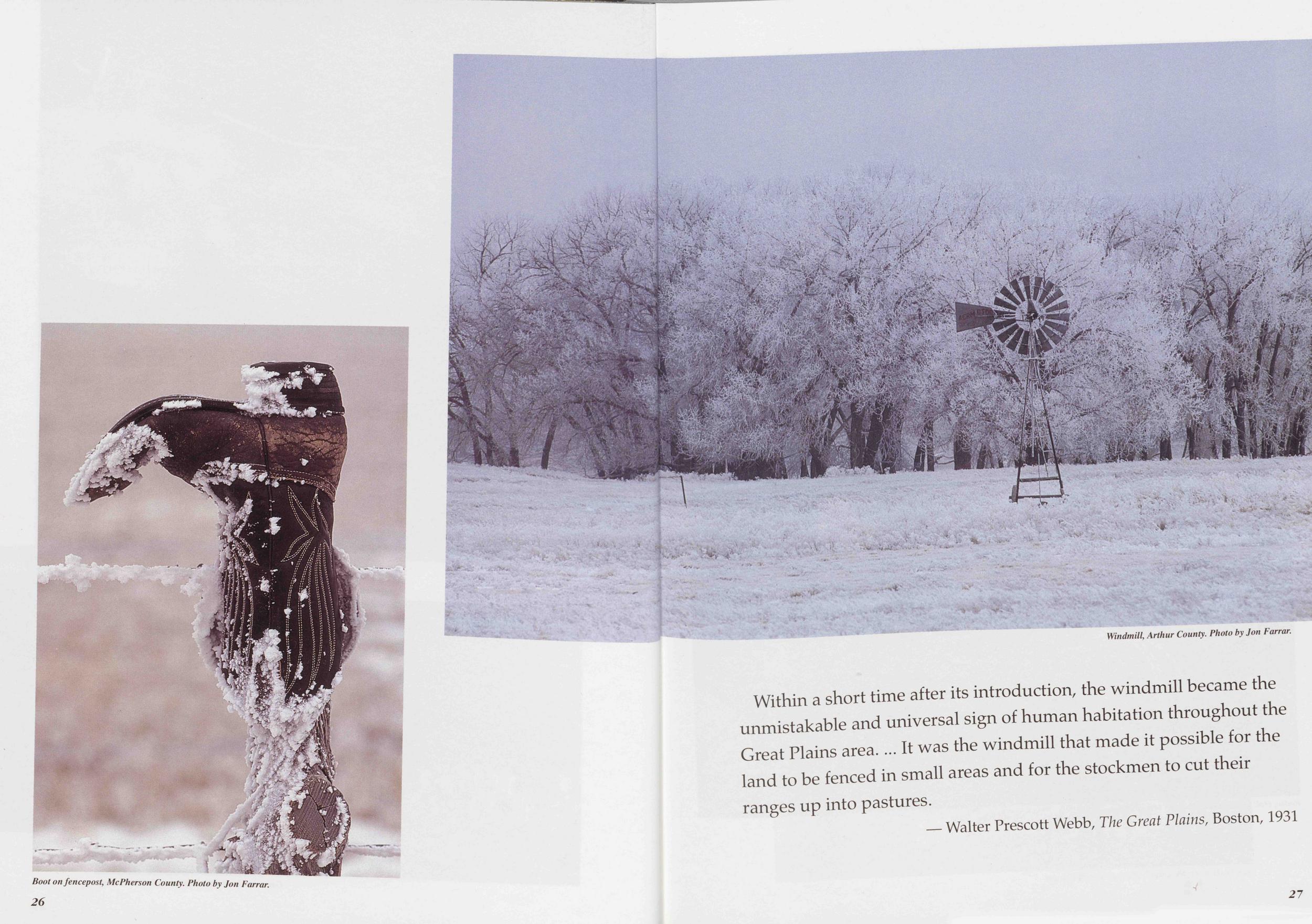
Within a short time after its introduction, the windmill became the unmistakable and universal sign of human habitation throughout the Great Plains area.... It was the windmill that made it possible for the land to be fenced in small areas and for the stockmen to cut their ranges up into pastures.
__ Walter Prescott Webb, The Great Plains, Boston, 1931 27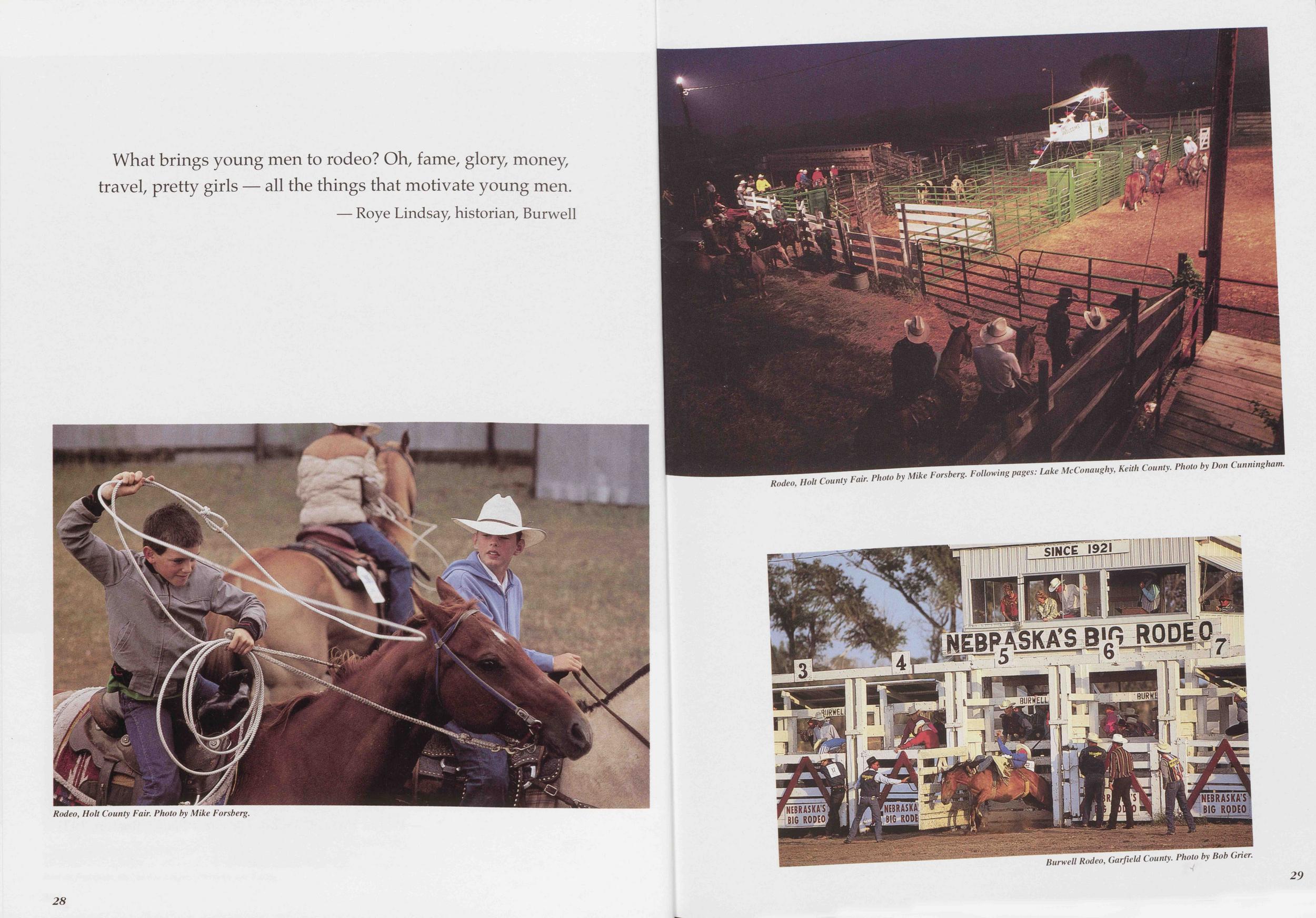
What brings young men to rodeo? Oh, fame, glory, money, travel, pretty girls — all the things that motivate young men.
— Roye Lindsay, historian, Burwell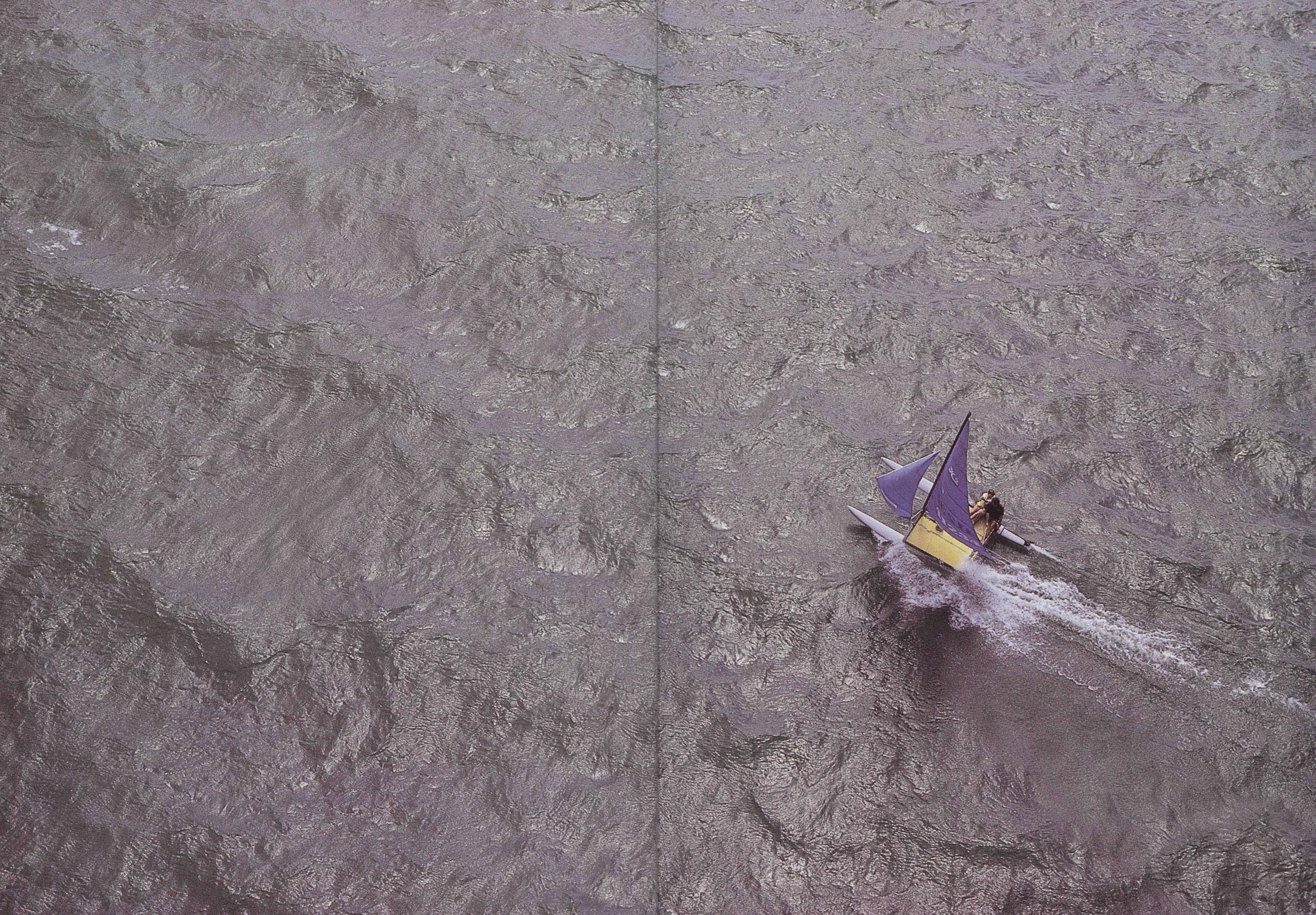
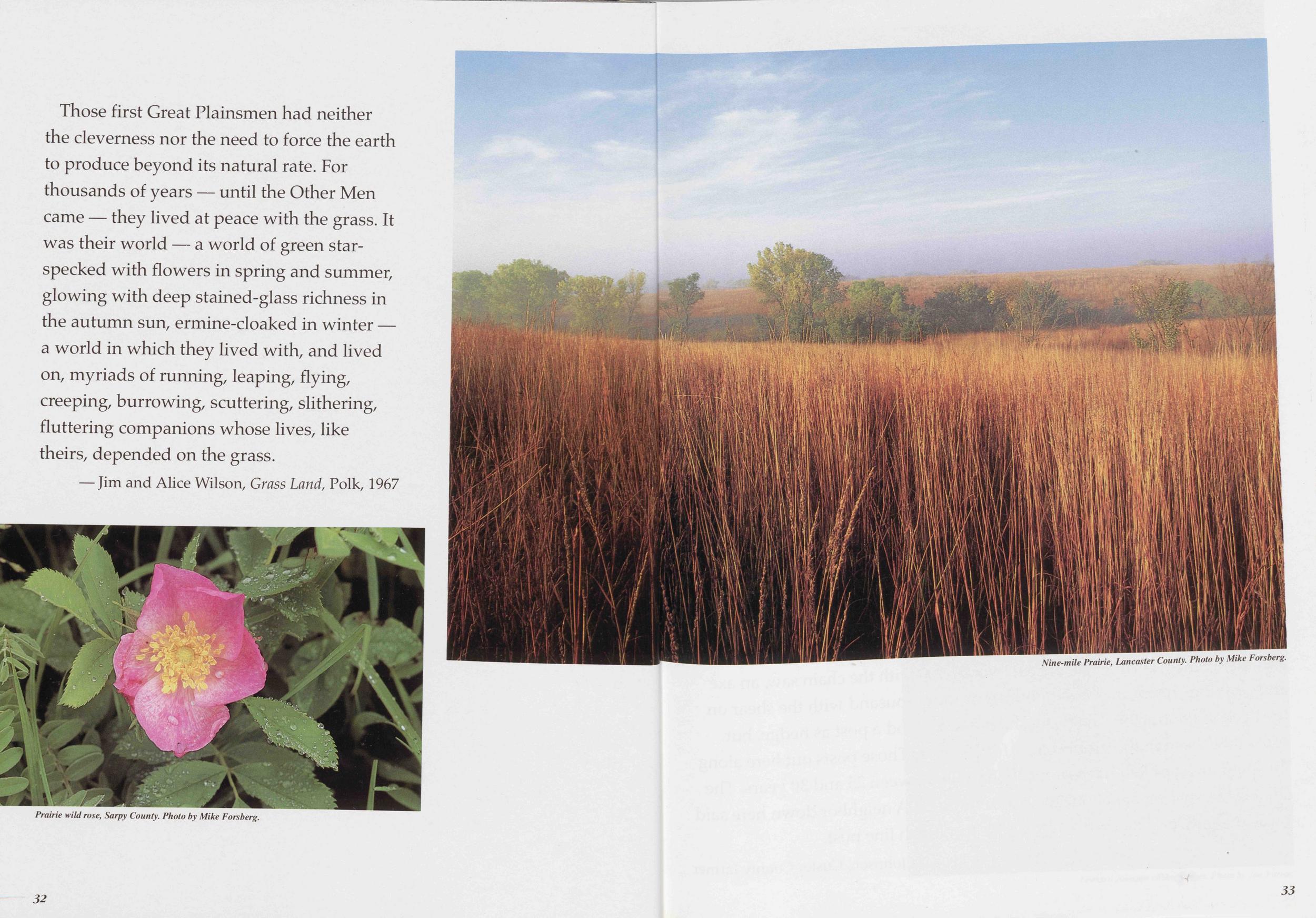
Those first Great Plainsmen had neither the cleverness nor the need to force the earth to produce beyond its natural rate. For thousands of years — until the Other Men came — they lived at peace with the grass. It was their world — a world of green starspecked with flowers in spring and summer, glowing with deep stained-glass richness in the autumn sun, ermine-cloaked in winter a world in which they lived with, and lived on, myriads of running, leaping, flying, creeping, burrowing, scuttering, slithering, fluttering companions whose lives, like theirs, depended on the grass.
— Jim and Alice Wilson, Grass Land, Polk, 1967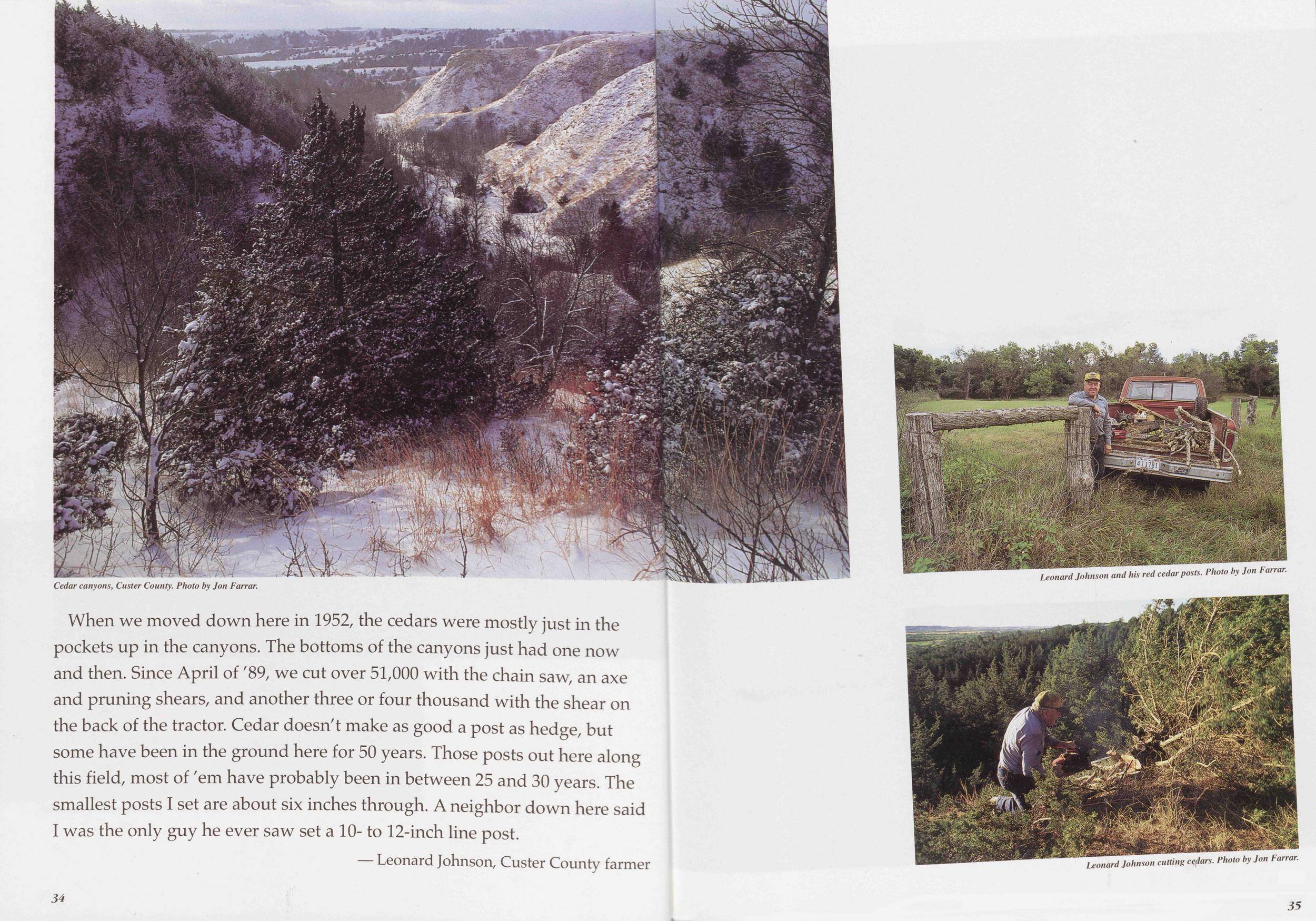
When we moved down here in 1952, the cedars were mostly just in the pockets up in the canyons. The bottoms of the canyons just had one now and then. Since April of '89, we cut over 51,000 with the chain saw, an axe and pruning shears, and another three or four thousand with the shear on the back of the tractor. Cedar doesn't make as good a post as hedge, but some have been in the ground here for 50 years. Those posts out here along this field, most of 'em have probably been in between 25 and 30 years. The smallest posts I set are about six inches through. A neighbor down here said I was the only guy he ever saw set a 10- to 12-inch line post.
Leonard Johnson, Custer County farmer 34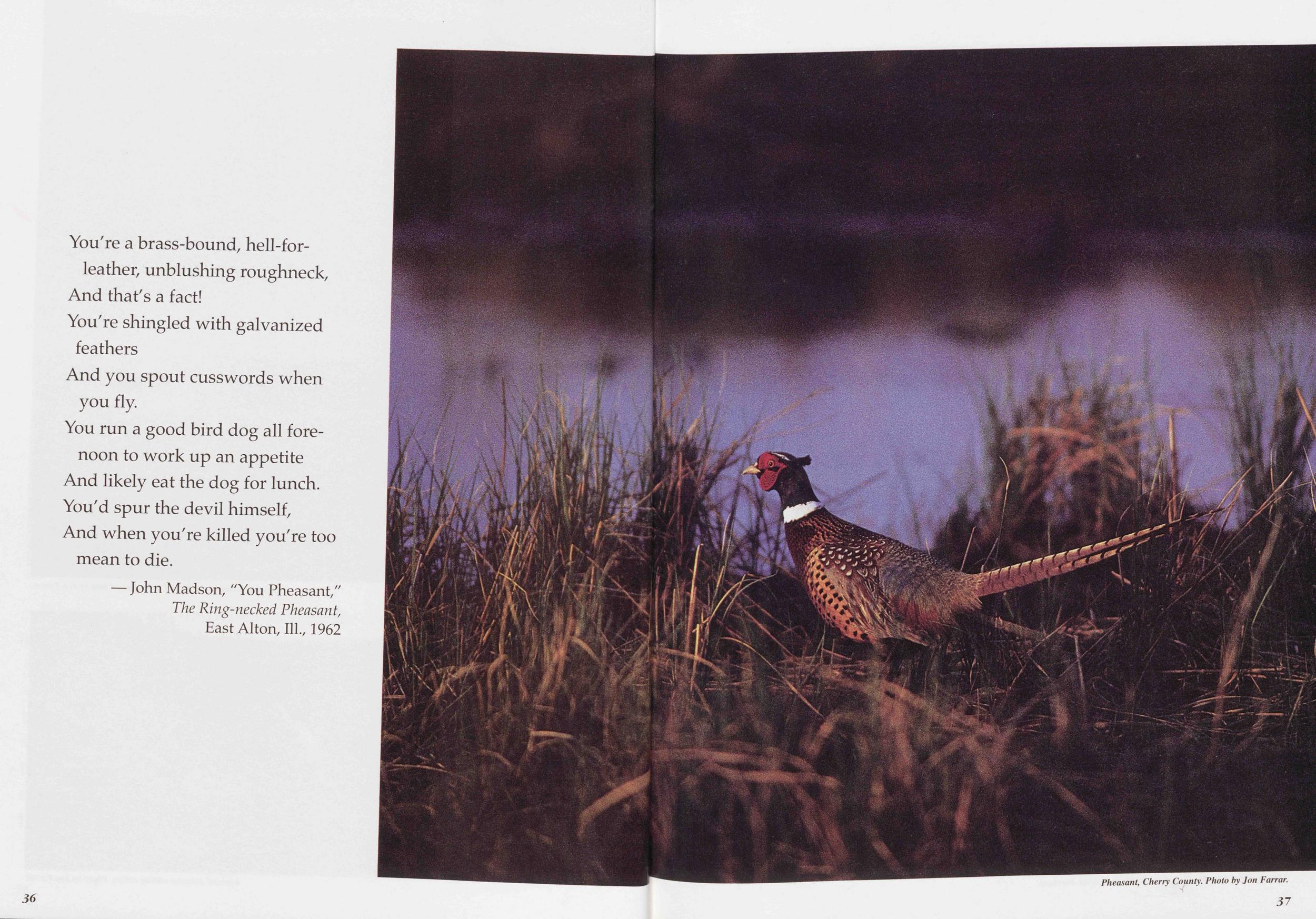 You're a brass-bound, hell-for-leather, unblushing roughneck,
And that's a fact!
You're shingled with galvanized
feathers
And you spout cusswords when
you fly.
You run a good bird dog all forenoon to work up an appetite
And likely eat the dog for lunch.
You'd spur the devil himself,
And when you're killed you're too
mean to die.
— John Madson, "You Pheasant,"
The Ring-necked Pheasant,
East Alton, 111., 1962
36
You're a brass-bound, hell-for-leather, unblushing roughneck,
And that's a fact!
You're shingled with galvanized
feathers
And you spout cusswords when
you fly.
You run a good bird dog all forenoon to work up an appetite
And likely eat the dog for lunch.
You'd spur the devil himself,
And when you're killed you're too
mean to die.
— John Madson, "You Pheasant,"
The Ring-necked Pheasant,
East Alton, 111., 1962
36
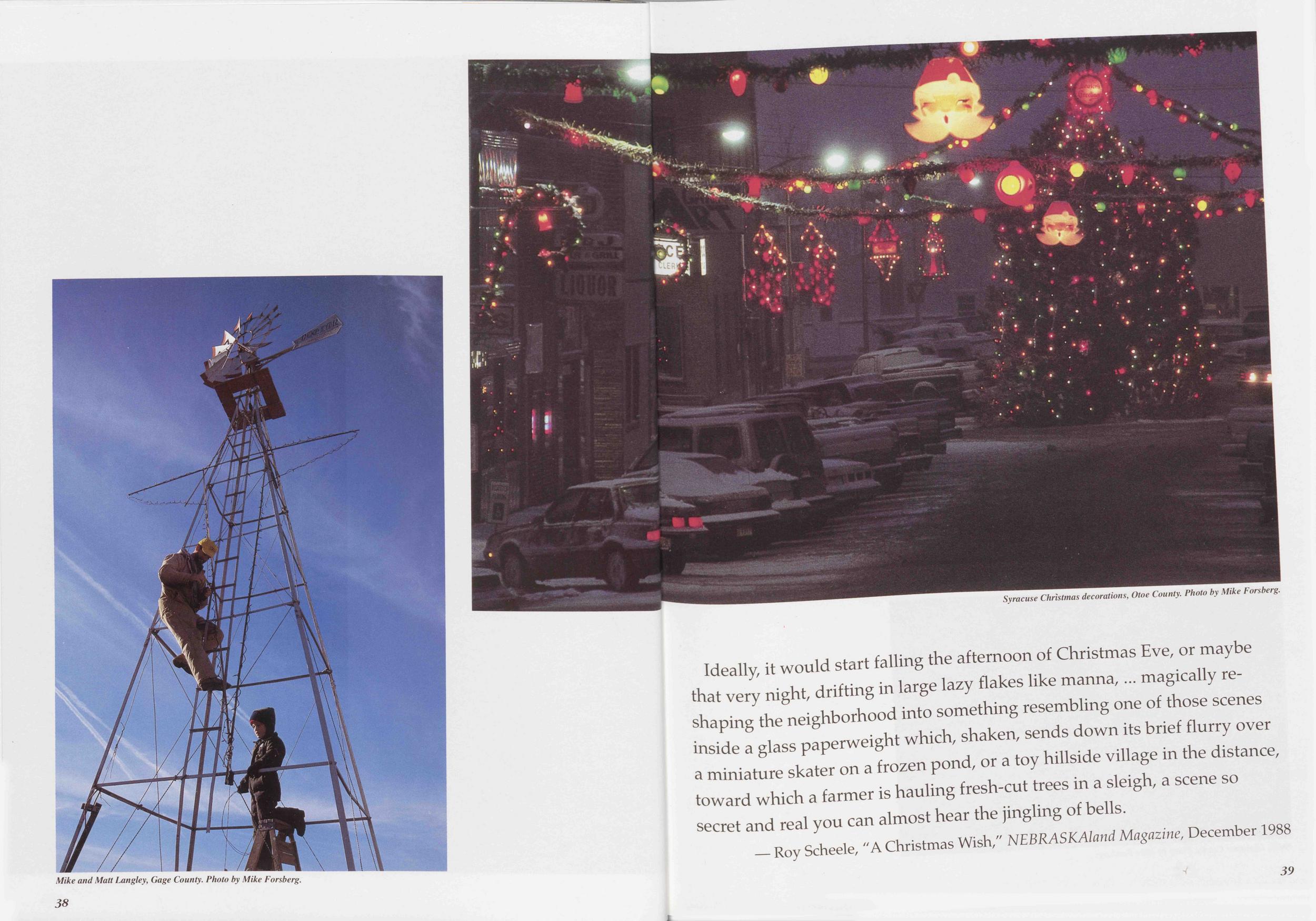
Ideally it would start falling the afternoon of Christmas Eve or maybe Ideally, it would flakes like manna, magically rethat very resembling one of those scenes Tg llss p pLSt which, shaken, sends down its bnef flurry over distance a miniature skater on a frozen pond, or trees in a sleign, a scene su toward which a farmer is hauling fresh cut r secret and real you can almost hear the jingling of bells.
Roy Scheele, "A Christmas Wish," NEBRASKA,^ Magazine, December 39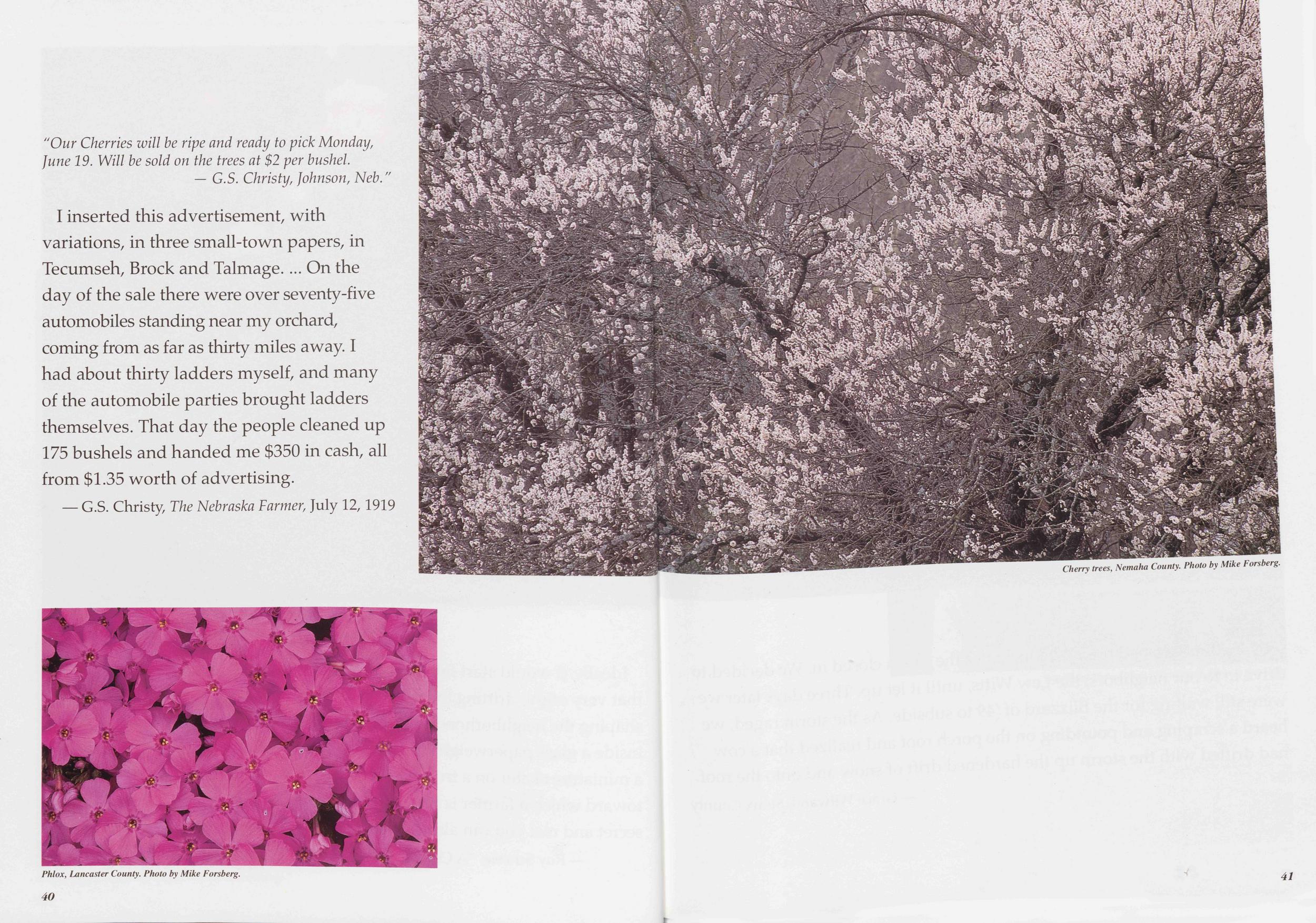
"Our Cherries will be ripe and ready to pick Monday, June 19. Will be sold on the trees at $2 per bushel.
— G.S. Christy, Johnson, Neb.I inserted this advertisement, with variations, in three small-town papers, in Tecumseh, Brock and Talmage On the day of the sale there were over seventy-five automobiles standing near my orchard, coming from as far as thirty miles away. I had about thirty ladders myself, and many of the automobile parties brought ladders themselves. That day the people cleaned up 175 bushels and handed me $350 in cash, all from $1.35 worth of advertising.
— G.S. Christy, The Nebraska Farmer, July 12,1919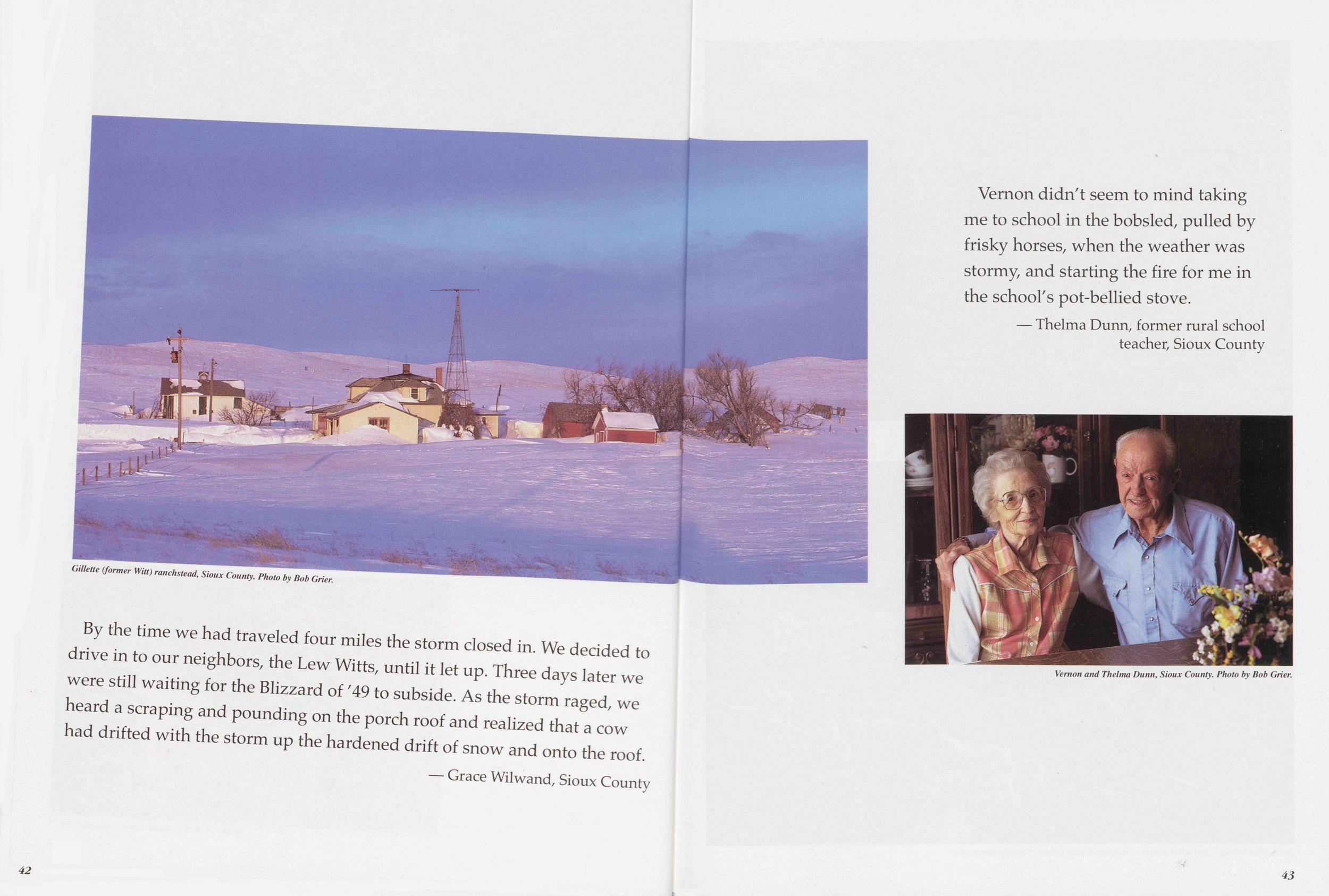
By the toe we had traveled four miles the storm closed in. We decided to dove m to our neighbors, the Lew Witts, until it let up Three days la were s„ll waiting for the Bllzzard of '49 to subside. dnfted wtth the storm up the hardened drift of snow and onto the roof.
— Grace Wilwand, Sioux County 42Vernon didn't seem to mind taking me to school in the bobsled, pulled by frisky horses, when the weather was stormy, and starting the fire for me in the school's pot-bellied stove.
— Thelma Dunn, former rural school teacher, Sioux County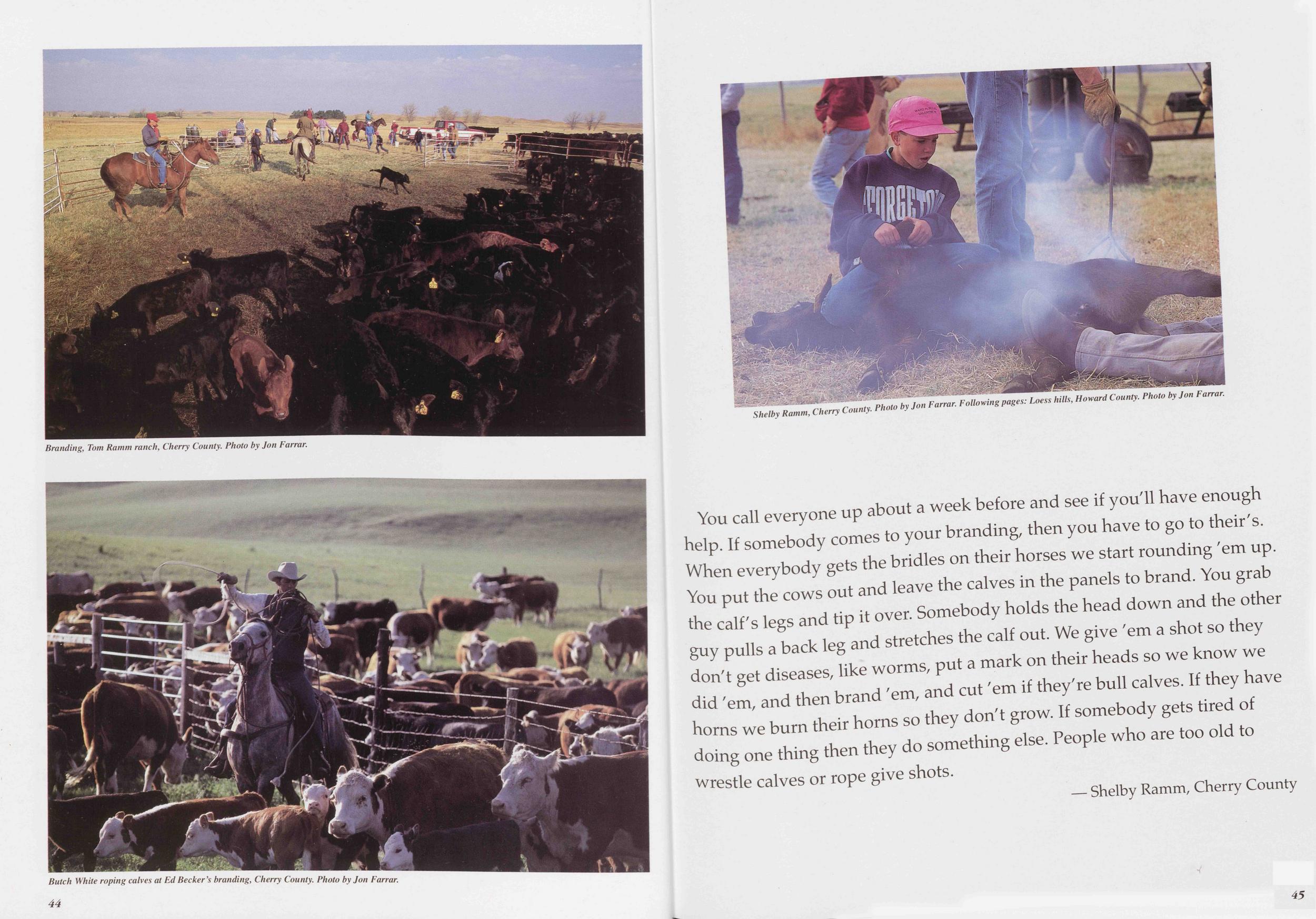
about a week before and see if you'll have enough You call everyone up about help. If somebody horses we start rounding 'em up. When everybody gets he bnd You put the cows out and le f CallLS the calf out. We give 'em a shot so they guy pulls a back leg a heads wrestle calves or rope give shots.
45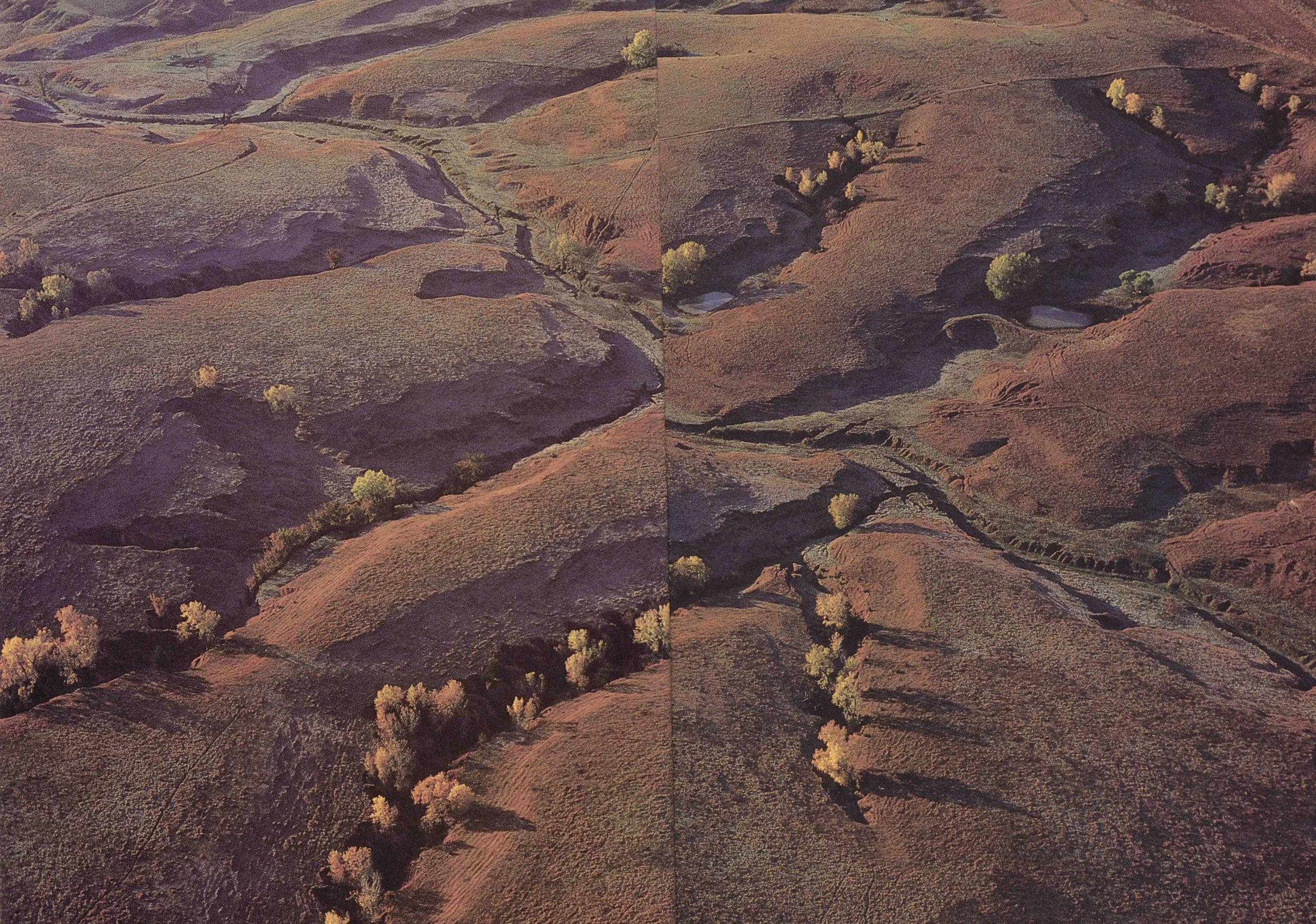
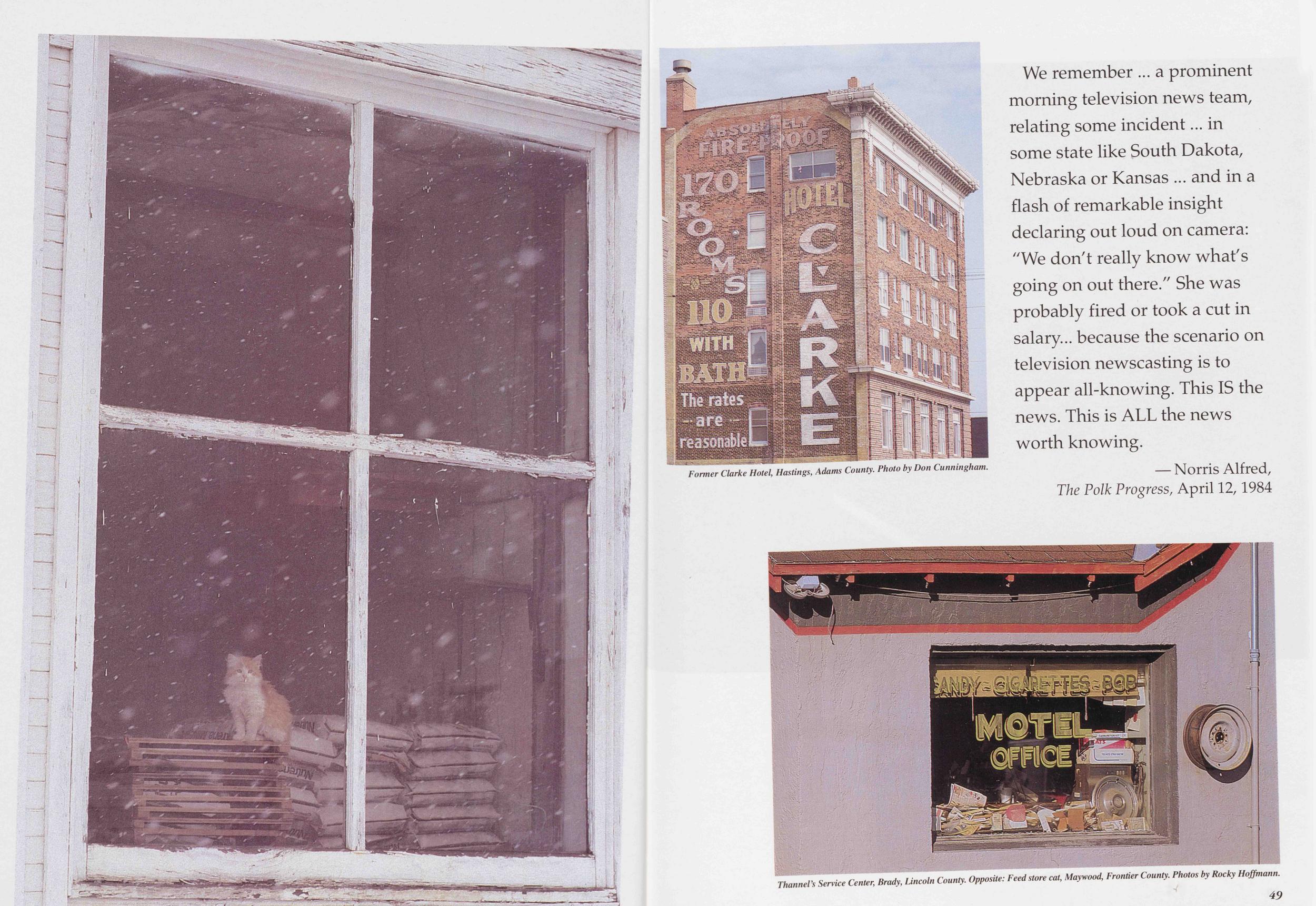
We remember a prominent morning television news team, relating some incident in some state like South Dakota, Nebraska or Kansas and in a flash of remarkable insight declaring out loud on camera: "We don't really know what's going on out there." She was probably fired or took a cut in salary because the scenario on television newscasting is to appear all-knowing. This IS the news. This is ALL the news worth knowing.
— Norris Alfred, The Polk Progress, April 12,1984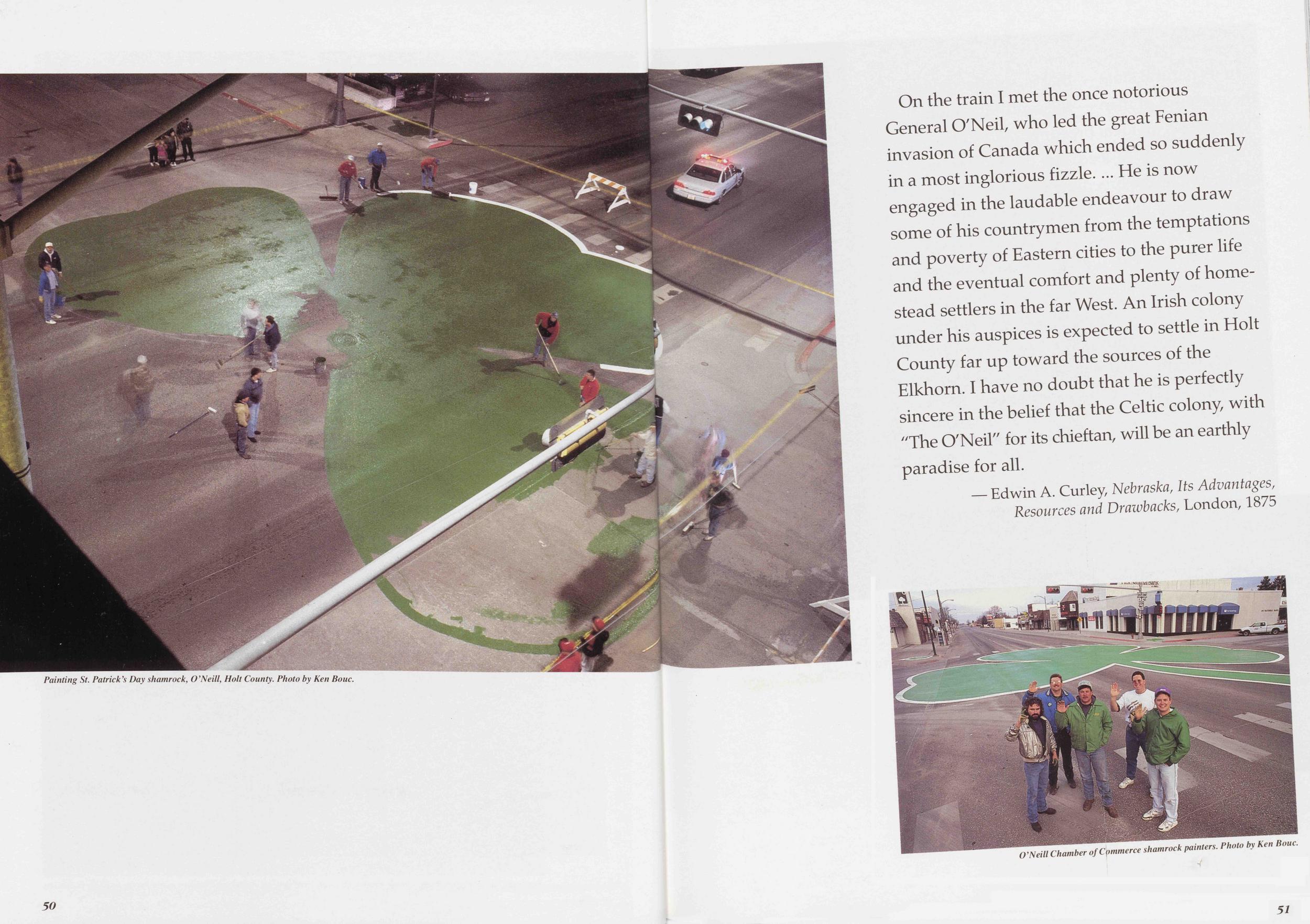
On the train I met the once notorious General O'Neil, who led the great Fenian invasion of Canada which ended so suddenly in a most inglorious fizzle He is now engaged in the laudable endeavour to draw some of his countrymen from the temptations and poverty of Eastern cities to the purer life and the eventual comfort and plenty of homestead settlers in the far West. An Irish colony under his auspices is expected to settle in Holt County far up toward the sources of the Elkhorn. I have no doubt that he is perfectly sincere in the belief that the Celtic colony with "The O'Neil" for its chieftan, will be an earthly paradise for all.
— Edwin A. Curley, Nebraska, Its Advantages, Resources and Drawbacks, London, 1875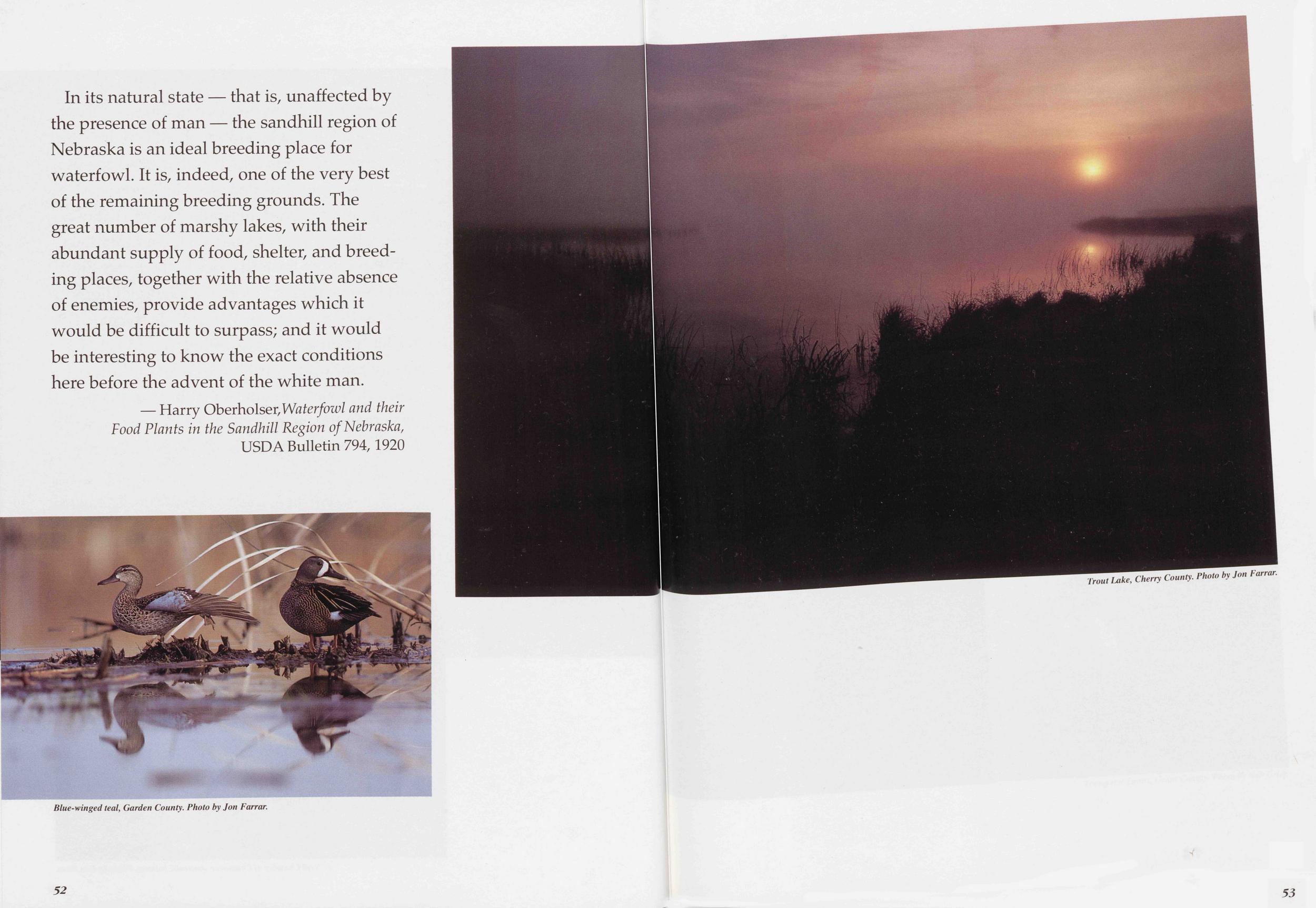
In its natural state — that is, unaffected by the presence of man — the sandhill region of Nebraska is an ideal breeding place for waterfowl. It is, indeed, one of the very best of the remaining breeding grounds. The great number of marshy lakes, with their abundant supply of food, shelter, and breeding places, together with the relative absence of enemies, provide advantages which it would be difficult to surpass; and it would be interesting to know the exact conditions here before the advent of the white man.
— Harry Oberholser,Waterfowl and their Food Plants in the Sandhill Region of Nebraska, USD A Bulletin 794,1920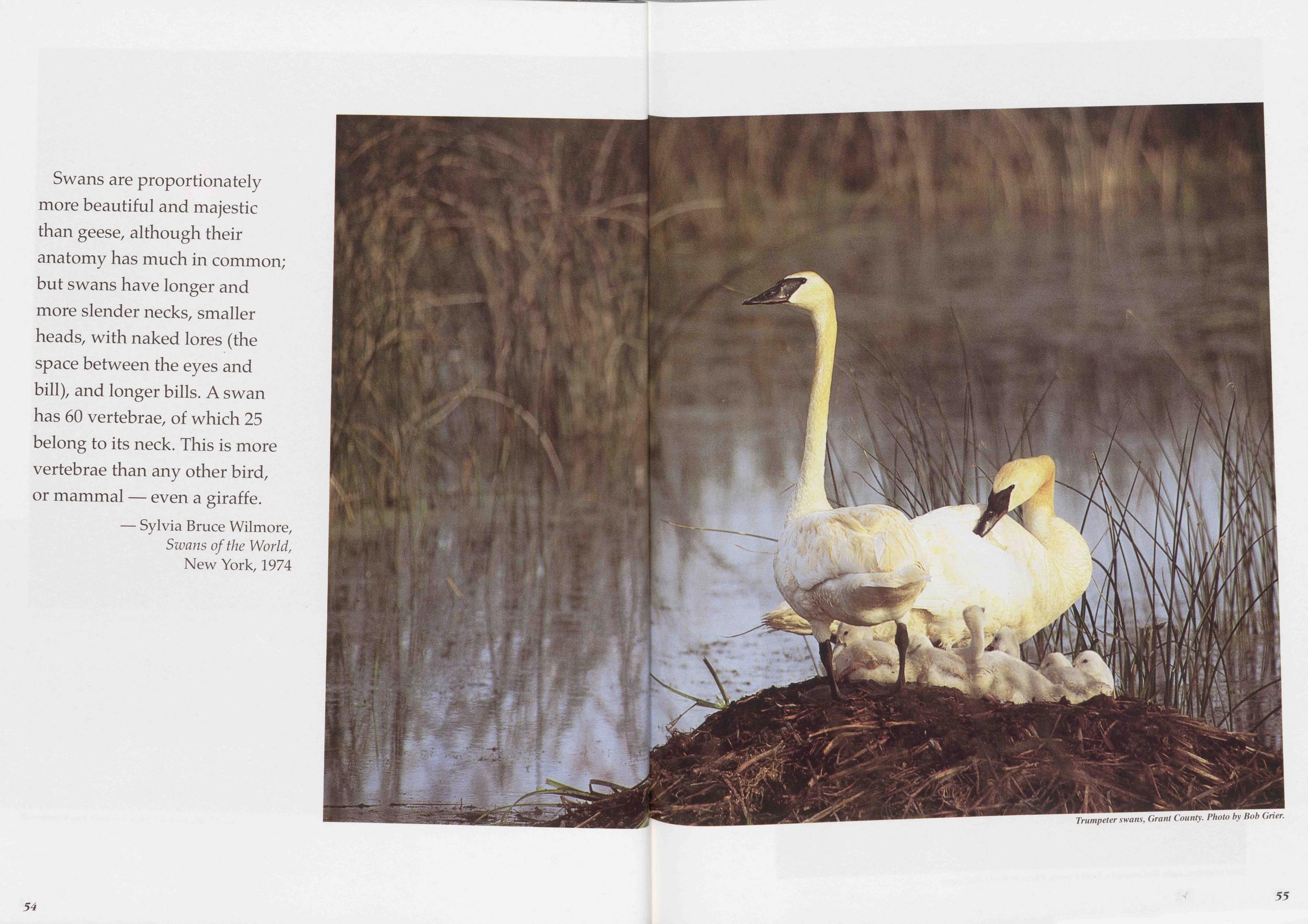
Swans are proportionately more beautiful and majestic than geese, although their anatomy has much in common; but swans have longer and more slender necks, smaller heads, with naked lores (the space between the eyes and bill), and longer bills. A swan has 60 vertebrae, of which 25 belong to its neck. This is more vertebrae than any other bird, or mammal — even a giraffe.
— Sylvia Bruce Wilmore, Swans of the World, New York, 1974 54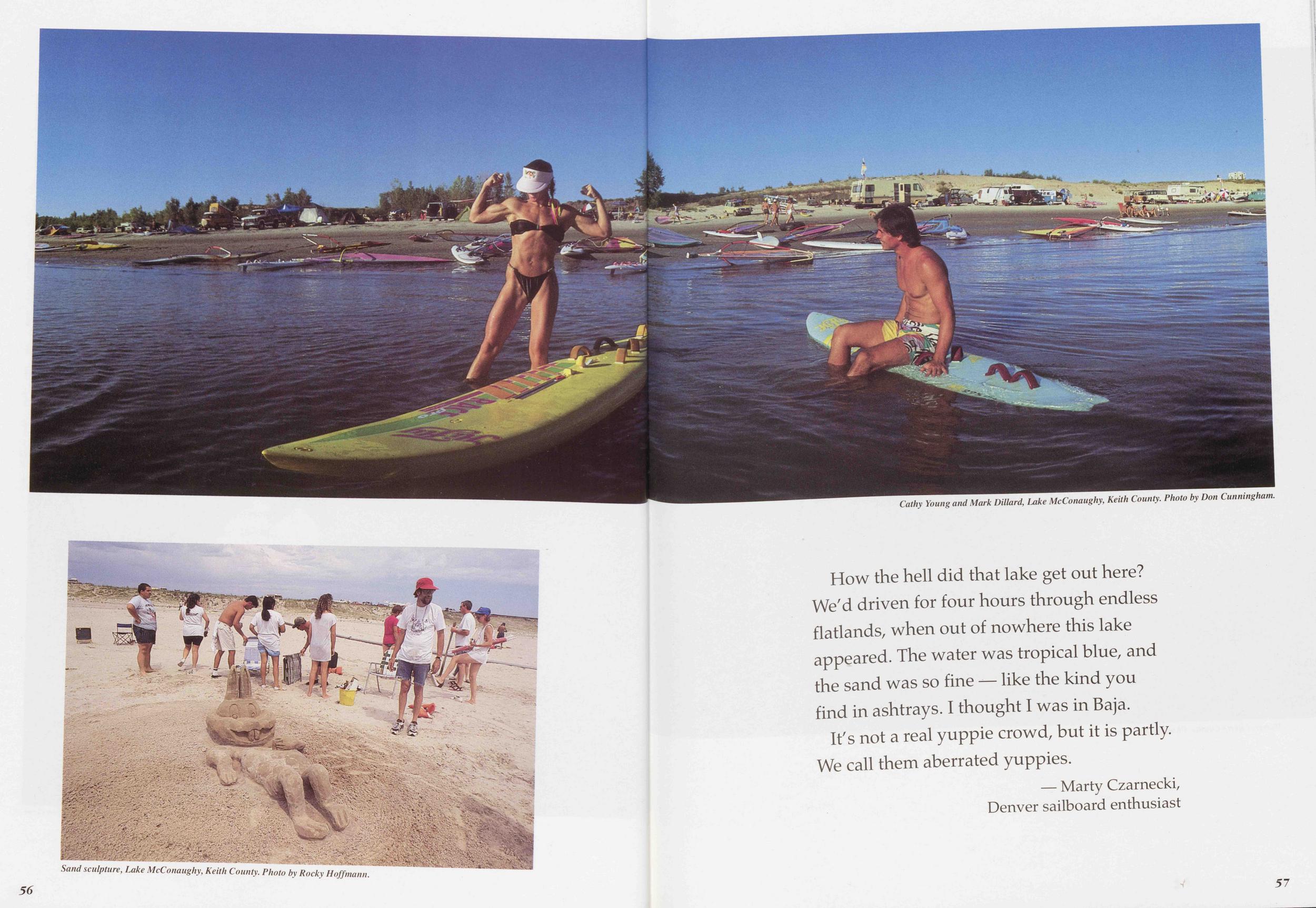
How the hell did that lake get out here? We'd driven for four hours through endless flatlands, when out of nowhere this lake appeared. The water was tropical blue, and the sand was so fine — like the kind you find in ashtrays. I thought I was in Baja.
It's not a real yuppie crowd, but it is partly. We call them aberrated yuppies.
— Marty Czarnecki, Denver sailboard enthusiast 57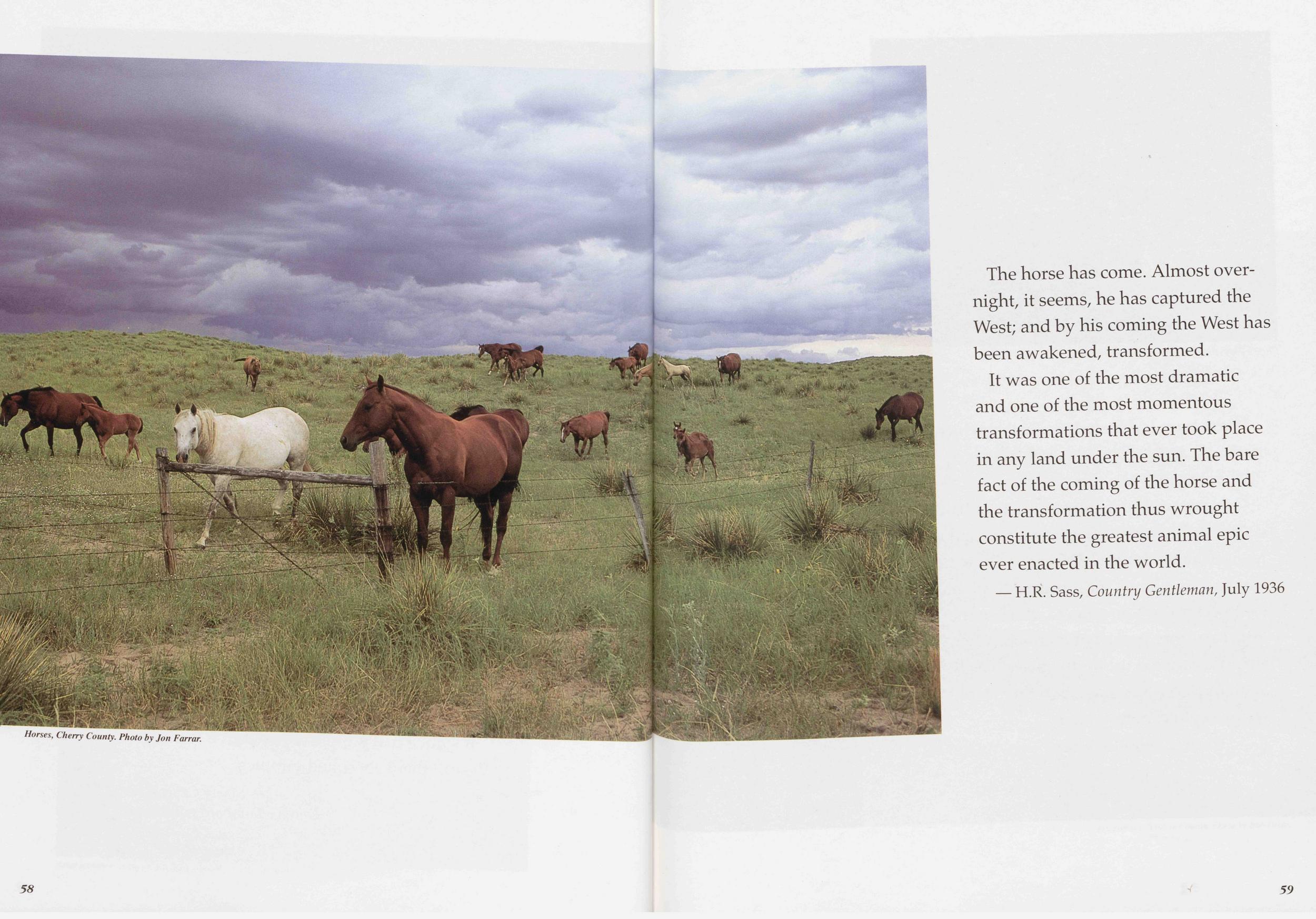
The horse has come. Almost overnight, it seems, he has captured the West; and by his coming the West has been awakened, transformed.
It was one of the most dramatic and one of the most momentous transformations that ever took place in any land under the sun. The bare fact of the coming of the horse and the transformation thus wrought constitute the greatest animal epic ever enacted in the world.
— H.R. Sass, Country Gentleman, July 1936 59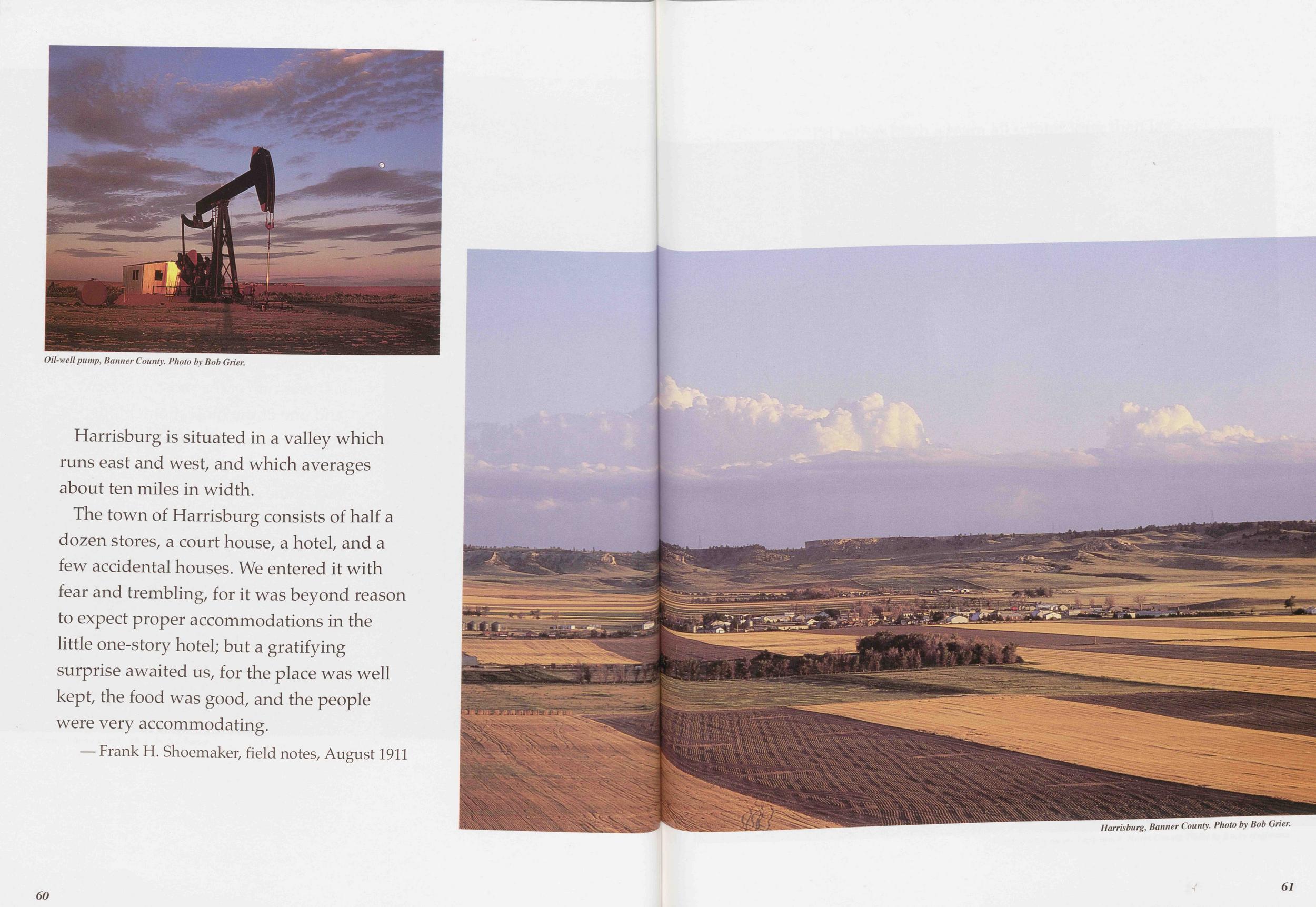
Harrisburg is situated in a valley which runs east and west, and which averages about ten miles in width.
The town of Harrisburg consists of half a dozen stores, a court house, a hotel, and a few accidental houses. We entered it with fear and trembling, for it was beyond reason to expect proper accommodations in the little one-story hotel; but a gratifying surprise awaited us, for the place was well kept, the food was good, and the people were very accommodating.
— Frank H. Shoemaker, field notes, August 1911 60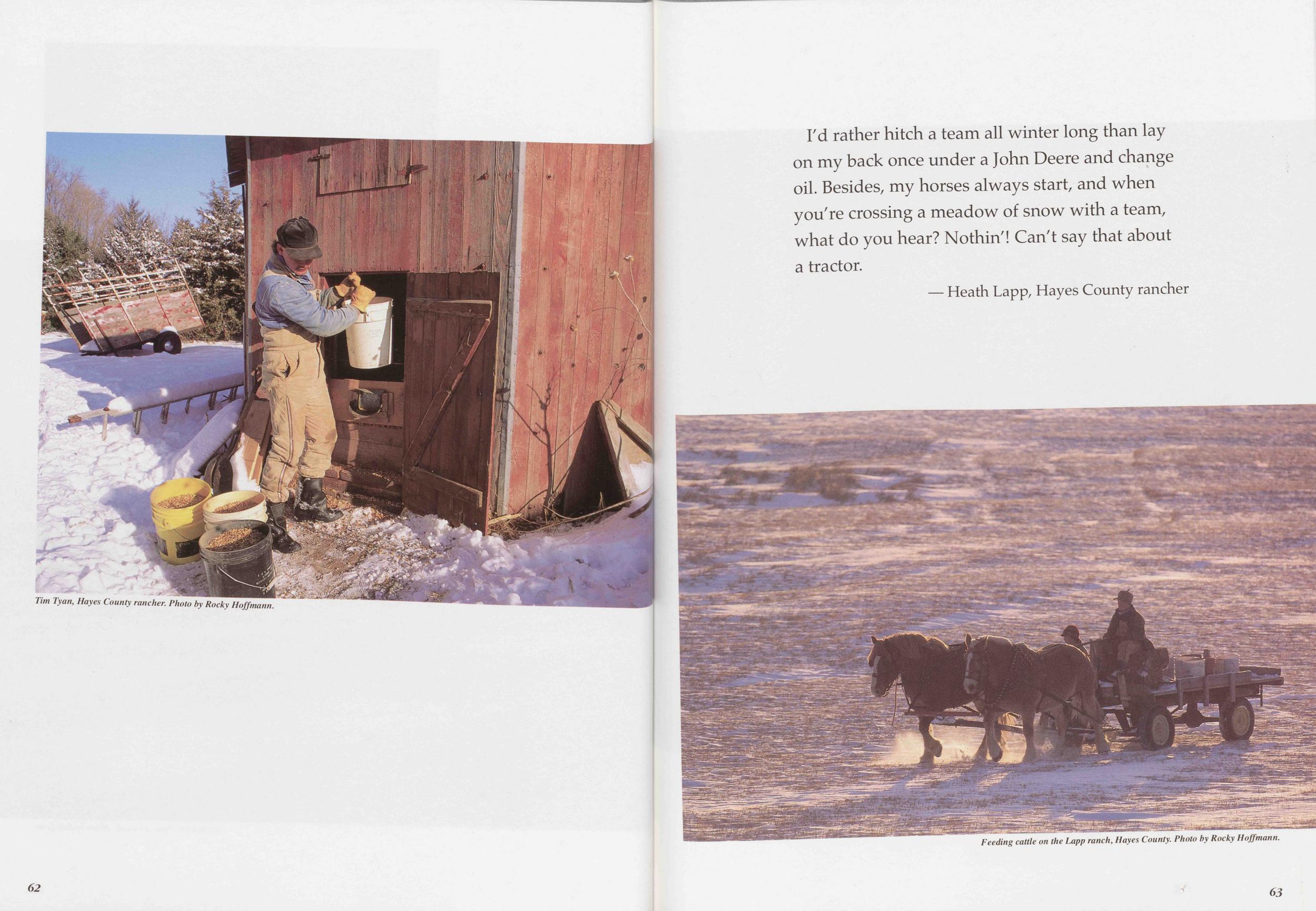
Fd rather hitch a team all winter long than lay on my back once under a John Deere and change oil. Besides, my horses always start, and when you're crossing a meadow of snow with a team, what do you hear? Nothin'! Can't say that about a tractor.
Heath Lapp, Hayes County rancher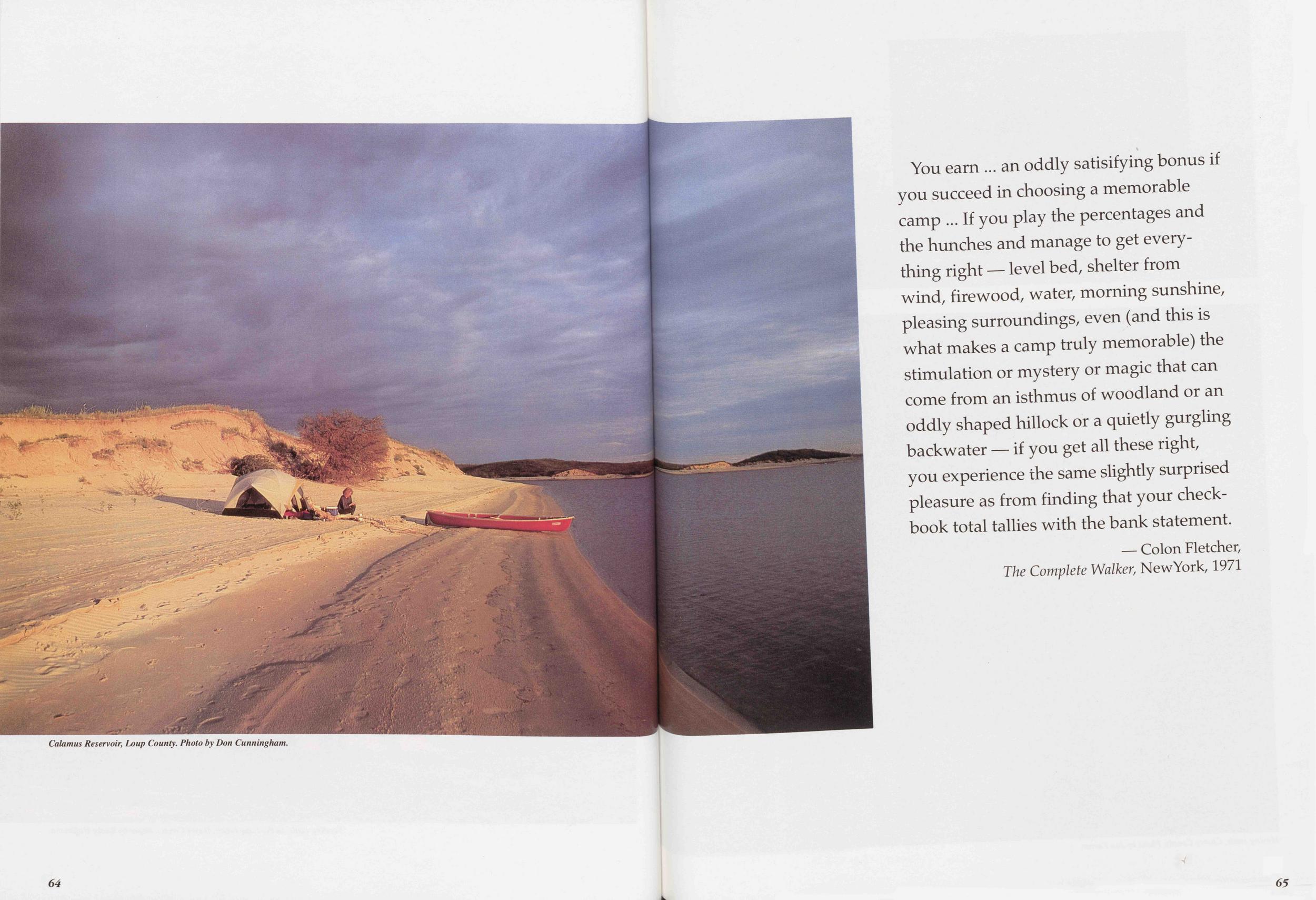
You earn an oddly satisifying bonus if you succeed in choosing a memorable camp If you play the percentages and the hunches and manage to get everything right — level bed, shelter from wind, firewood, water, morning sunshine, pleasing surroundings, even (and this is what makes a camp truly memorable) the stimulation or mystery or magic that can come from an isthmus of woodland or an oddly shaped hillock or a quietly gurgling backwater — if you get all these right, you experience the same slightly surprised pleasure as from finding that your check- book total tallies with the bank statement.
— Colon Fletcher, The Complete Walker, New York, 1971 65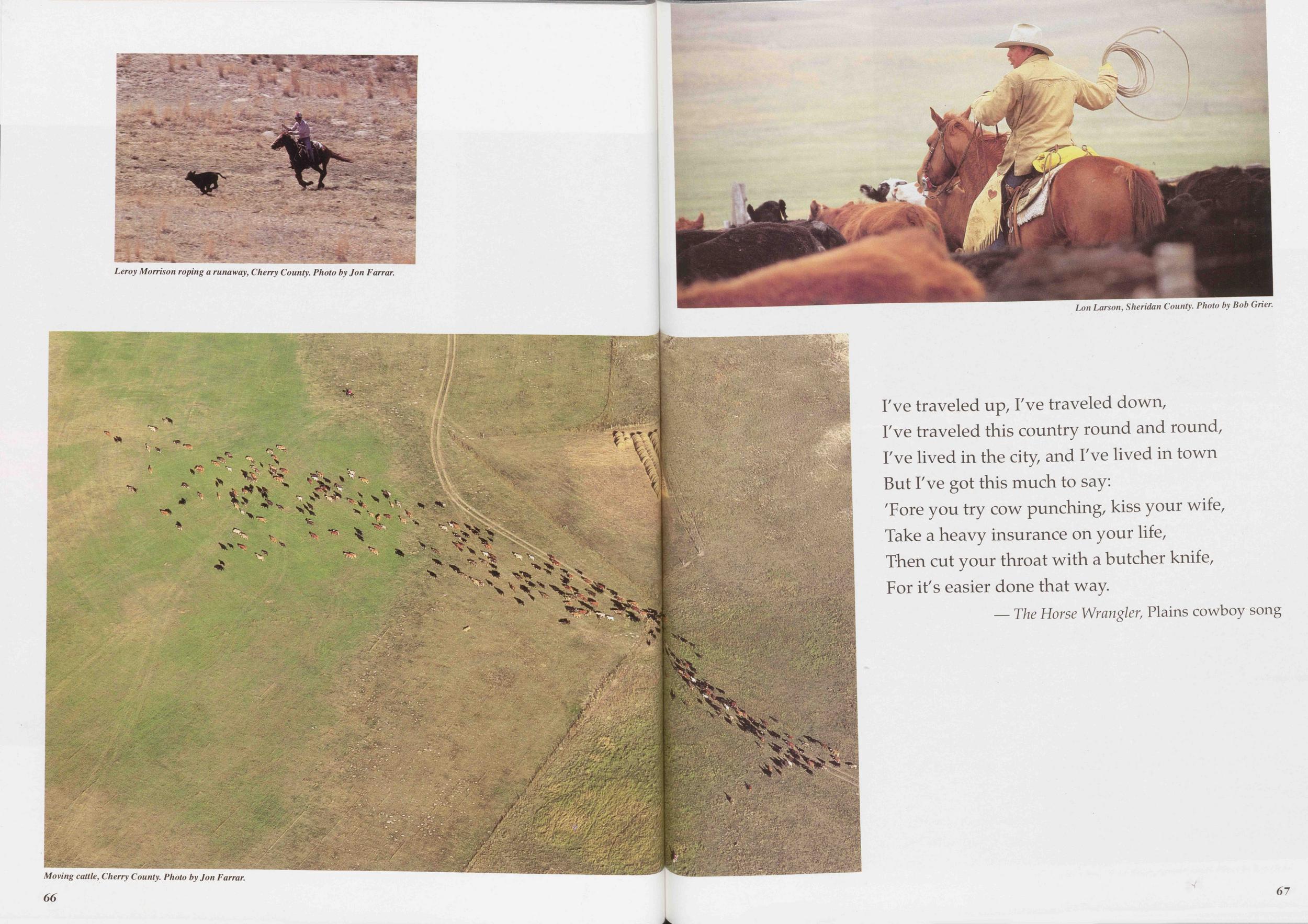
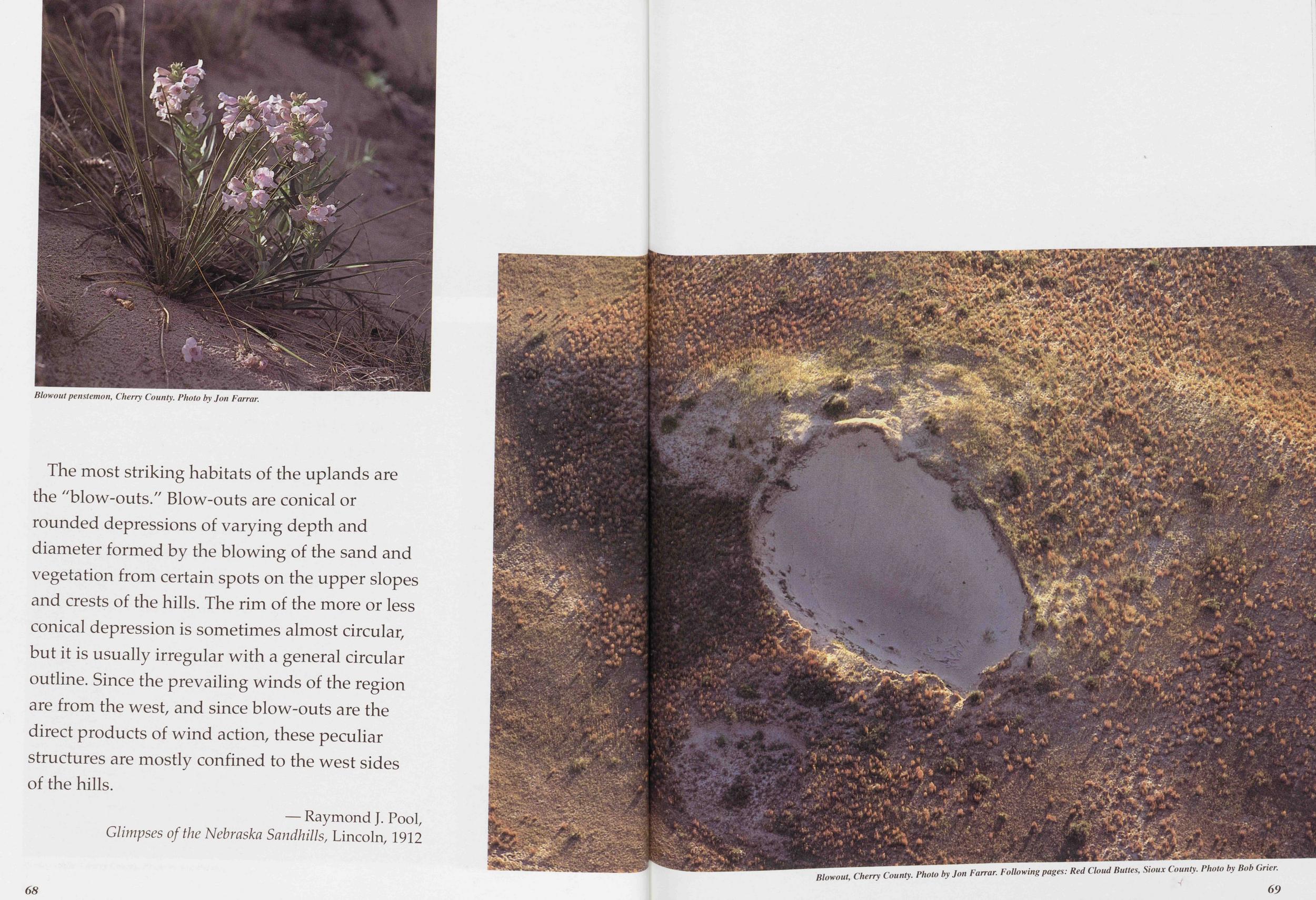
The most striking habitats of the uplands are the "blow-outs." Blow-outs are conical or rounded depressions of varying depth and diameter formed by the blowing of the sand and vegetation from certain spots on the upper slopes and crests of the hills. The rim of the more or less conical depression is sometimes almost circular, but it is usually irregular with a general circular outline. Since the prevailing winds of the region are from the west, and since blow-outs are the direct products of wind action, these peculiar structures are mostly confined to the west sides of the hills.
— Raymond J. Pool, Glimpses of the Nebraska Sandhills, Lincoln, 1912 68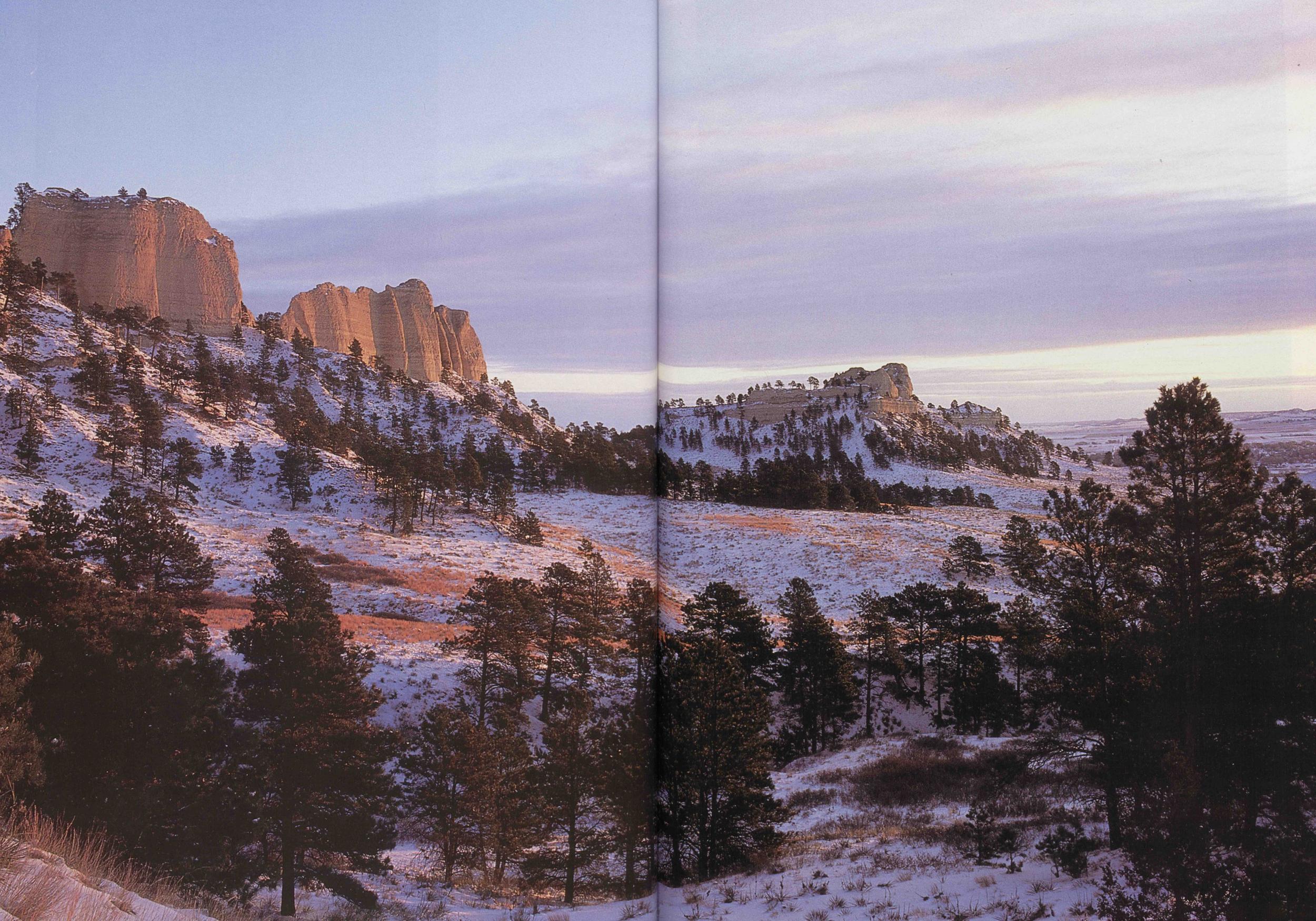
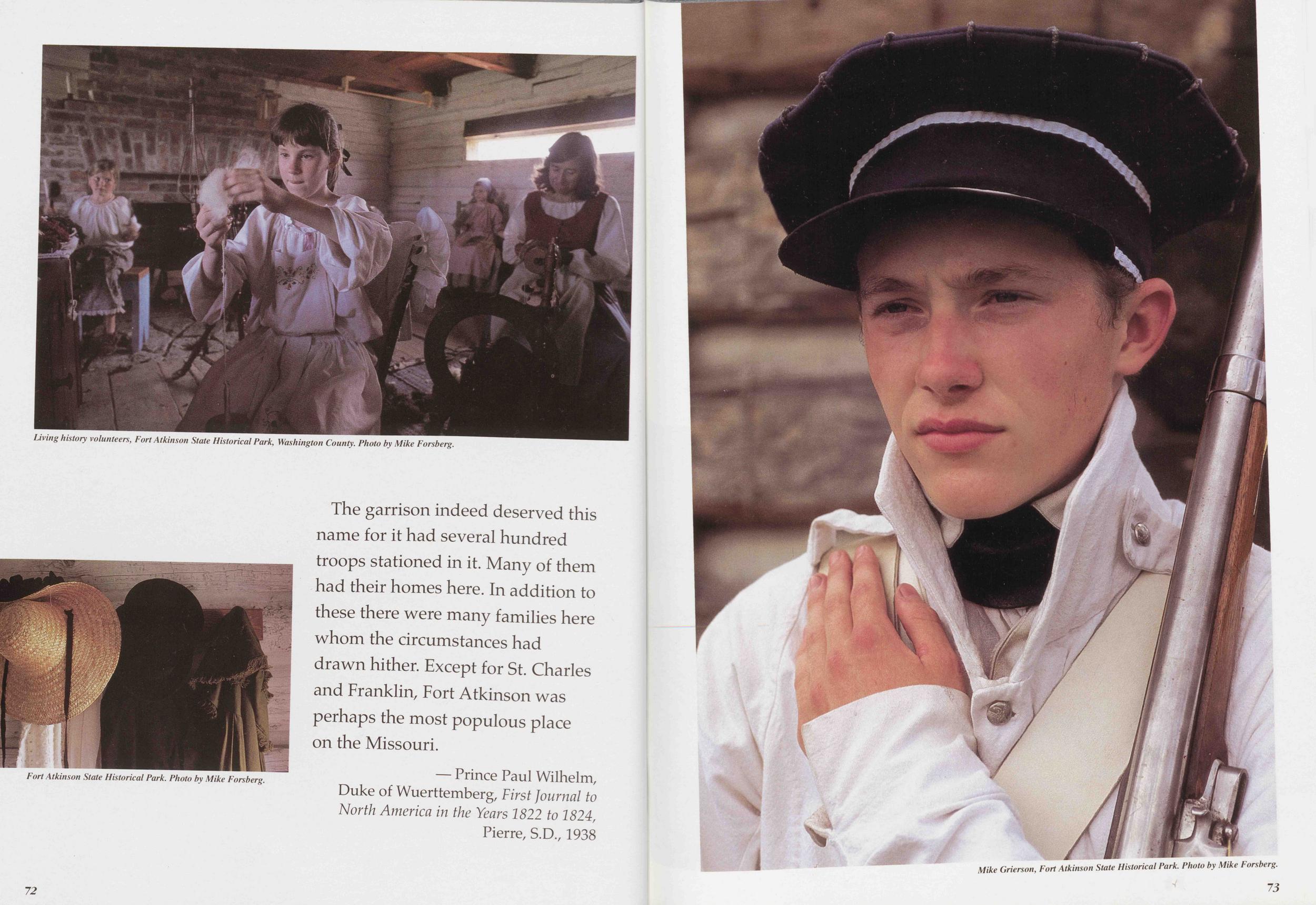
The garrison indeed deserved this name for it had several hundred troops stationed in it. Many of them had their homes here. In addition to these there were many families here whom the circumstances had drawn hither. Except for St. Charles and Franklin, Fort Atkinson was perhaps the most populous place on the Missouri.
— Prince Paul Wilhelm, Duke of Wuerttemberg, First Journal to North America in the Years 1822 to 1824, Pierre, S.D., 1938 72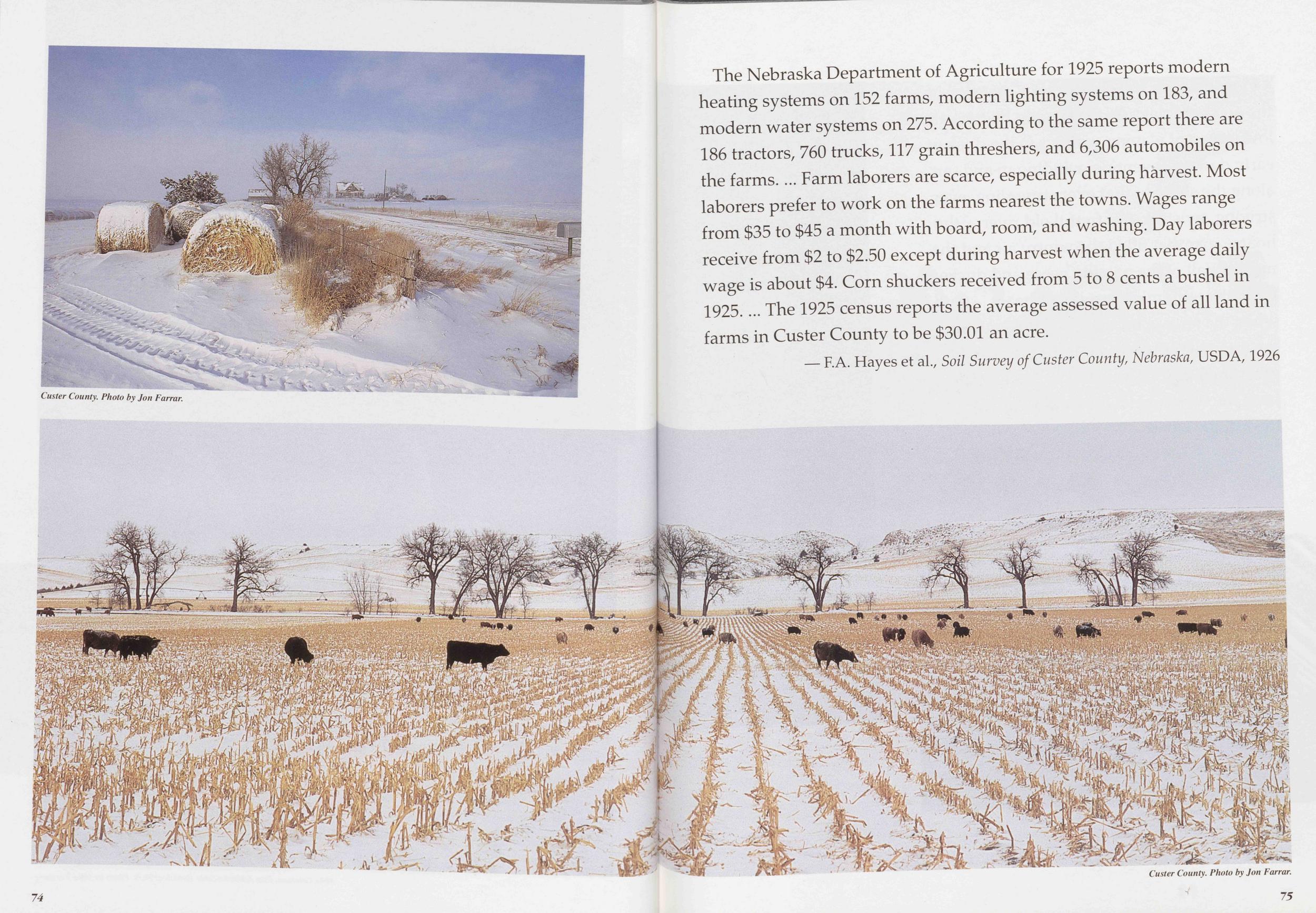
The Nebraska Department of Agriculture for 1925 reports modern heating systems on 152 farms, modern lighting systems on 183, and modern water systems on 275. According to the same report there are 186 tractors, 760 trucks, 117 grain threshers, and 6,306 automobiles on the farms.... Farm laborers are scarce, especially during harvest. Most laborers prefer to work on the farms nearest the towns. Wages range from $35 to $45 a month with board, room, and washing. Day laborers receive from $2 to $2.50 except during harvest when the average daily wage is about $4. Corn shuckers received from 5 to 8 cents a bushel in 1925 The 1925 census reports the average assessed value of all land in farms in Custer County to be $30.01 an acre.
— F.A. Hayes et al., Soz'J Survey of Custer County, Nebraska, USD A, 1926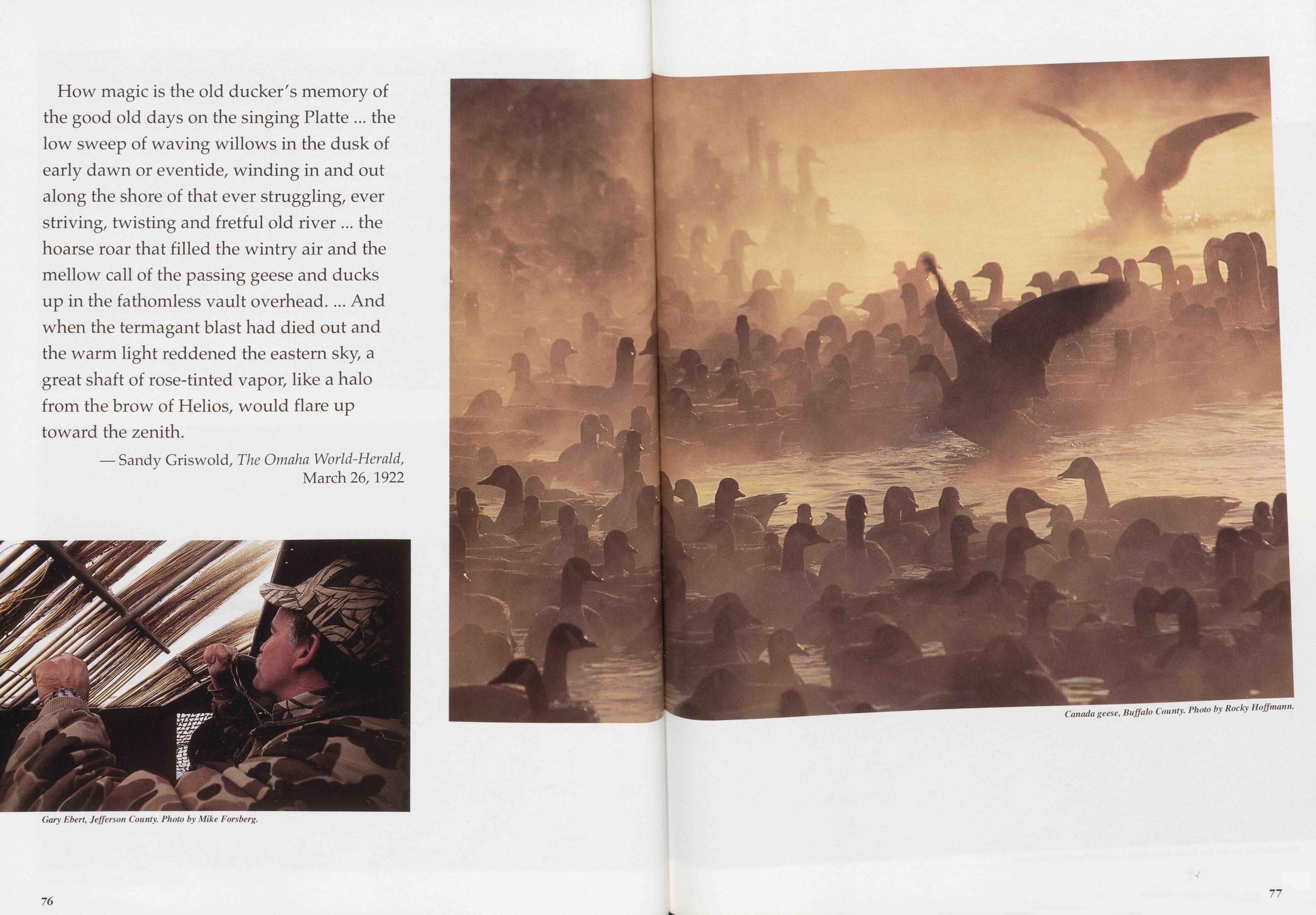
How magic is the old ducker's memory of the good old days on the singing Platte the low sweep of waving willows in the dusk of early dawn or eventide, winding in and out along the shore of that ever struggling, ever striving, twisting and fretful old river the hoarse roar that filled the wintry air and the mellow call of the passing geese and ducks up in the fathomless vault overhead And when the termagant blast had died out and the warm light reddened the eastern sky, a great shaft of rose-tinted vapor, like a halo from the brow of Helios, would flare up toward the zenith.
Sandy Griswold, The Omaha World-Herald, March 26,1922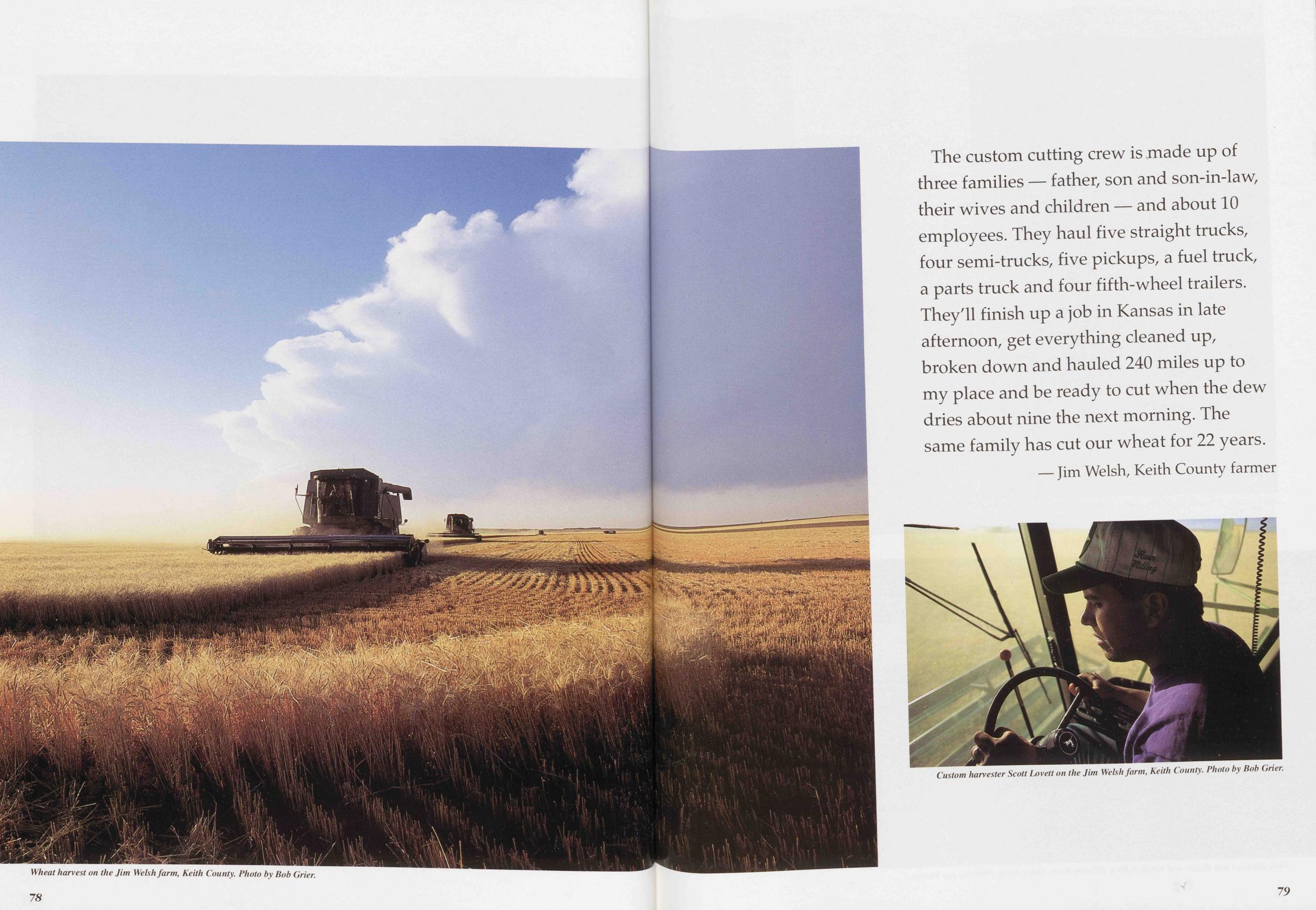
The custom cutting crew is made up of three families — father, son and son-in-law, their wives and children — and about 10 employees. They haul five straight trucks, four semi-trucks, five pickups, a fuel truck, a parts truck and four fifth-wheel trailers. They'll finish up a job in Kansas in late afternoon, get everything cleaned up, broken down and hauled 240 miles up to my place and be ready to cut when the dew dries about nine the next morning. The same family has cut our wheat for 22 years.
— Jim Welsh, Keith County farmer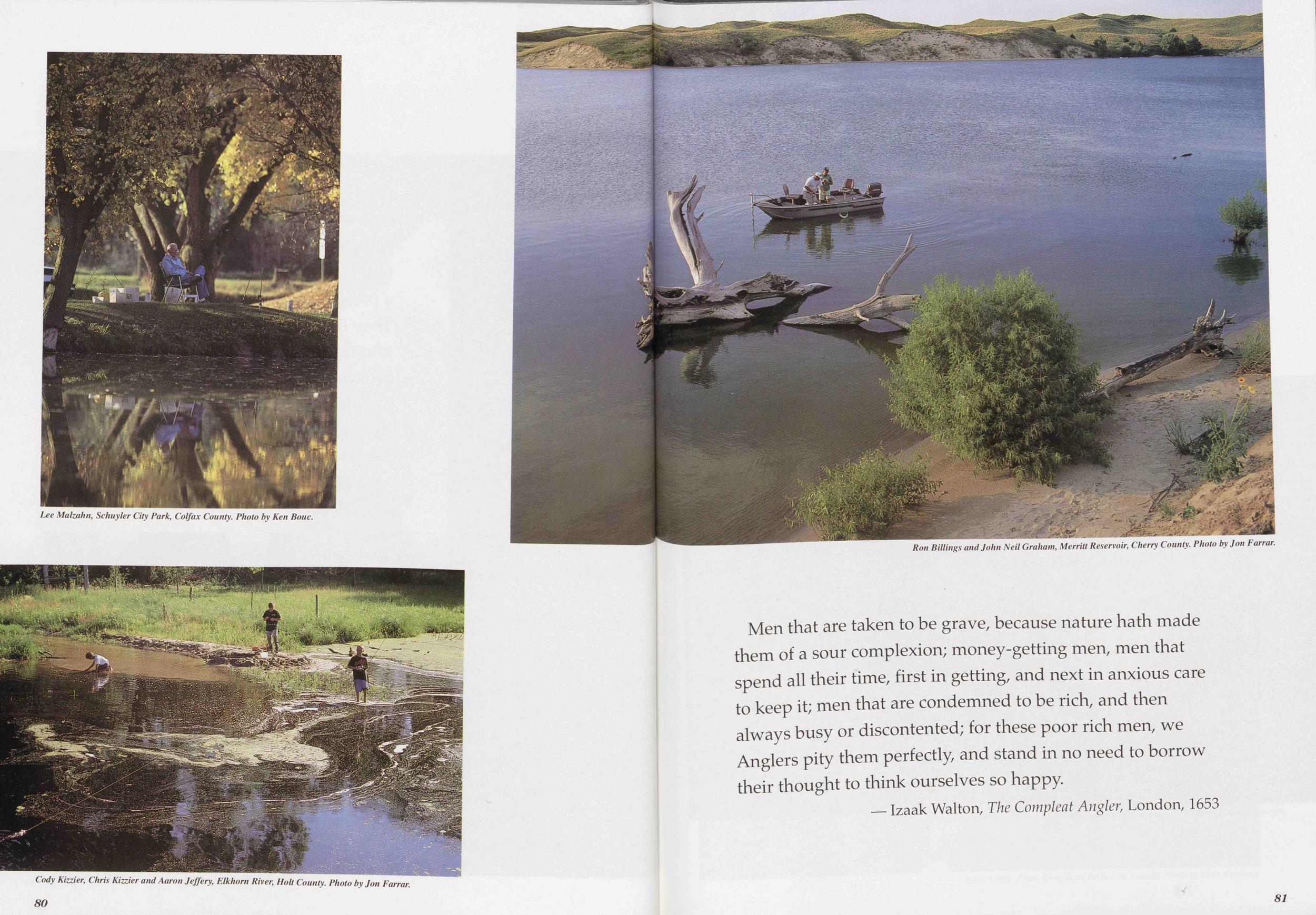
Men that are taken to be grave, because nature hath made them of a sour complexion; money-getting men, men that spend all their time, first in getting, and next in anxious care to keep it; men that are condemned to be rich, and then always busy or discontented; for these poor rich men, we Anglers pity them perfectly, and stand in no need to borrow their thought to think ourselves so happy.
— Izaak Walton, The Compleat Angler, London, 1653 81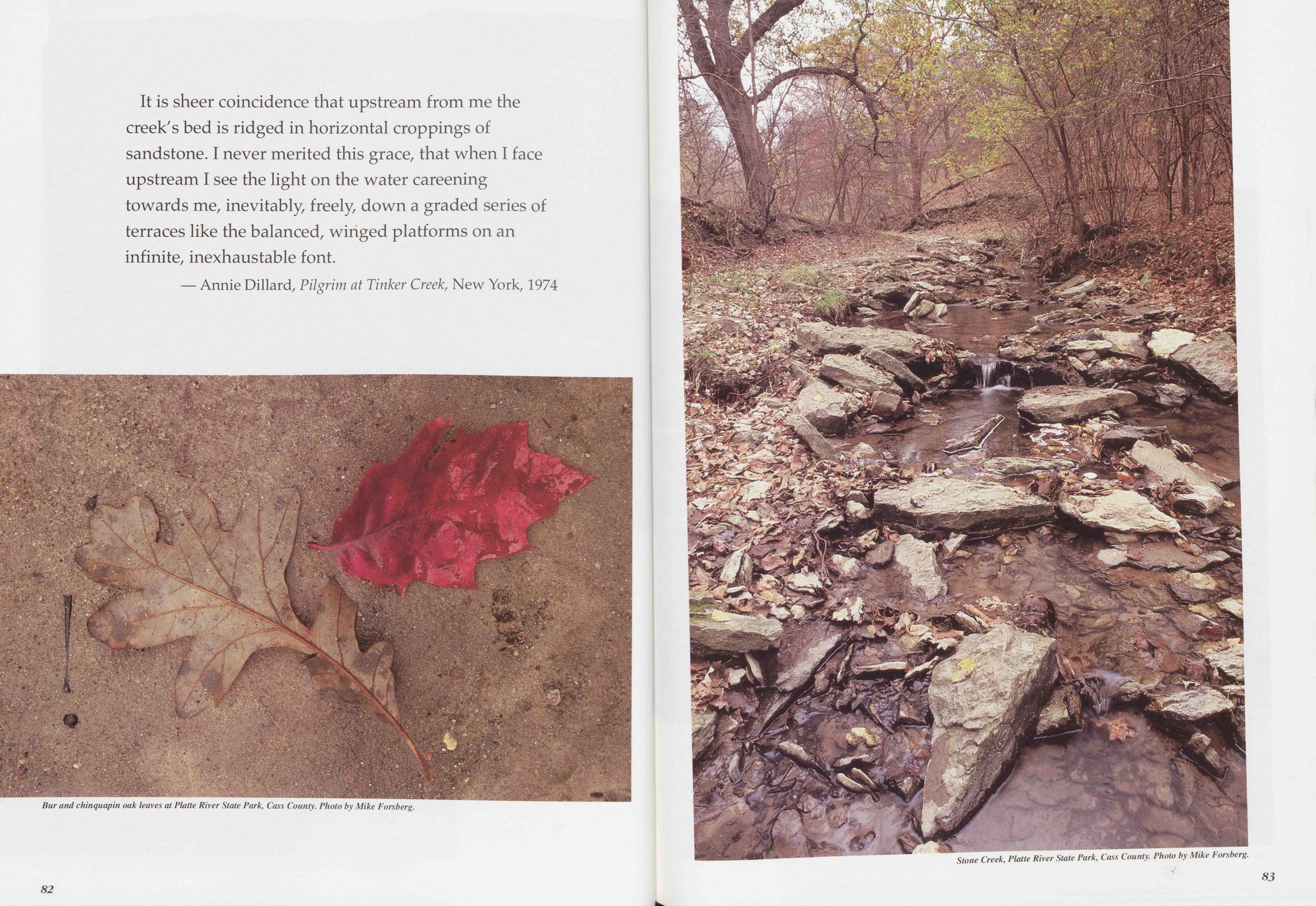
It is sheer coincidence that upstream from me the creek's bed is ridged in horizontal croppings of sandstone. I never merited this grace, that when I face upstream I see the light on the water careening towards me, inevitably, freely, down a graded series of terraces like the balanced, winged platforms on an infinite, inexhaustable font.
— Annie Dillard, Pilgrim at Tinker Creek, New York, 1974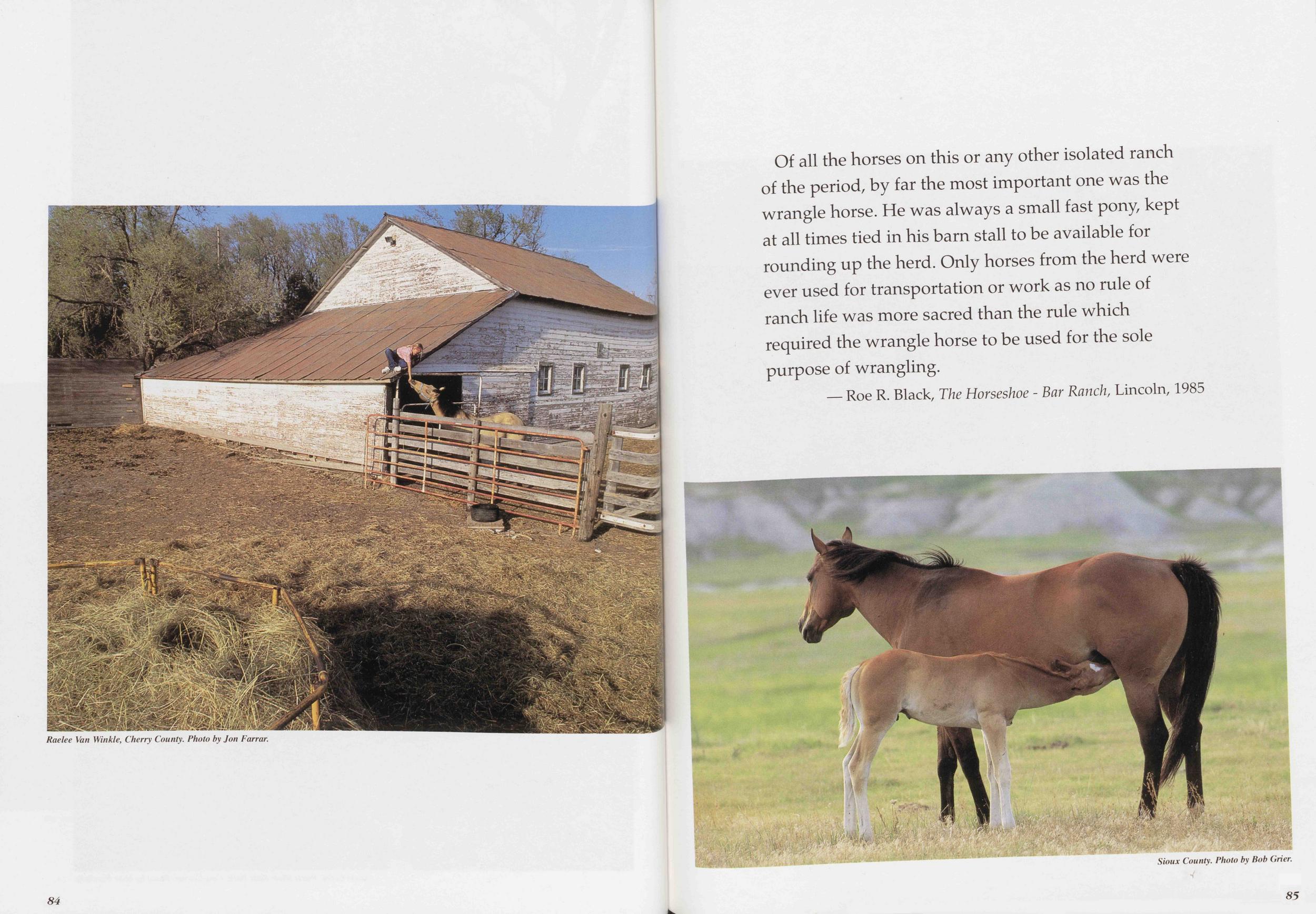
Of all the horses on this or any other isolated ranch of the period, by far the most important one was the wrangle horse. He was always a small fast pony, kept at all times tied in his barn stall to be available for rounding up the herd. Only horses from the herd were ever used for transportation or work as no rule of ranch life was more sacred than the rule which required the wrangle horse to be used for the sole purpose of wrangling.
— Roe R. Black, The Horseshoe - Bar Ranch, Lincoln, 1985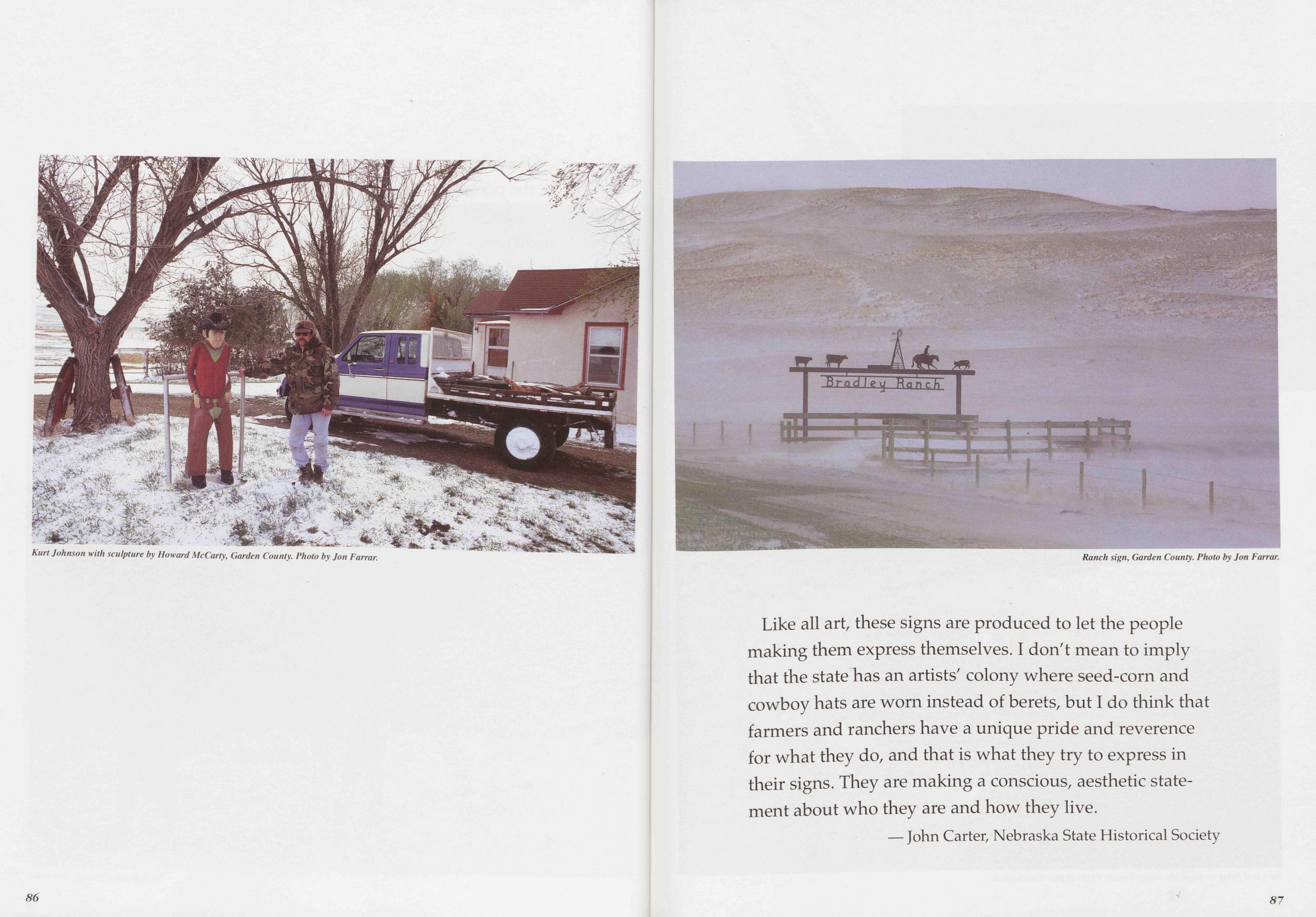
Like all art, these signs are produced to let the people making them express themselves. I don't mean to imply that the state has an artists' colony where seed-corn and cowboy hats are worn instead of berets, but I do think that farmers and ranchers have a unique pride and reverence for what they do, and that is what they try to express in their signs. They are making a conscious, aesthetic statement about who they are and how they live.
— John Carter, Nebraska State Historical Society 87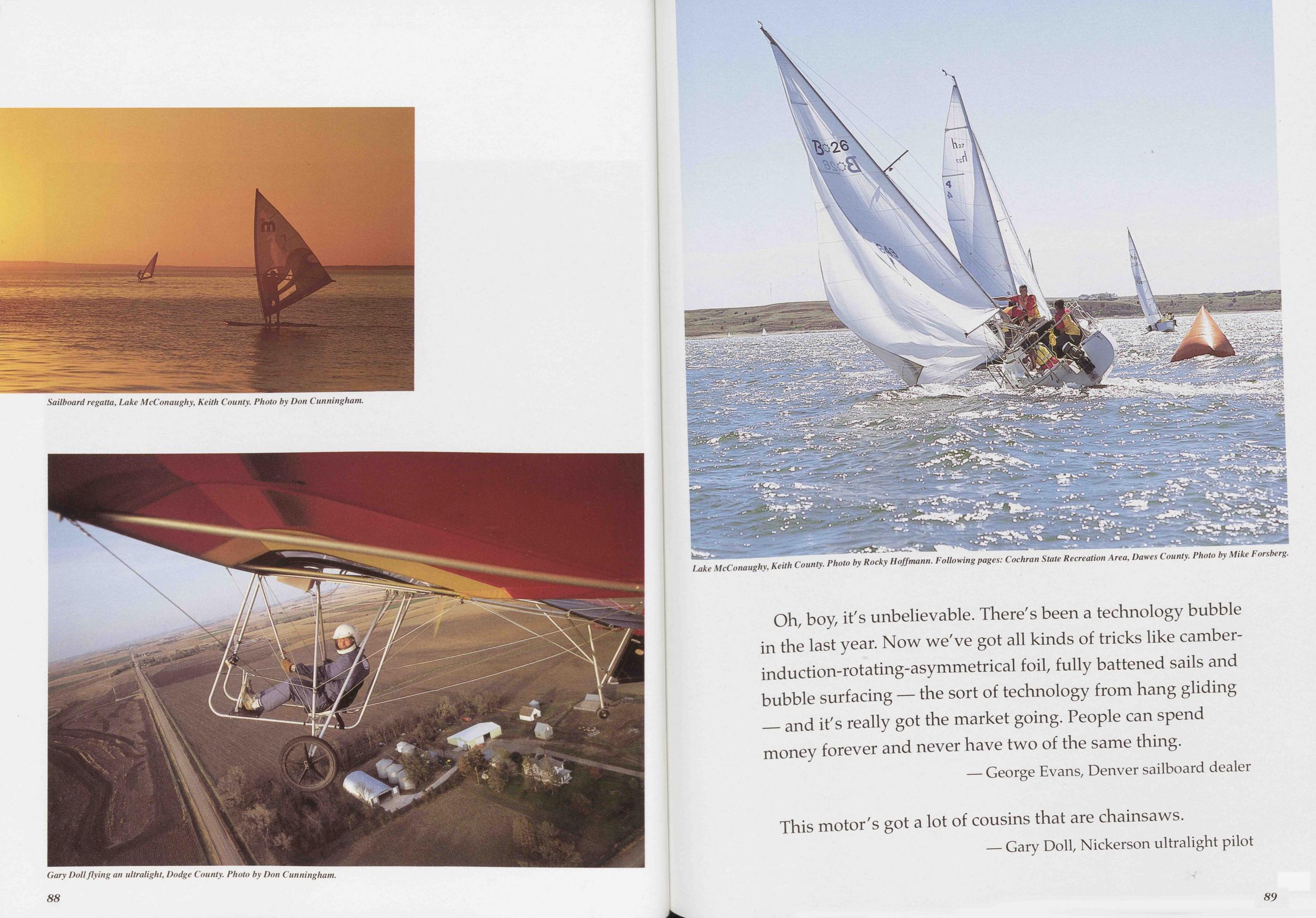
Oh, boy, it's unbelievable. There's been a technology bubble in the last year. Now we've got all kinds of tricks like camber-induction-rotating-asymmetrical foil, fully battened sails and bubble surfacing — the sort of technology from hang gliding — and it's really got the market going. People can spend money forever and never have two of the same thing.
— George Evans, Denver sailboard dealerThis motor's got a lot of cousins that are chainsaws.
— Gary Doll, Nickerson ultralight pilot 89
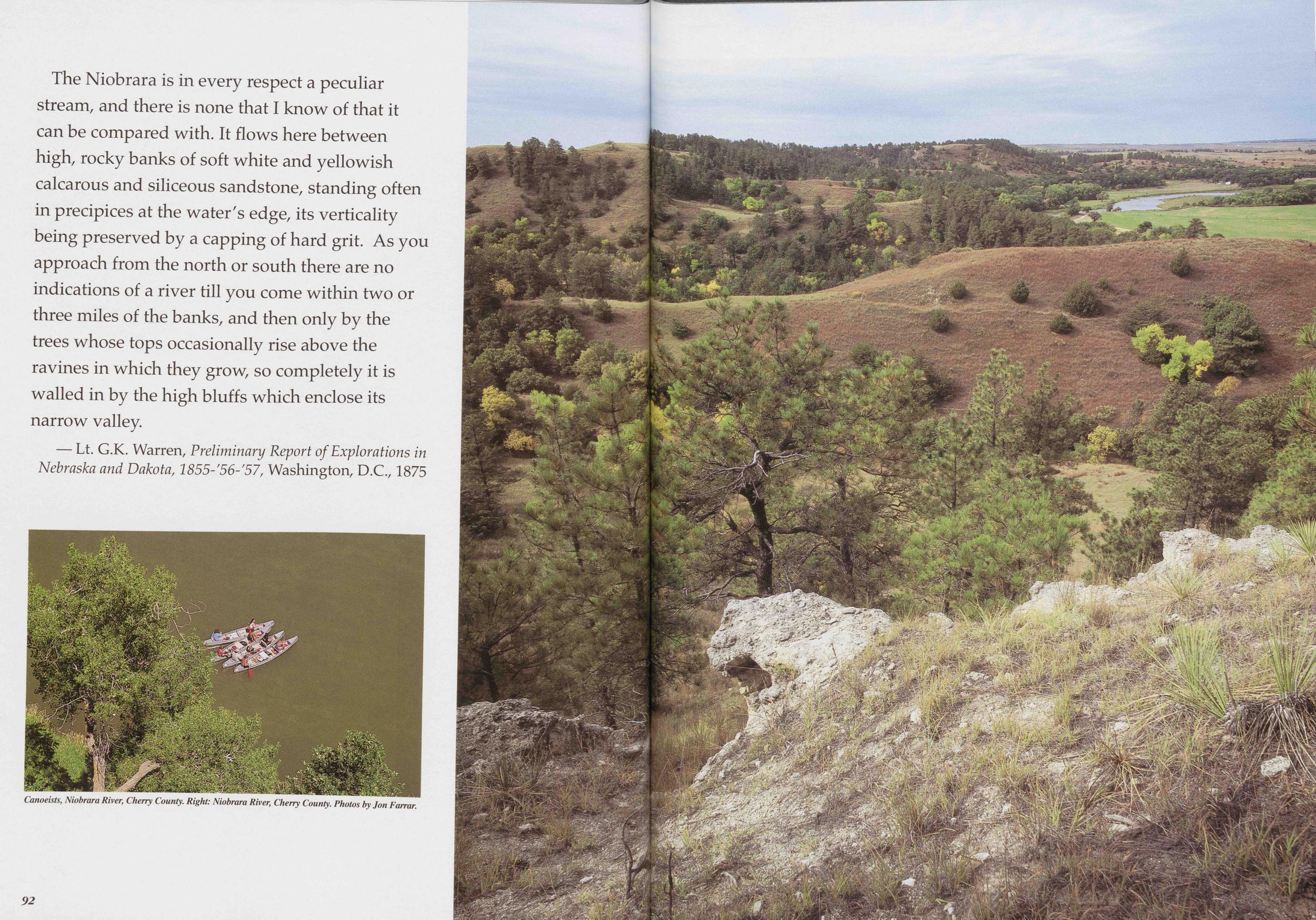
The Niobrara is in every respect a peculiar stream, and there is none that I know of that it can be compared with. It flows here between high, rocky banks of soft white and yellowish calcarous and siliceous sandstone, standing often in precipices at the water's edge, its verticality being preserved by a capping of hard grit. As you approach from the north or south there are no indications of a river till you come within two or three miles of the banks, and then only by the trees whose tops occasionally rise above the ravines in which they grow, so completely it is walled in by the high bluffs which enclose its narrow valley.
— Lt. G.K. Warren, Preliminary Report of Explorations in Nebraska and Dakota, 1855-'56-'57, Washington, D.C., 1875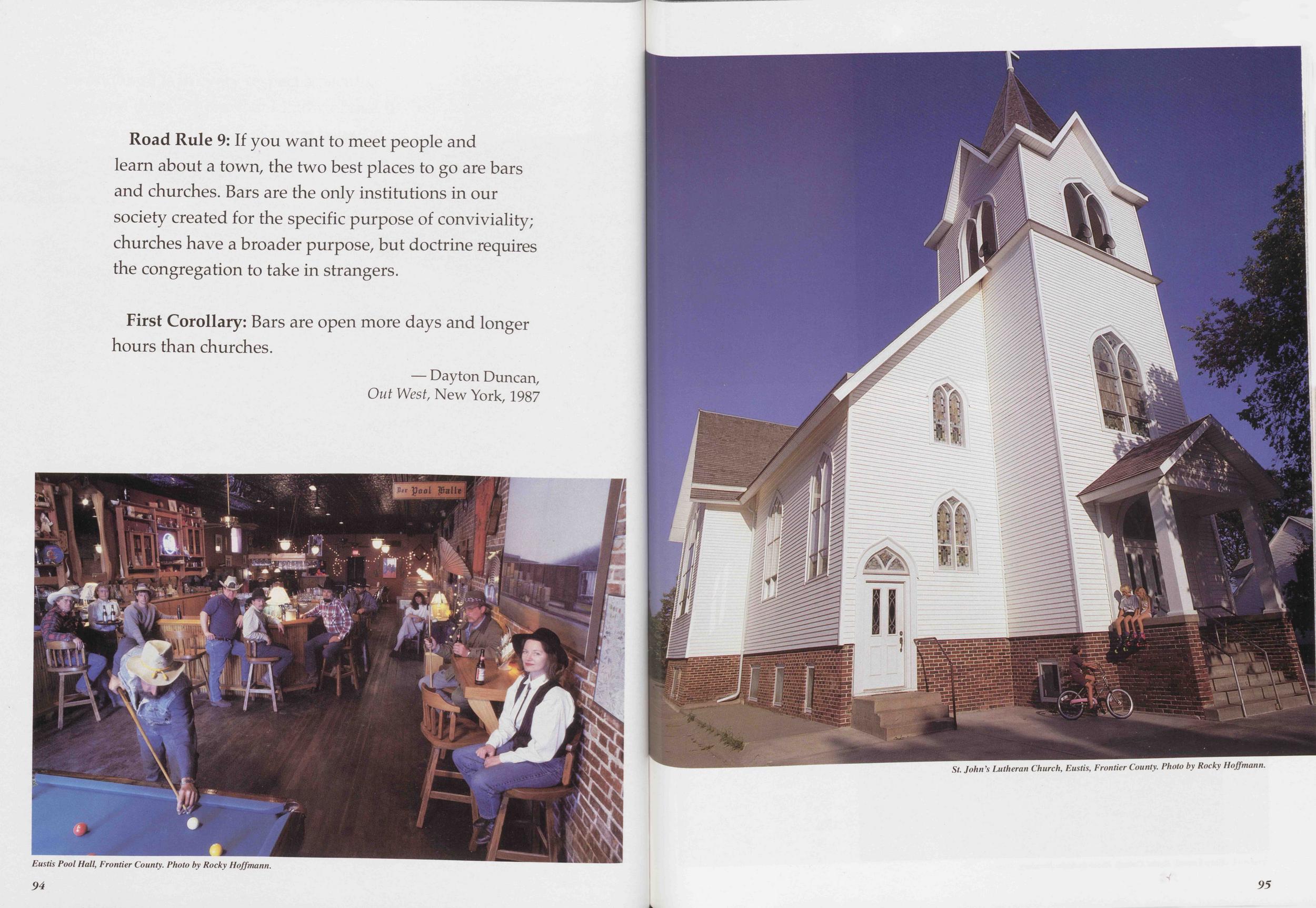
Road Rule 9: If you want to meet people and learn about a town, the two best places to go are bars and churches. Bars are the only institutions in our society created for the specific purpose of conviviality; churches have a broader purpose, but doctrine requires the congregation to take in strangers.
First Corollary: Bars are open more days and longer hours than churches.
— Dayton Duncan, Out West, New York, 1987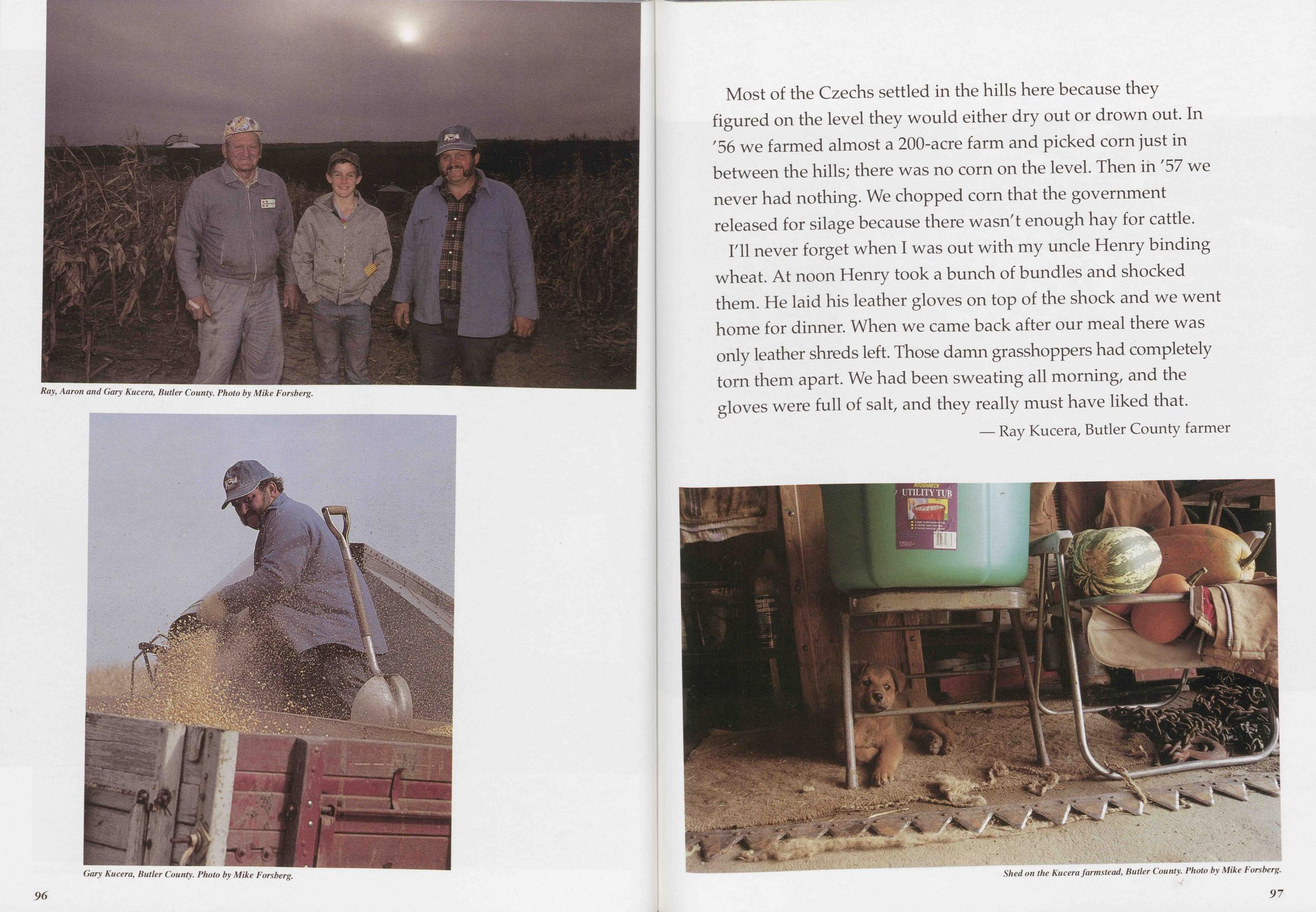
Most of the Czechs settled in the hills here because they figured on the level they would either dry out or drown out. In '56 we farmed almost a 200-acre farm and picked corn just in between the hills; there was no corn on the level. Then in '57 we never had nothing. We chopped corn that the government released for silage because there wasn't enough hay for cattle. I'll never forget when I was out with my uncle Henry binding wheat. At noon Henry took a bunch of bundles and shocked them. He laid his leather gloves on top of the shock and we went home for dinner. When we came back after our meal there was only leather shreds left. Those damn grasshoppers had completely torn them apart. We had been sweating all morning, and the gloves were full of salt, and they really must have liked that.
— Ray Kucera, Butler County farmer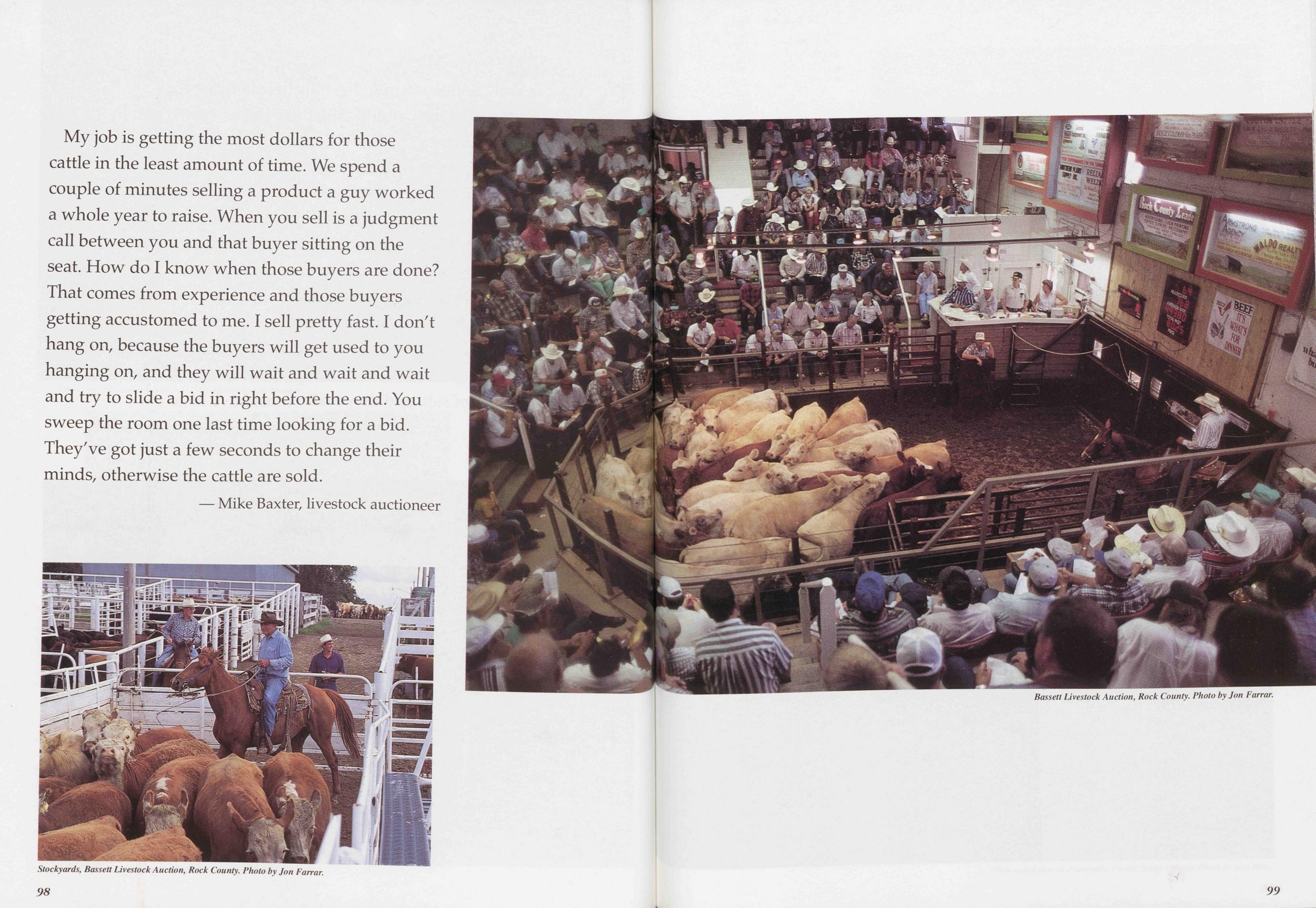
My job is getting the most dollars for those cattle in the least amount of time. We spend a couple of minutes selling a product a guy worked a whole year to raise. When you sell is a judgment call between you and that buyer sitting on the seat. How do I know when those buyers are done? That comes from experience and those buyers getting accustomed to me. I sell pretty fast. I don't hang on, because the buyers will get used to you hanging on, and they will wait and wait and wait and try to slide a bid in right before the end. You sweep the room one last time looking for a bid. They've got just a few seconds to change their minds, otherwise the cattle are sold.
— Mike Baxter, livestock auctioneer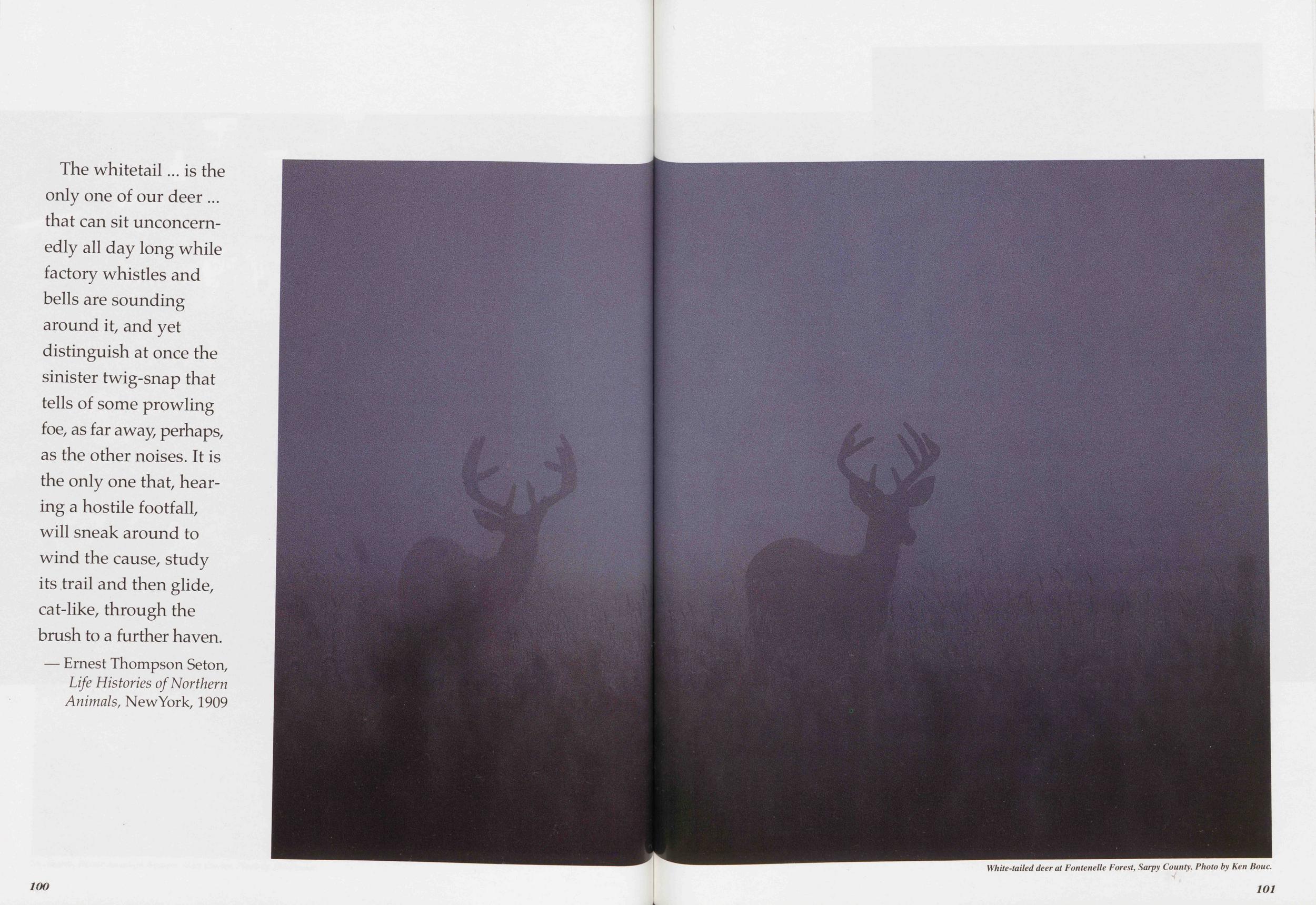
The whitetail is the only one of our deer that can sit unconcernedly all day long while factory whistles and bells are sounding around it, and yet distinguish at once the sinister twig-snap that tells of some prowling foe, as far away, perhaps, as the other noises. It is the only one that, hearing a hostile footfall, will sneak around to wind the cause, study its trail and then glide, cat-like, through the brush to a further haven.
— Ernest Thompson Seton, Life Histories of Northern Animals, NewYork, 1909 100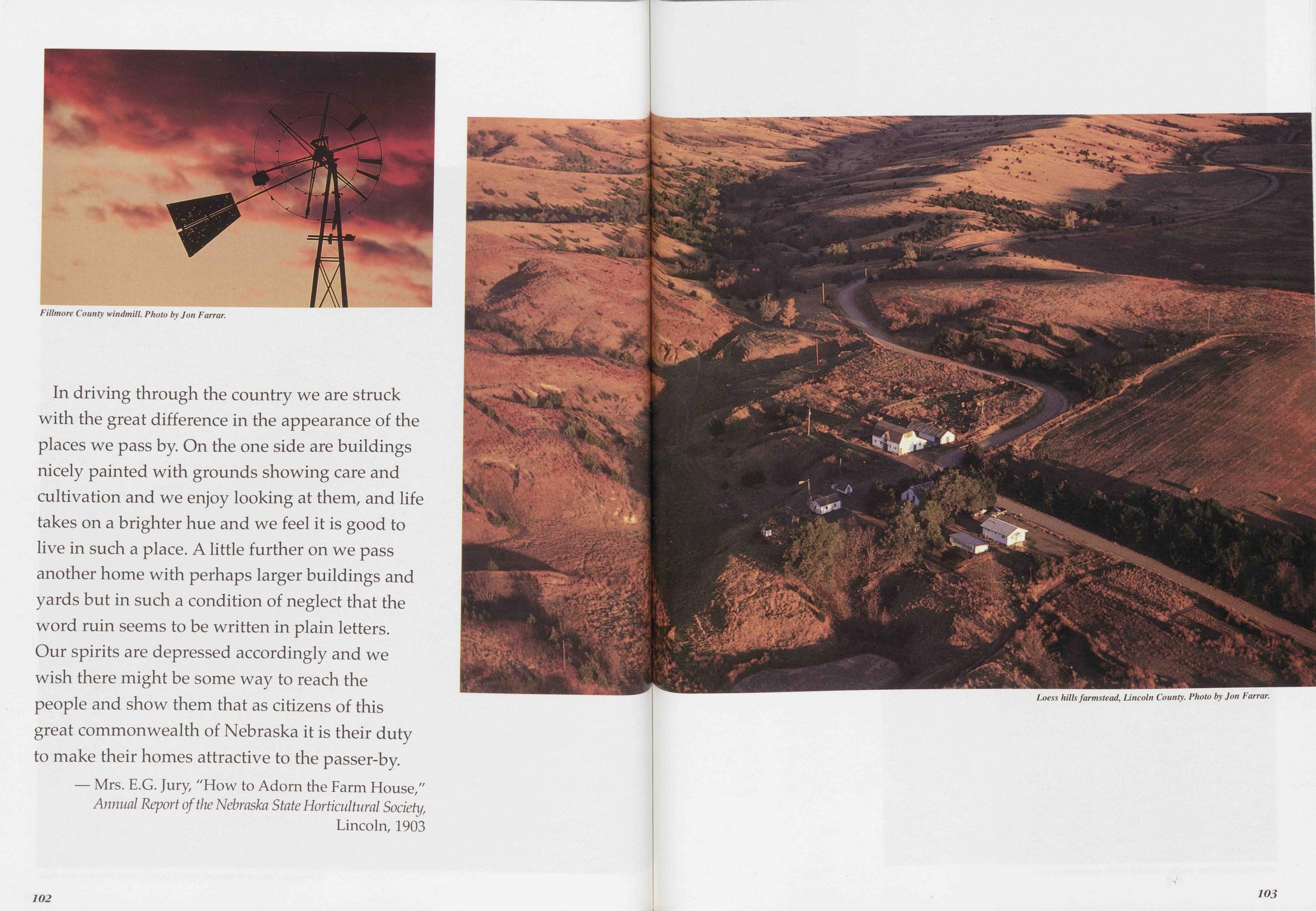
In driving through the country we are struck with the great difference in the appearance of the places we pass by. On the one side are buildings nicely painted with grounds showing care and cultivation and we enjoy looking at them, and life takes on a brighter hue and we feel it is good to live in such a place. A little further on we pass another home with perhaps larger buildings and yards but in such a condition of neglect that the word ruin seems to be written in plain letters. Our spirits are depressed accordingly and we wish there might be some way to reach the people and show them that as citizens of this great commonwealth of Nebraska it is their duty to make their homes attractive to the passer-by.
— Mrs. E.G. Jury, "How to Adorn the Farm House," Annual Report of the Nebraska State Horticultural Society, Lincoln, 1903 102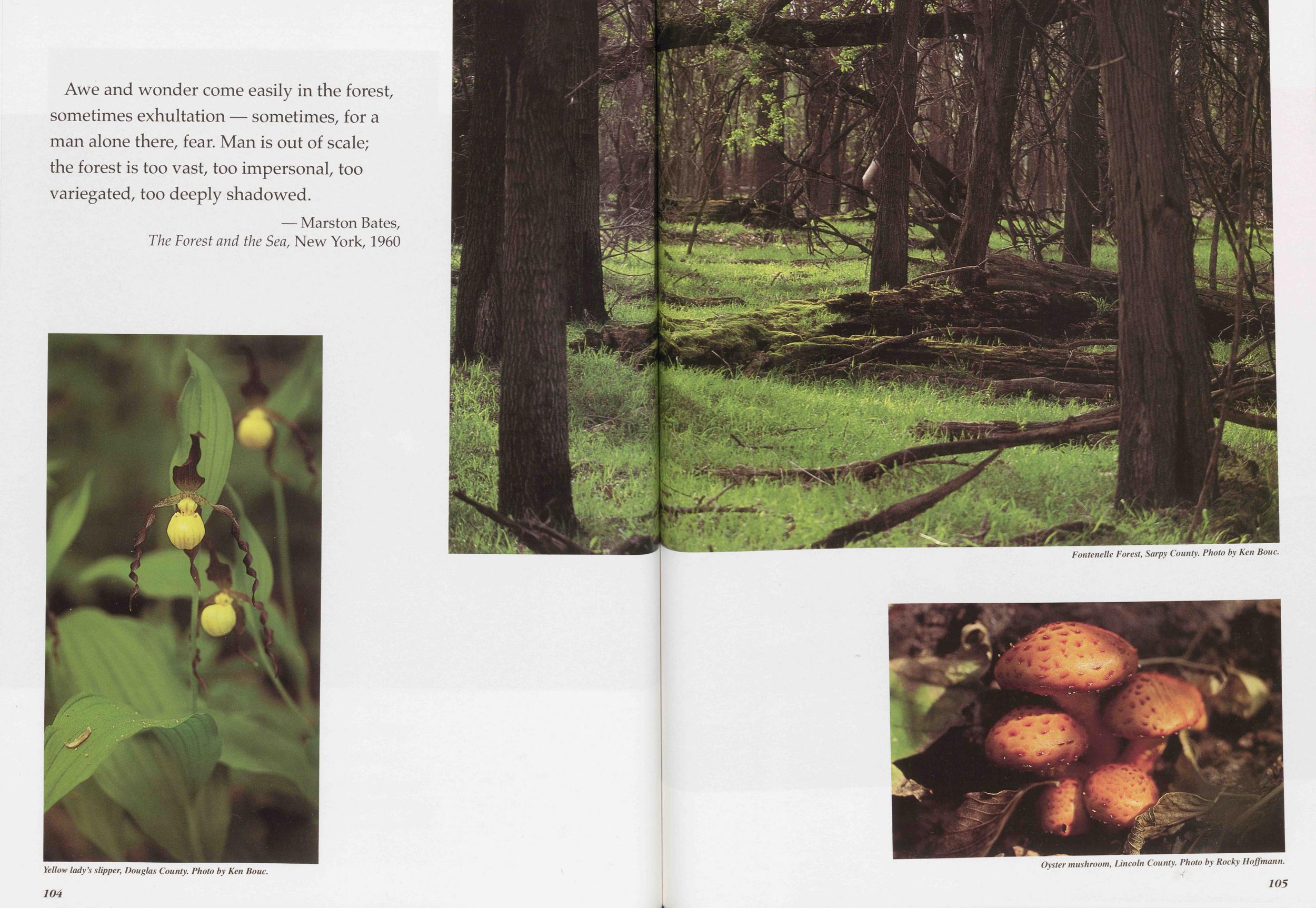
Awe and wonder come easily in the forest, sometimes exhultation — sometimes, for a man alone there, fear. Man is out of scale; the forest is too vast, too impersonal, too variegated, too deeply shadowed.
— Marston Bates, The Forest and the Sea, New York, 1960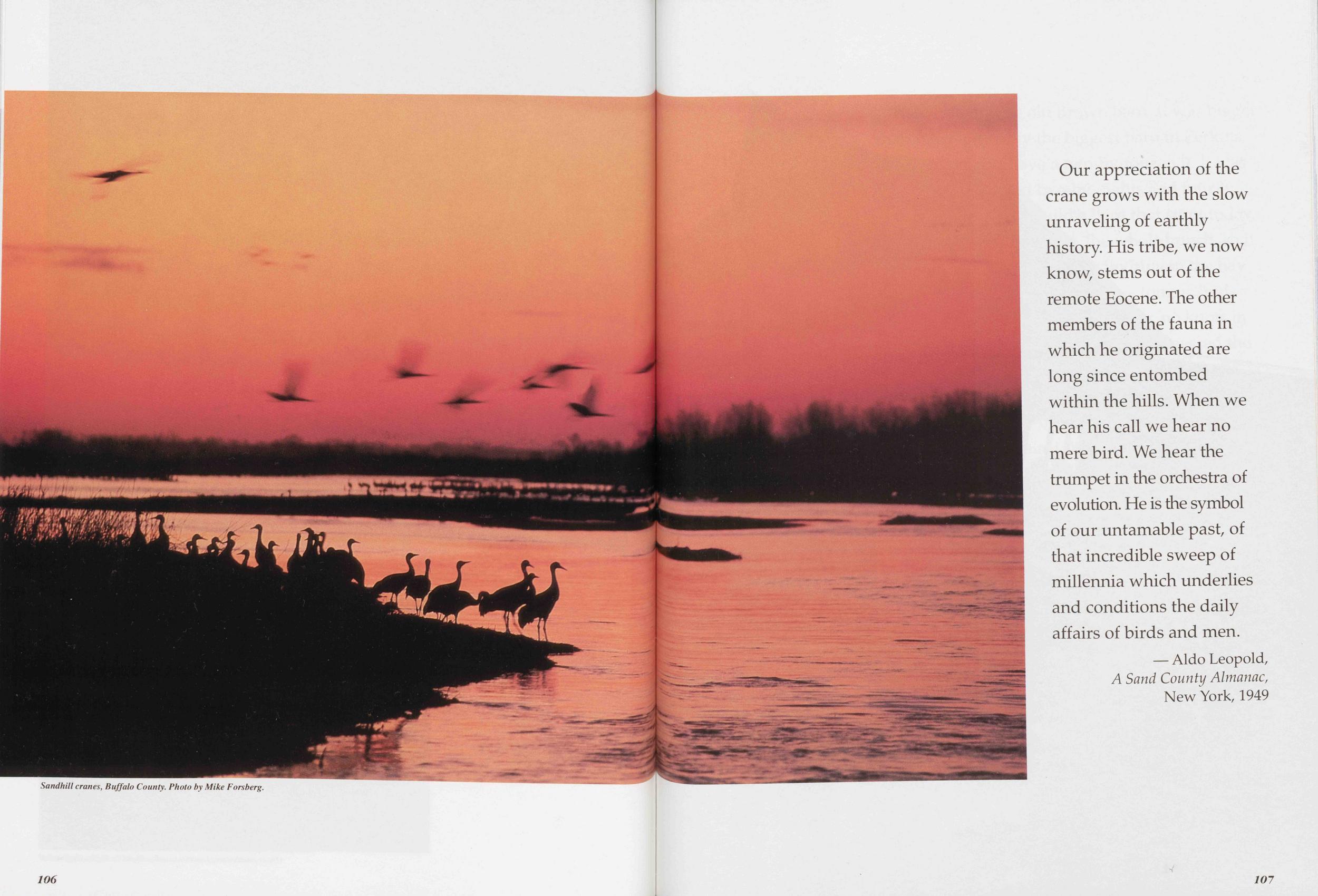
Our appreciation of the crane grows with the slow unraveling of earthly history. His tribe, we now know, stems out of the remote Eocene. The other members of the fauna in which he originated are long since entombed within the hills. When we hear his call we hear no mere bird. We hear the trumpet in the orchestra of evolution. He is the symbol of our untamable past, of that incredible sweep of millennia which underlies and conditions the daily affairs of birds and men.
— Aldo Leopold, A Sand County Almanac, New York, 1949 107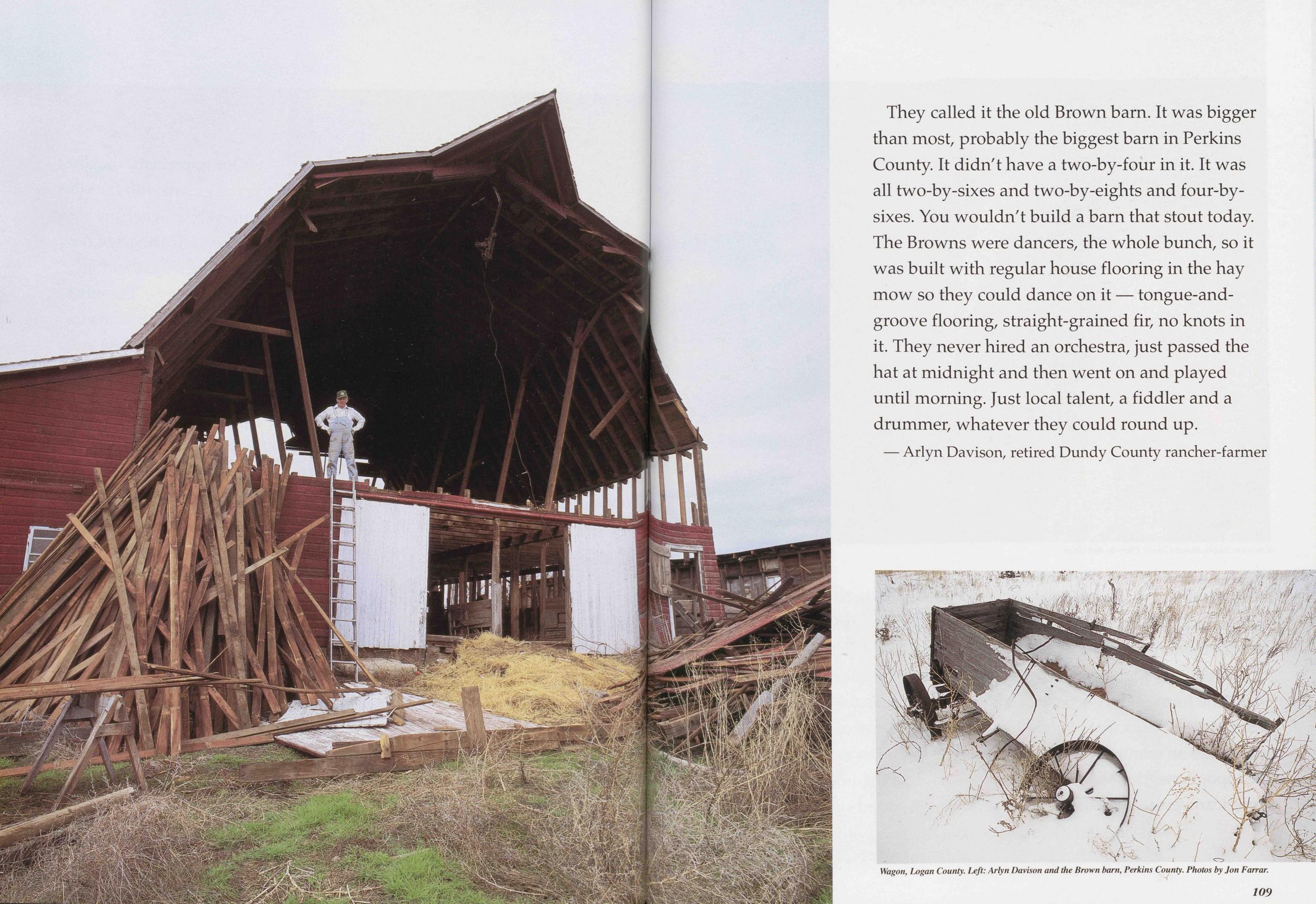
They called it the old Brown barn. It was bigger than most, probably the biggest barn in Perkins County. It didn't have a two-by-four in it. It was all two-by-sixes and two-by-eights and four-by-sixes. You wouldn't build a barn that stout today. The Browns were dancers, the whole bunch, so it was built with regular house flooring in the hay mow so they could dance on it — tongue-and-groove flooring, straight-grained fir, no knots in it. They never hired an orchestra, just passed the hat at midnight and then went on and played until morning. Just local talent, a fiddler and a drummer, whatever they could round up.
— Arlyn Davison, retired Dundy County rancher-farmer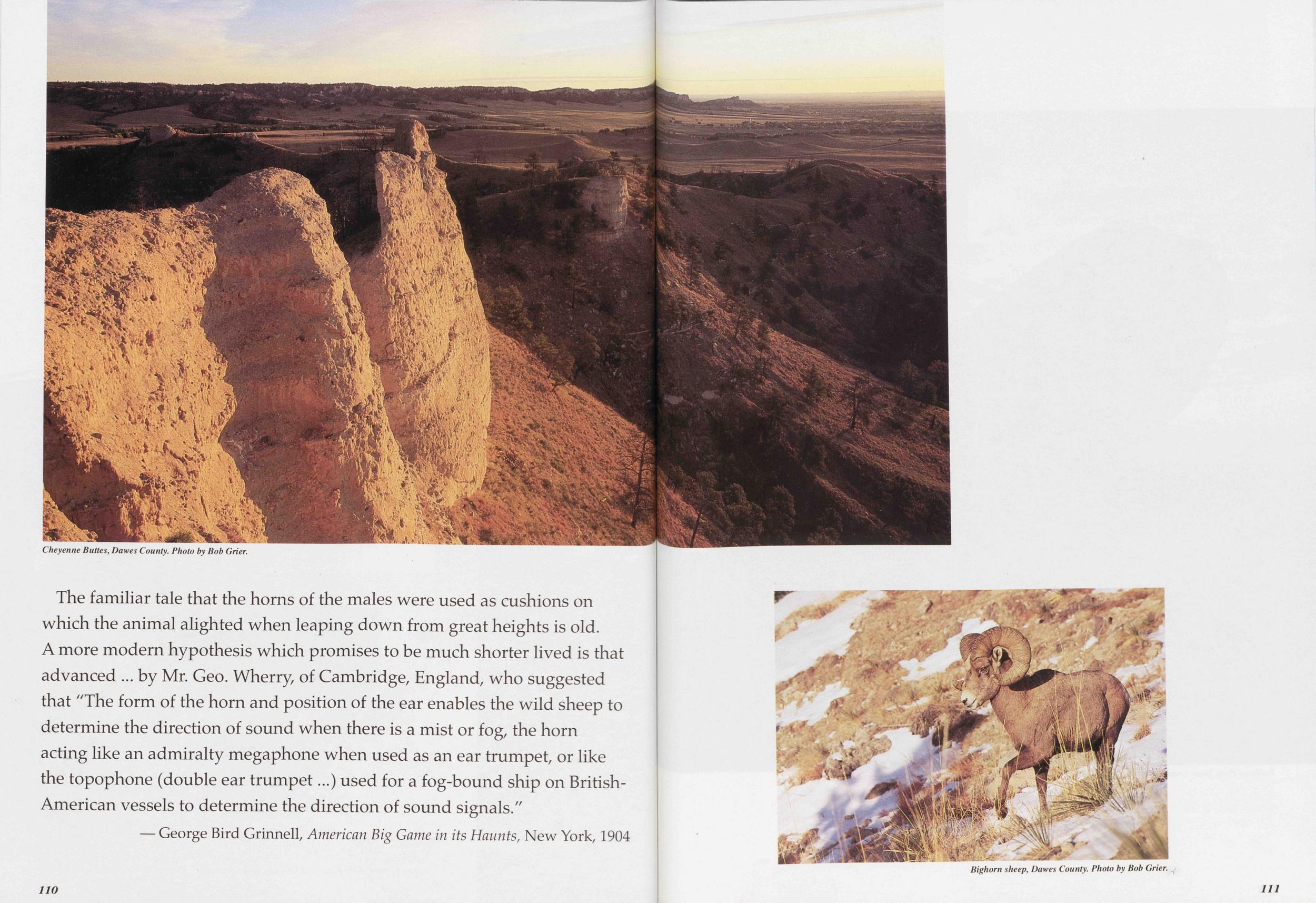
The familiar tale that the horns of the males were used as cushions on which the animal alighted when leaping down from great heights is old. A more modern hypothesis which promises to be much shorter lived is that advanced ... by Mr. Geo. Wherry of Cambridge, England, who suggested that 'The form of the horn and position of the ear enables the wild sheep to determine the direction of sound when there is a mist or fog, the horn acting like an admiralty megaphone when used as an ear trumpet, or like the topophone (double ear trumpet...) used for a fog-bound ship on British-American vessels to determine the direction of sound signals."
— George Bird Grinnell, American Big Game in its Haunts, New York, 1904 110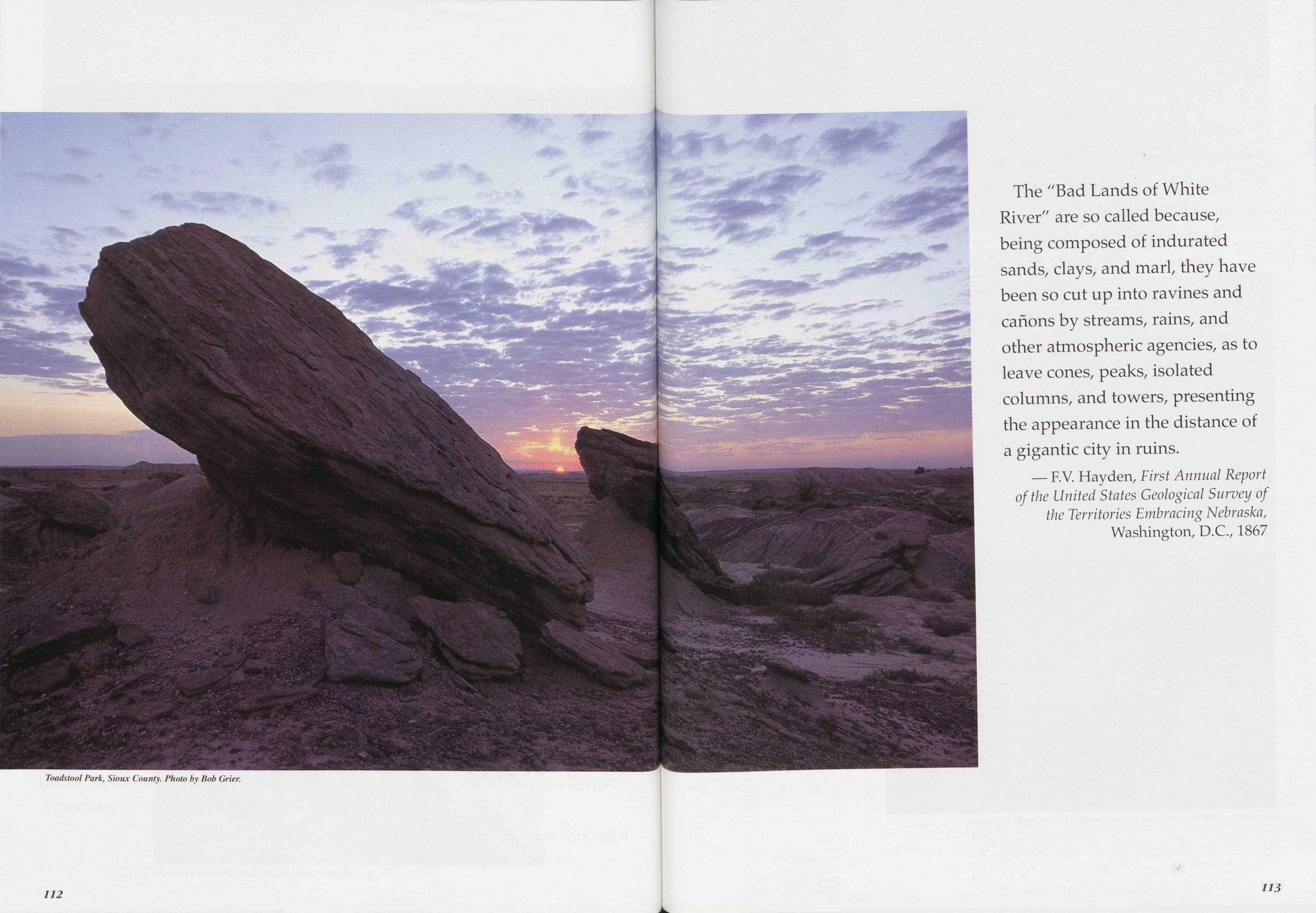
The "Bad Lands of White River" are so called because, being composed of indurated sands, clays, and marl, they have been so cut up into ravines and canons by streams, rains, and other atmospheric agencies, as to leave cones, peaks, isolated columns, and towers, presenting the appearance in the distance of a gigantic city in ruins.
— F.V. Hayden, First Annual Report of the United States Geological Survey of the Territories Embracing Nebraska, Washington, D.C., 1867 113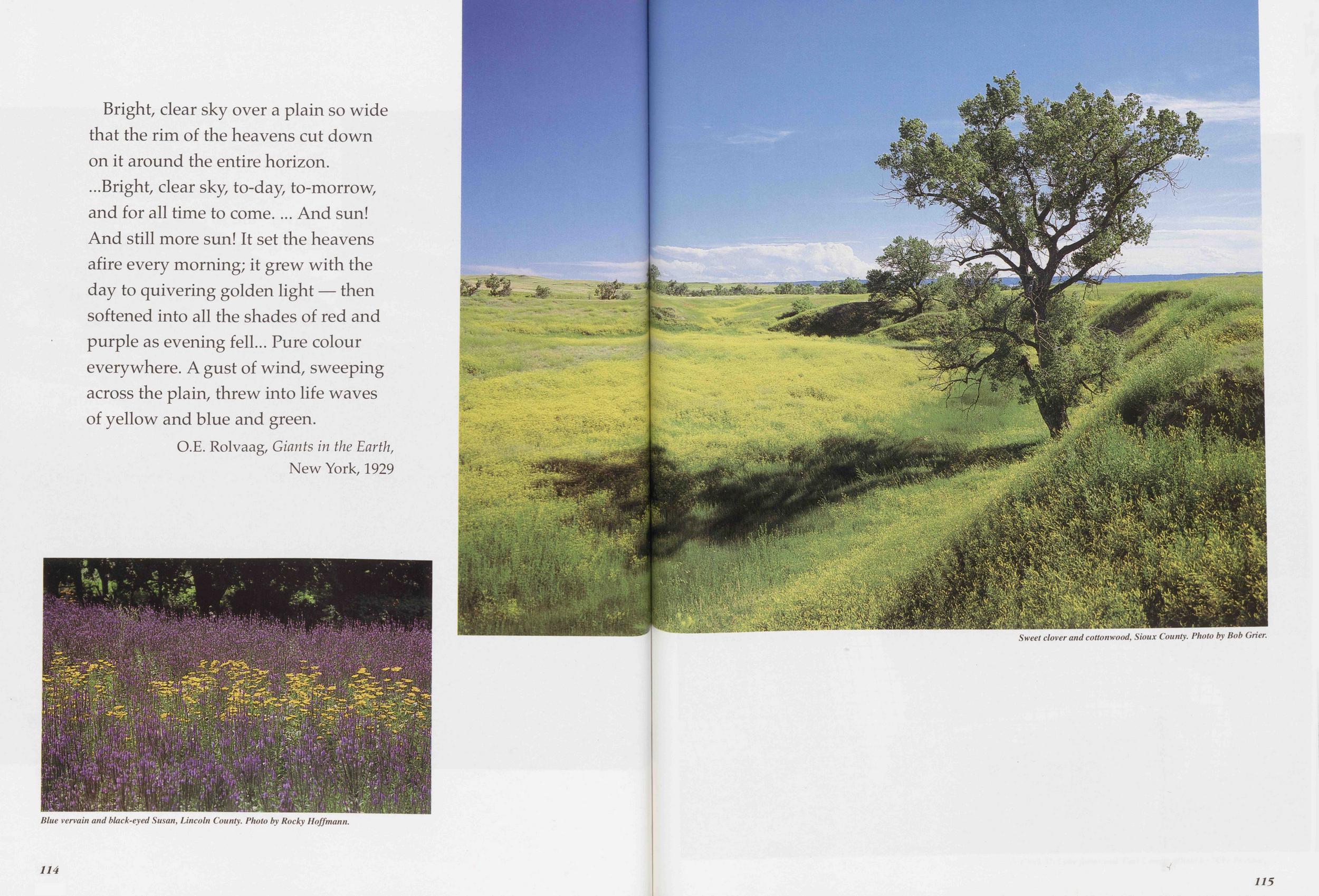
Bright, clear sky over a plain so wide that the rim of the heavens cut down on it around the entire horizon. Bright, clear sky, to-day, tomorrow, and for all time to come And sun! And still more sun! It set the heavens afire every morning; it grew with the day to quivering golden light then softened into all the shades of red and purple as evening fell Pure colour everywhere. A gust of wind, sweeping across the plain, threw into life waves of yellow and blue and green.
O.E. Rolvaag, Giants in the Earth, New York, 1929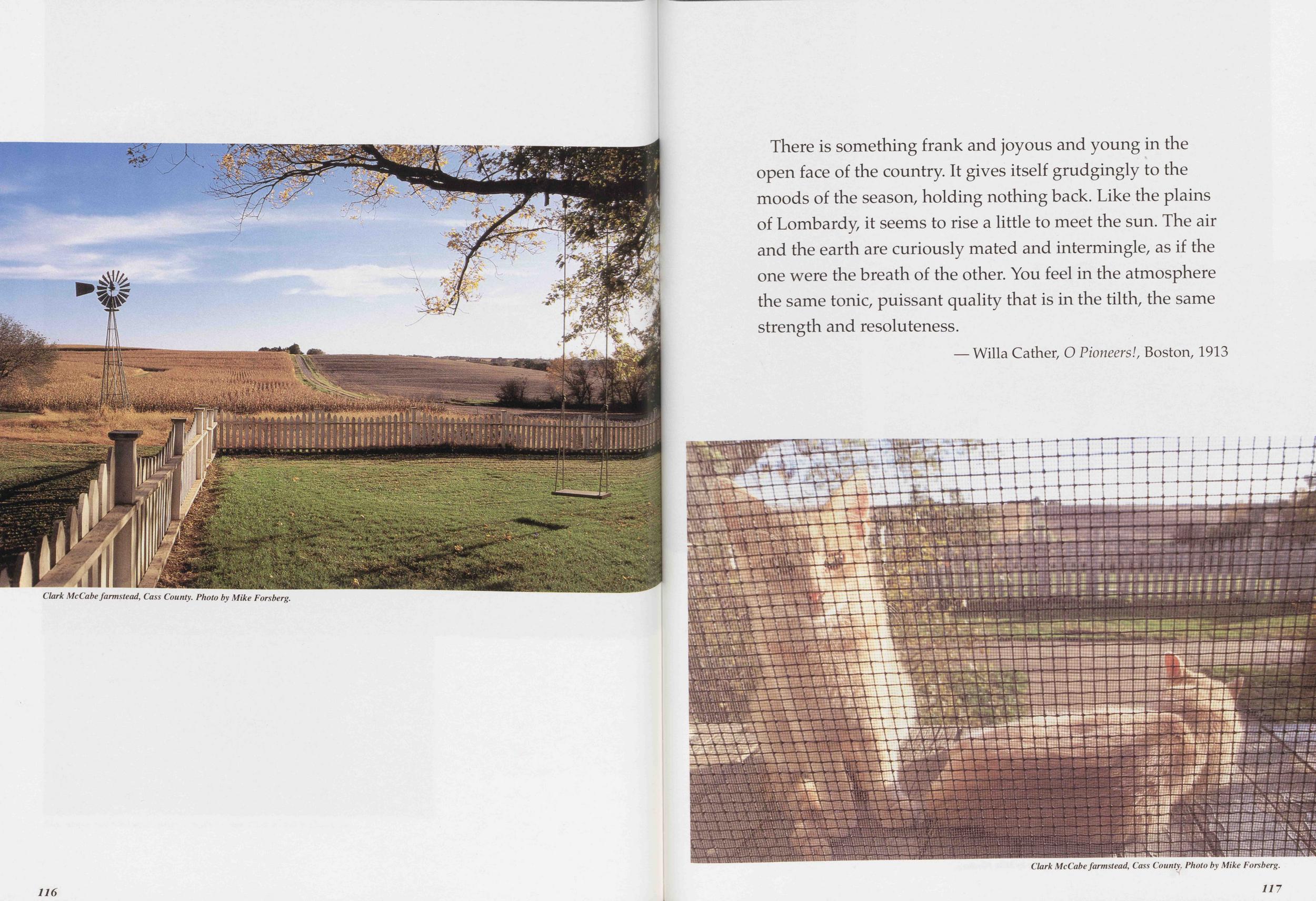
There is something frank and joyous and young in the open face of the country. It gives itself grudgingly to the moods of the season, holding nothing back. Like the plains of Lombardy, it seems to rise a little to meet the sun. The air and the earth are curiously mated and intermingle, as if the one were the breath of the other. You feel in the atmosphere the same tonic, puissant quality that is in the tilth, the same strength and resoluteness.
— Willa Cather, O Pioneers!, Boston, 1913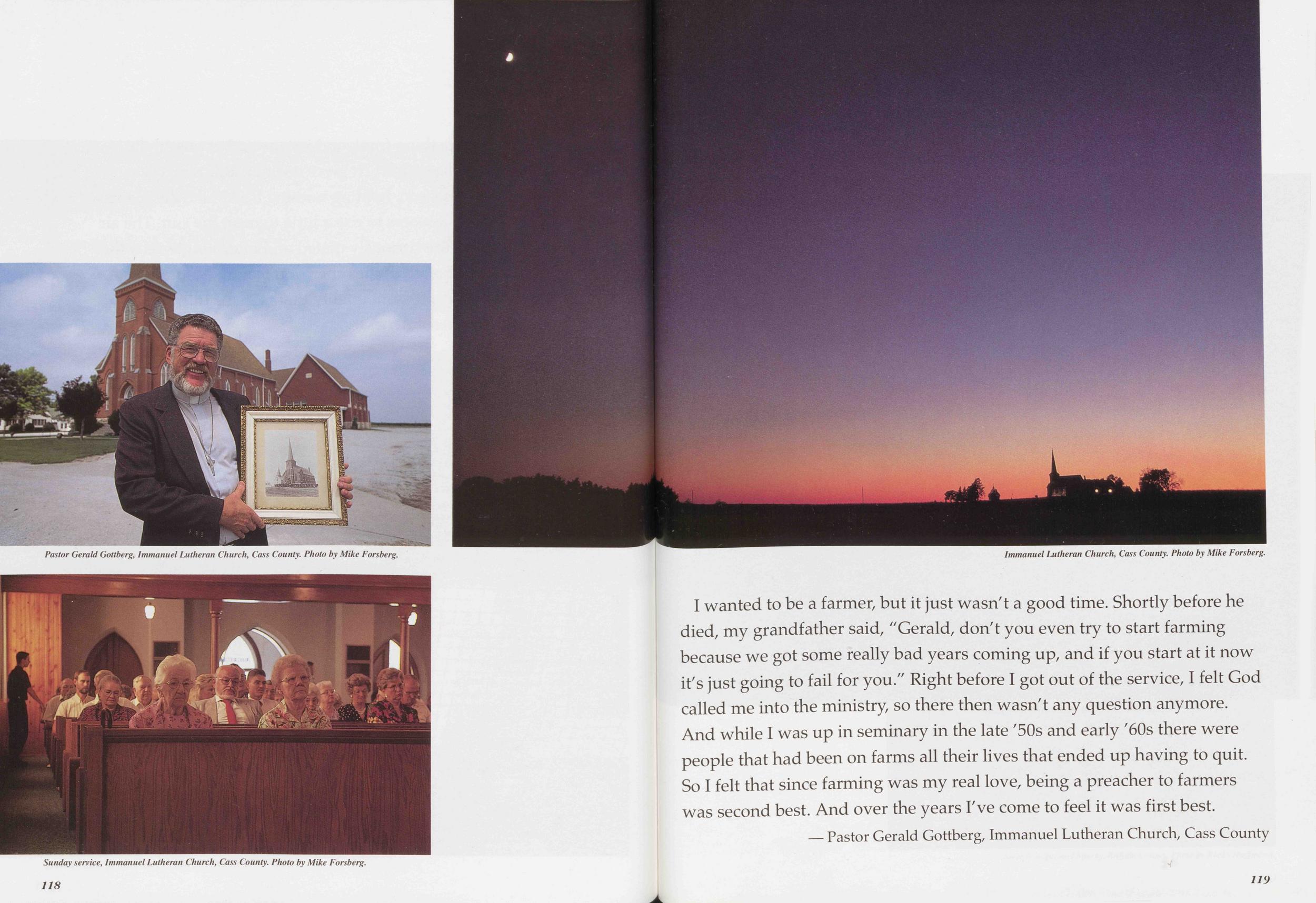
I wanted to be a farmer, but it just wasn't a good time. Shortly before he died, my grandfather said, "Gerald, don't you even try to start farming because we got some really bad years coming up, and if you start at it now it's just going to fail for you." Right before I got out of the service, I felt God called me into the ministry, so there then wasn't any question anymore. And while I was up in seminary in the late '50s and early '60s there were people that had been on farms all their lives that ended up having to quit. So I felt that since farming was my real love, being a preacher to farmers was second best. And over the years I've come to feel it was first best.
Pastor Gerald Gottberg, Immanuel Lutheran Church, Cass County 119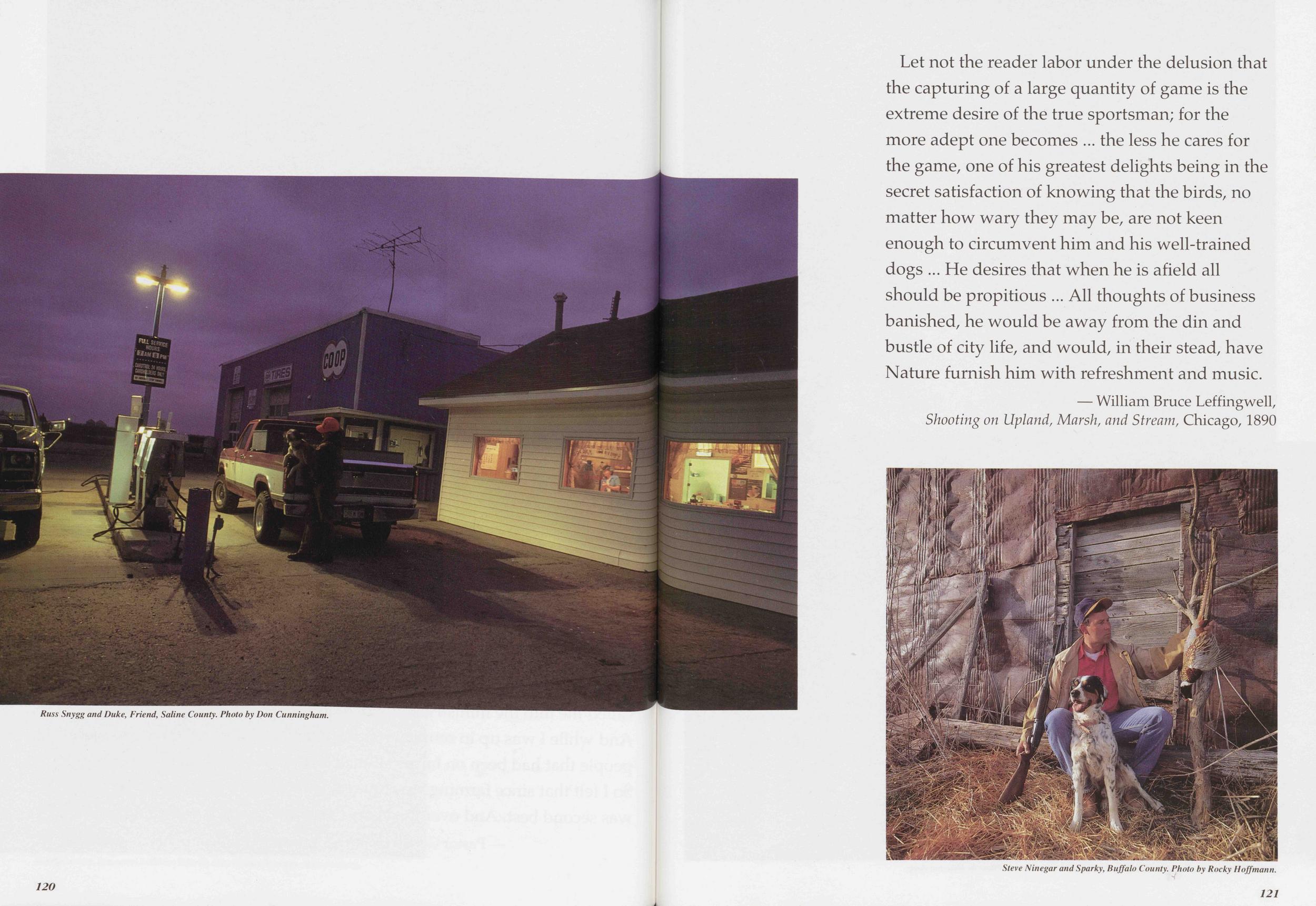
Let not the reader labor under the delusion that the capturing of a large quantity of game is the extreme desire of the true sportsman; for the more adept one becomes the less he cares for the game, one of his greatest delights being in the secret satisfaction of knowing that the birds, no matter how wary they may be, are not keen enough to circumvent him and his well-trained dogs He desires that when he is afield all should be propitious All thoughts of business banished, he would be away from the din and bustle of city life, and would, in their stead, have Nature furnish him with refreshment and music.
— William Bruce Leffingwell, Shooting on Upland, Marsh, and Stream, Chicago, 1890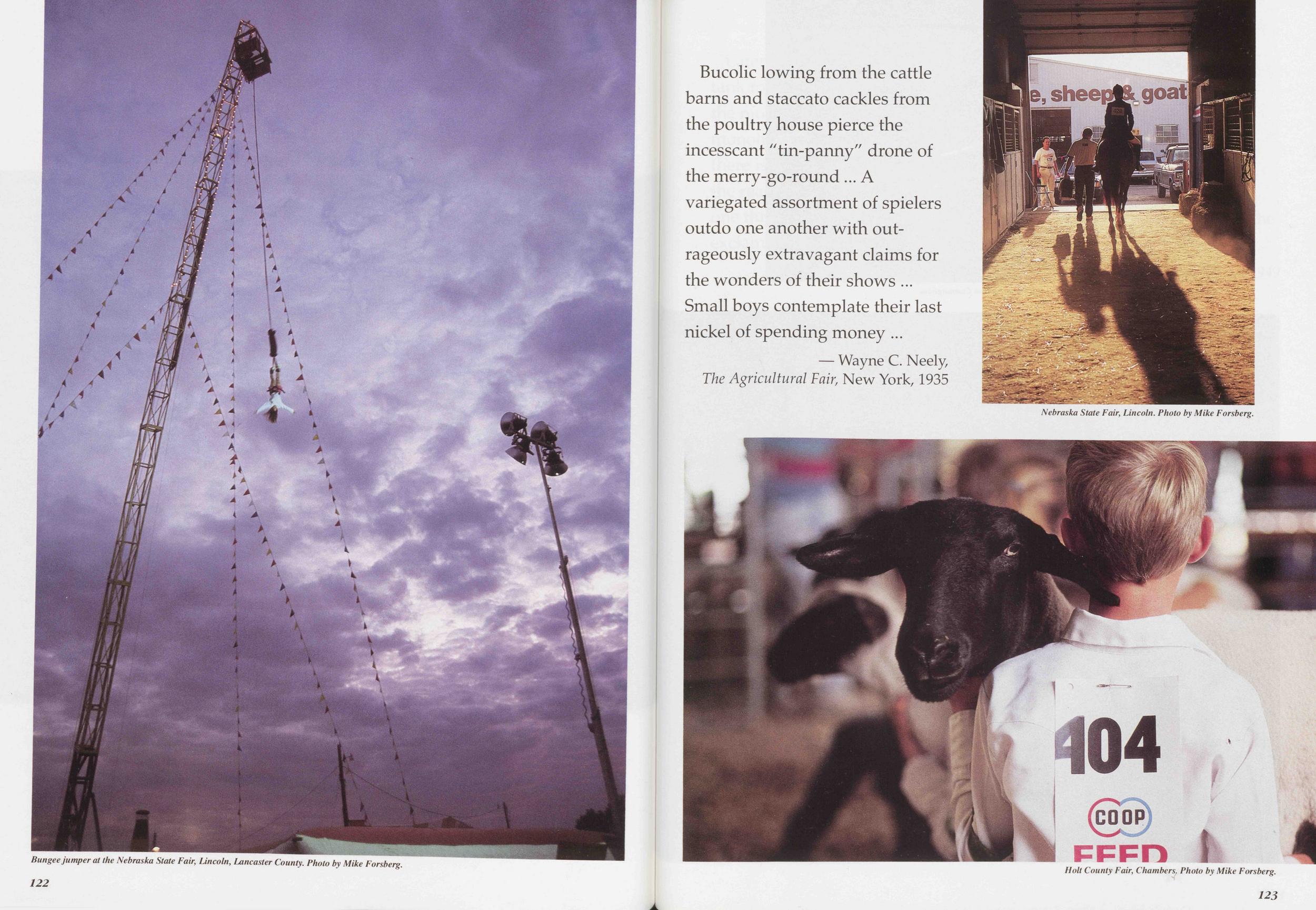
Bucolic lowing from the cattle barns and staccato cackles from the poultry house pierce the incesscant "tin-panny" drone of the merry-go-round A variegated assortment of spielers outdo one another with outrageously extravagant claims for the wonders of their shows Small boys contemplate their last nickel of spending money
— Wayne C. Neely The Agricultural Fair, New York, 1935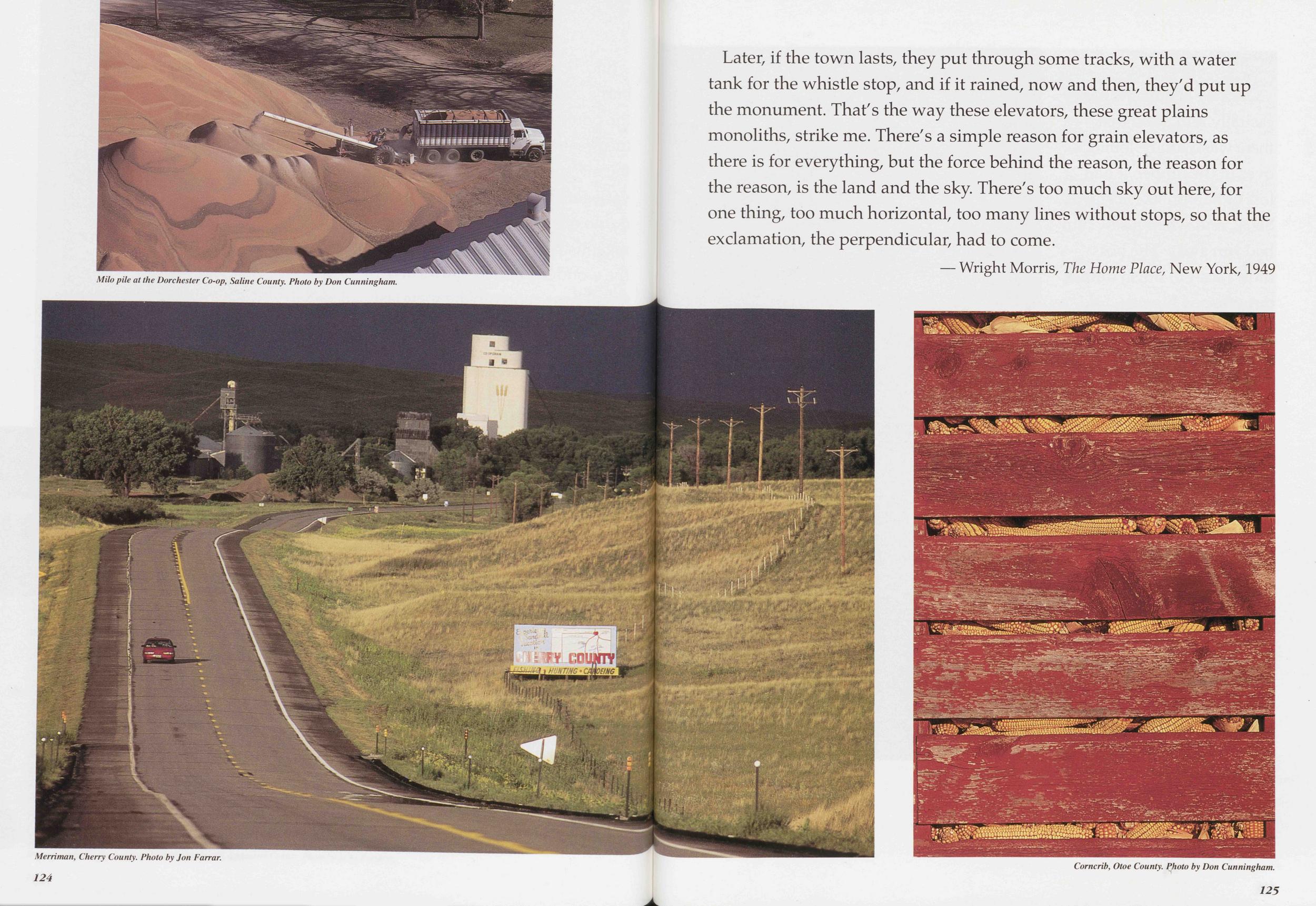
Later, if the town lasts, they put through some tracks, with a water tank for the whistle stop, and if it rained, now and then, they'd put up the monument. That's the way these elevators, these great plains monoliths, strike me. There's a simple reason for grain elevators, as there is for everything, but the force behind the reason, the reason for the reason, is the land and the sky. There's too much sky out here, for one thing, too much horizontal, too many lines without stops, so that the exclamation, the perpendicular, had to come.
Wright Morris, The Home Place, New York, 1949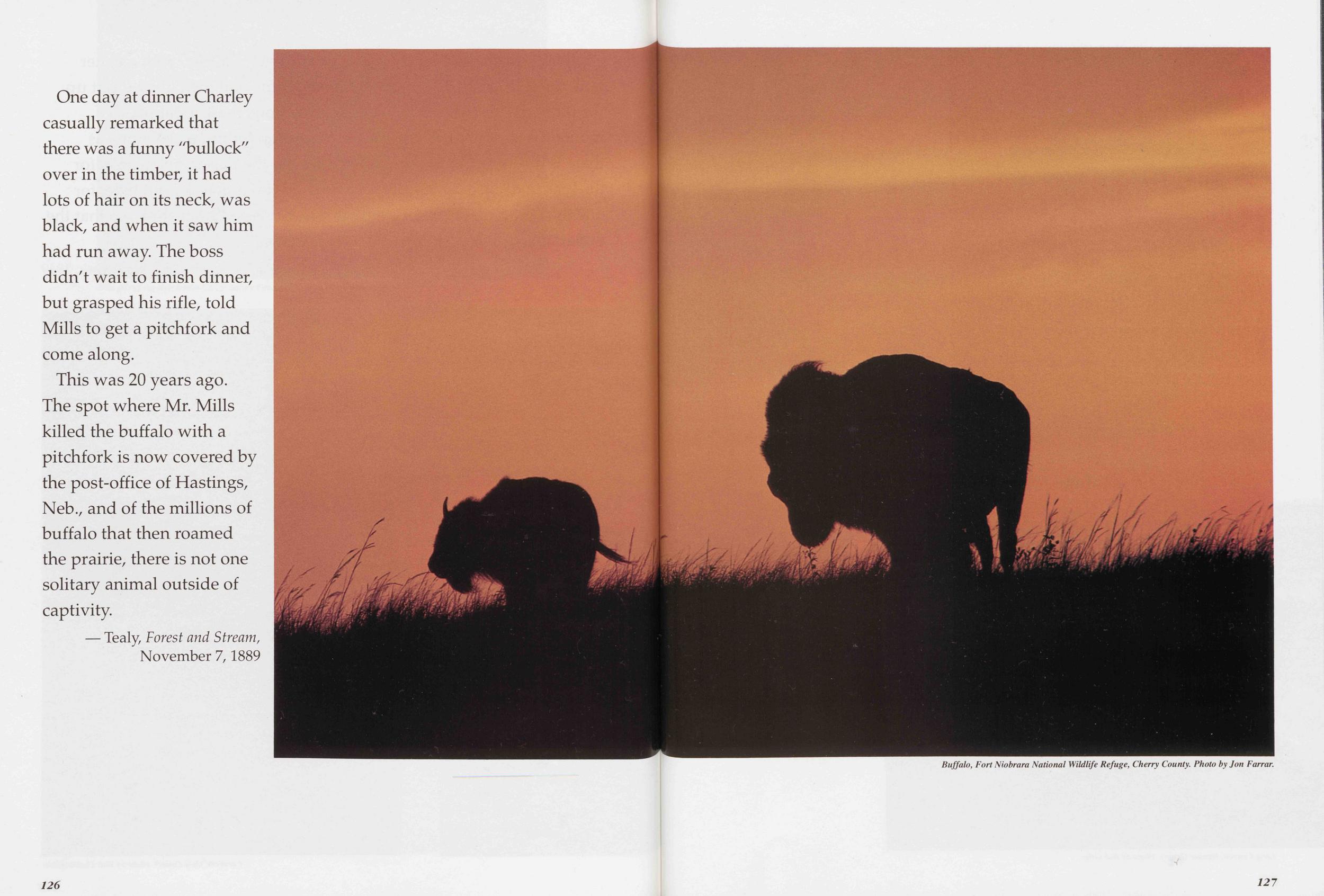
One day at dinner Charley casually remarked that there was a funny "bullock" over in the timber, it had lots of hair on its neck, was black, and when it saw him had run away. The boss didn't wait to finish dinner, but grasped his rifle, told Mills to get a pitchfork and come along.
This was 20 years ago. The spot where Mr. Mills killed the buffalo with a pitchfork is now covered by the post-office of Hastings, Neb., and of the millions of buffalo that then roamed the prairie, there is not one solitary animal outside of captivity.
— Tealy, Forest and Stream, November 7,1889 126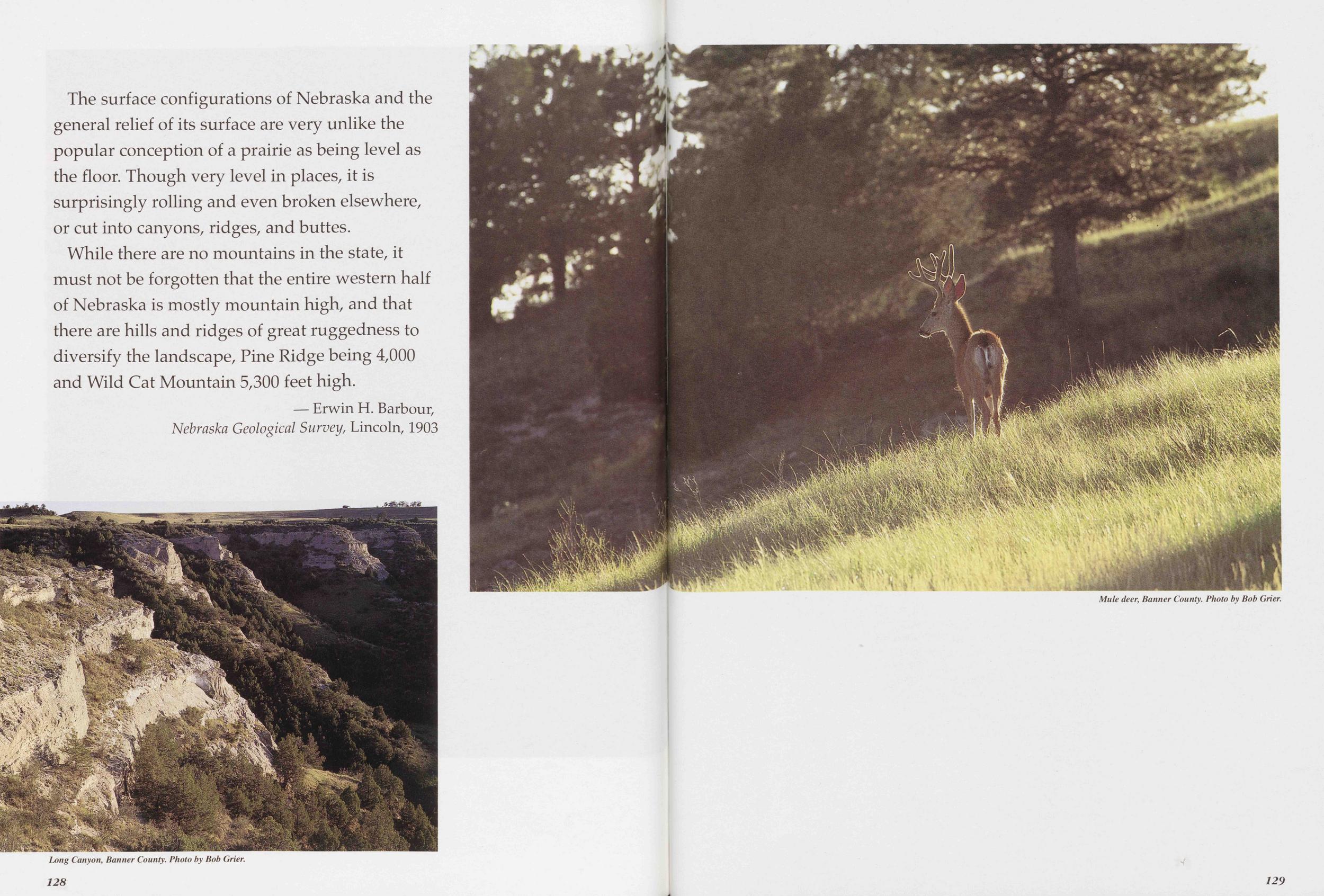
The surface configurations of Nebraska and the general relief of its surface are very unlike the popular conception of a prairie as being level as the floor. Though very level in places, it is surprisingly rolling and even broken elsewhere, or cut into canyons, ridges, and buttes.
While there are no mountains in the state, it must not be forgotten that the entire western half of Nebraska is mostly mountain high, and that there are hills and ridges of great ruggedness to diversify the landscape, Pine Ridge being 4,000 and Wild Cat Mountain 5,300 feet high.
— Erwin H. Barbour, Nebraska Geological Survey, Lincoln, 1903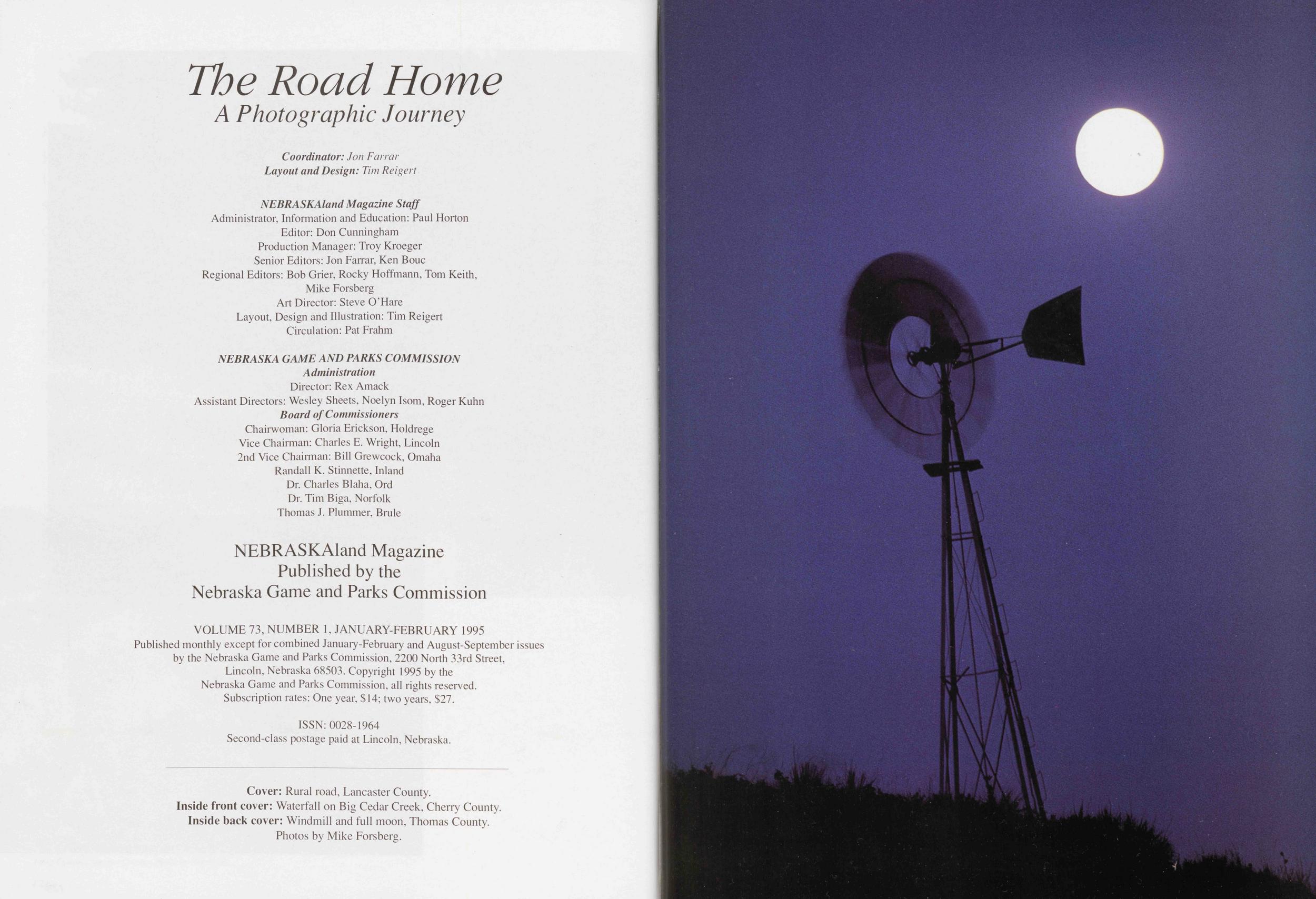
The Road Home
A Photographic Journey Coordinator: Jon Farrar Layout and Design: Tim Reigert NEBRASKAland Magazine Staff Administrator, Information and Education: Paul Horton Editor: Don Cunningham Production Manager: Troy Kroeger Senior Editors: Jon Farrar, Ken Bouc Regional Editors: Bob Grier, Rocky Hoffmann, Tom Keith, Mike Forsberg Art Director: Steve O'Hare Layout, Design and Illustration: Tim Reigert Circulation: Pat Frahm NEBRASKA GAME AND PARKS COMMISSION Administration Director: Rex Amack Assistant Directors: Wesley Sheets, Noelyn Isom, Roger Kuhn Board of Commissioners Chairwoman: Gloria Erickson, Holdrege Vice Chairman: Charles E. Wright, Lincoln 2nd Vice Chairman: Bill Grewcock, Omaha Randall K. Stinnette, Inland Dr. Charles Blaha, Ord Dr. Tim Biga, Norfolk Thomas J. Plummer, Brule NEBRASKAland Magazine Published by the Nebraska Game and Parks Commission VOLUME 73, NUMBER 1, JANUARY-FEBRUARY 1995 Published monthly except for combined January-February and August-September issues by the Nebraska Game and Parks Commission, 2200 North 33rd Street, Lincoln, Nebraska 68503. Copyright 1995 by the Nebraska Game and Parks Commission, all rights reserved. Subscription rates: One year, $14; two years, $27. ISSN: 0028-1964 Second-class postage paid at Lincoln, Nebraska. Cover: Rural road, Lancaster County. Inside front cover: Waterfall on Big Cedar Creek, Cherry County. Inside back cover: Windmill and full moon, Thomas County. Photos by Mike Forsberg.
$12.95
Position: 292 (29 views)