Volume 67, Issue 6, 1989
NEBRASKAland
JULY 1989 $1.50
NEBRASKAland
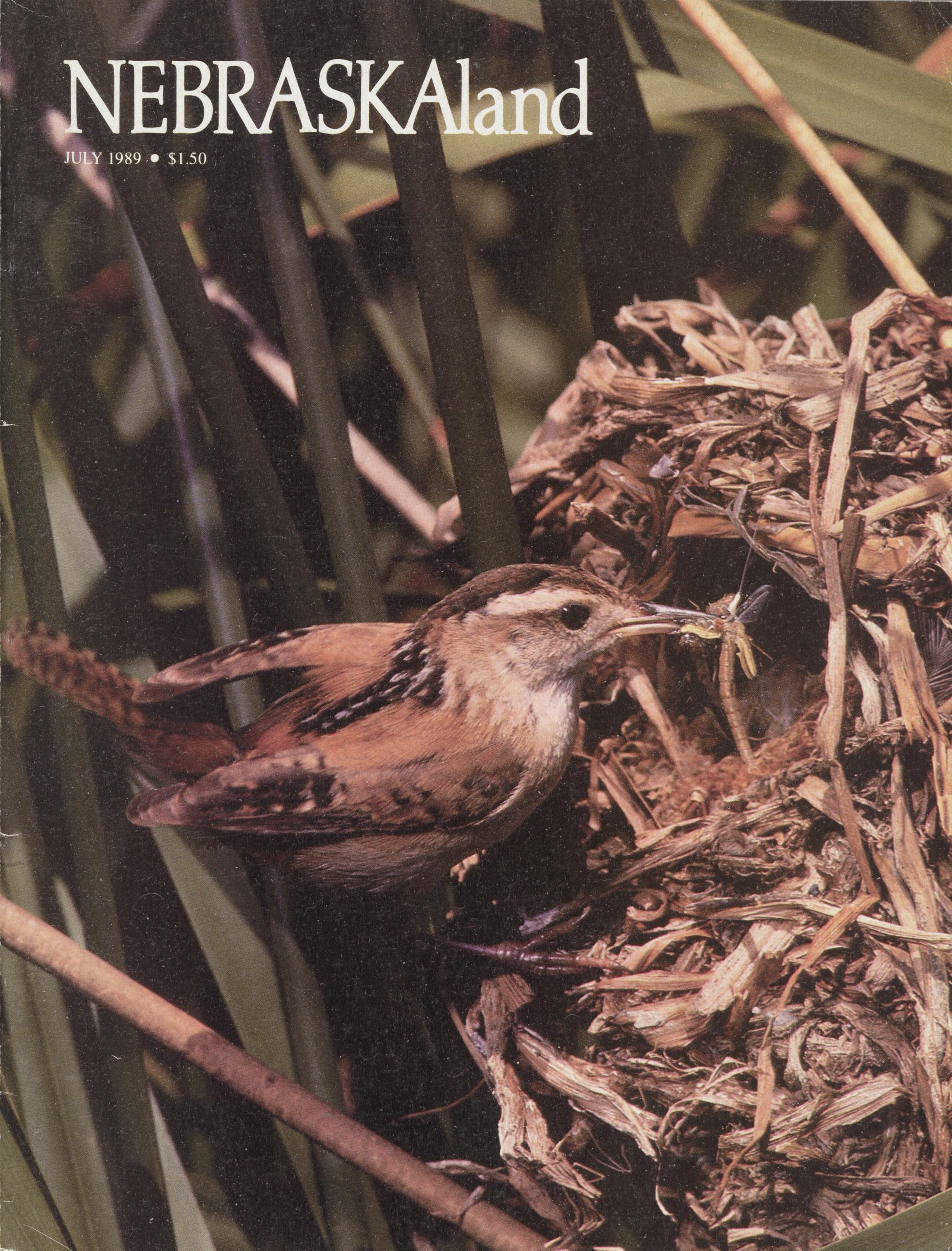
Published by the Nebraska Game and Parks Commission NEBRASKAland VOL. 67/NO. 6/JULY 1989 NEBRASKAland (ISSN:0028-1964) is published monthly except for combined Jan/Feb and Aug/Sept issues, by the Nebraska Game and Parks Commission, 2200 North 33rd Street, Lincoln, NE. Copyright 1989, all rights reserved. Second-class postage paid at Lincoln, Nebraska. POSTMASTER: Send address changes to NEBRASKAland, Box 30370, Lincoln, NE 68503. Rates: $ 12 for one year; $23 for two years. Offices Headquarters 2200 N. 33rd, Lincoln, 68503 (402)471-0641 13th and Farnam St., Omaha (402)595-2144 Ak-Sar-Ben Aquarium, Gretna (402)332-3901 Rt. 2, Alliance (308) 762-5605 Bassett (402) 684-2921 U.S. 81, Norfolk (402) 371-4950 Rt. 4, North Platte (308) 532-6225 Commissioners Chairman: Wayne Ziebarth, Wilcox Vice Chairman: LaVern Schneider, McCook 2nd Vice Chairman: L. Bruce Wright, Lincoln Richard L. Coyne, Omaha Elvin Adamson, Nenzel J. Alan Cramer, Wayne Marc Anthony, Scottsbluff Administration Director: Rex Amack Assistant Directors: William J. Bailey, Jr. Dale R. Bree Staff Chief, Information & Education: Jim MacAllister Managing Editor: Lowell Johnson Editor: Don Cunningham Senior Editors: Jon Farrar, Ken Bouc Regional Editors: Bob Grier, Rocky Hoffmann, Tom Keith Art Director: Duane Westerholt Illustration: Tim Reigert, Dan Curran Circulation: Pat Frahm Contents Features AT THE HEAD OF THE TRAIL 6 PRAIRIE PATHS, MOUSE HIGHWAYS AND NIGHTTIME TRAFFIC 10 OLD MACHINES 18 UNEARTHING THE PAST 30 THE RIVER WEARS TWO FACES 36 STEMMING THE PURPLE PLAGUE 38 Departments SPEAK UP 4 TRADING POST 4Q IN THE KITCHEN 50 COVER: A diminutive long billed marsh wren brings a tasty morsel to its intricately woven rush and cattail nest. Male marsh wrens, arriving at the marsh before the females, stake out territories, then turn their attention to a peculiar, characteristic behavior, the building of dummy nests. A male may build as many as five or more, often somewhat rough-hewn and unfinished. Ornithologists are unsure of the function of this behavior, since the females pay little attention to the dummy nests, and once they accept a mate, set to work building their own nests in which the brood is raised. Photo by Greg Beaumont. OPPOSITE: This broad-leaved aquatic plant, called arrowhead because of the shape of its leaf, begins to show its small, three-petaled flowers in July. Ethnobotonist Melvin R. Gilmore reports that Plains Indians used the tubers for food, preparing them by boiling or roasting. Photo by Don Cunningham. JULY 1989 3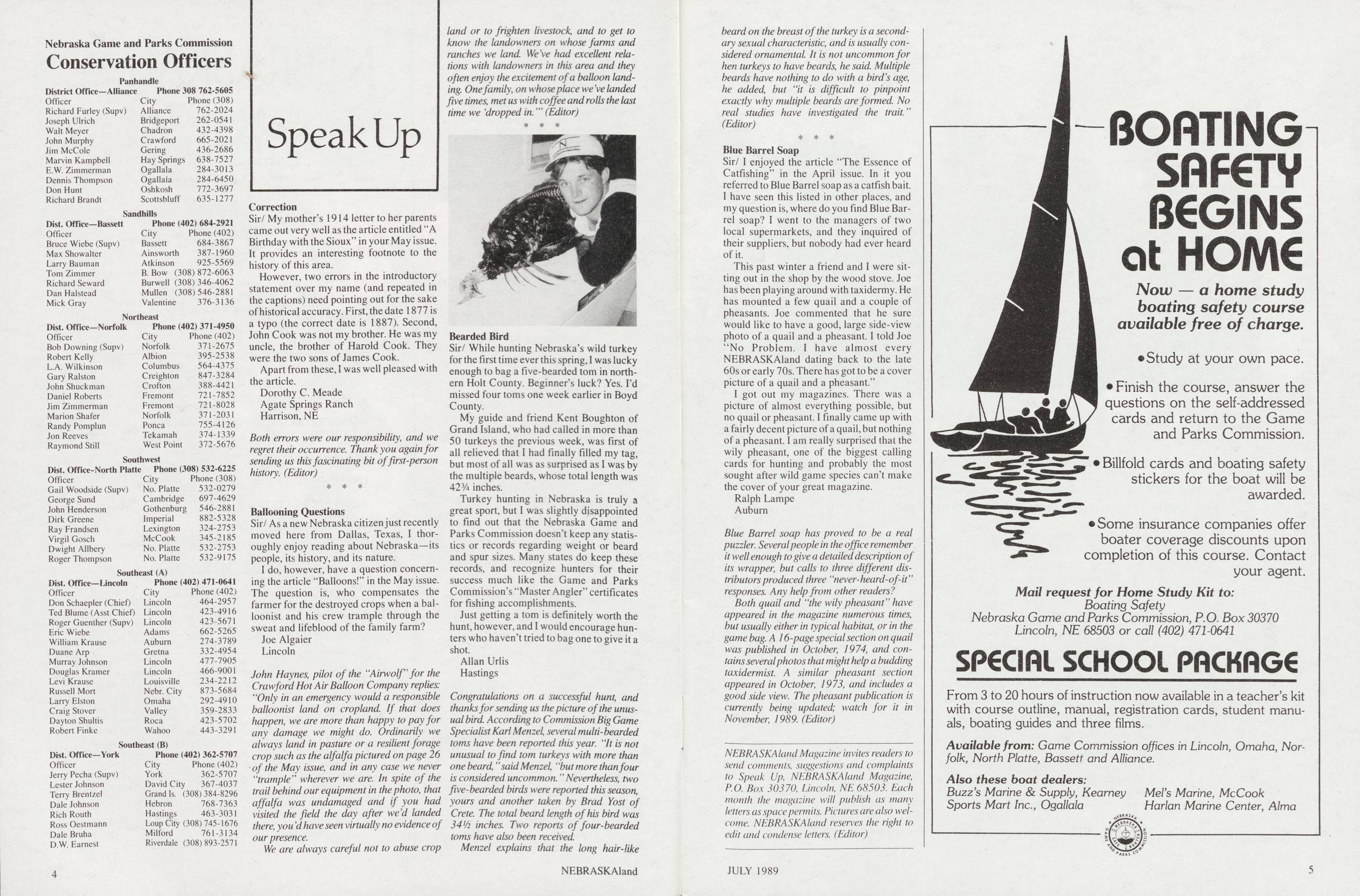
Speak Up
CorrectionSir My mother's 1914 letter to her parents came out very well as the article entitled "A Birthday with the Sioux" in your May issue. It provides an interesting footnote to the history of this area.
However, two errors in the introductory statement over my name (and repeated in the captions) need pointing out for the sake of historical accuracy. First, the date 1877 is a typo (the correct date is 1887). Second, John Cook was not my brother. He was my uncle, the brother of Harold Cook. They were the two sons of James Cook.
Apart from these, I was well pleased with the article.
Dorothy C. Meade Agate Springs Ranch Harrison, NEBoth errors were our responsibility, and we regret their occurrence. Thank you again for sending us this fascinating bit of first-person history. (Editor)
* * * Ballooning QuestionsSir/ As a new Nebraska citizen just recently moved here from Dallas, Texas, I thoroughly enjoy reading about Nebraska—its people, it's history, and it's nature.
I do, however, have a question concerning the article "Balloons!" in the May issue. The question is, who compensates the farmer for the destroyed crops when a balloonist and his crew trample through the sweat and lifeblood of the family farm?
Joe Algaier LincolnJohn Haynes, pilot of the "Airwolf" for the Crawford Hot Air Balloon Company replies: "Only in an emergency would a responsible balloonist land on cropland. If that does happen, we are more than happy to pay for any damage we might do. Ordinarily we always land in pasture or a resilient forage crop such as the alfalfa pictured on page 26 of the May issue, and in any case we never "trample" wherever we are. In spite of the trail behind our equipment in the photo, that affalfa was undamaged and if you had visited the field the day after wed landed there, you d have seen virtually no evidence of our presence.
We are always careful not to abuse crop land or to frighten livestock, and to get to know the landowners on whose farms and ranches we land. We've had excellent relations with landowners in this area and they often enjoy the excitement of a balloon landing. One family, on whose place we've landed five times, met us with coffee and rolls the last time we 'dropped in.'" (Editor)
* * *Sir/ While hunting Nebraska's wild turkey for the first time ever this spring, I was lucky enough to bag a five-bearded torn in northern Holt County. Beginner's luck? Yes. I'd missed four toms one week earlier in Boyd County.
My guide and friend Kent Boughton of Grand Island, who had called in more than 50 turkeys the previous week, was first of all relieved that I had finally filled my tag, but most of all was as surprised as I was by the multiple beards, whose total length was 423/4 inches.
Turkey hunting in Nebraska is truly a great sport, but I was slightly disappointed to find out that the Nebraska Game and Parks Commission doesn't keep any statistics or records regarding weight or beard and spur sizes. Many states do keep these records, and recognize hunters for their success much like the Game and Parks Commission's "Master Angler" certificates for fishing accomplishments.
Just getting a torn is definitely worth the hunt, however, and I would encourage hunters who haven't tried to bag one to give it a shot.
Allan Urlis HastingsCongratulations on a successful hunt, and thanks for sending us the picture of the unusual bird. According to Commission Big Game Specialist Karl Menzel, several multi-bearded toms have been reported this year. "It is not unusual to find torn turkeys with more than one beard,'' said Menzel, ' 'but more than four is considered uncommon." Nevertheless, two five-bearded birds were reported this season, yours and another taken by Brad Yost of Crete. The total beard length of his bird was 34V2 inches. Two reports of four-bearded toms have also been received.
Menzel explains that the long hair-like 4 NEBRASKAland beard on the breast of the turkey is a secondary sexual characteristic, and is usually considered ornamental. It is not uncommon for hen turkeys to have beards, he said. Multiple beards have nothing to do with a bird's age, he added, but "it is difficult to pinpoint exactly why multiple beards are formed. No real studies have investigated the trait." (Editor)
* * * Blue Barrel SoapSir/ I enjoyed the article "The Essence of Catfishing" in the April issue. In it you referred to Blue Barrel soap as a catfish bait. I have seen this listed in other places, and my question is, where do you find Blue Barrel soap? I went to the managers of two local supermarkets, and they inquired of their suppliers, but nobody had ever heard of it.
This past winter a friend and I were sit- ting out in the shop by the wood stove. Joe has been playing around with taxidermy. He has mounted a few quail and a couple of pheasants. Joe commented that he sure would like to have a good, large side-view photo of a quail and a pheasant. I told Joe 'No Problem. I have almost every NEBRASKAland dating back to the late 60s or early 70s. There has got to be a cover picture of a quail and a pheasant."
I got out my magazines. There was a picture of almost everything possible, but no quail or pheasant. I finally came up with a fairly decent picture of a quail, but nothing of a pheasant. I am really surprised that the wily pheasant, one of the biggest calling cards for hunting and probably the most sought after wild game species can't make the cover of your great magazine.
Ralph Lampe AuburnBlue Barrel soap has proved to be a real puzzler. Several people in the office remember it well enough to give a detailed description of its wrapper, but calls to three different distributors produced three ''never-heard-of- it'' responses. Any help from other readers?
Both quail and "the wily pheasant" have appeared in the magazine numerous times, but usually either in typical habitat, or in the game bag. A 16-page special section on quail was published in October, 1974, and contains several photos that might help a budding taxidermist. A similar pheasant section appeared in October, 1973, and includes a good side view. The pheasant publication is currently being updated; watch for it in November, 1989. (Editor)
NEBRASKAland Magazine invites readers to send comments, suggestions and complaints to Speak Up, NEBRASKAland Magazine, P.O. Box 30370, Lincoln, NE 68503. Each month the magazine will publish as many letters as space permits. Pictures are also welcome. NEBRASKAland reserves the right to edit and condense letters. (Editor)
BOATING BEGINS at HOME Now — a home study boating safety course available free of charge. Study at your own pace. Finish the course, answer the questions on the self-addressed cards and return to the Game and Parks Commission. Billfold cards and boating safety stickers for the boat will be awarded. Some insurance companies offer boater coverage discounts upon completion of this course. Contact your agent. Mail request for Home Study Kit to: Boating Safety Nebraska Game and Parks Commission, P. O. Box 30370 Lincoln, NE 68503 or call (402) 471-0641 SPECIAL SCHOOL PACKAGE From 3 to 20 hours of instruction now available in a teacher's kit with course outline, manual, registration cards, student manuals, boating guides and three films. Available from: Game Commission offices in Lincoln, Omaha, Norfolk, North Platte, Bassett and Alliance. Also these boat dealers: Buzz's Marine & Supply, Kearney Sports Mart Inc., Ogallala Mel's Marine, McCook Harlan Marine Center, Alma JULY 1989 5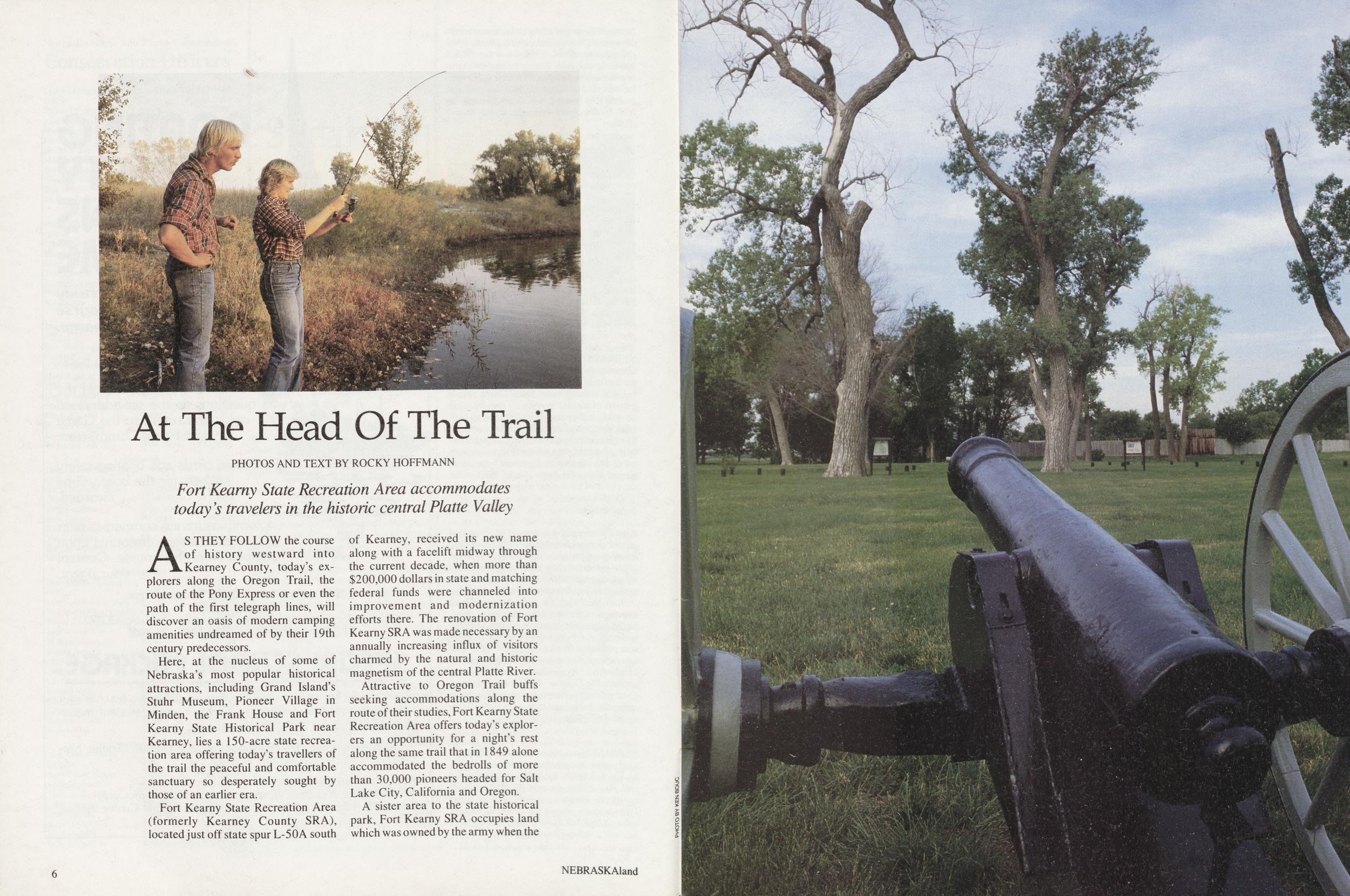
At The Head Of The Trail
PHOTOS AND TEXT BY ROCKY HOFFMANN Fort Kearny State Recreation Area accommodates today ys travelers in the historic central Platte ValleyAS THEY FOLLOW the course of history westward into Kearney County, today's explorers along the Oregon Trail, the route of the Pony Express or even the path of the first telegraph lines, will discover an oasis of modern camping amenities undreamed of by their 19th century predecessors.
Here, at the nucleus of some of Nebraska's most popular historical attractions, including Grand Island's Stuhr Museum, Pioneer Village in Minden, the Frank House and Fort Kearny State Historical Park near Kearney, lies a 150-acre state recreation area offering today's travelers of the trail the peaceful and comfortable sanctuary so desperately sought by those of an earlier era.
Fort Kearny State Recreation Area (formerly Kearney County SRA), located just off state spur L-50A south of Kearney, received its new name along with a facelift midway through the current decade, when more than $200,000 dollars in state and matching federal funds were channeled into improvement and modernization efforts there. The renovation of Fort Kearny SRA was made necessary by an annually increasing influx of visitors charmed by the natural and historic magnetism of the central Platte River.
Attractive to Oregon Trail buffs seeking accommodations along the route of their studies, Fort Kearny State Recreation Area offers today's explorers an opportunity for a night's rest along the same trail that in 1849 alone accommodated the bedrolls of more than 30,000 pioneers headed for Salt Lake City, California and Oregon.
A sister area to the state historical park, Fort Kearny SRA occupies land which was owned by the army when the 6 NEBRASKAland
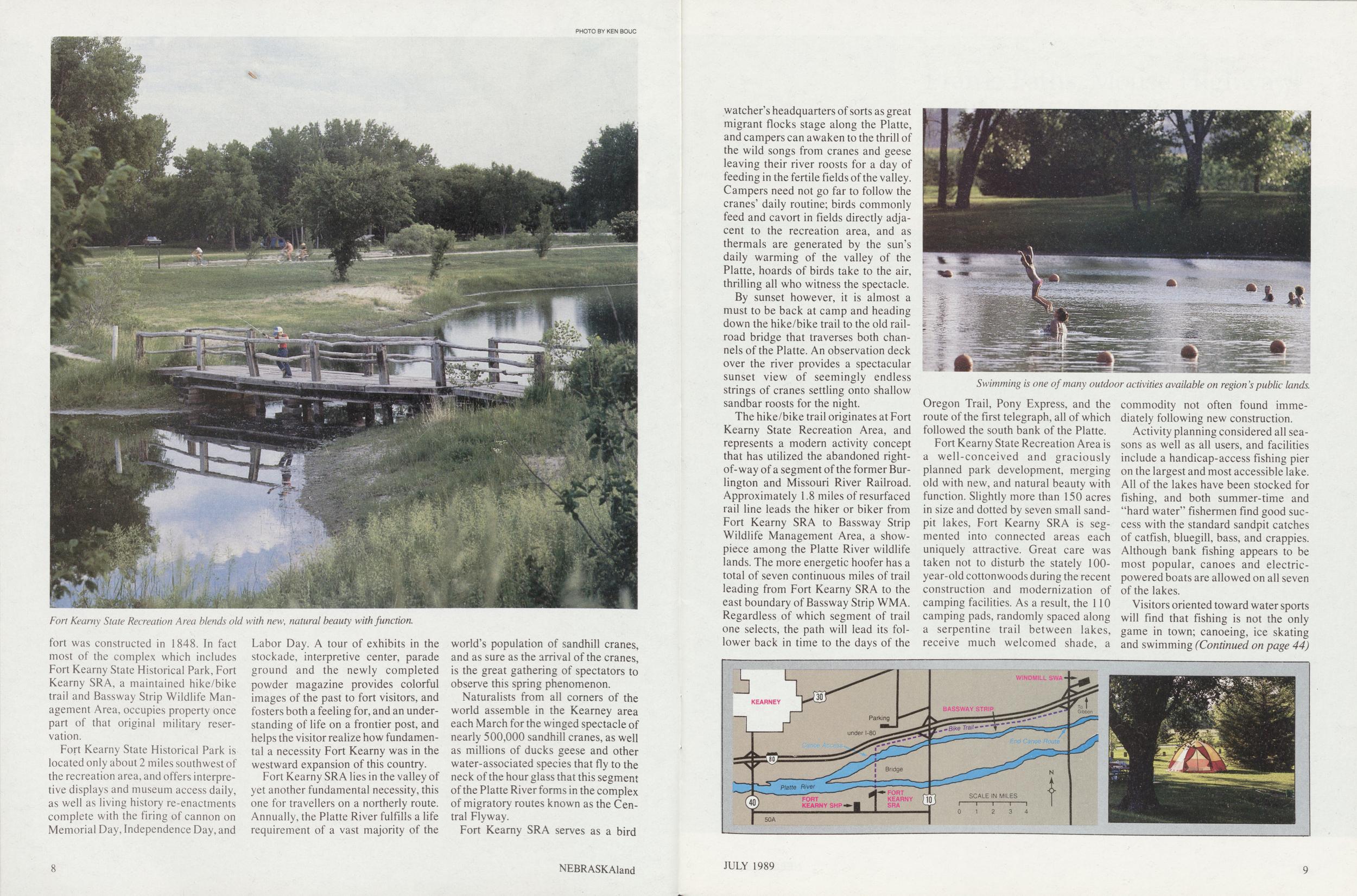
Fort Kearny State Historical Park, Fort Kearny SRA, a maintained hike/bike trail and Bassway Strip Wildlife Management Area, occupies property once part of that original military reservation. Fort Kearny State Historical Park is located only about 2 miles southwest of the recreation area, and offers interpretive displays and museum access daily, as well as living history re-enactments complete with the firing of cannon on Memorial Day, Independence Day, and Labor Day. A tour of exhibits in the stockade, interpretive center, parade ground and the newly completed powder magazine provides colorful images of the past to fort visitors, and fosters both a feeling for, and an understanding of life on a frontier post, and helps the visitor realize how fundamental a necessity Fort Kearny was in the westward expansion of this country.
Fort Kearny SRA lies in the valley of yet another fundamental necessity, this one for travelers on a northerly route. Annually, the Platte River fulfills a life requirement of a vast majority of the world's population of sandhill cranes, and as sure as the arrival of the cranes, is the great gathering of spectators to observe this spring phenomenon.
Naturalists from all corners of the world assemble in the Kearney area each March for the winged spectacle of nearly 500,000 sandhill cranes, as well as millions of ducks geese and other water-associated species that fly to the neck of the hour glass that this segment of the Platte River forms in the complex of migratory routes known as the Central Flyway.
Fort Kearny SRA serves as a bird 6 NEBRASKAland watcher's headquarters of sorts as great migrant flocks stage along the Platte, and campers can awaken to the thrill of the wild songs from cranes and geese leaving their river roosts for a day of feeding in the fertile fields of the valley. Campers need not go far to follow the cranes' daily routine; birds commonly feed and cavort in fields directly adjacent to the recreation area, and as thermals are generated by the sun's daily warming of the valley of the Platte, hoards of birds take to the air, thrilling all who witness the spectacle.
By sunset however, it is almost a must to be back at camp and heading down the hike/bike trail to the old railroad bridge that traverses both channels of the Platte. An observation deck over the river provides a spectacular sunset view of seemingly endless strings of cranes settling onto shallow sandbar roosts for the night.
The hike/bike trail originates at Fort Kearny State Recreation Area, and represents a modern activity concept that has utilized the abandoned right-of-way of a segment of the former Burlington and Missouri River Railroad. Approximately 1.8 miles of resurfaced rail line leads the hiker or biker from Fort Kearny SRA to Bassway Strip Wildlife Management Area, a showpiece among the Platte River wildlife lands. The more energetic hoofer has a total of seven continuous miles of trail leading from Fort Kearny SRA to the east boundary of Bassway Strip WMA. Regardless of which segment of trail one selects, the path will lead its follower back in time to the days of the Oregon Trail, Pony Express, and the route of the first telegraph, all of which followed the south bank of the Platte.
Fort Kearny State Recreation Area is a well-conceived and graciously planned park development, merging old with new, and natural beauty with function. Slightly more than 150 acres in size and dotted by seven small sandpit lakes, Fort Kearny SRA is segmented into connected areas each uniquely attractive. Great care was taken not to disturb the stately 100-year-old cottonwoods during the recent construction and modernization of camping facilities. As a result, the 110 camping pads, randomly spaced along a serpentine trail between lakes, receive much welcomed shade, a commodity not often found immediately following new construction.
Activity planning considered all seasons as well as all users, and facilities include a handicap-access fishing pier on the largest and most accessible lake. All of the lakes have been stocked for fishing, and both summer-time and "hard water" fishermen find good success with the standard sandpit catches of catfish, bluegill, bass, and crappies. Although bank fishing appears to be most popular, canoes and electric-powered boats are allowed on all seven of the lakes.
Visitors oriented toward water sports will find that fishing is not the only game in town; canoeing, ice skating and swimming (Continued on page 44)
Prairie Paths, Mouse Highways and Nighttime Traffic
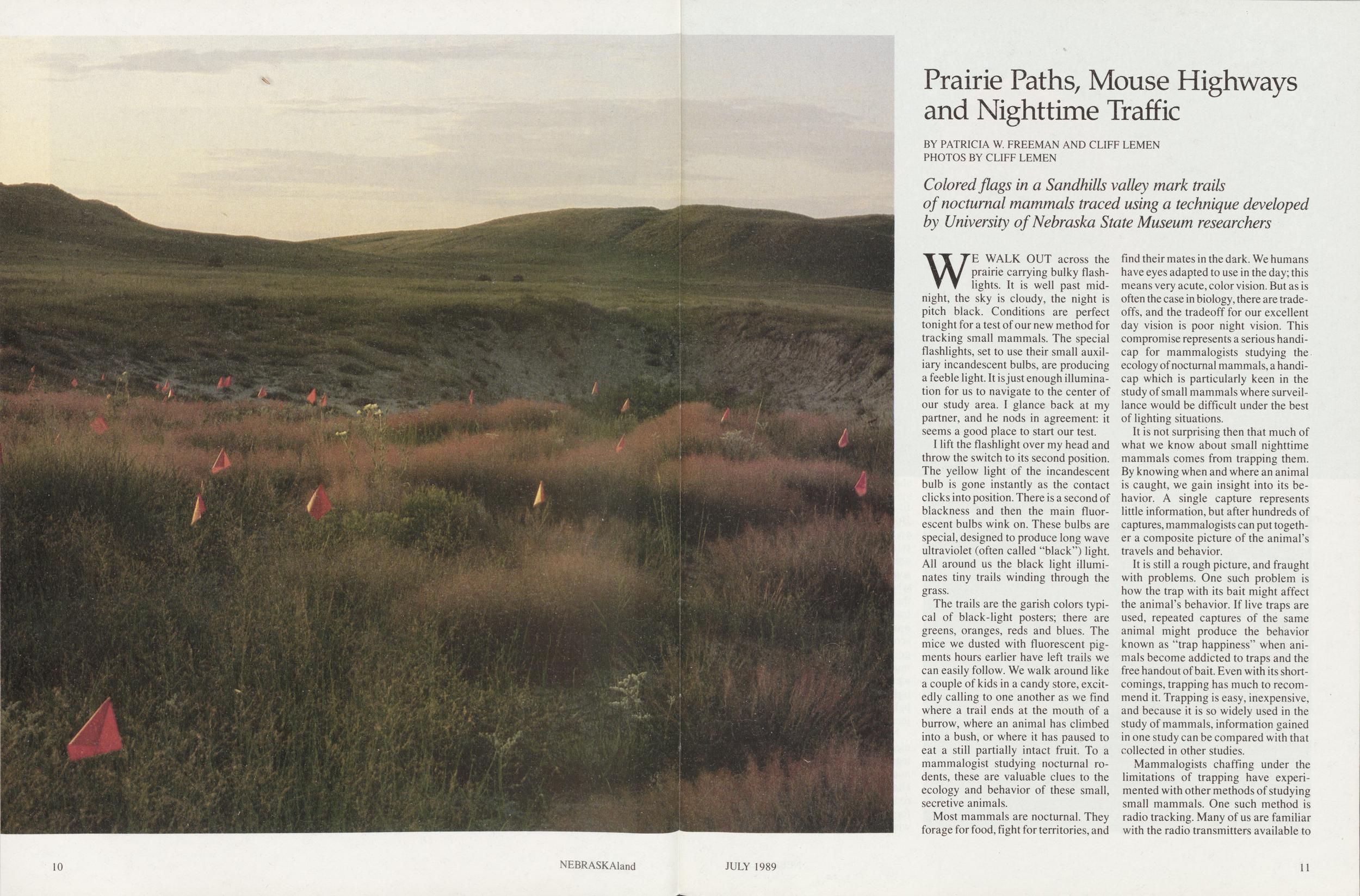
BY PATRICIA W. FREEMAN AND CLIFF LEMEN PHOTOS BY CLIFF LEMEN Colored flags in a Sandhills valley mark trails of nocturnal mammals traced using a technique developed by University of Nebraska State Museum researchersWE WALK OUT across the prairie carrying bulky flashlights. It is well past midnight, the sky is cloudy, the night is pitch black. Conditions are perfect tonight for a test of our new method for tracking small mammals. The special flashlights, set to use their small auxiliary incandescent bulbs, are producing a feeble light. It is just enough illumination for us to navigate to the center of our study area. I glance back at my partner, and he nods in agreement: it seems a good place to start our test.
I lift the flashlight over my head and throw the switch to its second position. The yellow light of the incandescent bulb is gone instantly as the contact clicks into position. There is a second of blackness and then the main fluorescent bulbs wink on. These bulbs are special, designed to produce long wave ultraviolet (often called "black") light. All around us the black light illuminates tiny trails winding through the grass.
The trails are the garish colors typical of black-light posters; there are greens, oranges, reds and blues. The mice we dusted with fluorescent pigments hours earlier have left trails we can easily follow. We walk around like a couple of kids in a candy store, excitedly calling to one another as we find where a trail ends at the mouth of a burrow, where an animal has climbed into a bush, or where it has paused to eat a still partially intact fruit. To a mammalogist studying nocturnal rodents, these are valuable clues to the ecology and behavior of these small, secretive animals.
Most mammals are nocturnal. They forage for food, fight for territories, and find their mates in the dark. We humans have eyes adapted to use in the day; this means very acute, color vision. But as is often the case in biology, there are trade-offs, and the tradeoff for our excellent day vision is poor night vision. This compromise represents a serious handicap for mammalogists studying the ecology of nocturnal mammals, a handicap which is particularly keen in the study of small mammals where surveillance would be difficult under the best of lighting situations.
It is not surprising then that much of what we know about small nighttime mammals comes from trapping them. By knowing when and where an animal is caught, we gain insight into its behavior. A single capture represents little information, but after hundreds of captures, mammalogists can put together a composite picture of the animal's travels and behavior.
It is still a rough picture, and fraught with problems. One such problem is how the trap with its bait might affect the animal's behavior. If live traps are used, repeated captures of the same animal might produce the behavior known as "trap happiness" when animals become addicted to traps and the free handout of bait. Even with its shortcomings, trapping has much to recommend it. Trapping is easy, inexpensive, and because it is so widely used in the study of mammals, information gained in one study can be compared with that collected in other studies.
Mammalogists chaffing under the
limitations of trapping have experimented with other methods of studying
small mammals. One such method is
radio tracking. Many of us are familiar
with the radio transmitters available to
JULY 1989
11
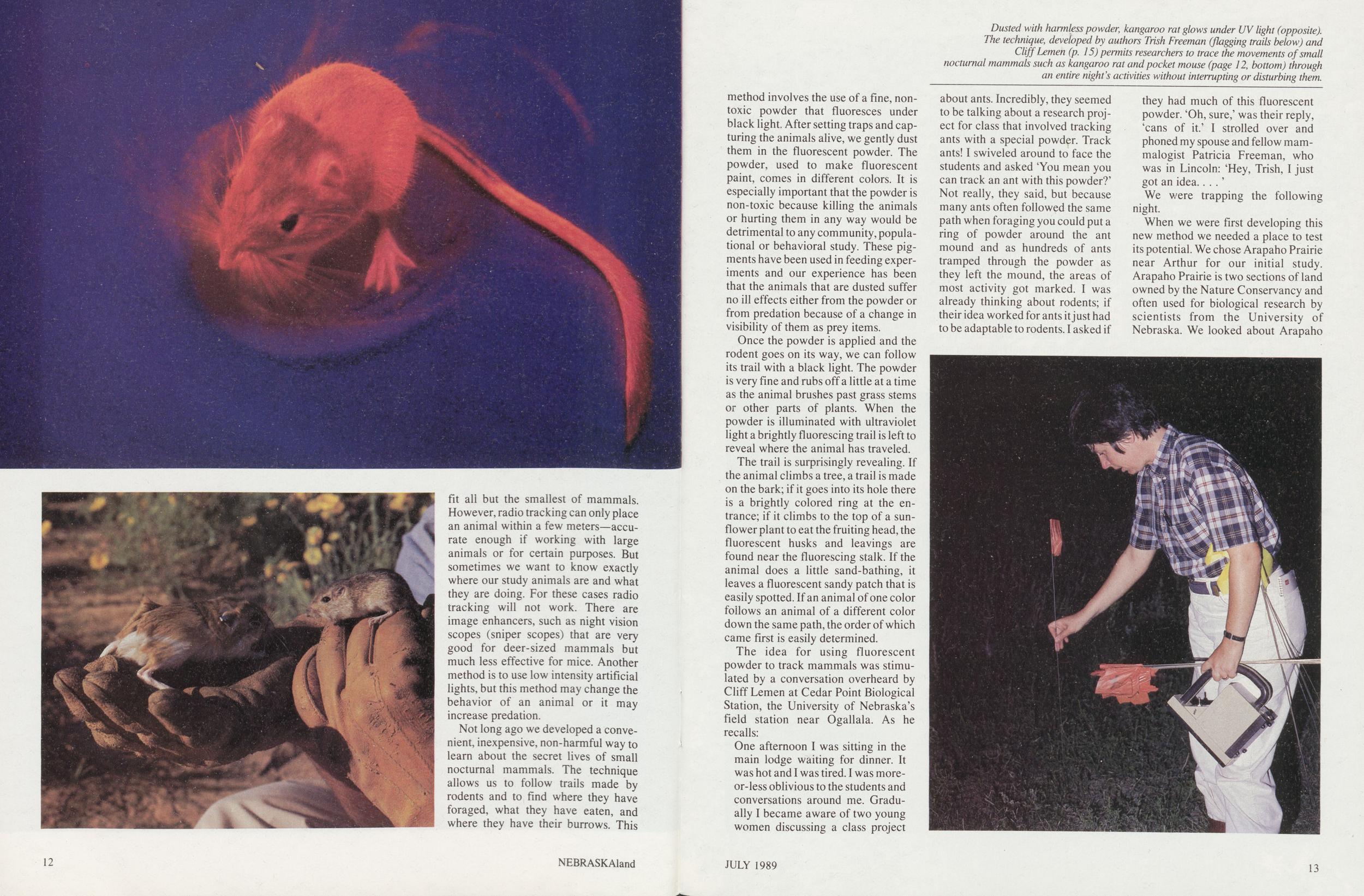
Not long ago we developed a convenient, inexpensive, non-harmful way to learn about the secret lives of small nocturnal mammals. The technique allows us to follow trails made by rodents and to find where they have foraged, what they have eaten, and where they have their burrows. This 12 NEBRASKAland method involves the use of a fine, nontoxic powder that fluoresces under black light. After setting traps and capturing the animals alive, we gently dust them in the fluorescent powder. The powder, used to make fluorescent paint, comes in different colors. It is especially important that the powder is non-toxic because killing the animals or hurting them in any way would be detrimental to any community, population or behavioral study. These pigments have been used in feeding experiments and our experience has been that the animals that are dusted suffer no ill effects either from the powder or from predation because of a change in visibility of them as prey items.
Once the powder is applied and the rodent goes on its way, we can follow its trail with a black light. The powder is very fine and rubs off a little at a time as the animal brushes past grass stems or other parts of plants. When the powder is illuminated with ultraviolet light a brightly fluorescing trail is left to reveal where the animal has traveled.
The trail is surprisingly revealing. If the animal climbs a tree, a trail is made on the bark; if it goes into its hole there is a brightly colored ring at the entrance; if it climbs to the top of a sunflower plant to eat the fruiting head, the fluorescent husks and leavings are found near the fluorescing stalk. If the animal does a little sand-bathing, it leaves a fluorescent sandy patch that is easily spotted. If an animal of one color follows an animal of a different color down the same path, the order of which came first is easily determined.
The idea for using fluorescent powder to track mammals was stimulated by a conversation overheard by Cliff Lemen at Cedar Point Biological Station, the University of Nebraska's field station near Ogallala. As he recalls:
One afternoon I was sitting in the main lodge waiting for dinner. It was hot and I was tired. I was more-or-less oblivious to the students and conversations around me. Gradually I became aware of two young women discussing a class project about ants. Incredibly, they seemed to be talking about a research project for class that involved tracking ants with a special powder. Track ants! I swiveled around to face the students and asked 'You mean you can track an ant with this powder?' Not really, they said, but because many ants often followed the same path when foraging you could put a ring of powder around the ant mound and as hundreds of ants tramped through the powder as they left the mound, the areas of most activity got marked. I was already thinking about rodents; if their idea worked for ants it just had to be adaptable to rodents. I asked if they had much of this fluorescent powder. 'Oh, sure,' was their reply, 'cans of it.' I strolled over and phoned my spouse and fellow mammalogist Patricia Freeman, who was in Lincoln: 'Hey, Trish, I just got an idea.
We were trapping the following night.
When we were first developing this new method we needed a place to test its potential. We chose Arapaho Prairie near Arthur for our initial study. Arapaho Prairie is two sections of land owned by the Nature Conservancy and often used for biological research by scientists from the University of Nebraska. We looked about Arapaho
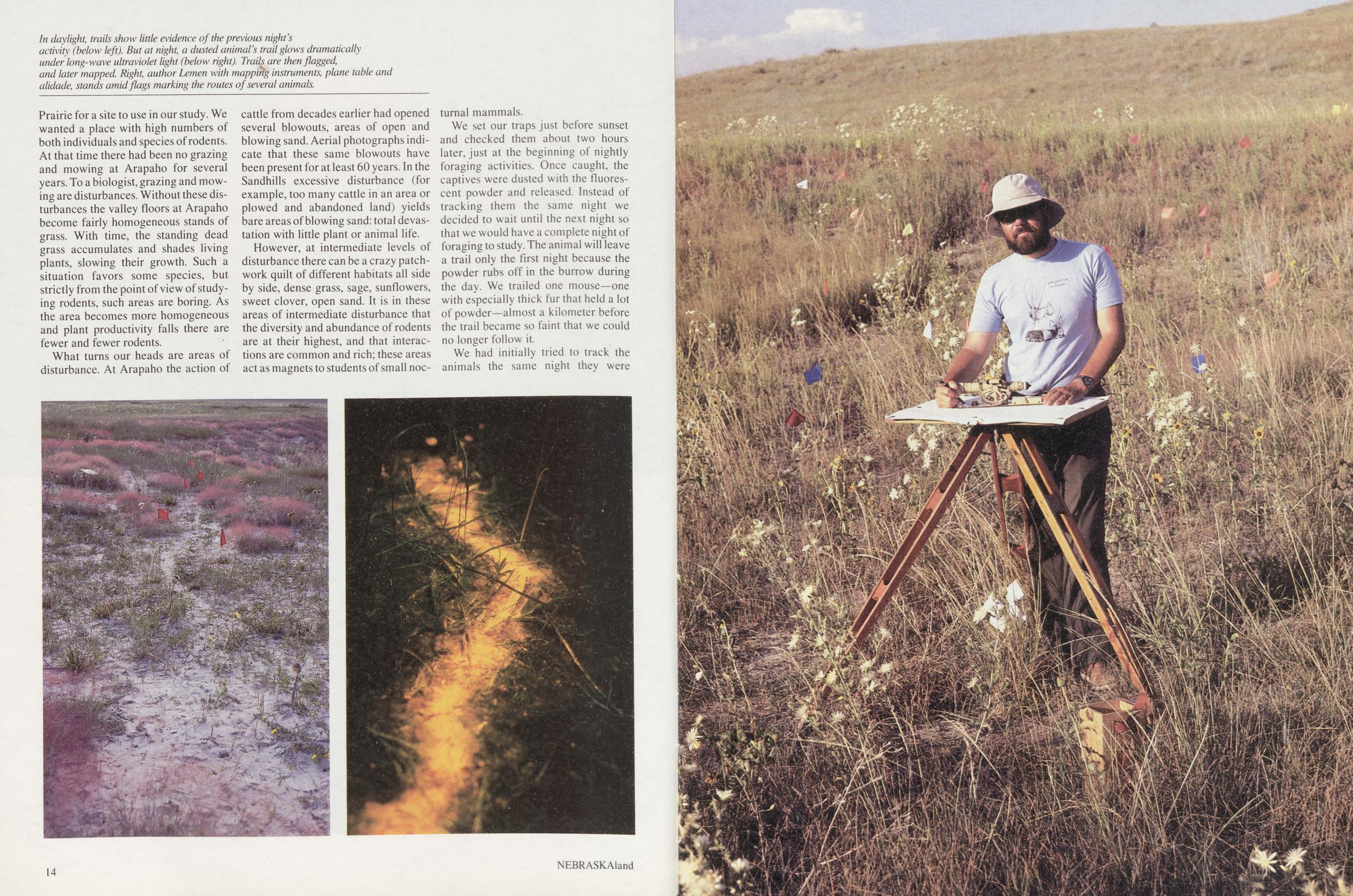
Prairie for a site to use in our study. We wanted a place with high numbers of both individuals and species of rodents. At that time there had been no grazing and mowing at Arapaho for several years. To a biologist, grazing and mowing are disturbances. Without these disturbances the valley floors at Arapaho become fairly homogeneous stands of grass. With time, the standing dead grass accumulates and shades living plants, slowing their growth. Such a situation favors some species, but strictly from the point of view of studying rodents, such areas are boring. As the area becomes more homogeneous and plant productivity falls there are fewer and fewer rodents.
What turns our heads are areas of disturbance. At Arapaho the action of cattle from decades earlier had opened several blowouts, areas of open and blowing sand. Aerial photographs indicate that these same blowouts have been present for at least 60 years. In the Sandhills excessive disturbance (for example, too many cattle in an area or plowed and abandoned land) yields bare areas of blowing sand: total devastation with little plant or animal life.
However, at intermediate levels of disturbance there can be a crazy patchwork quilt of different habitats all side by side, dense grass, sage, sunflowers, sweet clover, open sand. It is in these areas of intermediate disturbance that the diversity and abundance of rodents are at their highest, and that interactions are common and rich; these areas act as magnets to students of small nocturnal mammals.
We set our traps just before sunset and checked them about two hours later, just at the beginning of nightly foraging activities. Once caught, the captives were dusted with the fluorescent powder and released. Instead of tracking them the same night we decided to wait until the next night so that we would have a complete night of foraging to study. The animal will leave a trail only the first night because the powder rubs off in the burrow during the day. We trailed one mouse—one with especially thick fur that held a lot of powder—almost a kilometer before the trail became so faint that we could no longer follow it.
We had initially tried to track the animals the same night they were 14 NEBRASKAland
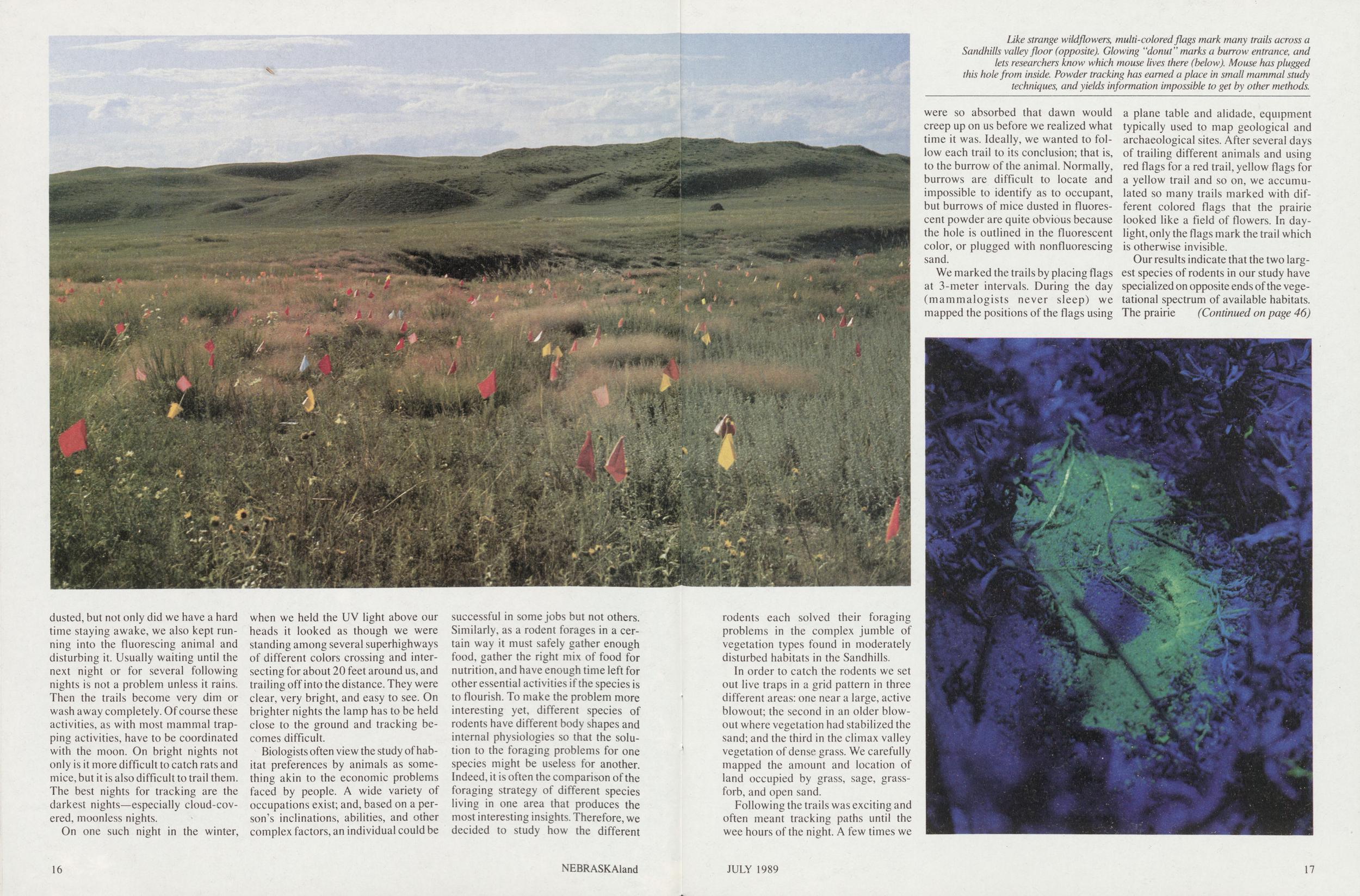
On one such night in the winter, when we held the UV light above our heads it looked as though we were standing among several superhighways of different colors crossing and intersecting for about 20 feet around us, and trailing off into the distance. They were clear, very bright, and easy to see. On brighter nights the lamp has to be held close to the ground and tracking becomes difficult.
Biologists often view the study of habitat preferences by animals as some- thing akin to the economic problems faced by people. A wide variety of occupations exist; and, based on a person's inclinations, abilities, and other complex factors, an individual could be successful in some jobs but not others. Similarly, as a rodent forages in a certain way it must safely gather enough food, gather the right mix of food for nutrition, and have enough time left for other essential activities if the species is to flourish. To make the problem more interesting yet, different species of rodents have different body shapes and internal physiologies so that the solution to the foraging problems for one species might be useless for another. Indeed, it is often the comparison of the foraging strategy of different species living in one area that produces the most interesting insights. Therefore, we decided to study how the different 16 NEBRASKAland rodents each solved their foraging problems in the complex jumble of vegetation types found in moderately disturbed habitats in the Sandhills.
In order to catch the rodents we set out live traps in a grid pattern in three different areas: one near a large, active blowout; the second in an older blowout where vegetation had stabilized the sand; and the third in the climax valley vegetation of dense grass. We carefully mapped the amount and location of land occupied by grass, sage, grassforb, and open sand.
Following the trails was exciting and often meant tracking paths until the wee hours of the night. A few times we were so absorbed that dawn would creep up on us before we realized what time it was. Ideally, we wanted to follow each trail to its conclusion; that is, to the burrow of the animal. Normally, burrows are difficult to locate and impossible to identify as to occupant, but burrows of mice dusted in fluorescent powder are quite obvious because the hole is outlined in the fluorescent color, or plugged with non-fluorescing sand.
We marked the trails by placing flags at 3-meter intervals. During the day (mammalogists never sleep) we mapped the positions of the flags using a plane table and alidade, equipment typically used to map geological and archaeological sites. After several days of trailing different animals and using red flags for a red trail, yellow flags for a yellow trail and so on, we accumulated so many trails marked with different colored flags that the prairie looked like a field of flowers. In daylight, only the flags mark the trail which is otherwise invisible.
Our results indicate that the two largest species of rodents in our study have specialized on opposite ends of the vegetational spectrum of available habitats. The prairie (Continued on page 46)
JULY 1989 17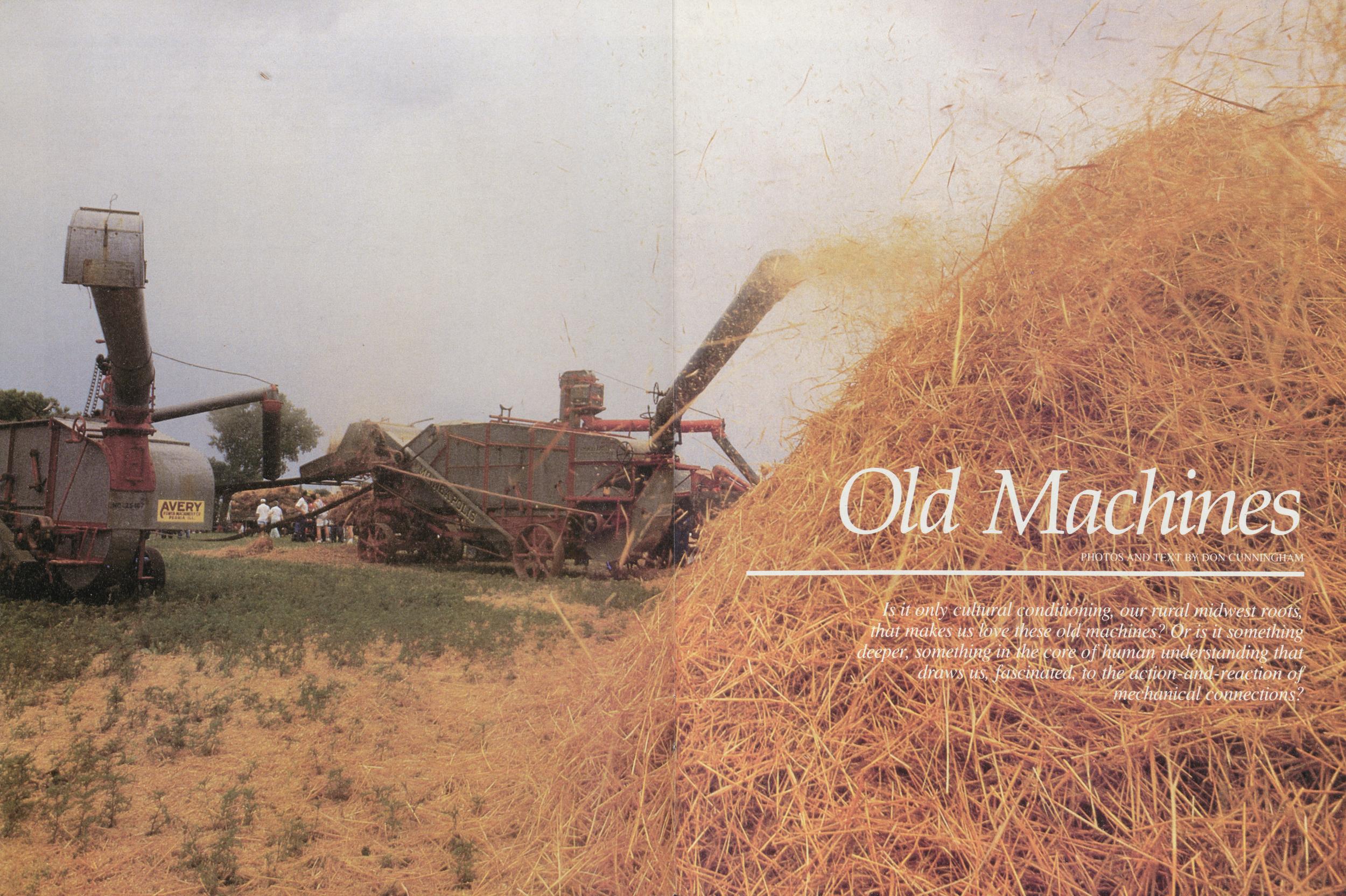
Old Machines
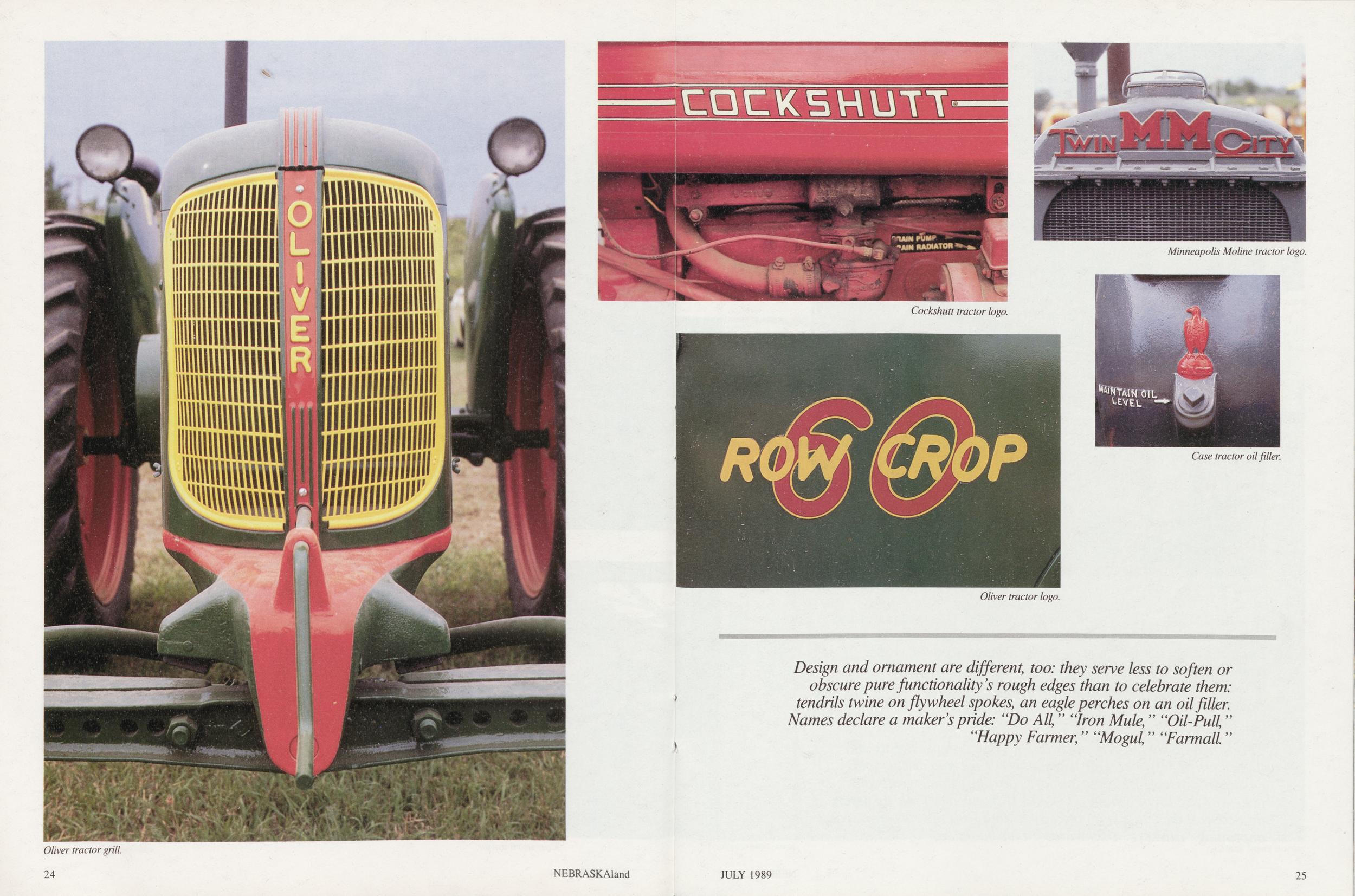
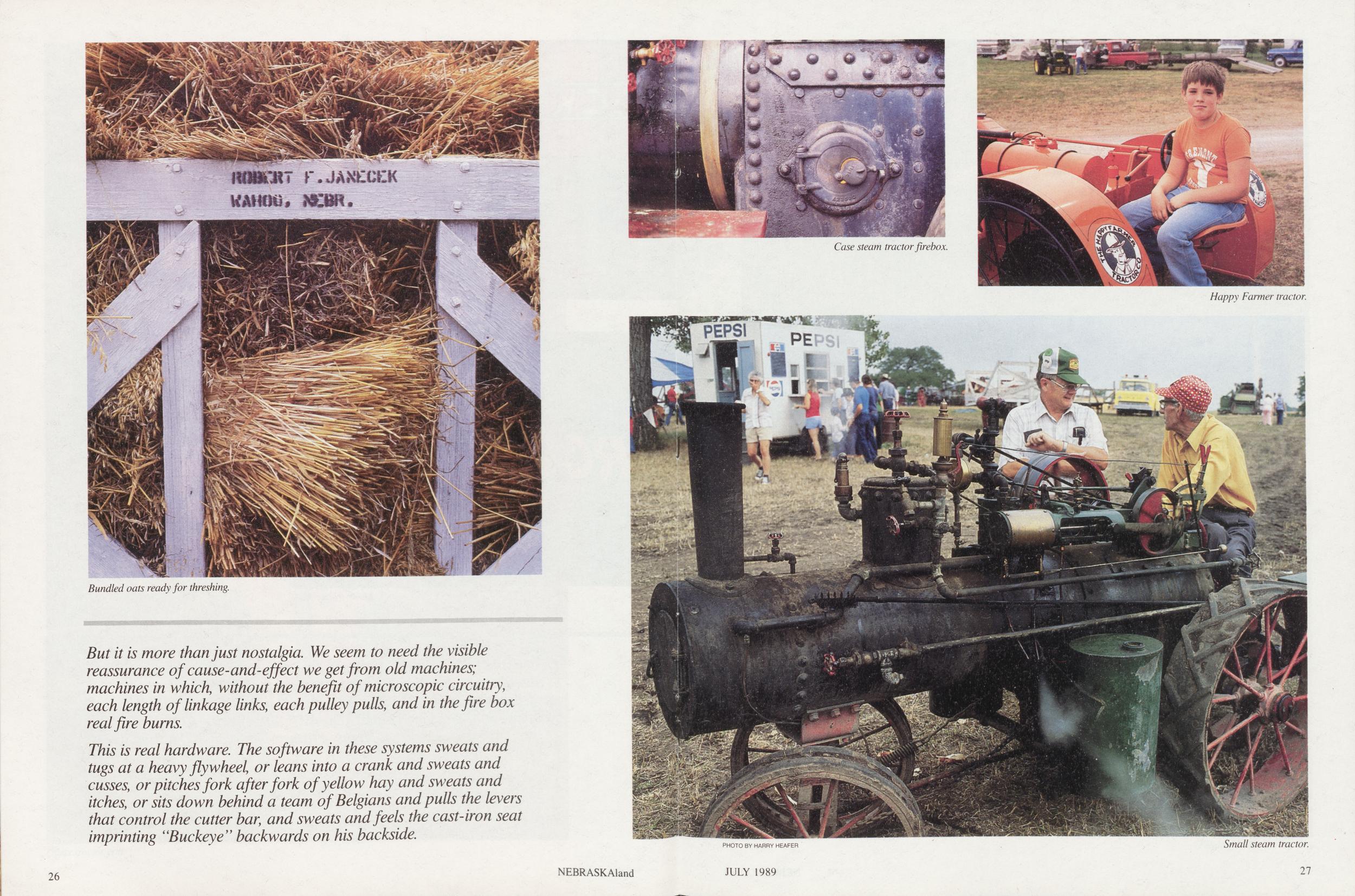
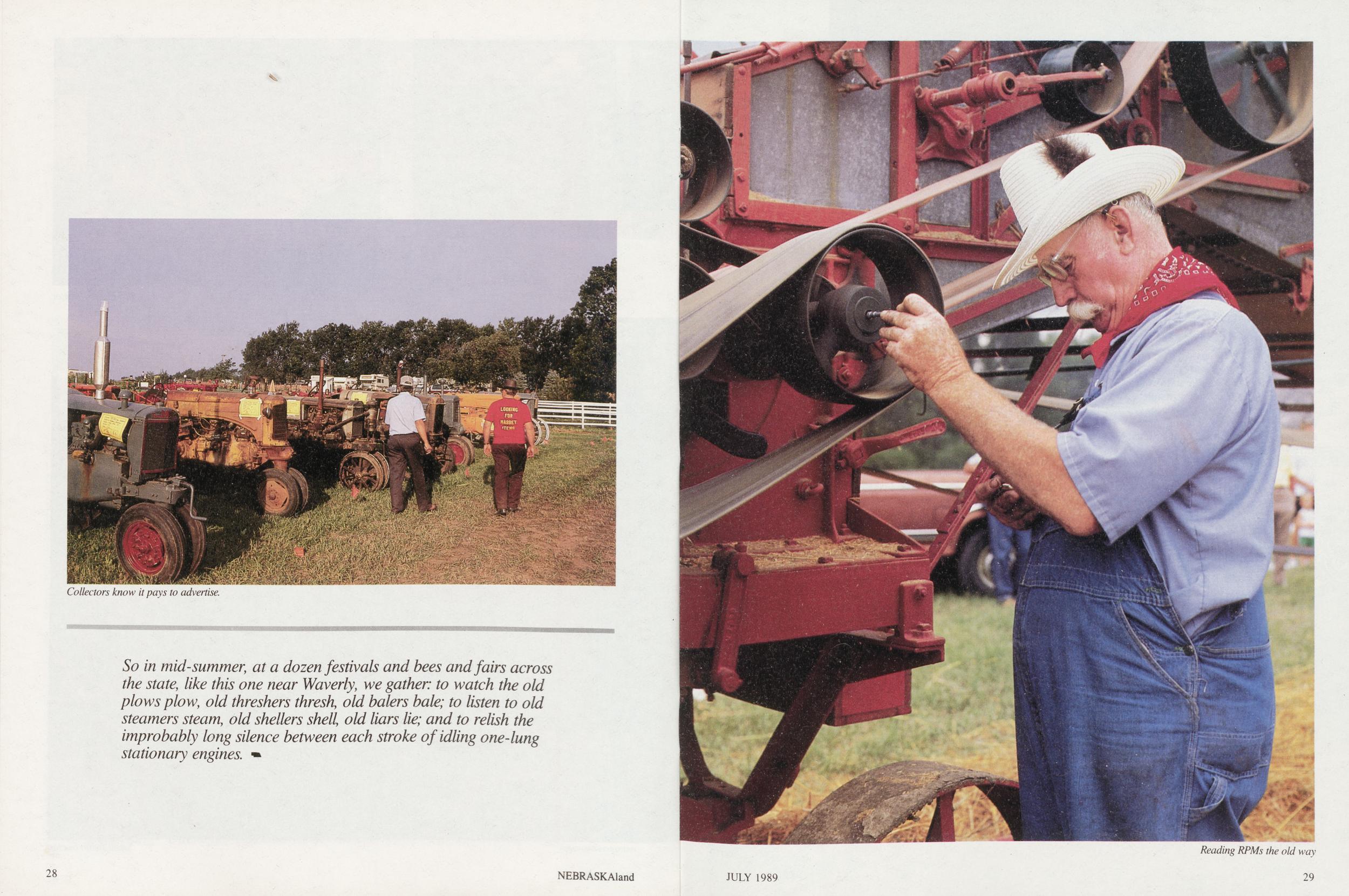
PHOTOS AND TEXT BY DON CUNNINGHAM It is only cultural conditioning, our rural midwest roots, that makes us love these old machines? Or is it something deeper, something in the core of human understanding that draws us, fascinated, to the action and reaction of mechanical connnections?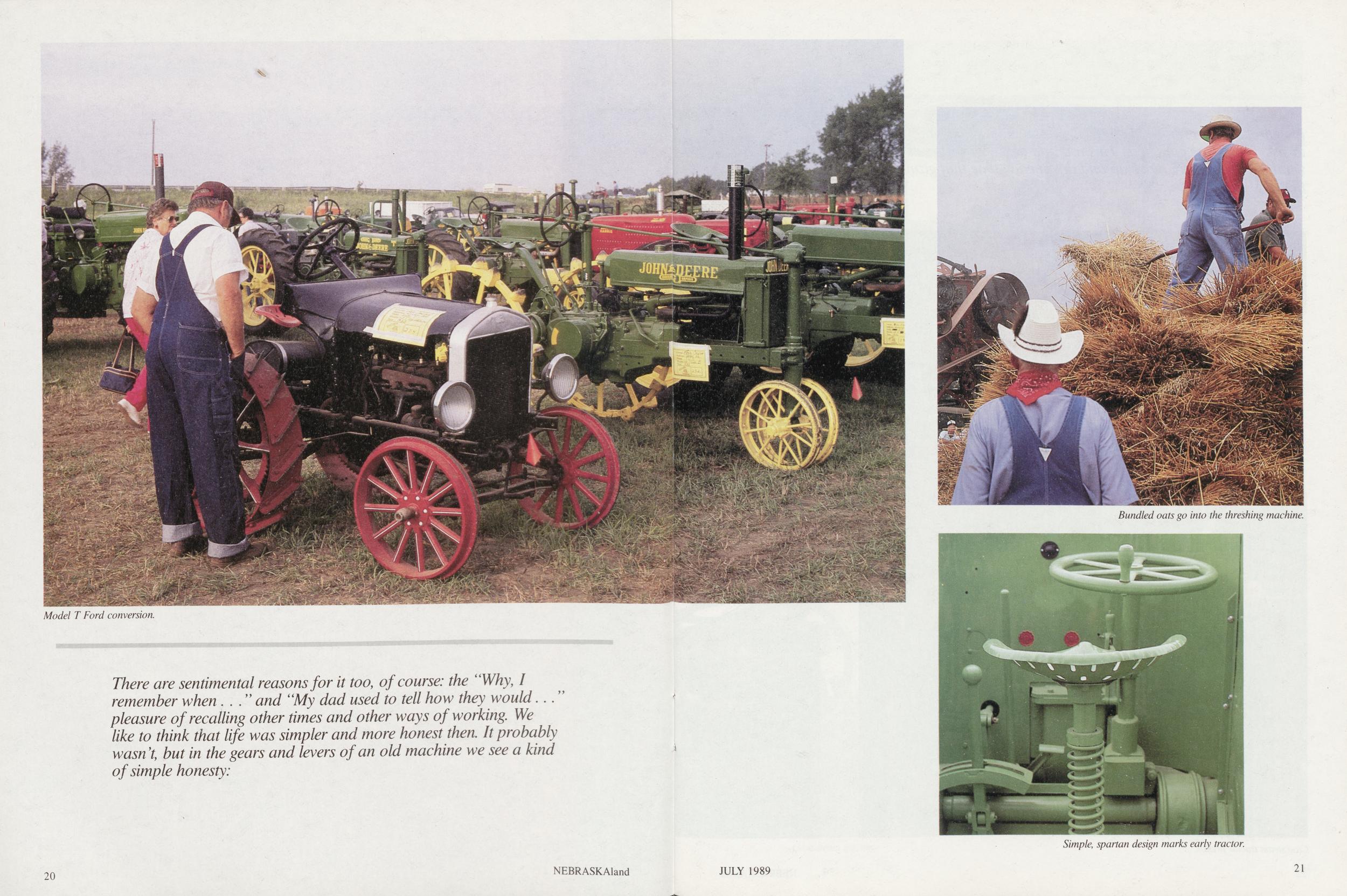
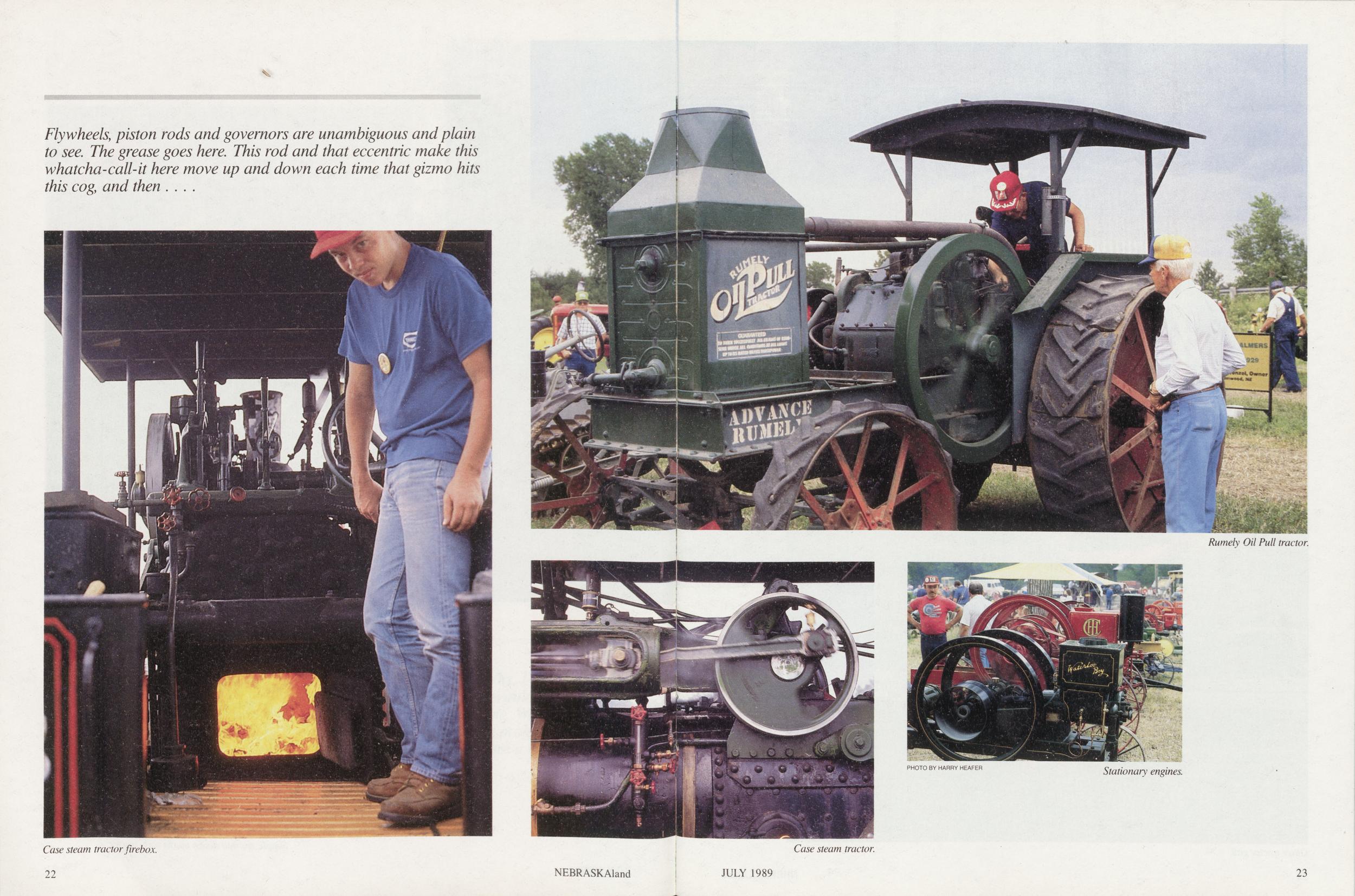 Flywheels, piston rods and governors are unambiguous and plain
to see. The grease goes here. This rod and that eccentric make this
whatcha-call-it here move up and down each time that gizmo hits
this cog, and then ....
Flywheels, piston rods and governors are unambiguous and plain
to see. The grease goes here. This rod and that eccentric make this
whatcha-call-it here move up and down each time that gizmo hits
this cog, and then ....
Unearthing The Past
PHOTOS AND TEXT BY BOB GRIER Fort Robinson barracks, constructed in 1874 and burned in 1898, is yielding its secrets to archaeologistsSIGNIFICANT historical events sometimes bequeath a mantle of importance, even fame, to the most common things—among them a rough-hewn log barracks constructed in 1874 at Camp Robinson (now Fort Robinson State Park) on the White River a few miles west of present-day Crawford. One of three barracks built around Camp Robinson's parade ground, the 1874 cavalry barracks was the scene of one the most famous and tragic episodes of the Indian wars period, the Cheyenne Outbreak that began on the night of January 9, 1879.
The outbreak itself was actually the final chapter in a long, bloody story that began with the relocation of the Northern Cheyenne to Oklahoma in 1878, when they were promised the opportunity to return north if the Oklahoma reservation proved not to be to their liking. Starving, malaria-ridden, and unhappy in the unfamiliar climate and landscape, about 350 men, women and children left the reservation in September, and made their way north to the Sandhills of Nebraska. There they split into two groups, and with Dull Knife, 149 Cheyenne went west toward Camp Robinson.
Captured by troops from the camp on October 23, the Indians were put into the log barracks pending a decision on their fate. On January 3, word came 30 from the War Department that the Cheyenne were to be returned to Indian Territory. Dull Knife said his people would prefer to die. The barracks was chained shut, and food and firewood denied the occupants.
After six days, the Cheyenne reassembled weapons they had dismantled and hidden at the time of their capture, and broke out of the barracks. Cold, hunger, and the relentless pursuit of the army decimated them, and finally on January 21, the Cheyenne Outbreak ended in a last battle on Antelope Creek northwest of the post. Of the 149 who had escaped, 64 were killed, and 78 recaptured.
Such a summary does little justice to the military, political and cultural complexities and misunderstandings that culminated in the moonlight escape, the flight through the buttes, and the final stand on Antelope Creek in northern Sioux County. The full story of the incident needs fuller treatment, and that must wait for a later time.
But the story of the barracks in which the Cheyenne were imprisoned is interesting in its own right. Each summer since 1987, teams of archaeologists-professional, student, and volunteer-under direction of the Nebraska State Historical Society have excavated the remains of the 1874 barracks to gather the architectural information required to accurately reconstruct it. Secondary objectives include gaining as much information as possible about the Cheyenne presence, including, by the end of the 1988 excavation, the location of a least one of the "rifle pits" dug by the Cheyenne prior to the outbreak, and the gathering of information relating to the occupation of the barracks by the military. The barracks was destroyed by fire in 1898, while occupied by men of the 9th Cavalry and their families.
Gayle Carlson of the Nebraska State Historical Society's department of anthropology is in charge of the excavation teams.
"Work on the 1874 barracks was initiated by several volunteers and Historical Society staff during the summer of 1987," says Carlson. "During the initial field session at Fort Robinson, a series of alternate one-meter squares was excavated across the building remains, to locate the edges of the structure as precisely as possible and to determine the stratigraphy and depth and condition of the deposits. Information obtained during this first season was used to prepare a proposal requesting funding and participation by excavation teams from Earthwatch through their Center for Field Research."
Earthwatch is an organization of scholars and citizens working together 30 NEBRASKAland
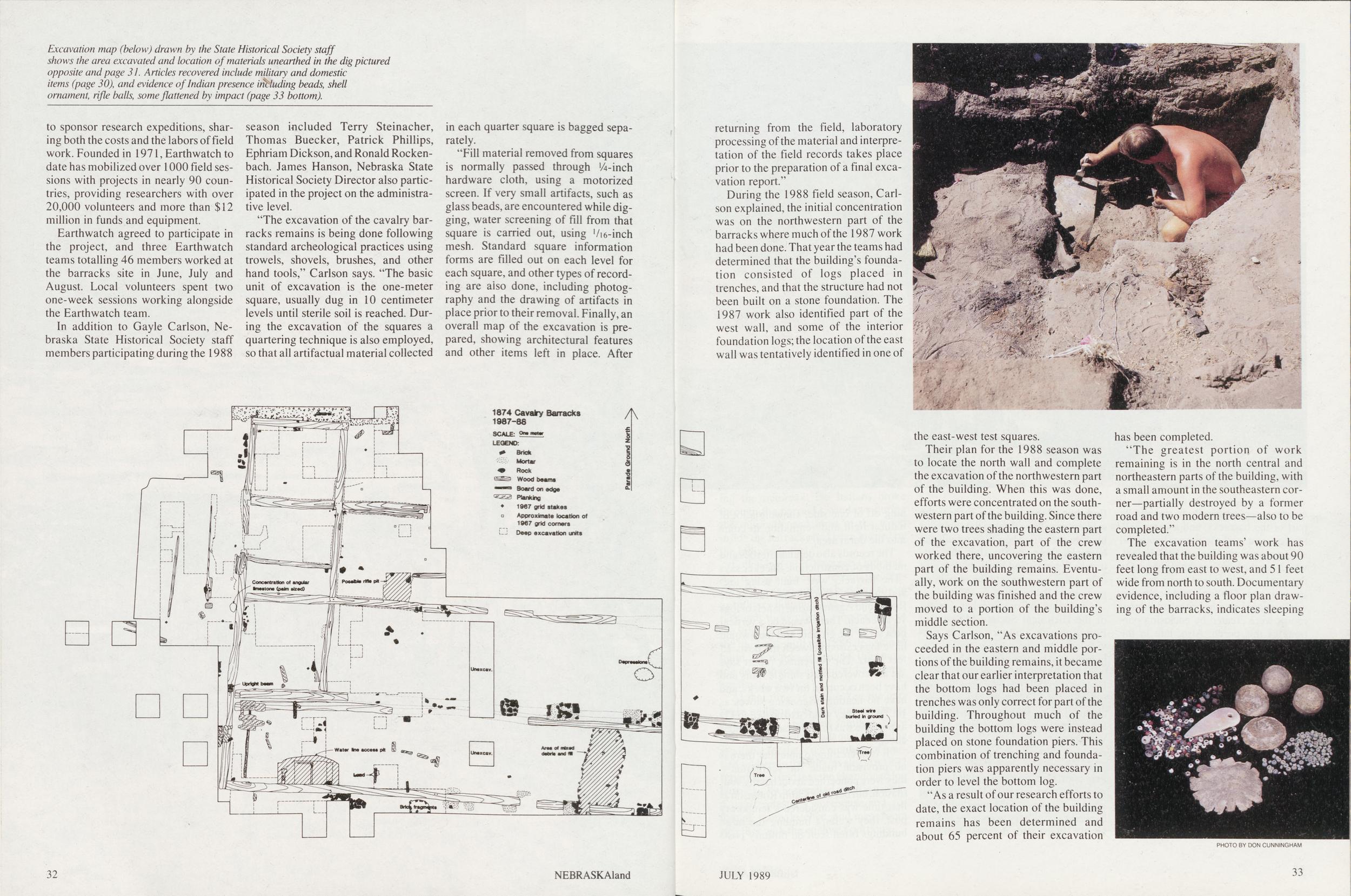
Earthwatch agreed to participate in the project, and three Earthwatch teams totaling 46 members worked at the barracks site in June, July and August. Local volunteers spent two one-week sessions working alongside the Earthwatch team.
In addition to Gayle Carlson, Nebraska State Historical Society staff members participating during the 1988 season included Terry Steinacher, Thomas Buecker, Patrick Phillips, Ephriam Dickson, and Ronald Rockenbach. James Hanson, Nebraska State Historical Society Director also participated in the project on the administrative level.
"The excavation of the cavalry barracks remains is being done following standard archeological practices using trowels, shovels, brushes, and other hand tools," Carlson says. "The basic unit of excavation is the one-meter square, usually dug in 10 centimeter levels until sterile soil is reached. During the excavation of the squares a quartering technique is also employed, so that all artifactual material collected in each quarter square is bagged separately.
"Fill material removed from squares is normally passed through -inch hardware cloth, using a motorized screen. If very small artifacts, such as glass beads, are encountered while digging, water screening of fill from that square is carried out, using Vi6-inch mesh. Standard square information forms are filled out on each level for each square, and other types of recording are also done, including photography and the drawing of artifacts in place prior to their removal. Finally, an overall map of the excavation is prepared, showing architectural features and other items left in place. After 32 NEBRSAKAland returning from the field, laboratory processing of the material and interpretation of the field records takes place prior to the preparation of a final excavation report."
During the 1988 field season, Carlson explained, the initial concentration was on the northwestern part of the barracks where much of the 1987 work had been done. That year the teams had determined that the building's foundation consisted of logs placed in trenches, and that the structure had not been built on a stone foundation. The 1987 work also identified part of the west wall, and some of the interior foundation logs; the location of the east wall was tentatively identified in one of the east-west test squares.
Their plan for the 1988 season was to locate the north wall and complete the excavation of the northwestern part of the building. When this was done, efforts were concentrated on the southwestern part of the building. Since there were two trees shading the eastern part of the excavation, part of the crew worked there, uncovering the eastern part of the building remains. Eventually, work on the southwestern part of the building was finished and the crew moved to a portion of the building's middle section.
Says Carlson, "As excavations proceeded in the eastern and middle portions of the building remains, it became clear that our earlier interpretation that the bottom logs had been placed in trenches was only correct for part of the building. Throughout much of the building the bottom logs were instead placed on stone foundation piers. This combination of trenching and foundation piers was apparently necessary in order to level the bottom log.
"As a result of our research efforts to date, the exact location of the building remains has been determined and about 65 percent of their excavation has been completed.
"The greatest portion of work remaining is in the north central and northeastern parts of the building, with a small amount in the southeastern corner—partially destroyed by a former road and two modern trees—also to be completed."
The excavation teams' work has revealed that the building was about 90 feet long from east to west, and 51 feet wide from north to south. Documentary evidence, including a floor plan drawing of the barracks, indicates sleeping
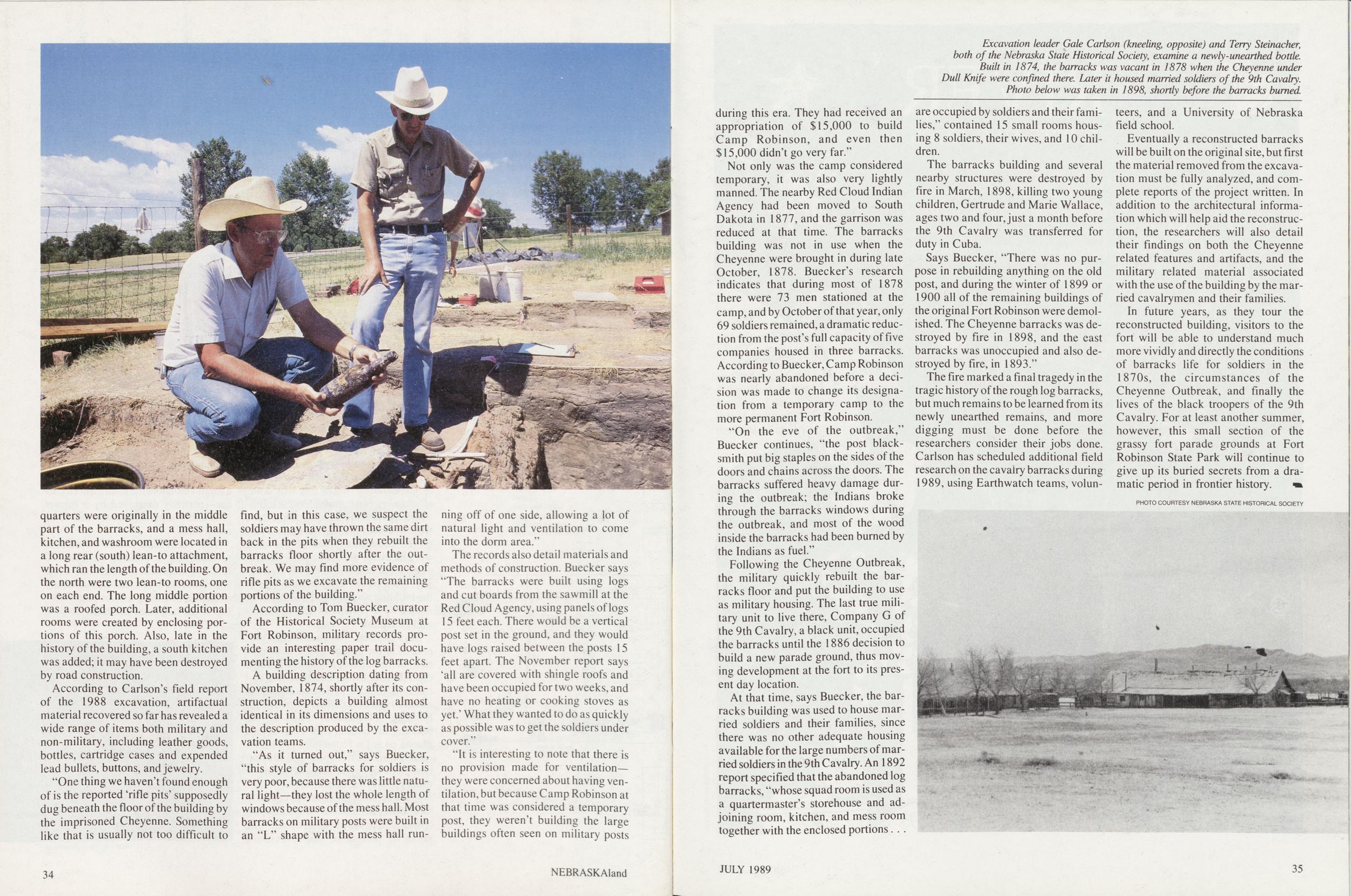
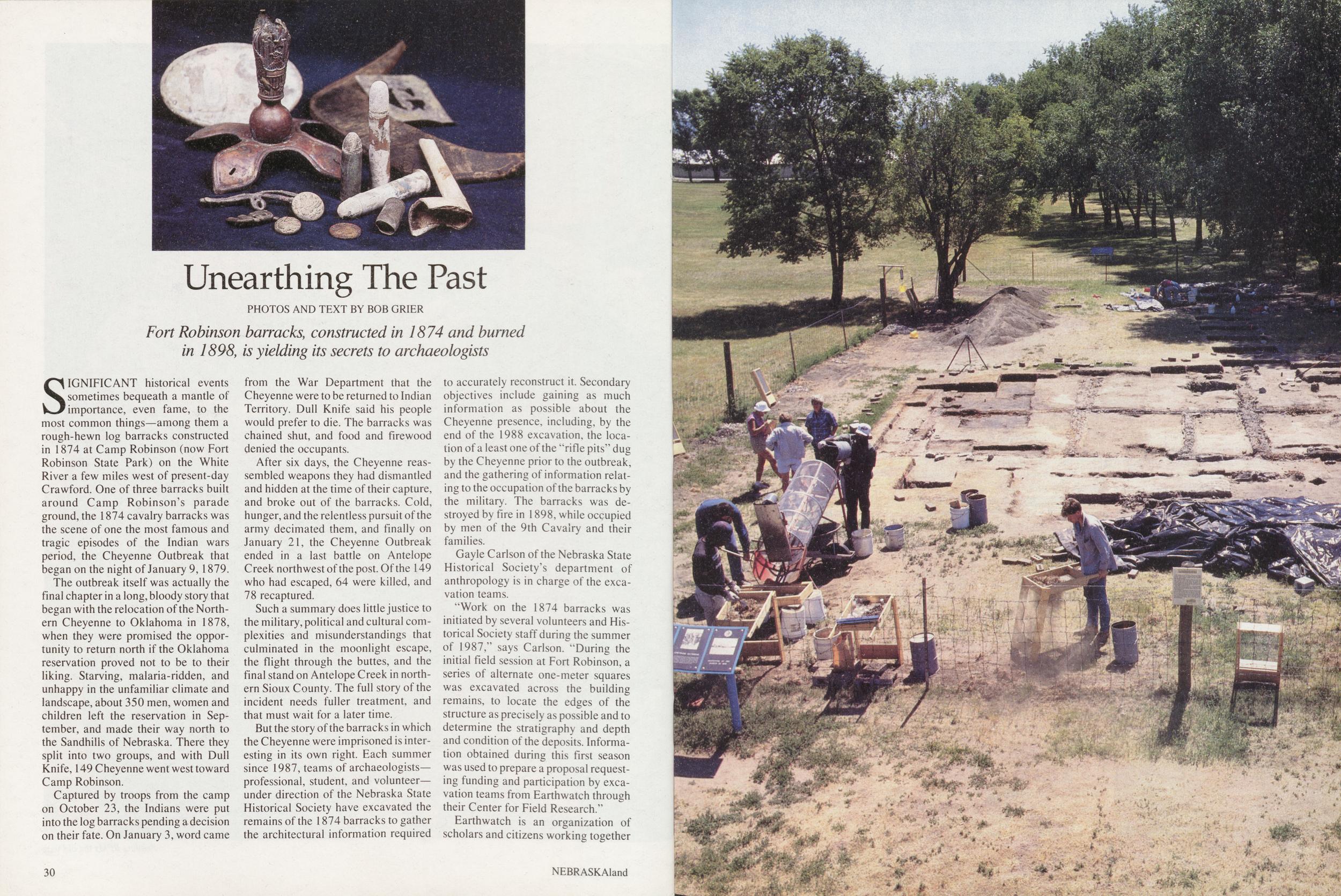
According to Carlson's field report of the 1988 excavation, artifactual material recovered so far has revealed a wide range of items both military and non-military, including leather goods, bottles, cartridge cases and expended lead bullets, buttons, and jewelry.
"One thing we haven't found enough of is the reported 'rifle pits' supposedly dug beneath the floor of the building by the imprisoned Cheyenne. Something like that is usually not too difficult to find, but in this case, we suspect the soldiers may have thrown the same dirt back in the pits when they rebuilt the barracks floor shortly after the outbreak. We may find more evidence of rifle pits as we excavate the remaining portions of the building."
According to Tom Buecker, curator of the Historical Society Museum at Fort Robinson, military records provide an interesting paper trail documenting the history of the log barracks.
A building description dating from November, 1874, shortly after its construction, depicts a building almost identical in its dimensions and uses to the description produced by the excavation teams.
"As it turned out," says Buecker, "this style of barracks for soldiers is very poor, because there was little natural light—they lost the whole length of windows because of the mess hall. Most barracks on military posts were built in an "L" shape with the mess hall running off of one side, allowing a lot of natural light and ventilation to come into the dorm area."
The records also detail materials and methods of construction. Buecker says "The barracks were built using logs and cut boards from the sawmill at the Red Cloud Agency, using panels of logs 15 feet each. There would be a vertical post set in the ground, and they would have logs raised between the posts 15 feet apart. The November report says 'all are covered with shingle roofs and have been occupied for two weeks, and have no heating or cooking stoves as yet.' What they wanted to do as quickly as possible was to get the soldiers under cover."
"It is interesting to note that there is no provision made for ventilation—they were concerned about having ventilation, but because Camp Robinson at that time was considered a temporary post, they weren't building the large buildings often seen on military posts 34 NEBRASKAland during this era. They had received an appropriation of $15,000 to build Camp Robinson, and even then $15,000 didn't go very far."
Excavation leader Gale Carlson (kneeling, opposite) and Terry Steinacher, both of the Nebraska State Historical Society, examine a newly-unearthed bottle. Built in 1874, the barracks was vacant in 1878 when the Cheyenne under Dull Knife were confined there. Later it housed married soldiers of the 9th Cavalry. Photo below was taken in 1898, shortly before the barracks burnedNot only was the camp considered temporary, it was also very lightly manned. The nearby Red Cloud Indian Agency had been moved to South Dakota in 1877, and the garrison was reduced at that time. The barracks building was not in use when the Cheyenne were brought in during late October, 1878. Buecker's research indicates that during most of 1878 there were 73 men stationed at the camp, and by October of that year, only 69 soldiers remained, a dramatic reduction from the post's full capacity of five companies housed in three barracks. According to Buecker, Camp Robinson was nearly abandoned before a decision was made to change its designation from a temporary camp to the more permanent Fort Robinson.
"On the eve of the outbreak," Buecker continues, "the post blacksmith put big staples on the sides of the doors and chains across the doors. The barracks suffered heavy damage during the outbreak; the Indians broke through the barracks windows during the outbreak, and most of the wood inside the barracks had been burned by the Indians as fuel."
Following the Cheyenne Outbreak, the military quickly rebuilt the barracks floor and put the building to use as military housing. The last true military unit to live there, Company G of the 9th Cavalry, a black unit, occupied the barracks until the 1886 decision to build a new parade ground, thus moving development at the fort to its present day location.
At that time, says Buecker, the barracks building was used to house married soldiers and their families, since there was no other adequate housing available for the large numbers of married soldiers in the 9th Cavalry. An 1892 report specified that the abandoned log barracks, "whose squad room is used as a quartermaster's storehouse and adjoining room, kitchen, and mess room together with the enclosed portions . . . are occupied by soldiers and their families," contained 15 small rooms hous- ing 8 soldiers, their wives, and 10 children.
The barracks building and several nearby structures were destroyed by fire in March, 1898, killing two young children, Gertrude and Marie Wallace, ages two and four, just a month before the 9th Cavalry was transferred for duty in Cuba.
Says Buecker, "There was no purpose in rebuilding anything on the old post, and during the winter of 1899 or 1900 all of the remaining buildings of the original Fort Robinson were demolished. The Cheyenne barracks was destroyed by fire in 1898, and the east barracks was unoccupied and also destroyed by fire, in 1893."
The fire marked a final tragedy in the tragic history of the rough log barracks, but much remains to be learned from its newly unearthed remains, and more digging must be done before the researchers consider their jobs done. Carlson has scheduled additional field research on the cavalry barracks during 1989, using Earthwatch teams, volunteers, and a University of Nebraska field school.
Eventually a reconstructed barracks will be built on the original site, but first the material removed from the excavation must be fully analyzed, and complete reports of the project written. In addition to the architectural information which will help aid the reconstruction, the researchers will also detail their findings on both the Cheyenne related features and artifacts, and the military related material associated with the use of the building by the married cavalrymen and their families.
In future years, as they tour the reconstructed building, visitors to the fort will be able to understand much more vividly and directly the conditions of barracks life for soldiers in the 1870s, the circumstances of the Cheyenne Outbreak, and finally the lives of the black troopers of the 9th Cavalry. For at least another summer, however, this small section of the grassy fort parade grounds at Fort Robinson State Park will continue to give up its buried secrets from a dramatic period in frontier history.
THE RIVER wears two faces
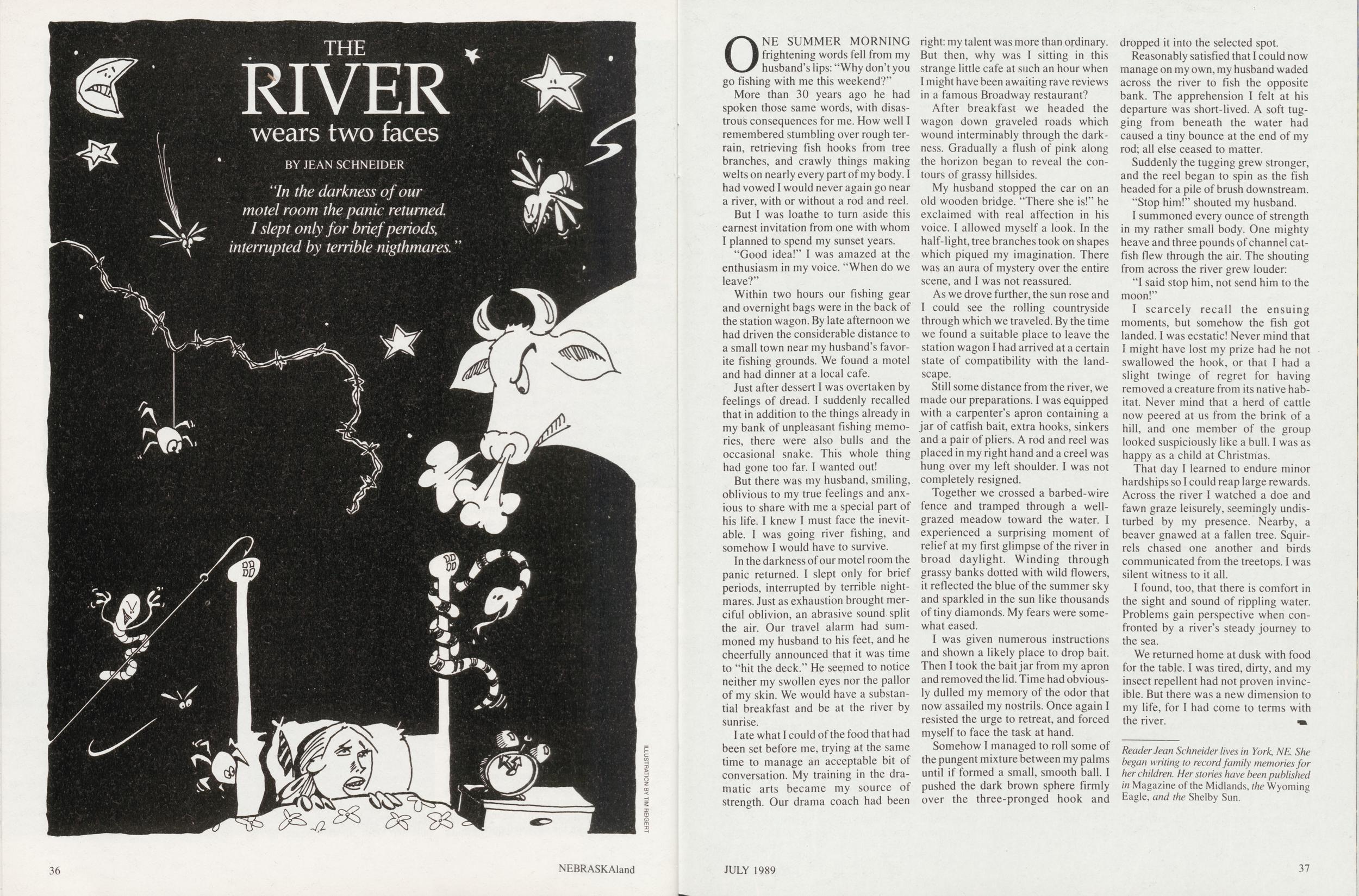
BY JEAN SCHNEIDER "In the darkness of our motel room the panic returned. I slept only for bried periods, interrupted by terrible nightmares."ONE SUMMER MORNING frightening words fell from my husband's lips: "Why don't you go fishing with me this weekend?'"
More than 30 years ago he had spoken those same words, with disastrous consequences for me. How well I remembered stumbling over rough terrain, retrieving fish hooks from tree branches, and crawly things making welts on nearly every part of my body. I had vowed I would never again go near a river, with or without a rod and reel.
But I was loathe to turn aside this earnest invitation from one with whom I planned to spend my sunset years.
"Good idea!'" I was amazed at the enthusiasm in my voice. "When do we leave?"
Within two hours our fishing gear and overnight bags were in the back of the station wagon. By late afternoon we had driven the considerable distance to a small town near my husband's favorite fishing grounds. We found a motel and had dinner at a local cafe.
Just after dessert I was overtaken by feelings of dread. I suddenly recalled that in addition to the things already in my bank of unpleasant fishing memories, there were also bulls and the occasional snake. This whole thing had gone too far. I wanted out!
But there was my husband, smiling, oblivious to my true feelings and anxious to share with me a special part of his life. I knew I must face the inevitable. I was going river fishing, and somehow I would have to survive.
In the darkness of our motel room the panic returned. I slept only for brief periods, interrupted by terrible nightmares. Just as exhaustion brought merciful oblivion, an abrasive sound, split the air. Our travel alarm had summoned my husband to his feet, and he cheerfully announced that it was time to "hit the deck." He seemed to notice neither my swollen eyes nor the pallor of my skin. We would have a substantial breakfast and be at the river by sunrise.
I ate what I could of the food that had been set before me, trying at the same time to manage an acceptable bit of conversation. My training in the dramatic arts became my source of strength. Our drama coach had been right: my talent was more than ordinary. But then, why was I sitting in this strange little cafe at such an hour when I might have been awaiting rave reviews in a famous Broadway restaurant?
After breakfast we headed the wagon down graveled roads which wound interminably through the darkness. Gradually a flush of pink along the horizon began to reveal the contours of grassy hillsides.
My husband stopped the car on an old wooden bridge. "There she is!" he exclaimed with real affection in his voice. I allowed myself a look. In the half-light, tree branches took on shapes which piqued my imagination. There was an aura of mystery over the entire scene, and I was not reassured.
As we drove further, the sun rose and I could see the rolling countryside through which we traveled. By the time we found a suitable place to leave the station wagon I had arrived at a certain state of compatibility with the landscape.
Still some distance from the river, we made our preparations. I was equipped with a carpenter's apron containing a jar of catfish bait, extra hooks, sinkers and a pair of pliers. A rod and reel was placed in my right hand and a creel was hung over my left shoulder. I was not completely resigned.
Together we crossed a barbed-wire fence and tramped through a well-grazed meadow toward the water. I experienced a surprising moment of relief at my first glimpse of the river in broad daylight. Winding through grassy banks dotted with wild flowers, it reflected the blue of the summer sky and sparkled in the sun like thousands of tiny diamonds. My fears were somewhat eased.
I was given numerous instructions and shown a likely place to drop bait. Then I took the bait jar from my apron and removed the lid. Time had obviously dulled my memory of the odor that now assailed my nostrils. Once again I resisted the urge to retreat, and forced myself to face the task at hand.
Somehow I managed to roll some of the pungent mixture between my palms until if formed a small, smooth ball. I pushed the dark brown sphere firmly over the three-pronged hook and dropped it into the selected spot.
Reasonably satisfied that I could now manage on my own, my husband waded across the river to fish the opposite bank. The apprehension I felt at his departure was short-lived. A soft tugging from beneath the water had caused a tiny bounce at the end of my rod; all else ceased to matter.
Suddenly the tugging grew stronger, and the reel began to spin as the fish headed for a pile of brush downstream.
"Stop him!" shouted my husband.
I summoned every ounce of strength in my rather small body. One mighty heave and three pounds of channel catfish flew through the air. The shouting from across the river grew louder:
"I said stop him, not send him to the moon!"
I scarcely recall the ensuing moments, but somehow the fish got landed. I was ecstatic! Never mind that I might have lost my prize had he not swallowed the hook, or that I had a slight twinge of regret for having removed a creature from its native habitat. Never mind that a herd of cattle now peered at us from the brink of a hill, and one member of the group looked suspiciously like a bull. I was as happy as a child at Christmas.
That day I learned to endure minor hardships so I could reap large rewards. Across the river I watched a doe and fawn graze leisurely, seemingly undisturbed by my presence. Nearby, a beaver gnawed at a fallen tree. Squirrels chased one another and birds communicated from the treetops. I was silent witness to it all.
I found, too, that there is comfort in the sight and sound of rippling water. Problems gain perspective when confronted by a river's steady journey to the sea.
We returned home at dusk with food for the table. I was tired, dirty, and my insect repellent had not proven invincible. But there was a new dimension to my life, for I had come to terms with the river.
Reader Jean Schneider lives in York, NE. She began writing to record family memories for her children. Her stories have been published in Magazine of the Midlands, the Wyoming Eagle, and the Shelby Sun.
Stemming The Purple Plague
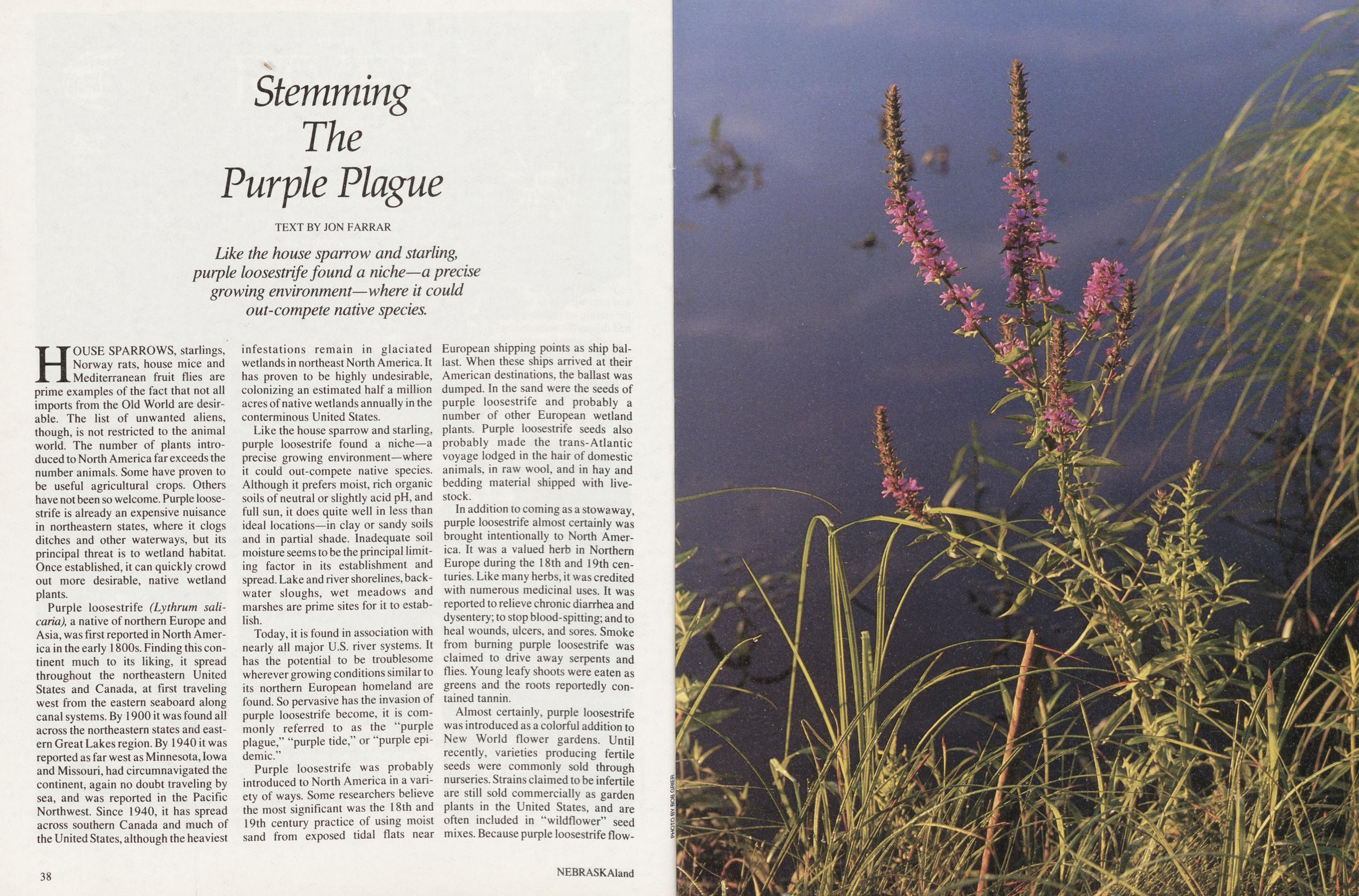
TEXT BY JON FARRAR Like the house sparrow and starling, triple loosestrife found a niche—a precise growing environment—where it could out-compete native species.HOUSE SPARROWS, starlings, Norway rats, house mice and Mediterranean fruit flies are prime examples of the fact that not all imports from the Old World are desirable. The list of unwanted aliens, though, is not restricted to the animal world. The number of plants introduced to North America far exceeds the number animals. Some have proven to be useful agricultural crops. Others have not been so welcome. Purple loosestrife is already an expensive nuisance in northeastern states, where it clogs ditches and other waterways, but its principal threat is to wetland habitat. Once established, it can quickly crowd out more desirable, native wetland plants.
Purple loosestrife (Lythrum salicaria), a native of northern Europe and Asia, was first reported in North America in the early 1800s. Finding this continent much to its liking, it spread throughout the northeastern United States and Canada, at first traveling west from the eastern seaboard along canal systems. By 1900 it was found all across the northeastern states and eastern Great Lakes region. By 1940 it was reported as far west as Minnesota, Iowa and Missouri, had circumnavigated the continent, again no doubt traveling by sea, and was reported in the Pacific Northwest. Since 1940, it has spread across southern Canada and much of the United States, although the heaviest infestations remain in glaciated wetlands in northeast North America. It has proven to be highly undesirable, colonizing an estimated half a million acres of native wetlands annually in the conterminous United States.
Like the house sparrow and starling, purple loosestrife found a niche—a precise growing environment—where it could out-compete native species. Although it prefers moist, rich organic soils of neutral or slightly acid pH, and full sun, it does quite well in less than ideal locations—in clay or sandy soils and in partial shade. Inadequate soil moisture seems to be the principal limiting factor in its establishment and spread. Lake and river shorelines, backwater sloughs, wet meadows and marshes are prime sites for it to establish.
Today, it is found in association with nearly all major U.S. river systems. It has the potential to be troublesome wherever growing conditions similar to its northern European homeland are found. So pervasive has the invasion of purple loosestrife become, it is commonly referred to as the "purple plague," "purple tide," or "purple epidemic."
Purple loosestrife was probably introduced to North America in a variety of ways. Some researchers believe the most significant was the 18th and 19th century practice of using moist sand from exposed tidal flats near European shipping points as ship ballast. When these ships arrived at their American destinations, the ballast was dumped. In the sand were the seeds of purple loosestrife and probably a number of other European wetland plants. Purple loosestrife seeds also probably made the trans-Atlantic voyage lodged in the hair of domestic animals, in raw wool, and in hay and bedding material shipped with livestock.
In addition to coming as a stowaway, purple loosestrife almost certainly was brought intentionally to North America. It was a valued herb in Northern Europe during the 18th and 19th centuries. Like many herbs, it was credited with numerous medicinal uses. It was reported to relieve chronic diarrhea and dysentery; to stop blood-spitting; and to heal wounds, ulcers, and sores. Smoke from burning purple loosestrife was claimed to drive away serpents and flies. Young leafy shoots were eaten as greens and the roots reportedly contained tannin.
Almost certainly, purple loosestrife was introduced as a colorful addition to New World flower gardens. Until recently, varieties producing fertile seeds were commonly sold through nurseries. Strains claimed to be infertile are still sold commercially as garden plants in the United States, and are often included in "wildflower" seed mixes. Because purple loosestrife flowers 38 NEBRASKAland
Exotic plants which become problems share two common characteristics—they are too successful in competing with native plants, and they reproduce prolifically.
As many as 80,000 purple loosestrife stalks have been counted on a single wetland acre; with each stalk capable of yielding up to 300,000 seeds, this creates a production potential of 24 billion seeds annually per acre. Under optimum conditions the seeds remain viable for years, waiting for favorable conditions before germinating.
Although the spread of purple loosestrife has certainly been aided by flower growers and bee keepers, natural agents are now its principal means of colonization. Flooding not only carries seeds or broken plant parts downstream, but into oxbows and floodplain meadows as well. Its tiny seeds float, are carried by the wind, cling to the feet or pass through the digestive tracts of birds, and can be carried from wetland to wetland on boats, boat trailers, tires, and even on the boots of hunters and fishermen.
It seems to increase during periods of drought when muddy shorelines are exposed and ripe for colonization, and at reservoir construction sites, farm ponds, or channelization projects. Once established, purple loosestrife can completely choke a marsh in only a few seasons.
In the northeastern United States, solid stands of purple loosestrife have filled marshes and waterways. When this occurs, the mix of native wetland plants which formerly provided food and nesting cover for wetland animals, particularly waterbirds, is replaced by a dense growth of purple loosestrife that provides virtually no benefits to wildlife. Lost is the mix of native aquatic vegetation of varying heights and interspersed with occasional open spots of water, which provided material for nesting platforms, tubers and seeds for food, and spawning sites and escape cover for fish. In time, the wetland wildlife is also lost. At a time when enormous sums of money and effort are being expended to preserve what little wetland habitat remains, the invasion of purple loosestrife is hardly welcome.
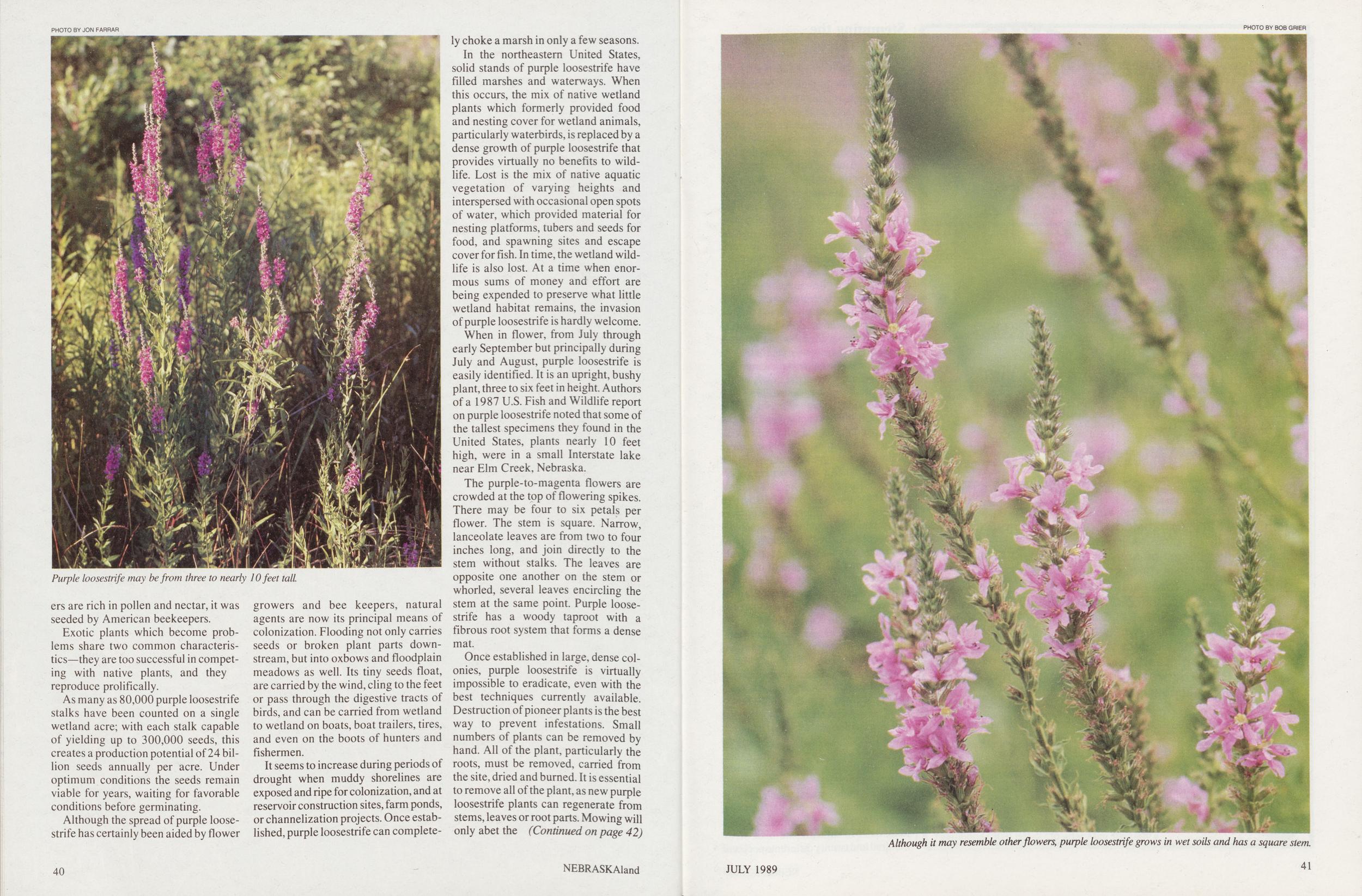
When in flower, from July through early September but principally during July and August, purple loosestrife is easily identified. It is an upright, bushy plant, three to six feet in height. Authors of a 1987 U.S. Fish and Wildlife report on purple loosestrife noted that some of the tallest specimens they found in the United States, plants nearly 10 feet high, were in a small Interstate lake near Elm Creek, Nebraska.
The purple-to-magenta flowers are crowded at the top of flowering spikes. There may be four to six petals per flower. The stem is square. Narrow, lanceolate leaves are from two to four inches long, and join directly to the stem without stalks. The leaves are opposite one another on the stem or whorled, several leaves encircling the stem at the same point. Purple loosestrife has a woody taproot with a fibrous root system that forms a dense mat.
Once established in large, dense colonies, purple loosestrife is virtually impossible to eradicate, even with the best techniques currently available. Destruction of pioneer plants is the best way to prevent infestations. Small numbers of plants can be removed by hand. All of the plant, particularly the roots, must be removed, carried from the site, dried and burned. It is essential to remove all of the plant, as new purple loosestrife plants can regenerate from stems, leaves or root parts. Mowing will only abet the (Continued on page 42)
40 NEBRASKAland The old west is still here..
fit FORT KEARNY
State Historical Park
This historic Army post was an important factor
in westward expansion. From its inception in
1848 until its closure in 1871, Fort Kearny was
a bustling center of activity for overland passengers, prospectors, farmers and emigrants
making
the trek west. Now a state historical park, it serves
as testimony to the pioneers who crossed the
plains. Imagine life as it was in the American
West as you follow walkways in the shadow of
the restored stockade and across the old parade
grounds. Fort Kearny is located south of the
Platte River between the Minden and Kearney
exits from Interstate 80.
VISIT US S
• It
I
Visitor center and other interpretive facilities
open through September 4 — 9 a.m. to 5 p.m.
Sept. 5 through Oct. 29, Weekends only — 1 to 5 p.m.
NEBRASKA GAME AND PARKS COMMISSION
The old west is still here..
fit FORT KEARNY
State Historical Park
This historic Army post was an important factor
in westward expansion. From its inception in
1848 until its closure in 1871, Fort Kearny was
a bustling center of activity for overland passengers, prospectors, farmers and emigrants
making
the trek west. Now a state historical park, it serves
as testimony to the pioneers who crossed the
plains. Imagine life as it was in the American
West as you follow walkways in the shadow of
the restored stockade and across the old parade
grounds. Fort Kearny is located south of the
Platte River between the Minden and Kearney
exits from Interstate 80.
VISIT US S
• It
I
Visitor center and other interpretive facilities
open through September 4 — 9 a.m. to 5 p.m.
Sept. 5 through Oct. 29, Weekends only — 1 to 5 p.m.
NEBRASKA GAME AND PARKS COMMISSION
Stemming the purple plague
(Continued from page 41)plant's spread. To prevent the distribution of seeds, it is best to remove plants during the early stages of flowering. If it is impossible to remove the entire plant, cutting off the flowering stalks will retard colonization by eliminating that year's seed crop. The site should be checked periodically to be sure no new plants have flowered.
Several herbicides, used carefully, can be applied to help control purple loosestrife. Plants over water may be selectively treated with the aquatic herbicides "Accord" or "Rodeo." Purple loosestrife on dryland sites may be treated with "Roundup." These herbicides are non-selective and will also kill other, desirable wetland plants. Spraying should be done carefully to avoid affecting desirable native plant species. Follow-up treatments will be necessary in subsequent years to ensure that surviving plants and newly established seedlings are destroyed. These herbicides are most effective in late summer—August and September. The improper application of these herbicides, though, may actually do more harm to a wetland community in the short term than will the purple loosestrife.
Because purple loosestrife is not an invader of agricultural crops in Nebraska, it has not been designated a noxious weed, which would require its destruction on both public and private land and prohibit the sale of its seeds, rootstock or seedlings. Half a dozen states, where purple loosestrife has existed long enough to be recognized as a serious problem, have declared it a noxious weed.
Even treatment with herbicides has proven ineffective in controlling purple loosestrife once it occurs over large areas. Like musk thistle and leafy spurge, it probably will never be eradicated in North America. The best that can be hoped for is to stop its increase, reduce its current range and destroy new plants as they appear.
In Europe, purple loosestrife is seldom found in large stands; rather it is mixed with other plants which grow on wet organic soils. Over its native range, purple loosestrife is controlled by a number of natural enemies. One hundred and twenty different species of 42 NEBRASKAland plant-eating insects are known to feed on purple loosestrife in Europe, including 14 which feed on it specifically.
The U.S. Department of Agriculture's Beneficial Insect Laboratory is working to bring these natural controls from Europe. Several insects which may aid in controlling loosestrife have been identified, and tests are being conducted to select those which will not have a negative impact on native flora in North America. If work on biological controls continues, researchers speculate it would be more than 10 years before any relief from purple loosestrife infestations could be expected.
The extent of purple loosestrife's colonization of Nebraska is not known. Its spread across the more arid Great Plains has been linked to the construction of irrigation reservoirs where disturbance of native shoreline vegetation and water level fluctuations create prime sites for colonization. Its spread into undisturbed wetlands has been slow, but, if purple loosestrife is allowed several years of seed production, the opportunity to control future infestations will probably have been lost.
Plants have been found in Dodge, Fillmore, Saunders, Buffalo, Hall, Cherry, Brown, Rock, Holt and Knox counties. It probably occurs in many others. Dense stands of the plant now encircle several small lakes along Interstate 80 in the central Platte Valley. It probably can be found up and down the principal east-west river valleys throughout the state, particularly along the Platte, the Niobrara and probably the lower Elkhorn, and it has become a significant problem on the upper end of Lewis and Clark Lake on the Missouri River. Purple loosestrife colonies are in position to move into the wetlands in Nebraska's two most important regions for waterbirds. The one documented site in Fillmore County, (there are undoubtedly others), indicates that the plant can succeed in the Rainwater Basin wetlands. Its occurrence in backwaters and wet meadows along the Niobrara River provides potential sources of seeds for the spread of purple loosestrife into the marshes and shallow lakes of the Sandhill region.
No one knows for sure if purple loosestrife has the potential to become as serious a threat to natural aquatic environments in Nebraska as it has in the northeastern states. The fact that it has established here at all, however, suggests that it finds Nebraska's wetlands and meadows to its liking. It seems wise for Nebraska to learn from the experience of states where control of the "purple plague" has become extremely costly, frustrating and at some sites impossible with current technology. For precise information on the use of herbicides to control purple loosestrife, and for additional information about the plant, contact your local county weed control board, the state Department of Agriculture or write: Purple Loosestrife, Box 25, 500 Lafayette Rd., St. Paul, MN 55146.
402-376-3708 ONE & TWO DAY RENTALS CAR SHUTTLE-SERVICE FULL-SERVICE TRIPS WE DO THE WORK YOU HAVE THE EUN For Reservations and Information Contact Doug and Twyla Graham HC 13 BOX 16 V VALENTINE, NEBRASKA 69201 Excellent Hunting-Fishing For Sale—106 acres on the North Platte River (1) mile east of Broadwater, NE. Lee Chapin (402) 423-5727 5817 Berkeley Dr. Lincoln, NE 68512LIVE-CATCH ALL-PURPOSE TRAPS Writ* for FREE CATALOG Traps without injury squirrels, chipmunks, rabbits, mink, fox, raccoons, stray animals, pests, etc. Sizes for every need. Also traps for snakes, sparrows, pigeons, crabs, turtles, quail, etc Save on our low factory prices Send no money Free catalog and trapping secrets MUSTANG MFG. CO., Dept N-34, Box 920947, Houston, Tex. 77292 BERGMANS RESORT On Beautiful Johnson Lake Lakefront Cabins RV Hookups Groceries Beer Bait Tackle Restaurant Lounge Boat Rentals Guide Service. Fish Swim Golf Elmer and Janet Bergman RR 2, Elwood, NE 68937 (308) 785-2298 STOCK YOUR LAKE OR POND WITH Channel Cat, Bluegill, Hybrid Bluegill, Largemouth Bass, Crappie, Bullheads, Triploid Grass Carp, Walleye, Minnows WILLOW LAKE FISH HATCHERY Rt. 3, Box 46, Hastings, Nebr. 68901 Gaylord L Crawford Phone: (402) 463-8022 Day or Night For April to October 15 stocking BLACK HILLS NATURAL HISTORY FIELD CAMPS Presented by the University of Nebraska Trailside Museum at Fort Robinson State Park located near Crawford, NE. 1989 SCHEDULE (2 day trips) JUNE: 16 & 17; 30 & July 1 JULY: June 30 & 1; 14 & 15; 28 & 29 AUGUST: 18 & 19 iw * icaLM* RATES: $49 Children, $95 Adults. Rates include equipment (except clothing and sleeping bags), tents, foam pads and miscellaneous camp gear, meals (4) admissions, transportation (400 miles), presentation, and cap & T-shirt. DAY 1: Depart 8:00 am. Combines trips to Agate Springs, and the Hot Springs Mammoth Site. Camp is at forested site at Custer, SD. DAY 2: Traverse a dome mountain range. Visit a gold "ghost town", Bear Butte, Jewel Cave, School of Mines Museum and more. Return ETA sunset (7:00 pm) FOR MORE INFORMATION CONTACT: David A. Nixon, Superintendent, P.O. Box 462, Crawford, NE 68339 Telephone (308) 665-2730 after May 16,1989# DAILY TRIPS TO AGATE & TOADSTOOL PARK ALSO AVAILABLE JULY 1989 43
CEDAR LANE
Ranch Vacations
Guest ranch in the heart of the Sandhills of
Nebraska, Swimming, spa, horses, canoeing,
trail rides, barbecues. hunting, family reunions.
BOOKING NOW For 1989
Richard and Betty Schroeder HC 2 Box 9C
Stapleton. Nebraska 69163 Ph. 308-587-2233
Hatching Eggs Mature Flyers
Day-Old Chix Oven Ready
Started Birds Hickory Smoked
OUbl Game Bird Farms
8716 W.St. Lawrence Rd., Beloit, Wl 53511
PHEASANTS - WILD TURKEYS
CHUKAR & HUNGARIAN PARTRIDGES
GUN DOG TRAINING
All Sporting Breeds
All dogs worked on foot — no
horses. Midwest's finest facilities.
Field Champion-sired
Labrador pups for sale.
"Training for hunters by hunters"
WILDERNESS KENNELS
Henry Sader—Roca, Ne.
(402)423-4212 68430
PLATTE RIVER STATE PARK
from Louisville—1 mile south on NE 50,
2 miles west on S-13E
Buffalo items our specialty at Scott Lodge. Dine
in air-conditioned comfort or on the spacious
deck overlooking the picturesque Platte River
valley. Lodge open daily
Be sure to check out all the fun-time action
while here.
Nebraska Game and Parks Commission
KEN KO Inc.
Spend a day fishing the scenic Missouri
River with Fishing Guide Kenneth Cooksey.
For information write or call:
2002 2nd Ave. (402) 873-6288
Nebraska City, NE mornings/evenings
"ARE YOU GONNA LET
A BUNCH OF HALF-WITS
TURN OUR PUBLIC LANDS
INTO A PUBLIC DISGRACE
If you write to us, we'll tell you how you can help stop
abuse of our public lands.
Write: Take Pride in America, P.O. Box 1339, Jessup,
MD 20794.
BAD GUYS ABUSE PUBLIC LAND.
GOOD GUYS SAVE IT.
At the head of the trail
(Continued from page 9)draw considerable attention at Fort Kearny SRA. The swimming beach is open daily between Memorial Day weekend and Labor Day, and swimmers will find the convenience of change-houses and a new, modern restroom facility located close to the beach. Swimmers should use extra caution however, because beaches are unsupervised, and swimming with a companion is highly recommended.
Winter camping is available, with full electrical hookups on the 75 pads so equipped. Winter campers will have to make do with the more primitive pit-type restrooms, as modern facilities and the dump station are not available during the cold months. There are wintertime specialty activities at Fort Kearny, however that make up for the lack of conveniences found only during the more temperate months. For example, backpacking or cross country skiing on the hike/bike trail can offer involvement with a pristine riverine landscape draped in snow. Nordic-style skiers find the trail exhilarating, and its seven-mile extent linking Fort Kearny with Platte River wildlife lands provides a high-quality course. For those of a more mechanical aptitude, a complete snowmobile trail is also available yet sequestered from those who value the solitude of the area.
Serenity can also be savored at this time of the year on any of the seven lakes of the recreation area by skaters cutting figure eights with hard steel or ice fishermen cutting 8-inch diameter 44 NEBRASKAland round holes with sharpened steel. If desired, opportunities for such specialty forms of winter recreation can be extended to the many lakes of Bassway Strip at the far end of the trail, and even total "iceolation" may be achieved through winter primitive tent-camping on public wildlife lands along the Platte.
Although Fort Kearny State Recreation Area does not provide hunting opportunities, it certainly provides a home for waterfowl and deer hunters every fall. The area lies directly in the path of the fall duck and goose migration, and for those fortunate enough to have access to a Platte River blind along this central portion of the River, a more nostalgic setting to pitch a tent or park a camper would be difficult to find. Wild turkey and white-tailed deer hunters can be in the timber in a matter of minutes, and many fine bucks and gobblers have quickened the pulse rates of their pursuers over the years on the public hunting lands in the vicinity of Fort Kearny State Recreation Area.
Fort Kearny SRA is part of a welcome new trend: camping and recreation areas in the proximity of a state historical park. Acquired in 1960 by the Nebraska Game and Parks Commission, Fort Kearny State Recreation Area was one of the first camping additions to a state historical park, and except for the small primitive campsite at Ash Hollow, no other companion areas existed. A first class camping area was drawn into the plans for the recent construction of Rock Creek Station, and the acquisition of 233 acres at Buffalo Bill State Historical Park will be a tremendous asset to that facility.
The importance of, and need for such companion areas is self-evident. At Fort Kearny SRA, records indicate an annual visitation of nearly 100,000, and it is probably a comfortable assumption that nearly 100 percent of those who have camped at the SRA have also toured Fort Kearny State Historical Park.
Although companion camping areas to state historical parks have become more common, Fort Kearny will always remain unique in its history, its wildlife, and the breadth of its activity options. Fort Kearny: a gathering spot for pioneers along the Platte for more than 150 years—for cranes and geese, perhaps for 10,000 more.
"OUR IMPERIAL ARMY: NEBRASKA IN THE PHILIPPINE WAR" The fascinating story of Nebraska's involvement in this turn-of-the-century jungle war A special exhibit through 1989 at the State Museum of History 15th & P Streets, Lincoln Hours: 9-5, Mondav - Saturdav; 1:30 - 5, Sunday Free Admission CAN'T BEAR YOUR JOB ANYMORE? COME STAY WITH US AWHILE. LAKEVIEW on Lake McConaughy Air-conditioned units, cooking facilities. Up to four adults. Campground on the beach—50 hookups, showers, playground, shade. MARINA CAMPGROUND GUIDE SERVICE LAUNCHING STORE Groceries, Beer, Pop, Tackle, Live Bait BOAT & PONTOON RENTALS South Shore Big Mac at Gate 18 R.R. #1 Box L-9 Brule, NE 69127 Ogallala, NE (308) 284-4965 JULY 1989 45 BUFFALO
NEBRASKA MADE JERKY
Hickory smoked, 100% pure buffalo product
with almost no preservatives. Vacuum packed
so no refrigeration is needed. Send $23.00 for
16 1 -oz. packages or $ 1.75 for sample package
(prices include postage and handling) to:
G.E. Hill Distributing
5220 Aylesworth, Lincoln, NE 68504
(402) 464-6781
For credit card orders, please include number
and expiration date.
MasieiCoid
Future Fisherman
Foundation
Canoe the Dismal
Have a real adventure on this
unique river flowing through the
heart of Nebraska's Sandhills.
See wildlife, wildflowers and
spectacular valley scenery.
Canoe rental or one and two-day tours, Mullen to Thedford.
Call or write for Details.
Powder Horn Outfitters
7821 Vine, Lincoln, NE 68505
(402) 437-6585 (308) 748-2218
MARSHWATCHER
DUCKS UNLIMITED, Inc.
Ducks under water
The mallard has been experimentally
held alive under water for as long as
16 minutes, and even 27 minutes with
its trachea closed. Voluntarily, birds
stay under water for much shorter
times, usually less than two minutes,
according to Ducks Unlimited. The
common loon is known to stay under
water for 15 minutes. To dive, a bird
must expel the air from its air sacs and
at the same time reduce the flow of
blood to the muscles. Then it can draw
from the oxygen stored in the muscles,
enabling it to dive for longer periods.
BUFFALO
NEBRASKA MADE JERKY
Hickory smoked, 100% pure buffalo product
with almost no preservatives. Vacuum packed
so no refrigeration is needed. Send $23.00 for
16 1 -oz. packages or $ 1.75 for sample package
(prices include postage and handling) to:
G.E. Hill Distributing
5220 Aylesworth, Lincoln, NE 68504
(402) 464-6781
For credit card orders, please include number
and expiration date.
MasieiCoid
Future Fisherman
Foundation
Canoe the Dismal
Have a real adventure on this
unique river flowing through the
heart of Nebraska's Sandhills.
See wildlife, wildflowers and
spectacular valley scenery.
Canoe rental or one and two-day tours, Mullen to Thedford.
Call or write for Details.
Powder Horn Outfitters
7821 Vine, Lincoln, NE 68505
(402) 437-6585 (308) 748-2218
MARSHWATCHER
DUCKS UNLIMITED, Inc.
Ducks under water
The mallard has been experimentally
held alive under water for as long as
16 minutes, and even 27 minutes with
its trachea closed. Voluntarily, birds
stay under water for much shorter
times, usually less than two minutes,
according to Ducks Unlimited. The
common loon is known to stay under
water for 15 minutes. To dive, a bird
must expel the air from its air sacs and
at the same time reduce the flow of
blood to the muscles. Then it can draw
from the oxygen stored in the muscles,
enabling it to dive for longer periods.
Prairie paths, mouse highways and nighttime traffic
(Continued from page 17)vole, a dark animal with short legs, rarely sets foot outside the boundaries of the dense grass. It shuns not only the open areas of blowouts, but also the sage and grassforb microhabitats. The kangaroo rat, a bipedal animal that hops on its strong hind legs, avoids the grass and sage, and forages either in the open or in the sparsely vegetated grassforb microhabitat. These two species are such habitat specialists that they essentially never meet because their movements rarely bring them into a shared area even though they may be foraging only a few inches from one another.
A third mouse, the plains pocket mouse, is less specialized in its habitat use than the prairie vole and kangaroo rat but does have a preference for the sage and grass-forb areas rather than for either the dense grass or sandy open areas. The pocket mouse, although a relative of the kangaroo rat, uses quadrupedal locomotion and is one of the smallest mice on the prairie, with a weight equal to that of 3 to 4 dimes.
The deer mouse, another common species of the prairie, represents the exact opposite strategy from habitat specialists such as the k-rat and vole. These mice used all the habitats we studied nearly equally. A true generalist, this jack-of-all-trades is one of the most widely distributed rodents in North America. Its wide range of habitat preferences far exceed those present in the Sandhills. Deer mice can be found in the broadleaf forests of New England and the Appalachians, the coniferous forest of the Rockies and Canada, the deserts of the Southwest and Mexico as well as the prairies of the Midwest.
In all of this trailing we recorded some use of the vertical habitat. The Sandhills prairie where we conducted this study has no trees, but it does have plants such as sunflowers that are more than four feet tall as well as various stiff grasses and sedges. Three times, the same plains pocket mouse left glowing trails which showed it had climbed the fruiting stalk of sedges about a foot high to eat the flowering heads. One night a hispid pocket mouse climbed 13 46 NEBRASKAland sunflower stalks to get at the fruiting heads at the top. Finally, to our surprise, we followed the trail of a single kangaroo rat, a highly bipedal animal, nearly three feet up into a sunflower plant where it had cut off the fruiting head and returned to the ground to eat it.
But given the hundreds of meters we trailed these three species, these few forays into the vertical are not common. In places we have trapped where there are trees, the deer mice often climb them, especially juniper trees, foraging for food. On a dark night, under UV light, these trees look like Christmas trees decorated with bright trails along the branches.
After we completed our study in the Sandhills we published our results in technical journals. Soon several other mammalogists began using our method for their studies. Others have expanded on our ideas to suit their own purposes. Some have noted that animals dusted with powder will not only mark a trail, but will also mark any animals with which they come in contact. In one study a researcher wanted to know which animals were sharing a burrow system, and by powdering one, all of its nest mates were soon marked as well. Another biologist wanted information about the mating success of large versus small males of a particular species. By marking these two groups of males with different colors and checking females for powder, the researcher could quickly quantify the relative success of these two size-classes of males.
"Powder-tracking" has earned a place in the standard repertoire of techniques used to study small mammals. It yields information that would be impossible to get by other methods. Another bonus is that this method is very inexpensive. A camp light, its fluorescent tube replaced with a long wave-length UV tube, a few live traps, and a few dollars worth of fluorescent pigments, and a researcher is in business. Besides, it's a lot of fun, too.
Patricia W. Freeman and Cliff Lemen are mammalogists at the University of Nebraska State Museum (Elephant Hall) in Lincoln. For more information on their technique, readers are referred to: Lemen, C A, and P. W. Freeman. "Tracking Mammals with Fluorescent Pigments: A New Technique, "Journal of Mammalogy, 66:134-36, 1985. Lemen, C A., and P. W. Freeman, "Habitat Selection and Movement Patterns in Sandhills Rodents," Prairie Naturalist, 18:129-141,
Without trees, giant dust storms roll across the countryside. With Conservation Trees, shelter-belts tame the wind. Conservation Trees Make The Difference Imagine a world without trees. A world where growing gullies ravage valuable farmland and destroy the vital crops we need to feed our planet. Where giant dust storms roll across the countryside, blowing away precious topsoil. Where erosion cuts deep gashes into the earth. And where the once fertile land becomes desolate. The National Arbor Day Foundation asks you to imagine a world with trees. Conservation Trees. Where shelter-belts slow the wind, saving crops and fields. Where forested hillsides protect the land from erosion and help conserve moisture. Where land, once useless for farming, is transformed into orchards, Christmas tree farms, woodlots, and sheltered fields. A world without trees is no world for me... or for you! Conservation Trees make the difference. Write for your Free Conservation Trees Brochure Find out how you can make a difference with Conservation Trees. Write for your free Conservation Trees brochure. Colorful photos and illustrations, and easy-to-understand descriptions will .show you... How to use shade trees and windbreaks to save energy in your home How to attract songbirds to your yard How to save trees during construction How to manage a woodlot or tree plantation How to save topsoil and help farm profits with shelterbelts The right way to plant trees The right way to prune trees For your free brochure, send your name and address to: Conservation Trees, The National Arbor Day Foundation, Nebraska City, NE 68410. The National Arbor Day Foundation Free Brochure Nebraska City, Nebraska 68410 JULY 1989 47 ® Chadron State Park
TLC 75, Box 33
Chadron, HE 69337
Phone: (308) 432-2036
CABIMS: 2-bedroom, $30-$35
Group facilities available
SEASOM: May 26-SepL 5
© Port Robinson State Park
P.O. Box 392
Crawford, ME 69339
Phone: (308) 665-2660
CABIMS: 2-4 bedroom, $35-$55
LODGE ROOMS: $20-$22
BRICKS: 6-9 bedroom, $85-$120
Group facilities available
SEASOM: May 26-SepL 5
© Niobrara State Park
P.O. Box 226
Niobrara, ME 68760
Phone: (402) 857-3373
CABIMS: 1-2 bedroom, $45-$55
Group facilities available
SEASOM: Apr. 28-mid Mov.
at a fyebncucx State Park!
© Ponca State Park
P.O. Box 688
Ponca, ME 68770
Phone: (402) 775-2284
CABIMS: 2-bedroom, $35
SEASOM: May 26-Sept 5
Get away from the hustle and celebrate summer
with a close-to-home Nebraska State Park vacation.
Some choice dates for cabins are still available.
Reservations accepted for two or more nights for
dates listed for each area.
© Platte River State Park
RL 1, Box 161A
Louisville, ME 68037
Phone: (402) 234-2217
CAMPER CABIMS: $15-$25
MODERM CABIMS:
2-3 bedroom, $35-$55
TEPEES: Sleep 4-6, $10
Group facilities available
SEASOM: Year-round
© Two Rivers SRA's
LLP. Caboose Park
RL 1, Box 203
Waterloo, ME 68069
Phone: (402) 359-5165
CABOOSES: Sleep 6, $40
SEASOM: Apr. 280ct 30
© Victoria Springs SRA
P.O. Box 254
Anselmo, ME 68813
Phone: (308) 749-2235
CABIMS: 2-bedroom, $35
SEASOM: May 26-Sept 5
©
Nebraska Game and Parks Commission
From Preseason thru Oklahoma to Bowl Game Coverage, Give the Gift that Delivers the
Action!
Husker Hot Pack & More
Capture the excitement! Sign up for the
biggest and best football mail order package around. Like any good football game,
this year's program is available with
options.
STANDARD PACKAGE
The Standard Package begins Aug. 16, 1989
with football practice coverage and continues
with dairy Slo/vriter's reports — a pre-season
school-by-school Big 8 Round-Up.
Your action packed football package will also
include our Annual Football Section — this
year commemorating 100 years of Husker
Football; Extra Point — the latest pre-game
reports; and Sunday Journal-Star post-game
coverage. We'll wrap up the season with a
full week of football news at bowl time.
All this at last year's price of $15.95.
HUSKER SUPREME
When you order the Husker Supreme you
will receive everything in the Standard Package plus coverage at Letter of Intent
time,
Spring Practice, the NFL draft, and the Red
& White Game.
All the seasons of football for the unbelievable price of only $17.95.
Both packages will feature analysis, commentary, action photos, the continuing rundown
of prep and pro sports, as well as capital, regional and Nebraska news.
BONUS
When you order either of the football packages for a friend or relative, we'll send
you
the 1989 limited edition 11x14 print by Lincoln Journal cartoonist Paul Fell. This
is the
first of a series of prints created by Paul Fell.
Start collecting your prints now.
If you are ordering a package for a friend or
relative, we would also like to send them the
limited edition print by Paul Fell.
Covers mailing costs anywhere in the USA and/or APO numbers. Complete order form by
checking
appropriate package and mail check or money order to: HUSKER HOT PAK, Circulation
DepL, Box 81609, Lincoln, NE 68501.
Please send □ Standard Package at $15.95, □ Husker Supreme at $17.95, gift subscription
and card to those listed below.
I have enclosed
SEND TO:
Name
Address.
City
State.
Zip.
Gift card should be signed from:
Your Name
Your Address.
City
Phone.
State.
Zip.
Please attach additional orders on a separate sheet of paper.
® Chadron State Park
TLC 75, Box 33
Chadron, HE 69337
Phone: (308) 432-2036
CABIMS: 2-bedroom, $30-$35
Group facilities available
SEASOM: May 26-SepL 5
© Port Robinson State Park
P.O. Box 392
Crawford, ME 69339
Phone: (308) 665-2660
CABIMS: 2-4 bedroom, $35-$55
LODGE ROOMS: $20-$22
BRICKS: 6-9 bedroom, $85-$120
Group facilities available
SEASOM: May 26-SepL 5
© Niobrara State Park
P.O. Box 226
Niobrara, ME 68760
Phone: (402) 857-3373
CABIMS: 1-2 bedroom, $45-$55
Group facilities available
SEASOM: Apr. 28-mid Mov.
at a fyebncucx State Park!
© Ponca State Park
P.O. Box 688
Ponca, ME 68770
Phone: (402) 775-2284
CABIMS: 2-bedroom, $35
SEASOM: May 26-Sept 5
Get away from the hustle and celebrate summer
with a close-to-home Nebraska State Park vacation.
Some choice dates for cabins are still available.
Reservations accepted for two or more nights for
dates listed for each area.
© Platte River State Park
RL 1, Box 161A
Louisville, ME 68037
Phone: (402) 234-2217
CAMPER CABIMS: $15-$25
MODERM CABIMS:
2-3 bedroom, $35-$55
TEPEES: Sleep 4-6, $10
Group facilities available
SEASOM: Year-round
© Two Rivers SRA's
LLP. Caboose Park
RL 1, Box 203
Waterloo, ME 68069
Phone: (402) 359-5165
CABOOSES: Sleep 6, $40
SEASOM: Apr. 280ct 30
© Victoria Springs SRA
P.O. Box 254
Anselmo, ME 68813
Phone: (308) 749-2235
CABIMS: 2-bedroom, $35
SEASOM: May 26-Sept 5
©
Nebraska Game and Parks Commission
From Preseason thru Oklahoma to Bowl Game Coverage, Give the Gift that Delivers the
Action!
Husker Hot Pack & More
Capture the excitement! Sign up for the
biggest and best football mail order package around. Like any good football game,
this year's program is available with
options.
STANDARD PACKAGE
The Standard Package begins Aug. 16, 1989
with football practice coverage and continues
with dairy Slo/vriter's reports — a pre-season
school-by-school Big 8 Round-Up.
Your action packed football package will also
include our Annual Football Section — this
year commemorating 100 years of Husker
Football; Extra Point — the latest pre-game
reports; and Sunday Journal-Star post-game
coverage. We'll wrap up the season with a
full week of football news at bowl time.
All this at last year's price of $15.95.
HUSKER SUPREME
When you order the Husker Supreme you
will receive everything in the Standard Package plus coverage at Letter of Intent
time,
Spring Practice, the NFL draft, and the Red
& White Game.
All the seasons of football for the unbelievable price of only $17.95.
Both packages will feature analysis, commentary, action photos, the continuing rundown
of prep and pro sports, as well as capital, regional and Nebraska news.
BONUS
When you order either of the football packages for a friend or relative, we'll send
you
the 1989 limited edition 11x14 print by Lincoln Journal cartoonist Paul Fell. This
is the
first of a series of prints created by Paul Fell.
Start collecting your prints now.
If you are ordering a package for a friend or
relative, we would also like to send them the
limited edition print by Paul Fell.
Covers mailing costs anywhere in the USA and/or APO numbers. Complete order form by
checking
appropriate package and mail check or money order to: HUSKER HOT PAK, Circulation
DepL, Box 81609, Lincoln, NE 68501.
Please send □ Standard Package at $15.95, □ Husker Supreme at $17.95, gift subscription
and card to those listed below.
I have enclosed
SEND TO:
Name
Address.
City
State.
Zip.
Gift card should be signed from:
Your Name
Your Address.
City
Phone.
State.
Zip.
Please attach additional orders on a separate sheet of paper.
Trading Post
DOGSYELLOW-BLACK Lab pups. FC-AFC sired. AKC. Hips OFA certified. Dew claws removed. Excellent hunting potential. Contact Bob Bendler, Lexington, NE (308) 324-4247.
TRAINING ALL BREEDS Hunting Dogs - Vizslas for sale. Rozanek Kennels, Rt. 2, Schuyler, NE 68661. Phone(402)352-8769.
ENGLISH SETTERS: "Bred for the hunter"; select puppies and started dogs available from outstanding bloodlines. Stud service available by proven hunters. High Plains Kennels, 1411 Emerson, Alliance, NE 69301, Phone (308) 762-6709.
GERMAN SHORTHA1RS and Brittany Spaniel pups. Started and occasionally a meat dog. Pups are guaranteed. Also I will be training hunting dogs. Wayne Clark, Percival, IA. Phone (712)529-4238 or(402) 263-3155 at Union, NE
ENGLISH POINTER pups breeding Elhew; started dogs, force retrieving; at stud Ch. Elhew Husker John. J. H. Render, Box 86, Panama, NE 68419. Phone (402) 788-2213.
GERMAN SHORTHAIRED puppies, started and trained dogs. Gun dog training available. Dave Wickham, Cactus Kennels, HC 50, Box 14, Kimball, NE 69145. Phone (308) 235-3237.
MISCELLANEOUSNE NEBRASKA trout fishing. 3 modern cottages, 1 available year round. 5 spring fed lakes with open water all year. Trout up to 7 pounds. Other varieties fish also. Diamond E. Trout Resort, Orchard, NE 68764. Phone (402)893-4745.
GUNS — Browning, Winchester, Remington, others, Hi-powers, shotguns, new. used, antiques. Want Pre-1964 Winchesters. Buy-Sell-Trade. Ph. (402) 729-6112. Bedlan's Sporting Goods, Fairbury, NE 68352.
MAD RIVER CANOES offers the finest quality and performance. For the Finest canoes and accessories look to Great Plains Canoe Co., 205 Main, Springfield, NE. Phone (402) 253-2001.
Bev Doolittle, Terrry Redlin, Jerry Raedke, Ed Wards, Robert Bateman, Frank McCarthy and Neal Anderson are available at the 2nd Street Gallery, 537 W. 2nd, Hastings, NE 68901. Phone (402) 463-6677.
TROLLING MOTOR REPAIR. Factory authorized Minn Kota and Motor Guide, parts and service. Wolfs Repair and Tackle Supply, 1529 David Drive, Lincoln, NE 68504. Phone (402) 464-4265.
WINE AND BEER: Make your own. Send for free recipes and instructions. Omaha Supply, 1324 2nd Avenue, Nebraska City, NE 68410.
FREE! Booklets on northeastern Nevada; fishing, rockhounding maps, Carl Hayden, Box 528, Jackpot, Nevada 89825.
BUY, SELL, TRADE expired hunting, fishing, trapping permits. Singles/Collections. 15400 N. 56th St., Lincoln, NE 68514. phone (402) 785-7500.
BUYING: American Indian artifacts such as beadwork, weavings, baskets, etc.; also cowboy memorabilia such as chaps, spurs, photographs, etc. Best price first letter; photographs promptly returned. Jack Ringwalt, 1550 California St., Suite 6, #211, San Francisco, CA 94109, (415)759-6343.
FISH FOR SALE—adult northern pike, walleye, bass, bluegill, catfish, grass carp, coho salmon, trout and minnows. Carlson Clearwater Fish Farms, Inc., Rt. 2 Box 202, Wayne, NE 68787. Phone (402) 375-3262.
FISH FOR SALE—large bullheads for stocking or fishing derbies. Carlson Clearwater Farms, Inc., Rt. 2 Box 202, Wayne, NE 68787. Phone (402) 375-3262.
TIRED OF THE HUM-DRUM, ordinary lodging? Try a visit to Deer Run Bed & Breakfast 5 miles north of Tekamah, Nebraska on Highway 75. We offer comfort and country peace and quiet in northeast Nebraska's "blue ridge" near the Missouri River. Come share the Deer Run experience. For a free brochure call (402) 374-2423, or write to Deer Run B&B, RR1, Box 142, Tekamah, NE 68061
LAKE McCONAUGHY commercial property. 10 acres lake front property zoned commercial adjacent to Cedar Vue (Gate 13), boat ramp and camping area. The choice commercial site on the lake, with great activity. Call Brian Hines at (308) 284-6701 or (308) 355-4513.
GAVINS POINT DAM—completely furnished cabin available for weekly rental $150/week with $50 deposit. Contact Heilman's Bait & Tackle, Yankton, SD. Phone(605)665-7879.
FISH FOR SALE. Catfish, perch, coho salmon, rainbow trout, crappie, bluegill, walleye, minnows, goldfish, bullhead, largemouth bass, smallmouth bass, triploid grass carp. Commercial grower prices on catfish, perch, coho salmon, rainbow trout. Consulting available. Pleasant Valley Fish Farm, Rt. 1 Box 147, McCook, NE 69001. Phone (308) 345-6599.
FREE BOOK CATALOG. Novels, westerns, romances, children's; old out of print, found barns, attic. Authors: Grey, Bower, Connor, Fox, Curwood, Raine, Wright, Aldrige, Pollyanna, Freckles, many others. Postage appreciated. Pierce, 4400 N. Pine Cluster, Oroville, CA 95965.
TAXIDERMYALLISON'S TAXIDERMY STUDIO. Wally and Betty Allison Licensed Taxidermist. We've mounted 28 Nebraska State Record fish. Specializing in fish and birds, small game and rattlesnakes. We use freeze-dry. 2310 West Leota, North Platte, Nebr. 69101. Phone (308) 534-2324.
BADE TAXIDERMY - Quality a must — Fast service. Fish, birds, rugs, tanning, full mounts and game heads, 2111 N. Christy St., Fremont, NE 727-5463.
NABITY'S TAXIDERMY. 31 years experience. Specializing in natural grass backgrounds for mammals, birds and fish. 13901 "O" St., Lincoln, NE 68504 — 4 miles east of 84th and "O". (402) 489-6351.
PEISTER TAXIDERMY - Professional work at prices most sportsman can afford. Now in our new log cabin studio, 1020 Central Avenue, Box 3201, Kearney, NE 68847. Phone (308) 236-9700 or (308) 237-7575 evenings.
NATURECRAFT STUDIO - all custom services - creative work, quality, and experience since 1935. Includes freeze-dry processing. Display and sales room, visitors welcome. Hwy. 2 in Nebraska City. Phone (402) 873-5491. Joe Voges — Owner. Bow Steedly — Big Game specialist.
NEBRASKAland Magazine Order Form Please send me a subscription to NEBRASKAland Magazine One-year $12.00 NAME ADDRESS Two-year $23.00 STATE ZIP. Mail to: NEBRASKAland Magazine, Box 30370, Lincoln, NE 68503 DEE'S MAPS The new name in Contour Maps 1989 CONTOURS © Merritt Reservoir © Harlan County Reservoir © Calamus Reservoir © Glen Elder Reservoir in Kansas © Lewis & Clark © Red Willow & Swanson (one map) © Milford Lake in Kansas Water Proof — Tear Proof $495 each or $1295 for any 3 Satisfaction Guaranteed See your dealer or write: Sportsman, Box 702 Broken Bow, NE 68822 Central Nebraska Farms/Ranches FOR SALE 5,821 deeded, 640 lease with 626 acres farmground that can be bid CRP for 1990/$52 per acre. Home, shop and other improvements. 320 acre center pivot farm, 1988 corn yield 185+ bushel. 348 acre gravity irrigated farm, low water cost. 442 acres subirrigated meadow/pasture, 6-1-89 possession. 802 acre crop and pasture unit with home. 1,301 acre combination farm/ranch with good winter protection. House, barn, improvements. REAL ESTATE, INC. Box 509 O'Neill, Nebraska 402-336-3500 JULY 1989 49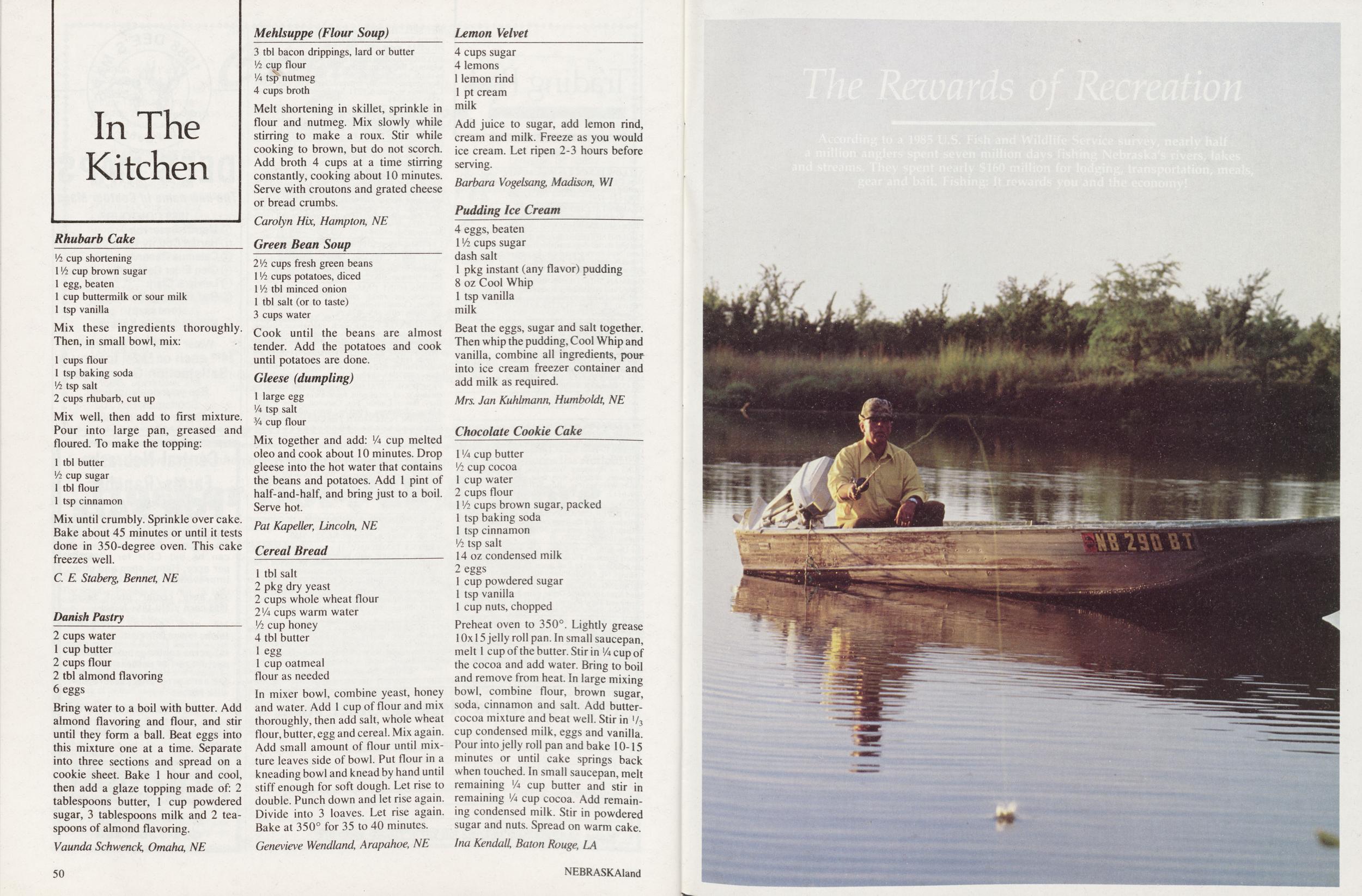
In The Kitchen
Rhubarb Cake Vi cup shortening 1 Vi cup brown sugar 1 egg, beaten 1 cup buttermilk or sour milk 1 tsp vanillaMix these ingredients thoroughly. Then, in small bowl, mix:
1 cups flour 1 tsp baking soda Vi tsp salt 2 cups rhubarb, cut upMix well, then add to first mixture. Pour into large pan, greased and floured. To make the topping:
1 tbl butter Vi cup sugar 1 tbl flour 1 tsp cinnamonMix until crumbly. Sprinkle over cake. Bake about 45 minutes or until it tests done in 350-degree oven. This cake freezes well.
C E Staberg, Bennet, NE Danish Pastry 2 cups water 1 cup butter 2 cups flour 2 tbl almond flavoring 6 eggsBring water to a boil with butter. Add almond flavoring and flour, and stir until they form a ball. Beat eggs into this mixture one at a time. Separate into three sections and spread on a cookie sheet. Bake 1 hour and cool, then add a glaze topping made of: 2 tablespoons butter, 1 cup powdered sugar, 3 tablespoons milk and 2 teaspoons of almond flavoring.
Vaunda Schwenck, Omaha, NE Mehlsuppe (Flour Soup) 3 tbl bacon drippings, lard or butter Vi cup flour Va tsp nutmeg 4 cups brothMelt shortening in skillet, sprinkle in flour and nutmeg. Mix slowly while stirring to make a roux. Stir while cooking to brown, but do not scorch. Add broth 4 cups at a time stirring constantly, cooking about 10 minutes. Serve with croutons and grated cheese or bread crumbs.
Carolyn Hix, Hampton, NE Green Bean Soup IVi cups fresh green beans 1 Vi cups potatoes, diced 1 Vi tbl minced onion 1 tbl salt (or to taste) 3 cups waterCook until the beans are almost tender. Add the potatoes and cook until potatoes are done.
Gleese (dumpling) 1 large egg lA tsp salt 3A cup flourMix together and add: lA cup melted oleo and cook about 10 minutes. Drop gleese into the hot water that contains the beans and potatoes. Add 1 pint of half-and-half, and bring just to a boil. Serve hot.
Pat Kapeller, Lincoln, NE Cereal Bread 1 tbl salt 2 pkg dry yeast 2 cups whole wheat flour 2 1/4 cups warm water Vi cup honey 4 tbl butter 1 egg 1 cup oatmeal flour as neededIn mixer bowl, combine yeast, honey and water. Add 1 cup of flour and mix thoroughly, then add salt, whole wheat flour, butter, egg and cereal. Mix again. Add small amount of flour until mixture leaves side of bowl. Put flour in a kneading bowl and knead by hand until stiff enough for soft dough. Let rise to double. Punch down and let rise again. Divide into 3 loaves. Let rise again. Bake at 350° for 35 to 40 minutes.
Genevieve Wendland, Arapahoe, NE Lemon Velvet 4 cups sugar 4 lemons 1 lemon rind 1 pt cream milkAdd juice to sugar, add lemon rind, cream and milk. Freeze as you would ice cream. Let ripen 2-3 hours before serving.
Barbara Vogelsang, Madison, WI Pudding Ice Cream 4 eggs, beaten 1 Vi cups sugar dash salt 1 pkg instant (any flavor) pudding 8 oz Cool Whip 1 tsp vanilla milkBeat the eggs, sugar and salt together. Then whip the pudding, Cool Whip and vanilla, combine all ingredients, pouf into ice cream freezer container and add milk as required.
Mrs. Jan Kuhlmann, Humboldt, NE Chocolate Cookie Cake 1 Va cup butter Vi cup cocoa 1 cup water 2 cups flour 1 !/2 cups brown sugar, packed 1 tsp baking soda 1 tsp cinnamon Vi tsp salt 14 oz condensed milk 2 eggs 1 cup powdered sugar 1 tsp vanilla 1 cup nuts, choppedPreheat oven to 350°. Lightly grease 1 Ox 15 jelly roll pan. In small saucepan, melt 1 cup of the butter. Stir in Va cup of the cocoa and add water. Bring to boil and remove from heat. In large mixing bowl, combine flour, brown sugar, soda, cinnamon and salt. Add butter-cocoa mixture and beat well. Stir in V3 cup condensed milk, eggs and vanilla. Pour into jelly roll pan and bake 10-15 minutes or until cake springs back when touched. In small saucepan, melt remaining Va cup butter and stir in remaining Va cup cocoa. Add remaining condensed milk. Stir in powdered sugar and nuts. Spread on warm cake.
Ina Kendall, Baton Rouge, LA 50 NEBRASKAland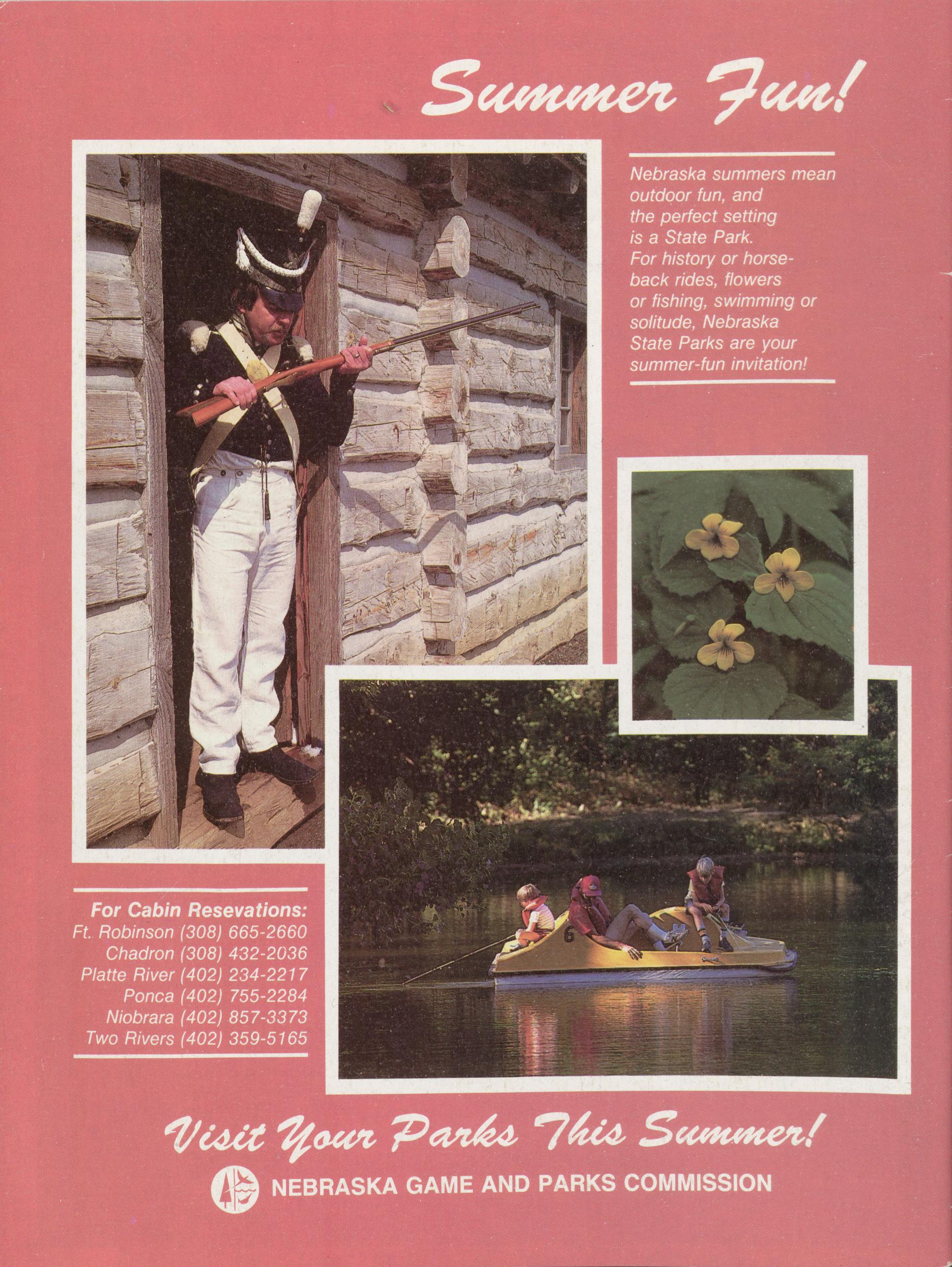
Summer Fun!
Position: 387 (25 views)