Volume 66, Issue 8, 1988
NEBRASKAland
OCTOBER 1988 $1/50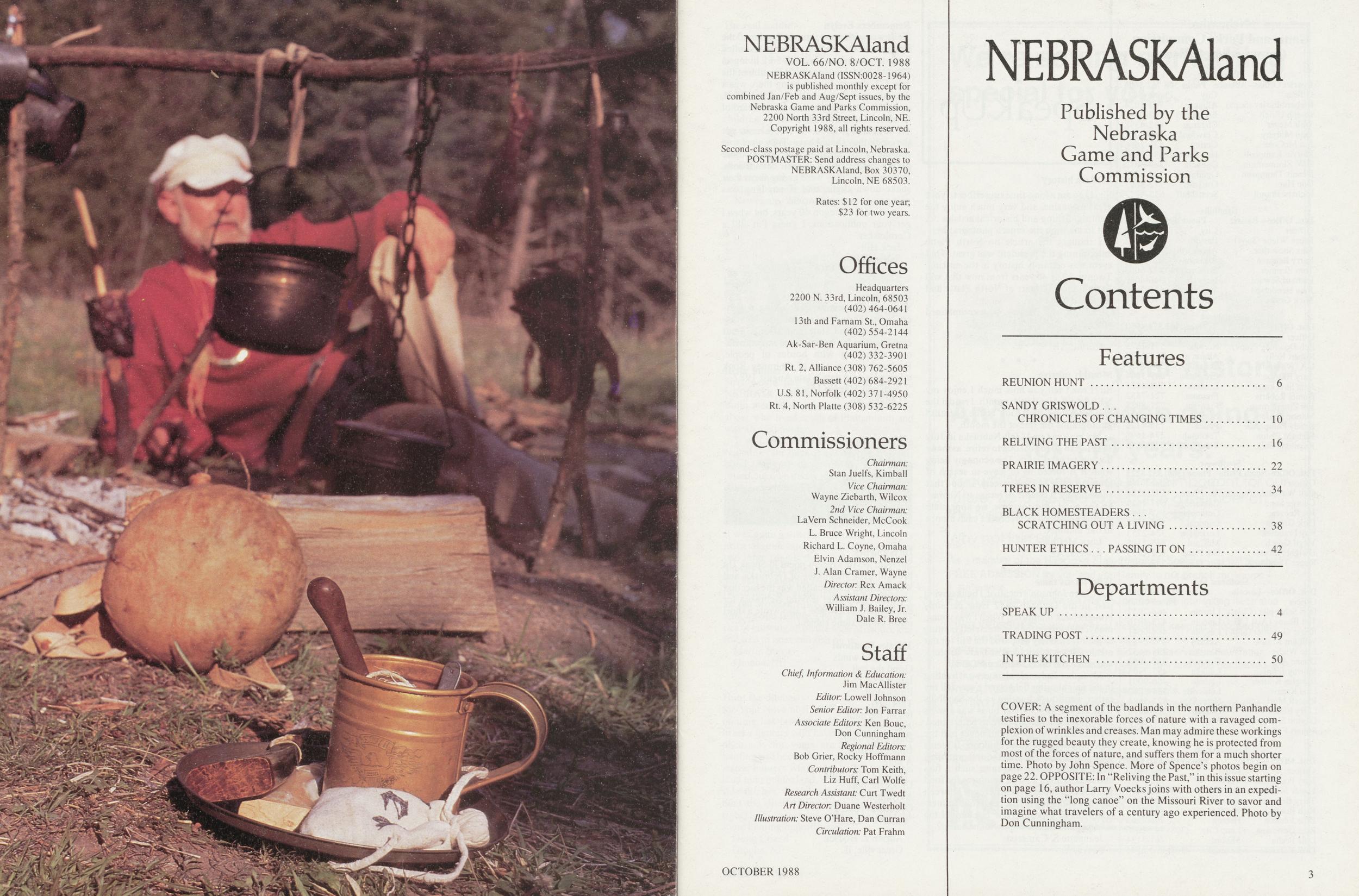
NEBRASKAland
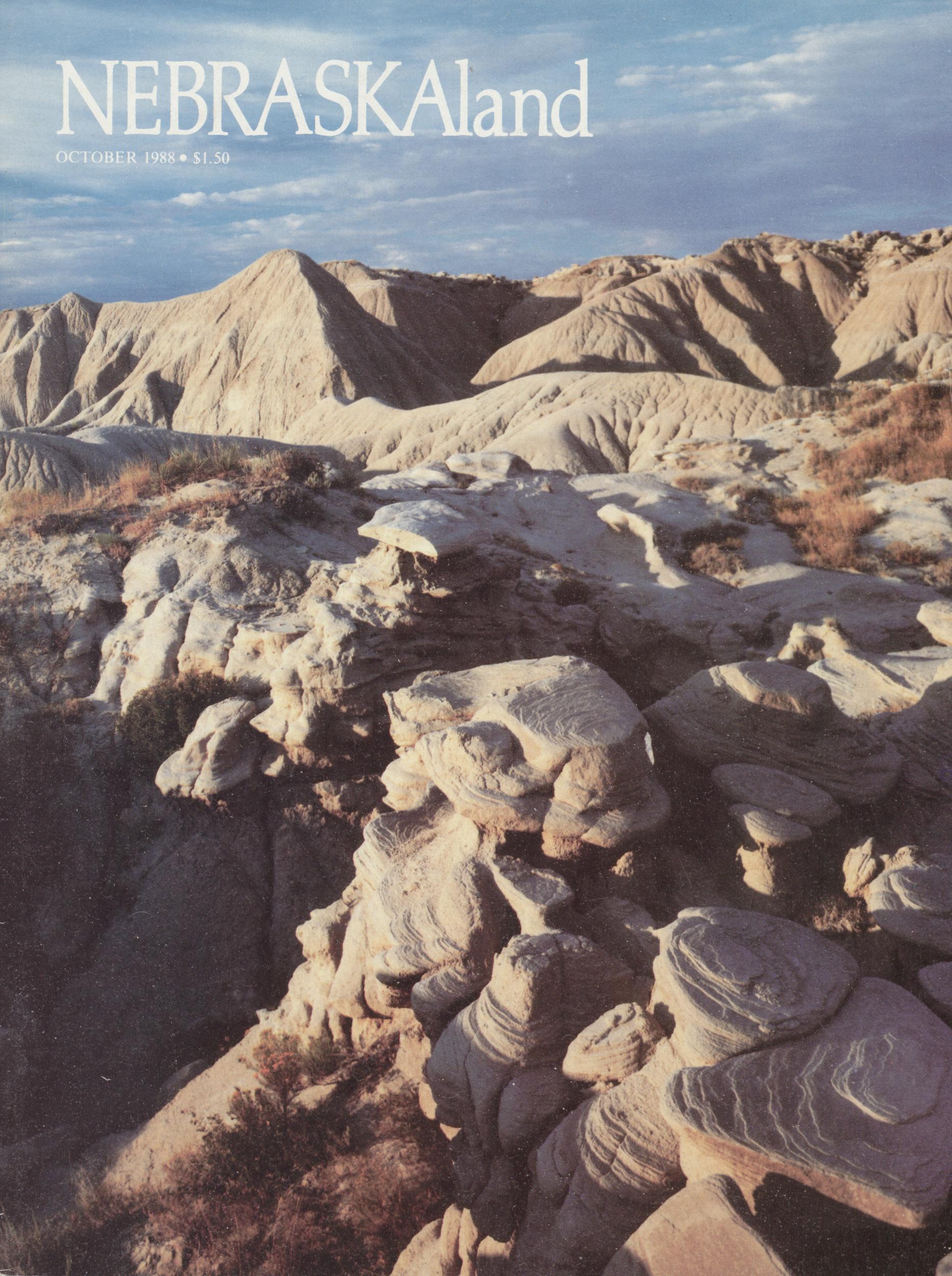
Published by the Nebraska Game and Parks Commission NEBRASKAland VOL. 66/NO. 8/OCT. 1988 NEBRASKAland (ISSN:0028-1964) is published monthly except for combined Jan/Feb and Aug/Sept issues, by the Nebraska Game and Parks Commission, 2200 North 33rd Street, Lincoln, NE. Copyright 1988, all rights reserved. Second-class postage paid at Lincoln, Nebraska. POSTMASTER: Send address changes to NEBRASKAland, Box 30370, Lincoln, NE 68503. Rates: $ 12 for one year; $23 for two years. Offices Headquarters 2200 N. 33rd, Lincoln, 68503 (402)464-0641 13th and Farnam St., Omaha (402)554-2144 Ak-Sar-Ben Aquarium, Gretna (402)332-3901 Rt. 2, Alliance (308) 762-5605 Bassett (402) 684-2921 U.S. 81, Norfolk (402) 371-4950 Rt. 4, North Platte (308) 532-6225 Commissioners Chairman: Stan Juelfs, Kimball Vice Chairman: Wayne Ziebarth, Wilcox 2nd Vice Chairman: LaVern Schneider, McCook L. Bruce Wright, Lincoln Richard L. Coyne, Omaha Elvin Adamson, Nenzel J. Alan Cramer, Wayne Director: Rex Amack Assistant Directors: William J. Bailey, Jr. Dale R. Bree Staff S**£t$T*5 Chief, Information & Education: Jim MacAllister Editor: Lowell Johnson Senior Editor: Jon Farrar Associate Editors: Ken Bouc, Don Cunningham Regional Editors: Bob Grier, Rocky Hoffmann Contributors: Tom Keith, Liz Huff, Carl Wolfe Research Assistant: Curt Twedt Art Director: Duane Westerholt Illustration: Steve O'Hare, Dan Curran Circulation: Pat Frahm Contents Features REUNION HUNT .................................. 6 SANDY GRISWOLD . . . CHRONICLES OF CHANGING TIMES............ 10 RELIVING THE PAST.............................. 16 PRAIRIE IMAGERY................................22 BLACK HOMESTEADERS ... SCRATCHING OUT A LIVING...................38 HUNTER ETHICS . . . PASSING IT ON...............42 Departments SPEAK UP........................................ 4 TRADING POST...................................49 COVER: A segment of the badlands in the northern Panhandle testifies to the inexorable forces of nature with a ravaged complexion of wrinkles and creases. Man may admire these workings for the rugged beauty they create, knowing he is protected from most of the forces of nature, and suffers them for a much shorter time. Photo by John Spence. More of Spence's photos begin on page 22. OPPOSITE: In "Reliving the Past," in this issue starting on page 16, author Larry Voecks joins with others in an expedition using the "long canoe" on the Missouri River to savor and imagine what travelers of a century ago experienced. Photo by Don Cunningham. OCTOBER 1988 3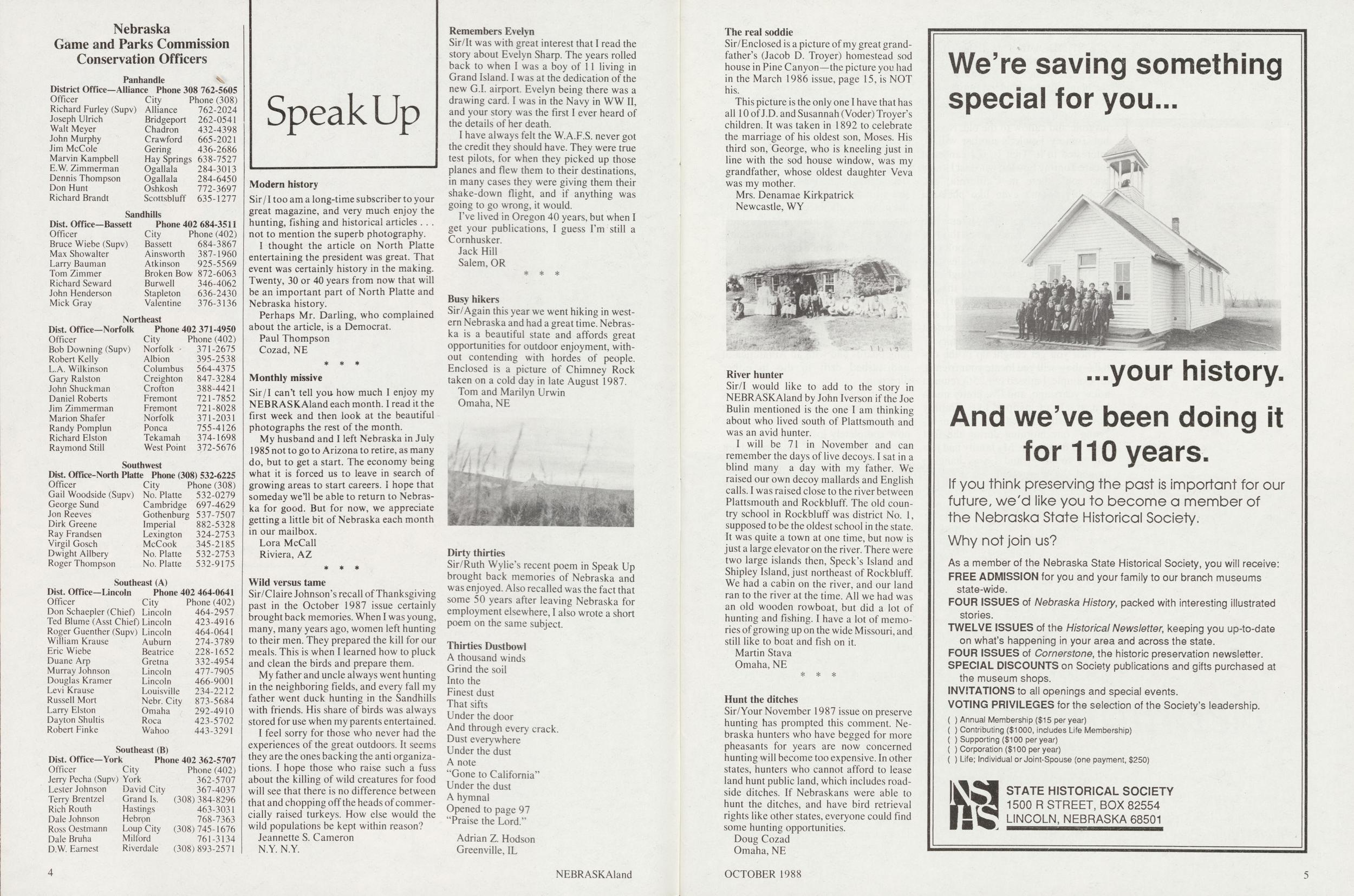
Nebraska Game and Parks Commission Conservation Officers
Panhandle ^ District Office—Alliance Phone 308 762-5605 Officer City Phone(308) Richard Furley (Supv) Alliance 762-2024 Joseph Ulrich Bridgeport 262-0541 Walt Meyer Chadron 432-4398 John Murphy Crawford 665-2021 Jim McCole Gering 436-2686 Marvin Kampbell Hay Spring s 638-7527 E.W. Zimmerman Ogallala 284-3013 Dennis Thompson Ogallala 284-6450 Don Hunt Oshkosh 772-3697 Richard Brandt Scottsbluff 635-1277 Sandhills Dist. Office—Bassett Phone 402 684-3511 Officer City Phone(402) Bruce Wiebe (Supv) Bassett 684-3867 Max Showalter Ainsworth 387-1960 Larry Bauman Atkinson 925-5569 Tom Zimmer Broken Bow 872-6063 Richard Seward Burwell 346-4062 John Henderson Stapleton 636-2430 Mick Gray Valentine 376-3136 Northeast Dist. Office—Norfolk Phone 402 371-4950 Officer City Phone(402) Bob Downing (Supv) Norfolk - 371-2675 Robert Kelly Albion 395-2538 L.A. Wilkinson Columbus 564-4375 Gary Ralston Creighton 847-3284 John Shuckman Crofton 388-4421 Daniel Roberts Fremont 721-7852 Jim Zimmerman Fremont 721-8028 Marion Shafer Norfolk 371-2031 Randy Pomplun Ponca 755-4126 Richard Elston Tekamah 374-1698 Raymond Still West Point 372-5676 Southwest Dist. Office-North Platte Phone (308) 532-6225 Officer City Phone (308) Gail Woodside (Supv) No. Platte 532-0279 George Sund Cambridge 697-4629 Jon Reeves Gothenburg 537-7507 Dirk Greene Imperial 882-5328 Ray Frandsen Lexington 324-2753 Virgil Gosch McCook 345-2185 Dwight Ailbery No. Platte 532-2753 Roger Thompson No. Platte 532-9175 Southeast (A) Dist. Office—Lincoln Phone 402 464-0641 Officer City Phone (402) Don Schaepler (ChieD Lincoln 464-2957 Ted Blume (Asst Chief) Lincoln 423-4916 Roger Guenther (Supv) Lincoln 464-0641 William Krause Auburn 274-3789 Eric Wiebe Beatrice 228-1652 Duane Arp Gretna 332-4954 Murray Johnson Lincoln 477-7905 Douglas Kramer Lincoln 466-9001 Levi Krause Louisville 234-2212 Russell Mort Nebr. City 873-5684 Larry Elston Omaha 292-4910 Dayton Shultis Roca 423-5702 Robert Finke Wahoo 443-3291 Southeast (B) Dist. Office—York Phone 402 362-5707 Officer City Phone (402) Jerry Pecha (Supv) York 362-5707 Lester Johnson David City 367-4037 Terry Brentzel Grand Is. (308) 384-8296 RichRouth Hastings 463-3031 Dale Johnson Hebron 768-7363 Ross Oestmann Loup City (308) 745-1676 Dale Bruha Milford 761 -3134 D W. Earnest Riverdale (308) 893-2571Speak Up
Modern historySir /1 too am a long-time subscriber to your great magazine, and very much enjoy the hunting, fishing and historical articles . . . not to mention the superb photography.
I thought the article on North Platte entertaining the president was great. That event was certainly history in the making. Twenty, 30 or 40 years from now that will be an important part of North Platte and Nebraska history.
Perhaps Mr. Darling, who complained about the article, is a Democrat.
Paul Thompson Cozad, NE * * * Monthly missiveSir/I can't tell you how much I enjoy my NEBRASKAland each month. I read it the first week and then look at the beautiful photographs the rest of the month.
My husband and I left Nebraska in July 1985 not to go to Arizona to retire, as many do, but to get a start. The economy being what it is forced us to leave in search of growing areas to start careers. I hope that someday we'll be able to return to Nebraska for good. But for now, we appreciate getting a little bit of Nebraska each month in our mailbox.
Lora McCall Riviera, AZ * * * Wild versus tameSir/Claire Johnson's recall of Thanksgiving past in the October 1987 issue certainly brought back memories. When I was young, many, many years ago, women left hunting to their men. They prepared the kill for our meals. This is when I learned how to pluck and clean the birds and prepare them.
My father and uncle always went hunting in the neighboring fields, and every fall my father went duck hunting in the Sandhills with friends. His share of birds was always stored for use when my parents entertained.
I feel sorry for those who never had the experiences of the great outdoors. It seems they are the ones backing the anti organizations. I hope those who raise such a fuss about the killing of wild creatures for food will see that there is no difference between that and chopping off the heads of commercially raised turkeys. How else would the wild populations be kept within reason?
Jeannette S. Cameron N.Y. N.Y. Remembers EvelynSir/It was with great interest that I read the story about Evelyn Sharp. The years rolled back to when I was a boy of 11 living in Grand Island. I was at the dedication of the new G.I. airport. Evelyn being there was a drawing card. I was in the Navy in WW II, and your story was the first I ever heard of the details of her death.
I have always felt the W.A.F.S. never got the credit they should have. They were true test pilots, for when they picked up those planes and flew them to their destinations, in many cases they were giving them their shake-down flight, and if anything was going to go wrong, it would.
I've lived in Oregon 40 years, but when I get your publications, I guess I'm still a Cornhusker.
Jack Hill Salem, OR * * * Busy hikersSir/ Again this year we went hiking in western Nebraska and had a great time. Nebraska is a beautiful state and affords great opportunities for outdoor enjoyment, without contending with hordes of people. Enclosed is a picture of Chimney Rock taken on a cold day in late August 1987.
Tom and Marilyn Urwin Omaha, NESir/Ruth Wylie's recent poem in Speak Up brought back memories of Nebraska and was enjoyed. Also recalled was the fact that some 50 years after leaving Nebraska for employment elsewhere, I also wrote a short poem on the same subject.
Thirties Dustbowl A thousand winds Grind the soil Into the Finest dust That sifts Under the door And through every crack. Dust everywhere Under the dust A note "Gone to California" Under the dust A hymnal Opened to page 97 "Praise the Lord." Adrian Z. Hodson Greenville, IL 4 NEBRASKAland The real soddieSir/Enclosed is a picture of my great grandfather's (Jacob D. Troyer) homestead sod house in Pine Canyon—the picture you had in the March 1986 issue, page 15, is NOT his.
This picture is the only one I have that has all 10 of J.D. and Susannah (Voder) Troyer's children. It was taken in 1892 to celebrate the marriage of his oldest son, Moses. His third son, George, who is kneeling just in line with the sod house window, was my grandfather, whose oldest daughter Veva was my mother.
Mrs. Denamae Kirkpatrick Newcastle, WYSir/I would like to add to the story in NEBRASKAland by John Iverson if the Joe Bulin mentioned is the one I am thinking about who lived south of Plattsmouth and was an avid hunter.
I will be 71 in November and can remember the days of live decoys. I sat in a blind many a day with my father. We raised our own decoy mallards and English calls. I was raised close to the river between Plattsmouth and Rockbluff. The old country school in Rockbluff was district No. 1, supposed to be the oldest school in the state. It was quite a town at one time, but now is just a large elevator on the river. There were two large islands then, Speck's Island and Shipley Island, just northeast of Rockbluff. We had a cabin on the river, and our land ran to the river at the time. All we had was an old wooden rowboat, but did a lot of hunting and fishing. I have a lot of memories of growing up on the wide Missouri, and still like to boat and fish on it.
Martin Stava Omaha, NE * * * Hunt the ditchesSir/Your November 1987 issue on preserve hunting has prompted this comment. Nebraska hunters who have begged for more pheasants for years are now concerned hunting will become too expensive. In other states, hunters who cannot afford to lease land hunt public land, which includes roadside ditches. If Nebraskans were able to hunt the ditches, and have bird retrieval rights like other states, everyone could find some hunting opportunities.
Doug Cozad Omaha, NE We're saving something special for you... ...your history. And we've been doing it for 110 years. If you think preserving the past is important for our future, we'd like you to become a member of the Nebraska State Historical Society. Why not join us? As a member of the Nebraska State Historical Society, you will receive: FREE ADMISSION for you and your family to our branch museums state-wide. FOUR ISSUES of Nebraska History, packed with interesting illustrated stories. TWELVE ISSUES of the Historical Newsletter, keeping you up-to-date on what's happening in your area and across the state. FOUR ISSUES of Cornerstone, the historic preservation newsletter. SPECIAL DISCOUNTS on Society publications and gifts purchased at the museum shops. INVITATIONS to all openings and special events. VOTING PRIVILEGES for the selection of the Society's leadership. ( ) Annual Membership ($15 per year) ( ) Contributing ($1000, includes Life Membership) ( ) Supporting ($100 per year) ( ) Corporation ($100 per year) ( ) Life; Individual or Joint-Spouse (one payment, $250) STATE HISTORICAL SOCIETY 1500 R STREET, BOX 82554 LINCOLN, NEBRASKA 68501 OCTOBER 1988 5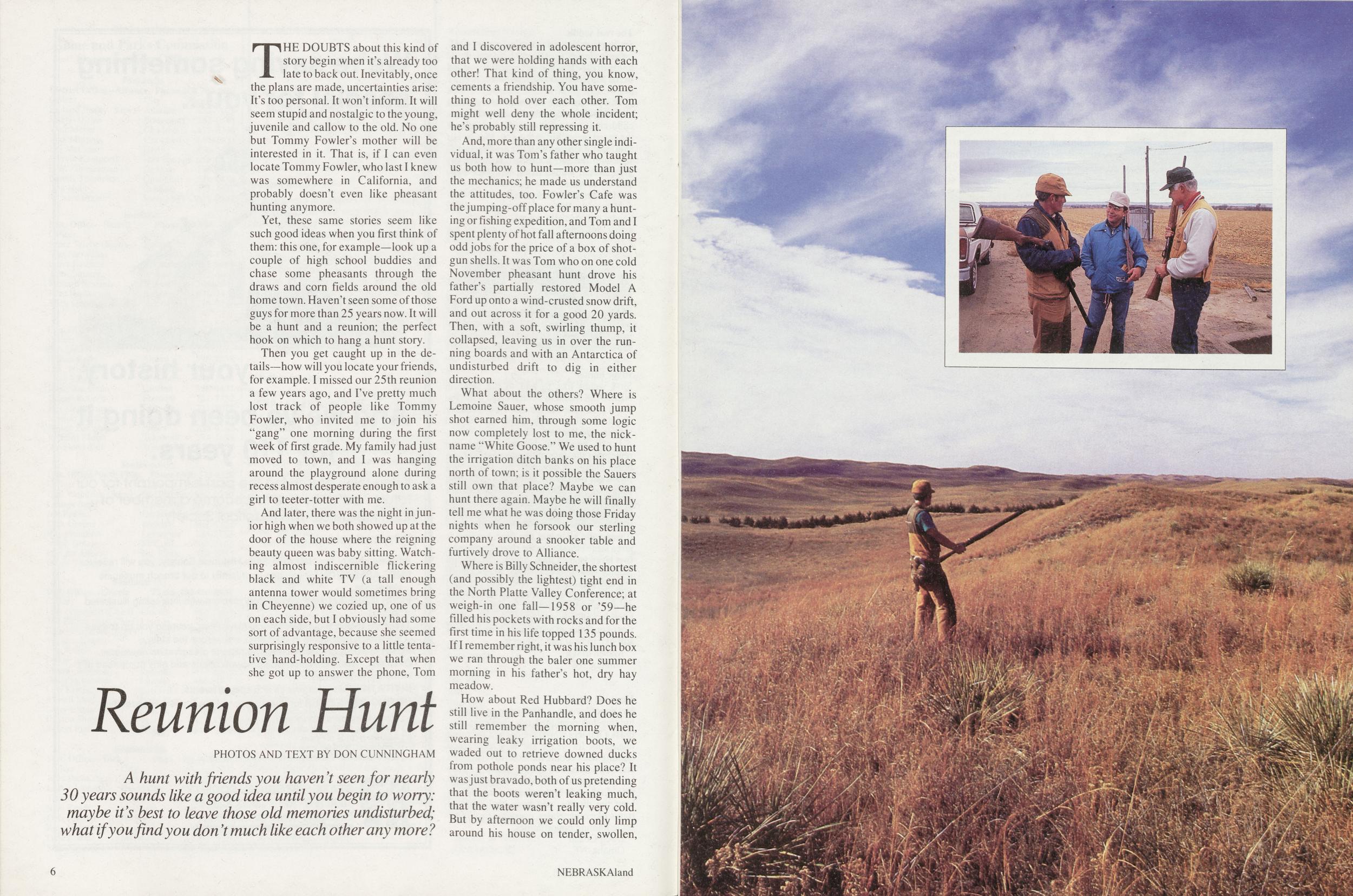
Reunion Hunt
PHOTOS AND TEXT BY DON CUNNINGHAM A hunt with friends you haven Y seen for nearly 30 years sounds like a good idea until you begin to worry: maybe it's best to leave those old memories undisturbed; what if you find you don Y much like each other any more?THE DOUBTS about this kind of story begin when it's already too late to back out. Inevitably, once the plans are made, uncertainties arise: It's too personal. It won't inform. It will seem stupid and nostalgic to the young, juvenile and callow to the old. No one but Tommy Fowler's mother will be interested in it. That is, if I can even locate Tommy Fowler, who last I knew was somewhere in California, and probably doesn't even like pheasant hunting anymore.
Yet, these same stories seem like such good ideas when you first think of them: this one, for example—look up a couple of high school buddies and chase some pheasants through the draws and corn fields around the old home town. Haven't seen some of those guys for more than 25 years now. It will be a hunt and a reunion; the perfect hook on which to hang a hunt story.
Then you get caught up in the details—how will you locate your friends, for example. I missed our 25th reunion a few years ago, and I've pretty much lost track of people like Tommy Fowler, who invited me to join his "gang" one morning during the first week of first grade. My family had just moved to town, and I was hanging around the playground alone during recess almost desperate enough to ask a girl to teeter-totter with me.
And later, there was the night in junior high when we both showed up at the door of the house where the reigning beauty queen was baby sitting. Watching almost indiscernible flickering black and white TV (a tall enough antenna tower would sometimes bring in Cheyenne) we cozied up, one of us on each side, but I obviously had some sort of advantage, because she seemed surprisingly responsive to a little tentative hand-holding. Except that when she got up to answer the phone, Tom and I discovered in adolescent horror, that we were holding hands with each other! That kind of thing, you know, cements a friendship. You have something to hold over each other. Tom might well deny the whole incident; he's probably still repressing it.
And, more than any other single individual, it was Tom's father who taught us both how to hunt—more than just the mechanics; he made us understand the attitudes, too. Fowler's Cafe was the jumping-off place for many a hunting or fishing expedition, and Tom and I spent plenty of hot fall afternoons doing odd jobs for the price of a box of shotgun shells. It was Tom who on one cold November pheasant hunt drove his father's partially restored Model A Ford up onto a wind-crusted snow drift, and out across it for a good 20 yards. Then, with a soft, swirling thump, it collapsed, leaving us in over the running boards and with an Antarctica of undisturbed drift to dig in either direction.
What about the others? Where is Lemoine Sauer, whose smooth jump shot earned him, through some logic now completely lost to me, the nickname "White Goose." We used to hunt the irrigation ditch banks on his place north of town; is it possible the Sauers still own that place? Maybe we can hunt there again. Maybe he will finally tell me what he was doing those Friday nights when he forsook our sterling company around a snooker table and furtively drove to Alliance.
Where is Billy Schneider, the shortest (and possibly the lightest) tight end in the North Platte Valley Conference; at weigh-in one fall—1958 or '59—he filled his pockets with rocks and for the first time in his life topped 135 pounds. If I remember right, it was his lunch box we ran through the baler one summer morning in his father's hot, dry hay meadow.
How about Red Hubbard? Does he still live in the Panhandle, and does he still remember the morning when, wearing leaky irrigation boots, we waded out to retrieve downed ducks from pothole ponds near his place? It was just bravado, both of us pretending that the boots weren't leaking much, that the water wasn't really very cold. But by afternoon we could only limp around his house on tender, swollen, 6 NEBRASKAland
 bright red feet, feeling heroic and
invincible while his father cooked
pancakes for us.
bright red feet, feeling heroic and
invincible while his father cooked
pancakes for us.
Where is Gary Hersh, who perfected the art of the one-hour, before-school pheasant hunt, a blitzkrieg in a blue Volkswagen with no defrosters. One morning, we also mastered—well, not mastered, really, but got kind of good at—the art of rolling Bull Durham cigarettes behind the glacial windshield of that car.
And what about . . . ? You see the problem: logistics and nostalgia supercede common sense, and you start making phone calls.
The girl who answered at the high school office said yes, of course, they kept records of alumni addresses. What year did my friends graduate? Then, in ill-disguised horror, "Oh— 1960—oh! I don't think our records go back that far!"
She probably didn't mean it the way it sounded. I'm probably oversensitive, and besides, I should have thought of directory assistance in the first place. The Fowlers still had a listing, and when his mother answered the phone she sounded just like she did in 1960.
Tom sounded much the same too, when I called him in Omaha, where he'd been living since his retirement from the Air Force (wait a minute . . . retirement? One of my classmates is retired? Maybe the girl at the high school was right after all!). Anyway he thought a reunion pheasant hunt was a pretty good idea, too.
So did Lemoine, now living on the home place, and teaching history and phyced in Gering. And he said he'd call Billy, and Red Hubbard, and whoever else he could locate. This could be fun.
Except for the doubts; doubts about the story, yes, but also others, deeper, less obvious, but maybe more important: We might not like each other anymore. Maybe it would be best to leave these high school memories undisturbed, and never test them against adult reality. Let's face it; all of us might have grown up into jerks.
There we'd be, coercing our middle-aged thighs through the sunflowers and sandburs around some vacant farm place, cursing the weather, cursing the 8 NEBRSAKAland weeds, cursing the barbed wire, blaming bad ammo for missed shots, and flinging mental imprecations at each other while smiling fatuous, empty smiles, making hearty middle-aged jokes, and exchanging the half-lies that almost strangers use to tell each other what they've been doing for the last 25 years.
But on the phone it didn't sound as if it would be like that, and we made plans for opening weekend—plans that included leaving a day early; why drive west on highway 2 without making time for at least a little grouse shooting in the Sandhills?
There's nothing like 250 miles in a car to renew an old acquaintance, and by the time we pulled into the motel in Thedford, it seemed perfectly normal for Tom Fowler and me to be headed off somewhere with a couple of shotguns.
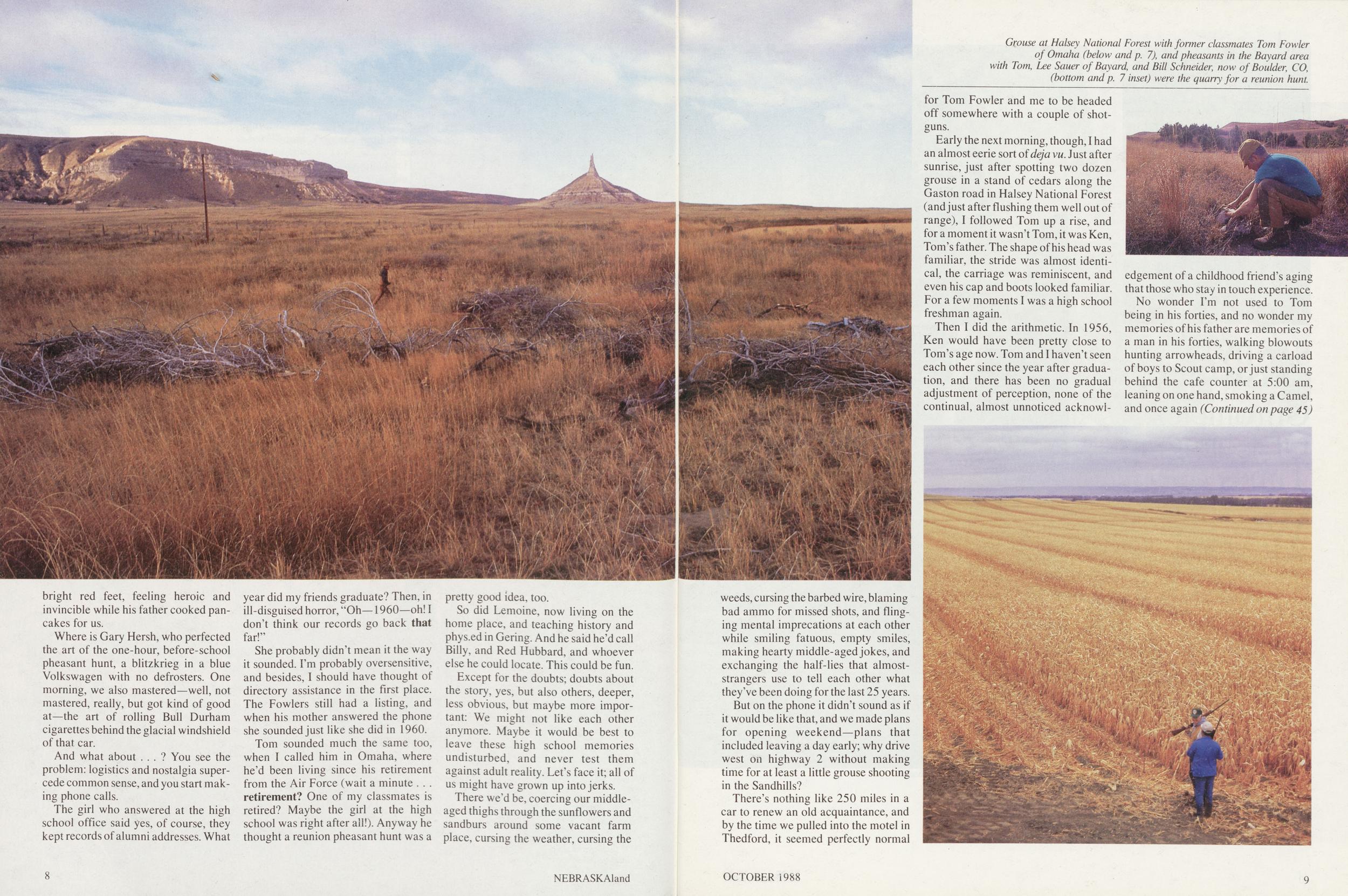
Early the next morning, though, I had an almost eerie sort of deja vu. Just after sunrise, just after spotting two dozen grouse in a stand of cedars along the Gaston road in Halsey National Forest (and just after flushing them well out of range), I followed Tom up a rise, and for a moment it wasn't Tom, it was Ken, Tom's father. The shape of his head was familiar, the stride was almost identical, the carriage was reminiscent, and even his cap and boots looked familiar. For a few moments I was a high school freshman again.
Then I did the arithmetic. In 1956, Ken would have been pretty close to Tom's age now. Tom and I haven't seen each other since the year after graduation, and there has been no gradual adjustment of perception, none of the continual, almost unnoticed acknowledgement of a childhood friend's aging that those who stay in touch experience.
No wonder I'm not used to Tom being in his forties, and no wonder my memories of his father are memories of a man in his forties, walking blowouts hunting arrowheads, driving a carload of boys to Scout camp, or just standing behind the cafe counter at 5:00 am, leaning on one hand, smoking a Camel, and once again (Continued on page 45)
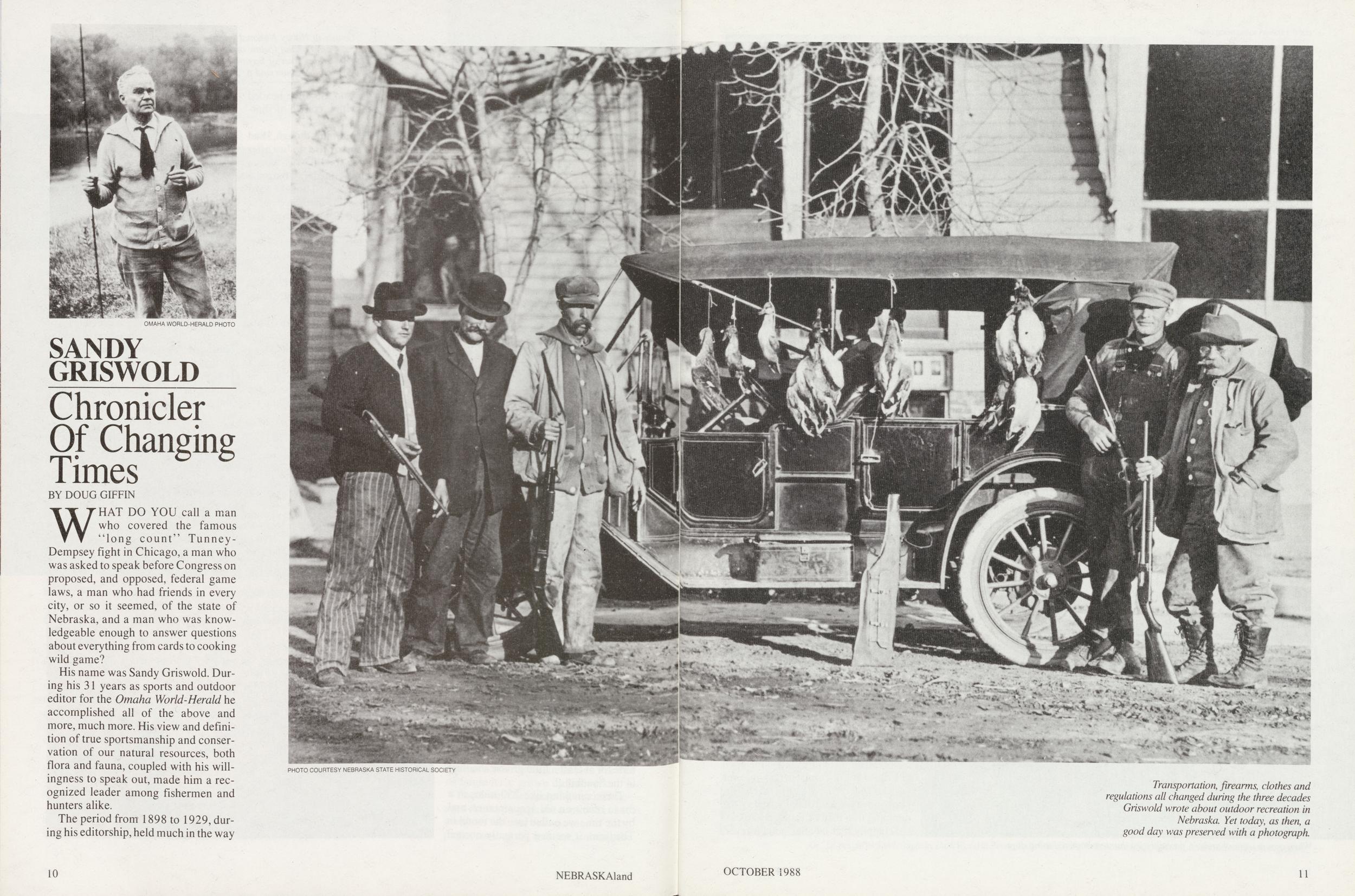
SANDY GRISWOLD Chronicler Of Changing Times
BY DOUG GIFFINWHAT DO YOU call a man who covered the famous "long count" Tunney- Dempsey fight in Chicago, a man who was asked to speak before Congress on proposed, and opposed, federal game laws, a man who had friends in every city, or so it seemed, of the state of Nebraska, and a man who was knowledgeable enough to answer questions about everything from cards to cooking wild game?
His name was Sandy Griswold. During his 31 years as sports and outdoor editor for the Omaha World-Herald he accomplished all of the above and more, much more. His view and definition of true sportsmanship and conservation of our natural resources, both flora and fauna, coupled with his willingness to speak out, made him a recognized leader among fishermen and hunters alike.
The period from 1898 to 1929, during his editorship, held much in the way of change for wildlife and those who pursued it. Those changes came not only in declining game populations, but in sportsmen's attitudes and regulations. Sandy Griswold chronicled and helped shape those regulations, and must have played an important role in influencing their acceptance among his readers.
10 NEBRASKAland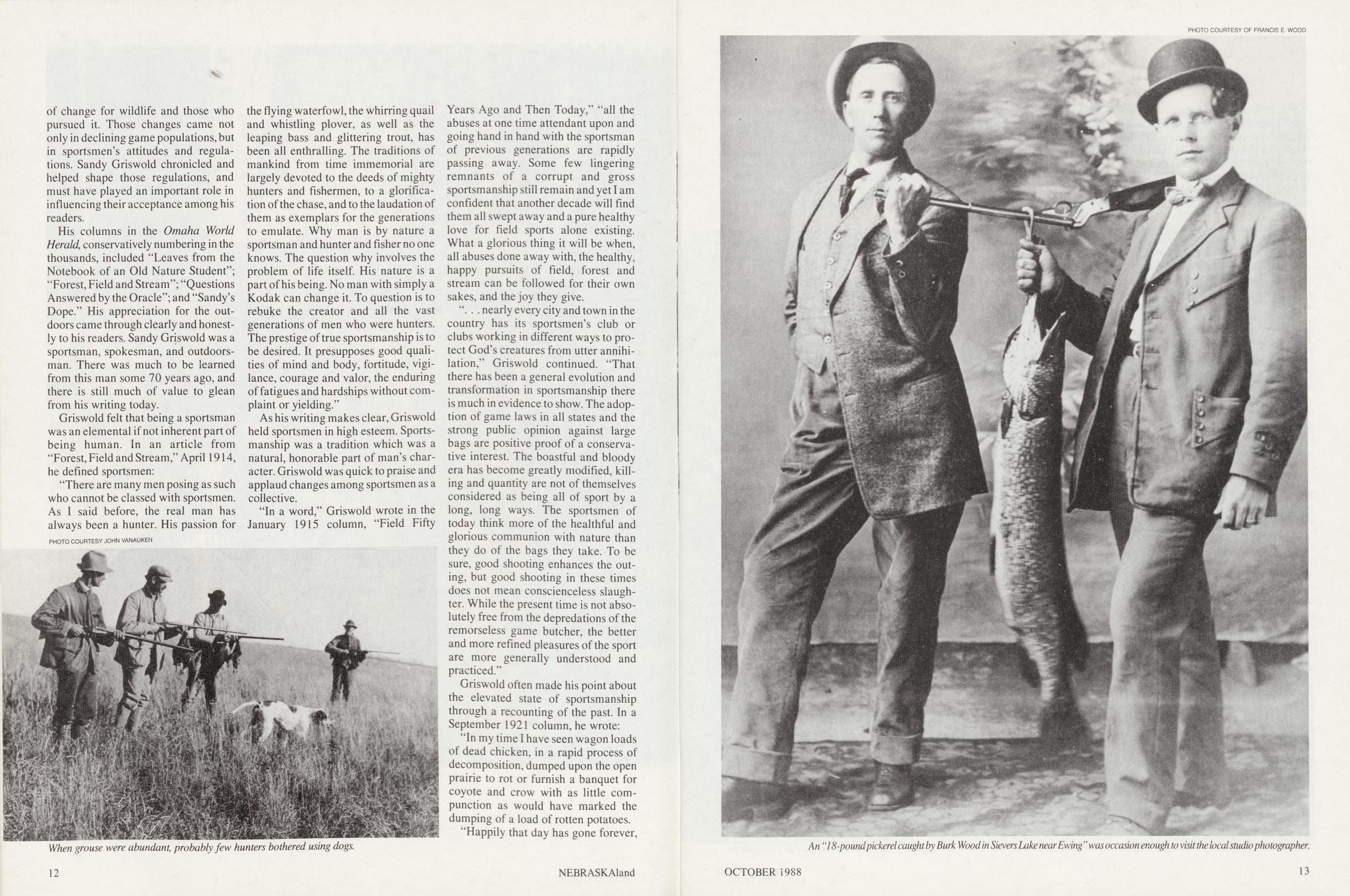
His columns in the Omaha World Herald, conservatively numbering in the thousands, included "Leaves from the Notebook of an Old Nature Student"; "Forest, Field and Stream"; "Questions Answered by the Oracle"; and "Sandy's Dope." His appreciation for the outdoors came through clearly and honestly to his readers. Sandy Griswold was a sportsman, spokesman, and outdoorsman. There was much to be learned from this man some 70 years ago, and there is still much of value to glean from his writing today.
Griswold felt that being a sportsman was an elemental if not inherent part of being human. In an article from "Forest, Field and Stream," April 1914, he defined sportsmen:
"There are many men posing as such who cannot be classed with sportsmen. As I said before, the real man has always been a hunter. His passion for the flying waterfowl, the whirring quail and whistling plover, as well as the leaping bass and glittering trout, has been all enthralling. The traditions of mankind from time immemorial are largely devoted to the deeds of mighty hunters and fishermen, to a glorification of the chase, and to the laudation of them as exemplars for the generations to emulate. Why man is by nature a sportsman and hunter and fisher no one knows. The question why involves the problem of life itself. His nature is a part of his being. No man with simply a Kodak can change it. To question is to rebuke the creator and all the vast generations of men who were hunters. The prestige of true sportsmanship is to be desired. It presupposes good qualities of mind and body, fortitude, vigilance, courage and valor, the enduring of fatigues and hardships without complaint or yielding."
As his writing makes clear, Griswold held sportsmen in high esteem. Sportsmanship was a tradition which was a natural, honorable part of man's character. Griswold was quick to praise and applaud changes among sportsmen as a collective.
"In a word," Griswold wrote in the January 1915 column, "Field Fifty Years Ago and Then Today," "all the abuses at one time attendant upon and going hand in hand with the sportsman of previous generations are rapidly passing away. Some few lingering remnants of a corrupt and gross sportsmanship still remain and yet I am confident that another decade will find them all swept away and a pure healthy love for field sports alone existing. What a glorious thing it will be when, all abuses done away with, the healthy, happy pursuits of field, forest and stream can be followed for their own sakes, and the joy they give.
". . . nearly every city and town in the country has its sportsmen's club or clubs working in different ways to protect God's creatures from utter annihilation," Griswold continued. "That there has been a general evolution and transformation in sportsmanship there is much in evidence to show. The adoption of game laws in all states and the strong public opinion against large bags are positive proof of a conservative interest. The boastful and bloody era has become greatly modified, killing and quantity are not of themselves considered as being all of sport by a long, long ways. The sportsmen of today think more of the healthful and glorious communion with nature than they do of the bags they take. To be sure, good shooting enhances the outing, but good shooting in these times does not mean conscienceless slaughter. While the present time is not absolutely free from the depredations of the remorseless game butcher, the better and more refined pleasures of the sport are more generally understood and practiced."
Griswold often made his point about the elevated state of sportsmanship through a recounting of the past. In a September 1921 column, he wrote:
Tn my time I have seen wagon loads of dead chicken, in a rapid process of decomposition, dumped upon the open prairie to rot or furnish a banquet for coyote and crow with as little compunction as would have marked the dumping of a load of rotten potatoes.
"Happily that day has gone forever, for so radical has been the evolution of sportsmanship, from bad to good, that it is doubtful if such a criminating act would be perpetuated in any section or by any man, however calloused to the true ethics of the sport."
12 NEBRASKAland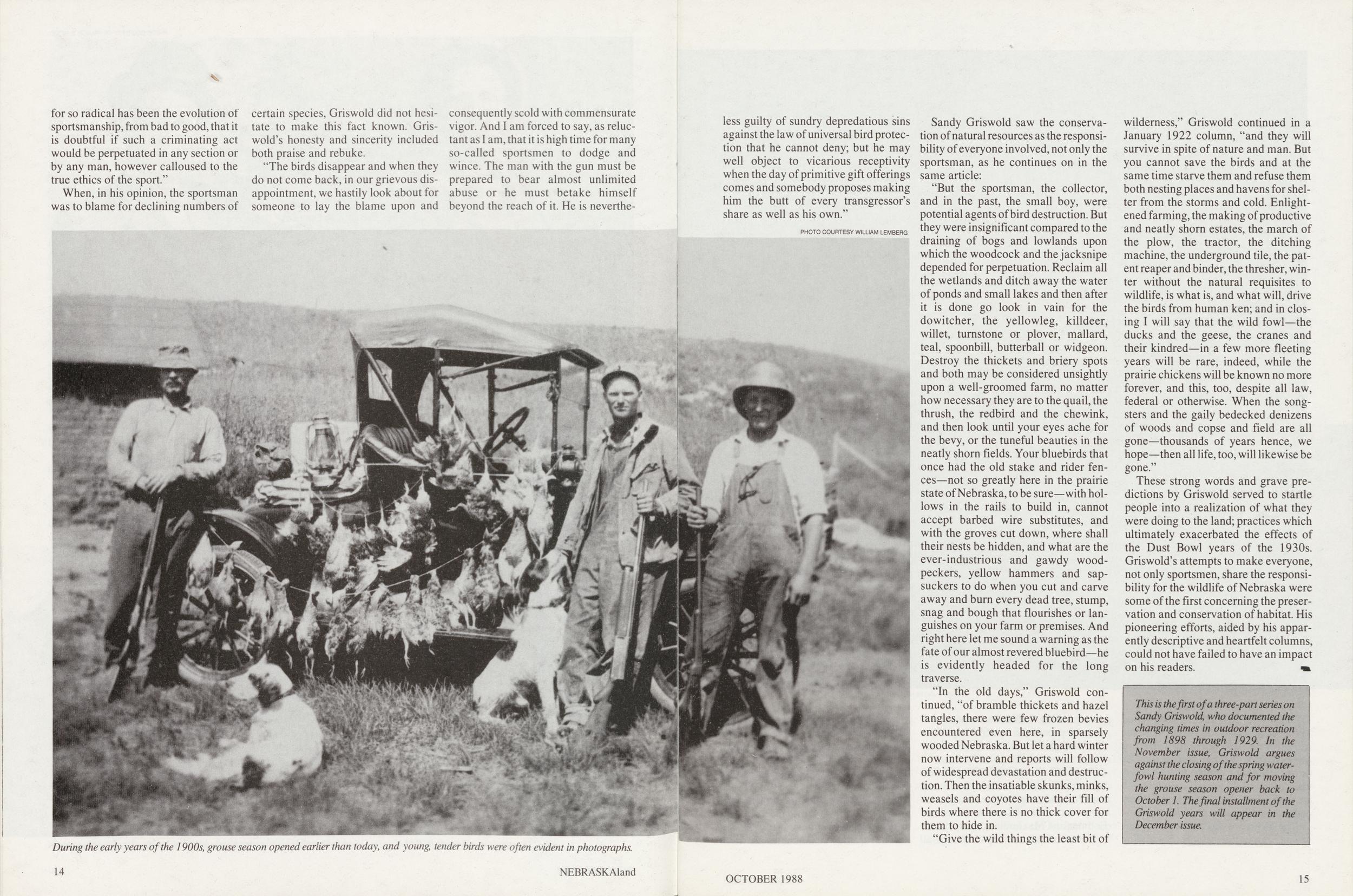
When, in his opinion, the sportsman was to blame for declining numbers of certain species, Griswold did not hesitate to make this fact known. Griswold's honesty and sincerity included both praise and rebuke.
"The birds disappear and when they do not come back, in our grievous disappointment, we hastily look about for someone to lay the blame upon and consequently scold with commensurate vigor. And I am forced to say, as reluctant as I am, that it is high time for many so-called sportsmen to dodge and wince. The man with the gun must be prepared to bear almost unlimited abuse or he must betake himself beyond the reach of it. He is nevertheless 14 NEBRASKAland guilty of sundry depredatious sins against the law of universal bird protection that he cannot deny; but he may well object to vicarious receptivity when the day of primitive gift offerings comes and somebody proposes making him the butt of every transgressor's share as well as his own."
Sandy Griswold saw the conservation of natural resources as the responsibility of everyone involved, not only the sportsman, as he continues on in the same article:
"But the sportsman, the collector, and in the past, the small boy, were potential agents of bird destruction. But they were insignificant compared to the draining of bogs and lowlands upon which the woodcock and the jacksnipe depended for perpetuation. Reclaim all the wetlands and ditch away the water of ponds and small lakes and then after it is done go look in vain for the dowitcher, the yellow leg, killdeer, willet, turnstone or plover, mallard, teal, spoonbill, butterball or widgeon. Destroy the thickets and briery spots and both may be considered unsightly upon a well-groomed farm, no matter how necessary they are to the quail, the thrush, the redbird and the chewink, and then look until your eyes ache for the bevy, or the tuneful beauties in the neatly shorn fields. Your bluebirds that once had the old stake and rider fences—not so greatly here in the prairie state of Nebraska, to be sure—with hollows in the rails to build in, cannot accept barbed wire substitutes, and with the groves cut down, where shall their nests be hidden, and what are the ever-industrious and gawdy wood- peckers, yellow hammers and sap suckers to do when you cut and carve away and burn every dead tree, stump, snag and bough that flourishes or languishes on your farm or premises. And right here let me sound a warning as the fate of our almost revered bluebird—he is evidently headed for the long traverse.
"In the old days," Griswold continued, "of bramble thickets and hazel tangles, there were few frozen bevies encountered even here, in sparsely wooded Nebraska. But let a hard winter now intervene and reports will follow of widespread devastation and destruction. Then the insatiable skunks, minks, weasels and coyotes have their fill of birds where there is no thick cover for them to hide in.
"Give the wild things the least bit of wilderness," Griswold continued in a January 1922 column, "and they will survive in spite of nature and man. But you cannot save the birds and at the same time starve them and refuse them both nesting places and havens for shelter from the storms and cold. Enlightened farming, the making of productive and neatly shorn estates, the march of the plow, the tractor, the ditching machine, the underground tile, the patent reaper and binder, the thresher, winter without the natural requisites to wildlife, is what is, and what will, drive the birds from human ken; and in closing I will say that the wild fowl—the ducks and the geese, the cranes and their kindred—in a few more fleeting years will be rare, indeed, while the prairie chickens will be known no more forever, and this, too, despite all law, federal or otherwise. When the songsters and the gaily bedecked denizens of woods and copse and field are all gone—thousands of years hence, we hope—then all life, too, will likewise be gone."
These strong words and grave pre- dictions by Griswold served to startle people into a realization of what they were doing to the land; practices which ultimately exacerbated the effects of the Dust Bowl years of the 1930s. Griswold's attempts to make everyone, not only sportsmen, share the responsibility for the wildlife of Nebraska were some of the first concerning the preservation and conservation of habitat. His pioneering efforts, aided by his apparently descriptive and heartfelt columns, could not have failed to have an impact on his readers.
This is the first of a three-part series on Sandy Griswold, who documented the changing times in outdoor recreation from 1898 through 1929. In the November issue, Griswold argues against the closing of the spring waterfowl hunting season and for moving the grouse season opener back to October 1. The final installment of the Griswold years will appear in the December issue. OCTOBER 1988 15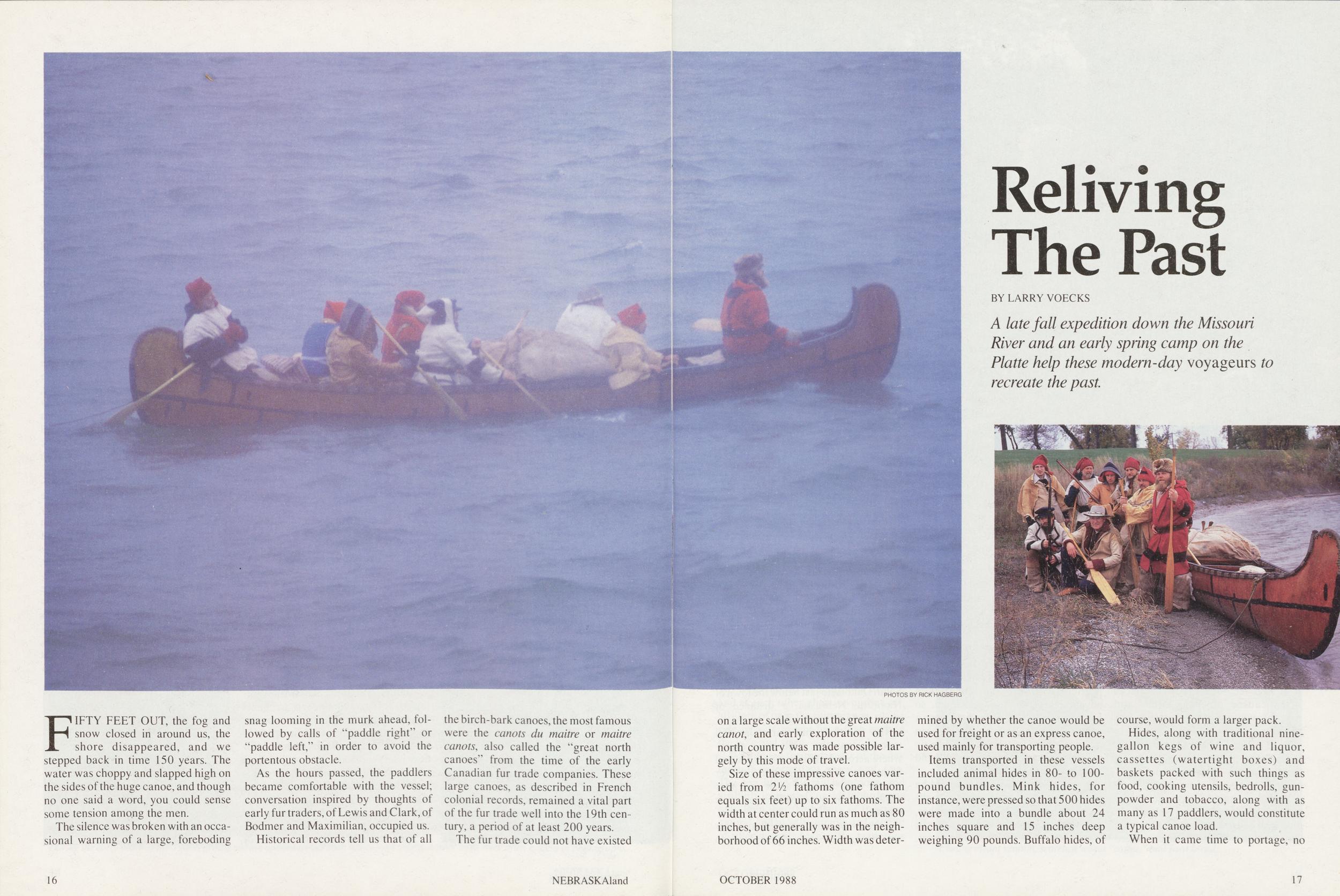
Reliving The Past
BY LARRY VOECKS A late fall expedition down the Missouri River and an early spring camp on the Platte help these modern-day voyageurs to recreate the pastFIFTY FEET OUT, the fog and snow closed in around us, the shore disappeared, and we stepped back in time 150 years. The water was choppy and slapped high on the sides of the huge canoe, and though no one said a word, you could sense some tension among the men.
The silence was broken with an occasional warning of a large, foreboding snag looming in the murk ahead, followed by calls of "paddle right" or "paddle left," in order to avoid the portentous obstacle.
As the hours passed, the paddlers became comfortable with the vessel; conversation inspired by thoughts of early fur traders, of Lewis and Clark, of Bodmer and Maximilian, occupied us.
Historical records tell us that of all the birch-bark canoes, the most famous were the canots du maitre or maitre canots, also called the "great north canoes" from the time of the early Canadian fur trade companies. These large canoes, as described in French colonial records, remained a vital part of the fur trade well into the 19th century, a period of at least 200 years.
The fur trade could not have existed 16 NEBRASKAland on a large scale without the great maitre cannot, and early exploration of the north country was made possible largely by this mode of travel.
Size of these impressive canoes varied from 2Vi fathoms (one fathom equals six feet) up to six fathoms. The width at center could run as much as 80 inches, but generally was in the neighborhood of 66 inches. Width was determined by whether the canoe would be used for freight or as an express canoe, used mainly for transporting people.
Items transported in these vessels included animal hides in 80- to 100-pound bundles. Mink hides, for instance, were pressed so that 500 hides were made into a bundle about 24 inches square and 15 inches deep weighing 90 pounds. Buffalo hides, of course, would form a larger pack.
Hides, along with traditional nine-gallon kegs of wine and liquor, cassettes (watertight boxes) and baskets packed with such things as food, cooking utensils, bedrolls, gunpowder and tobacco, along with as many as 17 paddlers, would constitute a typical canoe load.
When it came time to portage, no self-respecting voyageur would carry less than two bundles of at least 180 pounds, as it would be disgraceful to be weak.
OCTOBER 1988 17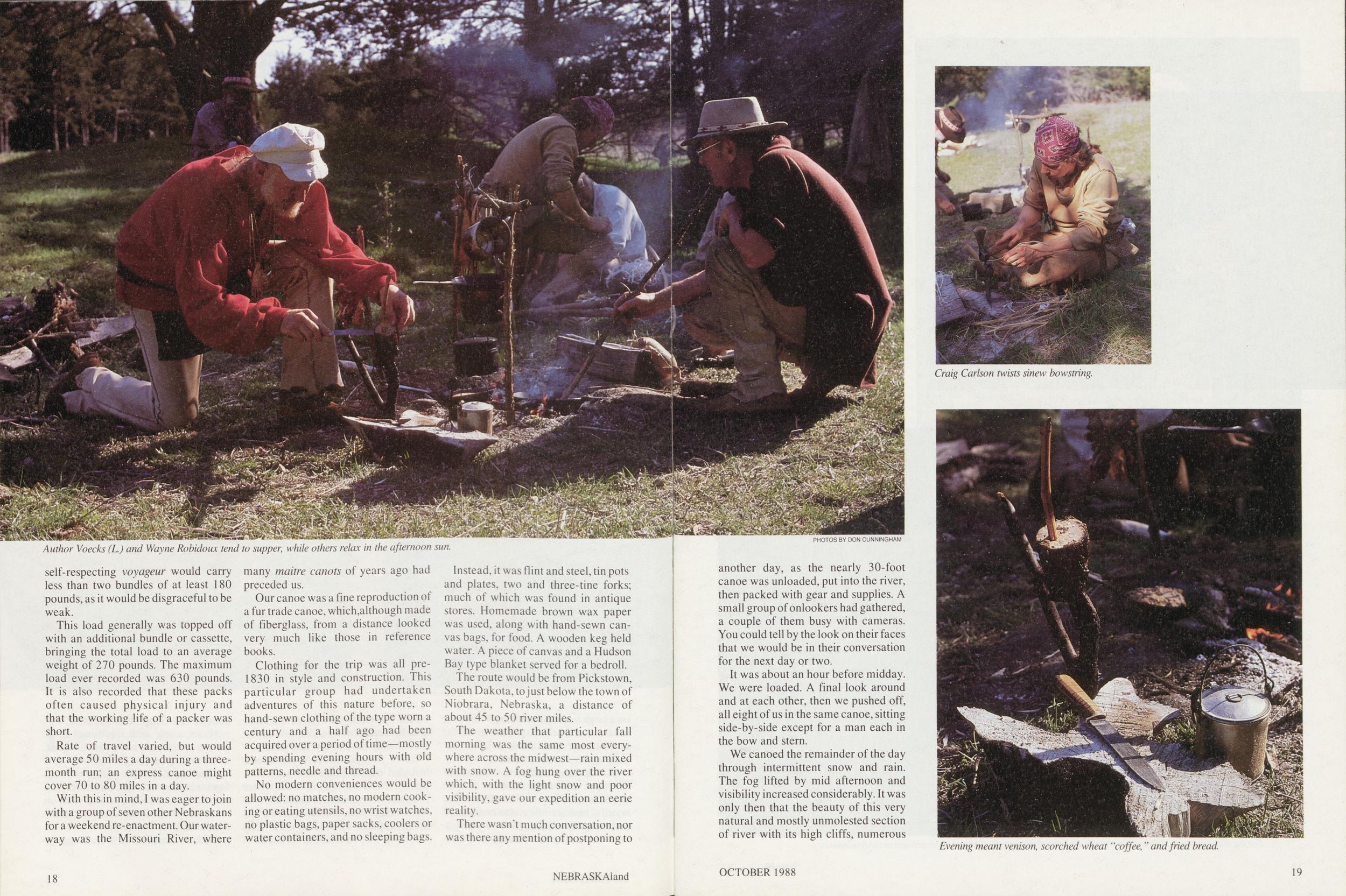
This load generally was topped off with an additional bundle or cassette, bringing the total load to an average weight of 270 pounds. The maximum load ever recorded was 630 pounds. It is also recorded that these packs often caused physical injury and that the working life of a packer was short.
Rate of travel varied, but would average 50 miles a day during a three month run; an express canoe might cover 70 to 80 miles in a day.
With this in mind, I was eager to join with a group of seven other Nebraskans for a weekend re-enactment. Our waterway was the Missouri River, where many maitre canots of years ago had preceded us.
Our canoe was a fine reproduction of a fur trade canoe, which although made of fiberglass, from a distance looked very much like those in reference books.
Clothing for the trip was all pre-1830 in style and construction. This particular group had undertaken adventures of this nature before, so hand-sewn clothing of the type worn a century and a half ago had been acquired over a period of time—mostly by spending evening hours with old patterns, needle and thread.
No modern conveniences would be allowed: no matches, no modern cooking or eating utensils, no wrist watches, no plastic bags, paper sacks, coolers or water containers, and no sleeping bags.
Instead, it was flint and steel, tin pots and plates, two and three-tine forks; much of which was found in antique stores. Homemade brown wax paper was used, along with hand-sewn can- vas bags, for food. A wooden keg held water. A piece of canvas and a Hudson Bay type blanket served for a bedroll.
The route would be from Pickstown, South Dakota, to just below the town of Niobrara, Nebraska, a distance of about 45 to 50 river miles.
The weather that particular fall morning was the same most everywhere across the midwest—rain mixed with snow. A fog hung over the river which, with the light snow and poor visibility, gave our expedition an eerie reality.
There wasn't much conversation, nor was there any mention of postponing to 18 NEBRASKAland another day, as the nearly 30-foot canoe was unloaded, put into the river, then packed with gear and supplies. A small group of onlookers had gathered, a couple of them busy with cameras. You could tell by the look on their faces that we would be in their conversation for the next day or two.
It was about an hour before midday. We were loaded. A final look around and at each other, then we pushed off, all eight of us in the same canoe, sitting side-by-side except for a man each in the bow and stern.
We canoed the remainder of the day through intermittent snow and rain. The fog lifted by mid afternoon and visibility increased considerably. It was only then that the beauty of this very natural and mostly unmolested section of river with its high cliffs, numerous islands and wetlands, became known to us. We were happy to be a part of it.
OCTOBER 1988 19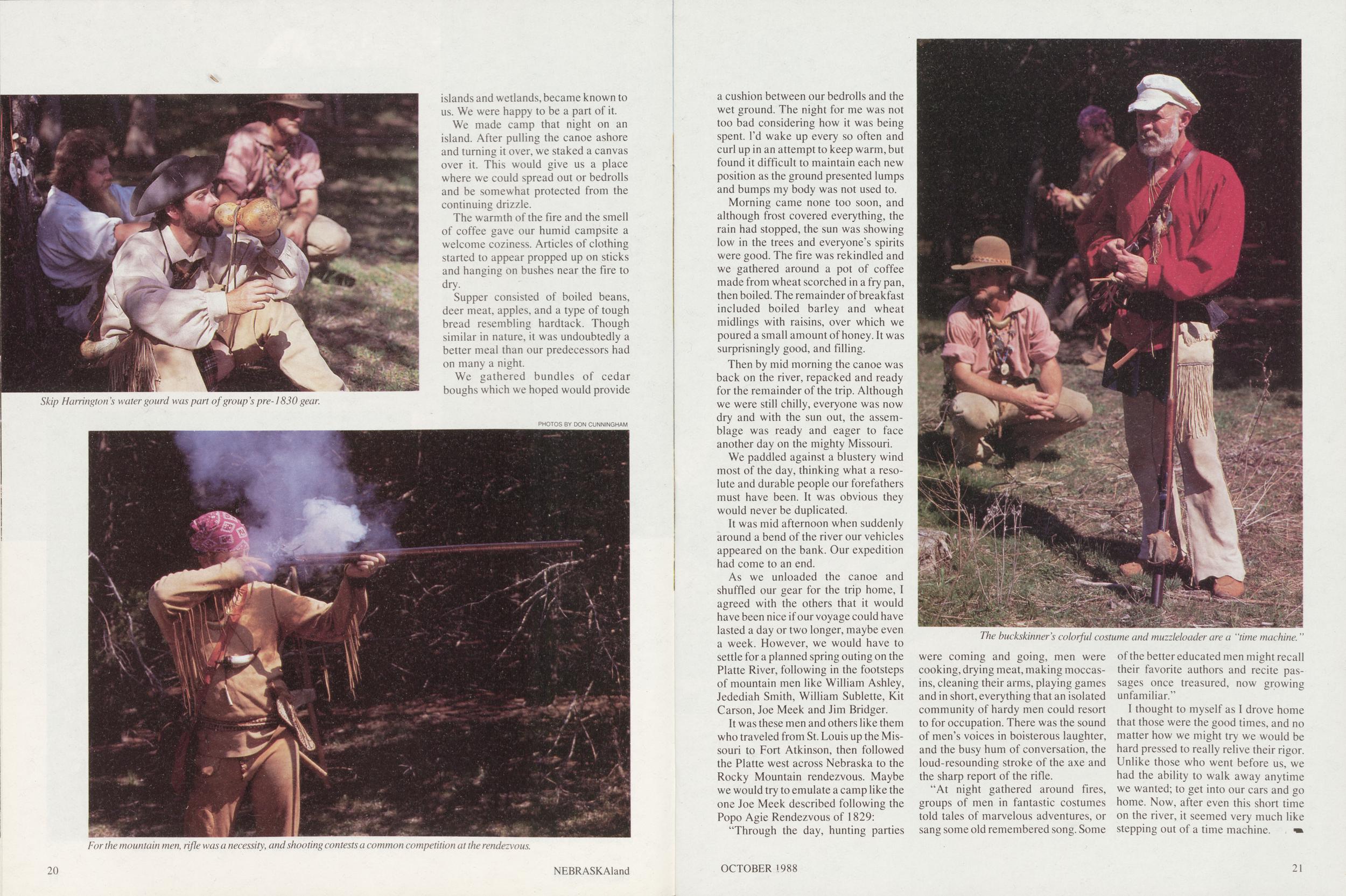
We made camp that night on an island. After pulling the canoe ashore and turning it over, we staked a canvas over it. This would give us a place where we could spread out or bedrolls and be somewhat protected from the continuing drizzle.
The warmth of the fire and the smell of coffee gave our humid campsite a welcome coziness. Articles of clothing started to appear propped up on sticks and hanging on bushes near the fire to dry.
Supper consisted of boiled beans, deer meat, apples, and a type of tough bread resembling hardtack. Though similar in nature, it was undoubtedly a better meal than our predecessors had on many a night.
We gathered bundles of cedar boughs which we hoped would provide 20 NEBRASKAland a cushion between our bedrolls and the wet ground. The night for me was not too bad considering how it was being spent. I'd wake up every so often and curl up in an attempt to keep warm, but found it difficult to maintain each new position as the ground presented lumps and bumps my body was not used to.
Morning came none too soon, and although frost covered everything, the rain had stopped, the sun was showing low in the trees and everyone's spirits were good. The fire was rekindled and we gathered around a pot of coffee made from wheat scorched in a fry pan, then boiled. The remainder of breakfast included boiled barley and wheat midlings with raisins, over which we poured a small amount of honey. It was surprisingly good, and filling.
Then by mid morning the canoe was back on the river, repacked and ready for the remainder of the trip. Although we were still chilly, everyone was now dry and with the sun out, the assemblage was ready and eager to face another day on the mighty Missouri.
We paddled against a blustery wind most of the day, thinking what a resolute and durable people our forefathers must have been. It was obvious they would never be duplicated.
It was mid afternoon when suddenly around a bend of the river our vehicles appeared on the bank. Our expedition had come to an end.
As we unloaded the canoe and shuffled our gear for the trip home, I agreed with the others that it would have been nice if our voyage could have lasted a day or two longer, maybe even a week. However, we would have to settle for a planned spring outing on the Platte River, following in the footsteps of mountain men like William Ashley, Jedediah Smith, William Sublette, Kit Carson, Joe Meek and Jim Bridger.
It was these men and others like them who traveled from St. Louis up the Missouri to Fort Atkinson, then followed the Platte west across Nebraska to the Rocky Mountain rendezvous. Maybe we would try to emulate a camp like the one Joe Meek described following the Popo Agie Rendezvous of 1829:
'Through the day, hunting parties were coming and going, men were cooking, drying meat, making moccasins, cleaning their arms, playing games and in short, everything that an isolated community of hardy men could resort to for occupation. There was the sound of men's voices in boisterous laughter, and the busy hum of conversation, the loud-resounding stroke of the axe and the sharp report of the rifle.
"At night gathered around fires, groups of men in fantastic costumes told tales of marvelous adventures, or sang some old remembered song. Some of the better educated men might recall their favorite authors and recite passages once treasured, now growing unfamiliar."
I thought to myself as I drove home that those were the good times, and no matter how we might try we would be hard pressed to really relive their rigor. Unlike those who went before us, we had the ability to walk away anytime we wanted; to get into our cars and go home. Now, after even this short time on the river, it seemed very much like stepping out of a time machine.
OCTOBER 1988 21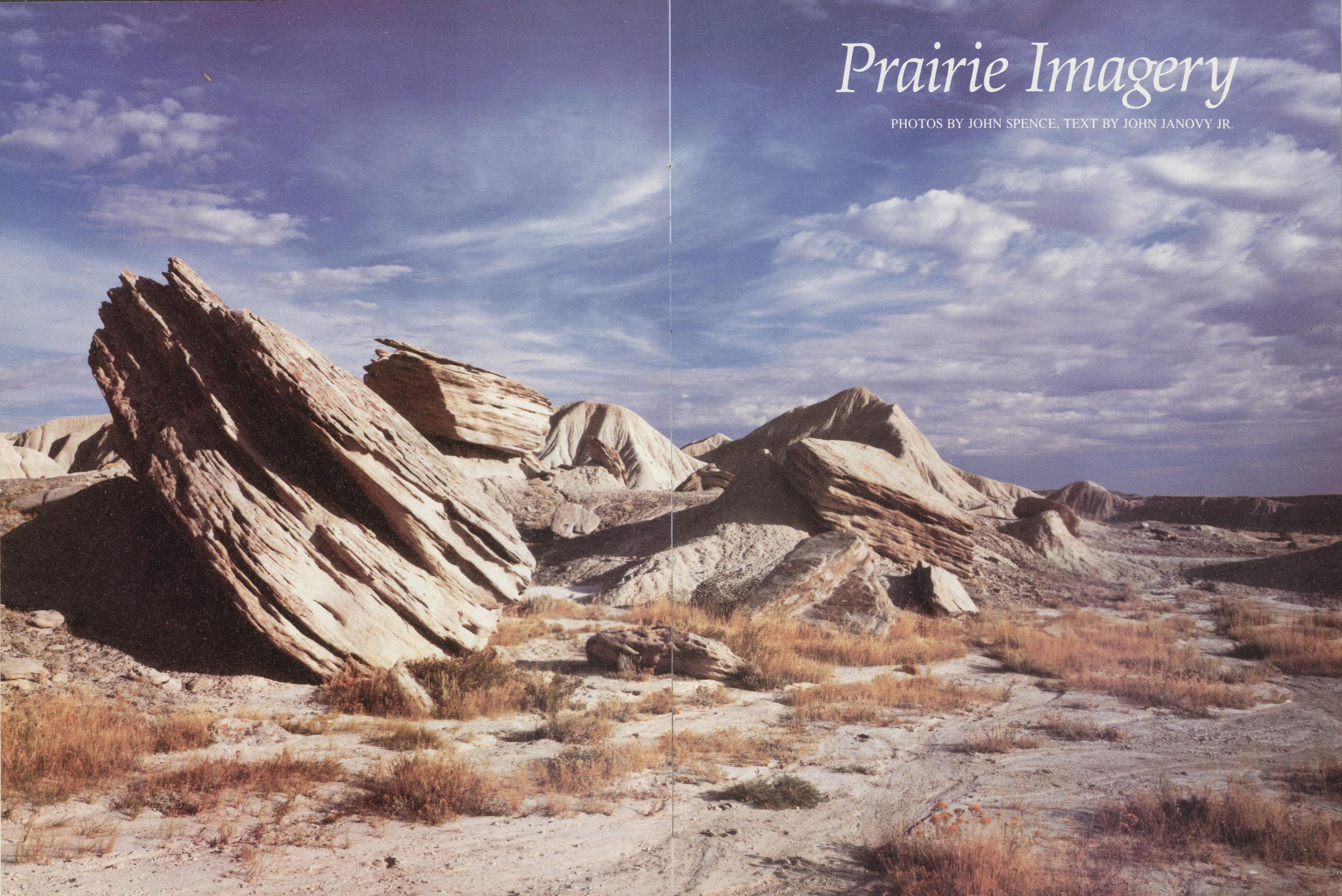
Prairie Imagery
PHOTOS BY JOHN SPENCE, TEXT BY JOHN JANOVY JR.
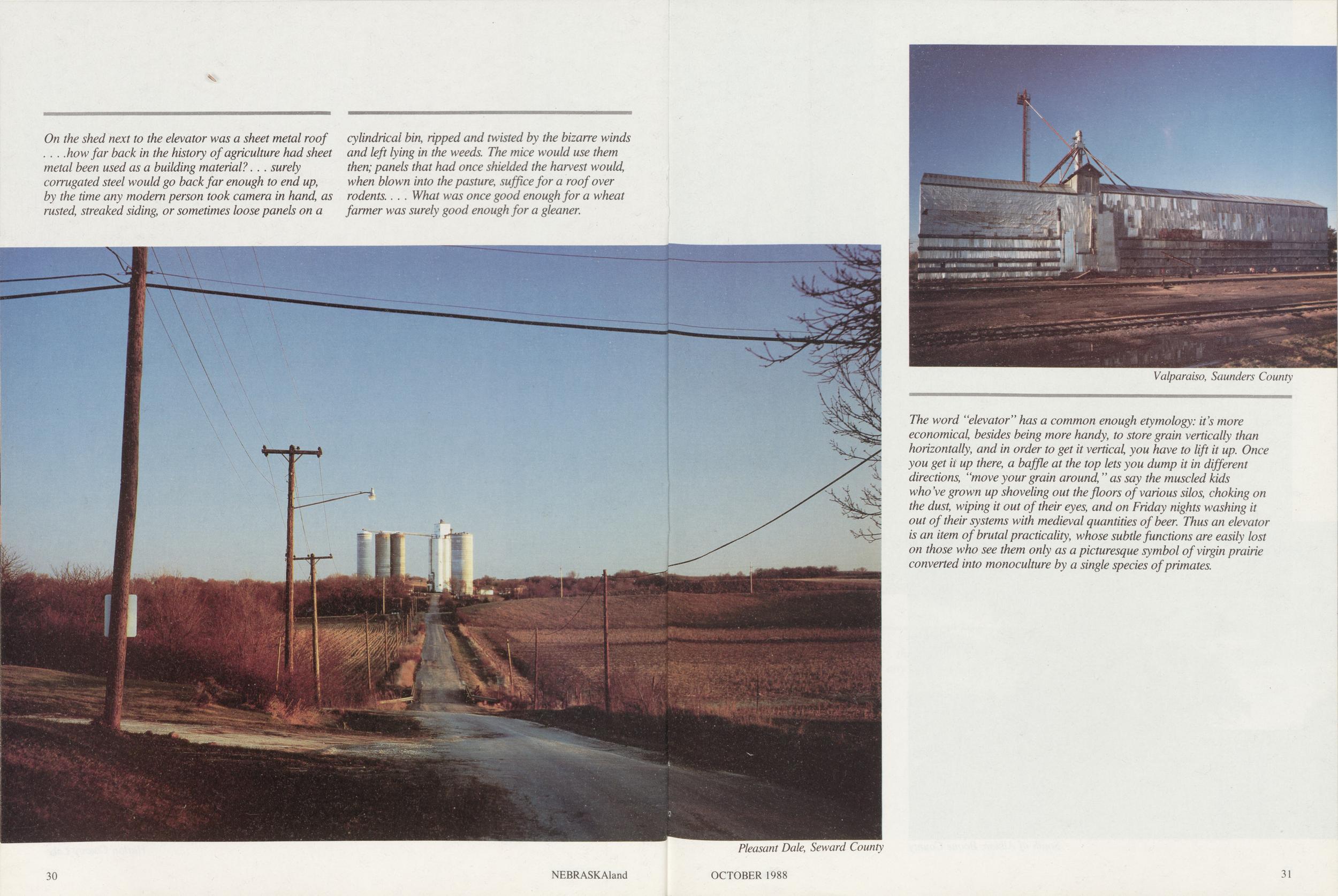
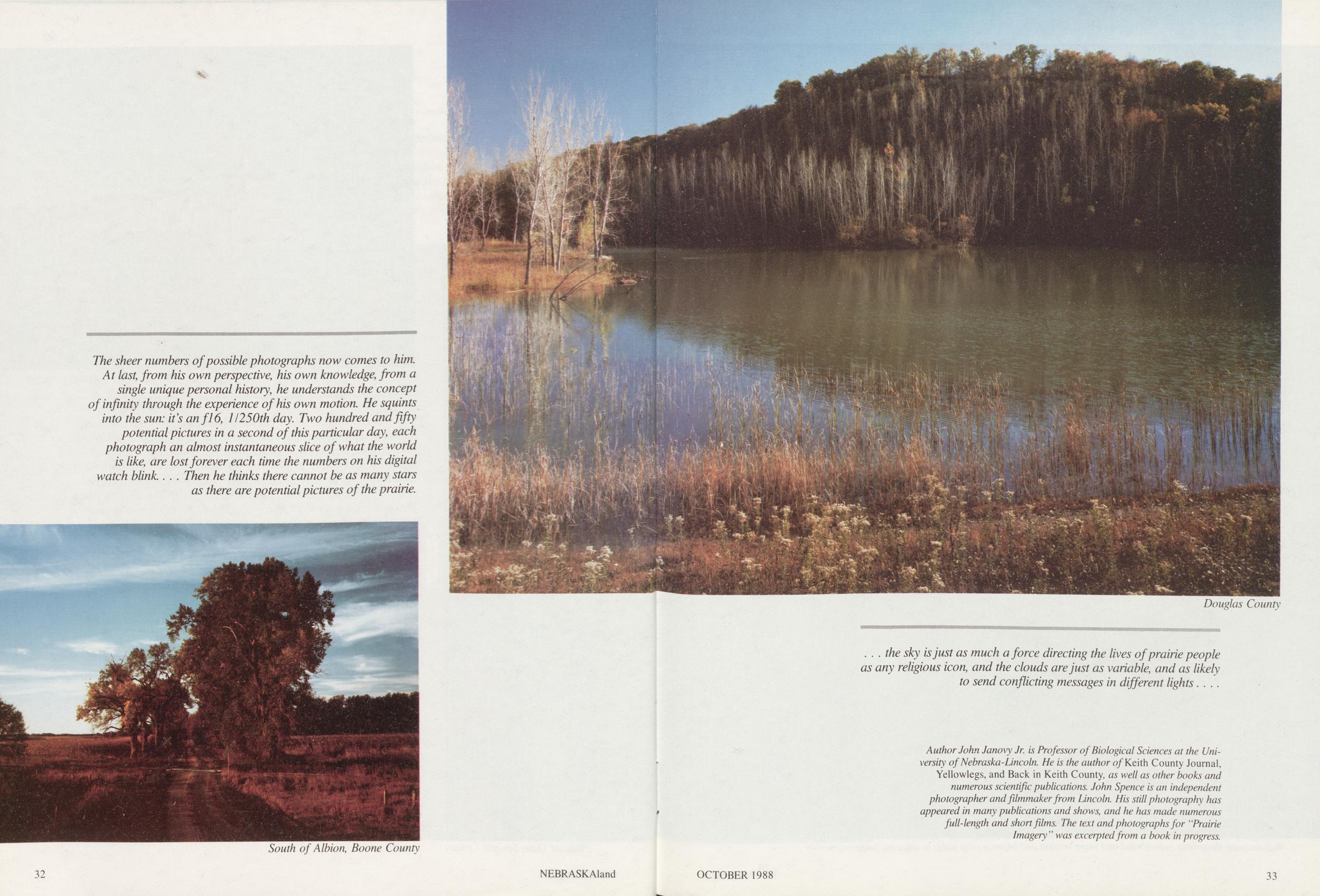
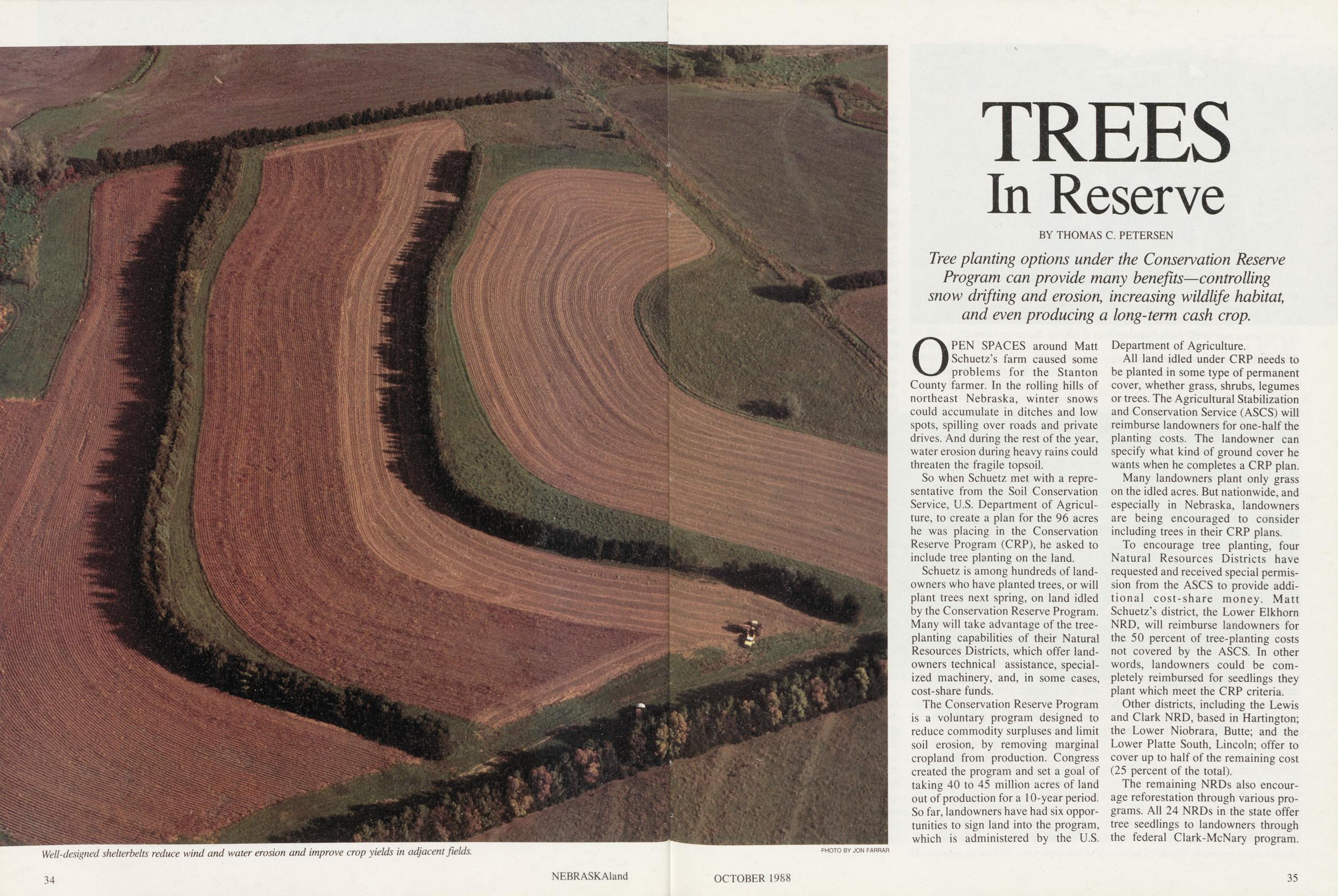
TREES In Reserve
BY THOMAS C. PETERSEN Tree planting options under the Conservation Reserve Program can provide many benefits—controlling snow drifting and erosion, increasing wildlife habitat, and even producing a long-term cash crop.OPEN SPACES around Matt Schuetz's farm caused some problems for the Stanton County farmer. In the rolling hills of northeast Nebraska, winter snows could accumulate in ditches and low spots, spilling over roads and private drives. And during the rest of the year, water erosion during heavy rains could threaten the fragile topsoil.
So when Schuetz met with a representative from the Soil Conservation Service, U.S. Department of Agriculture, to create a plan for the 96 acres he was placing in the Conservation Reserve Program (CRP), he asked to include tree planting on the land.
Schuetz is among hundreds of landowners who have planted trees, or will plant trees next spring, on land idled by the Conservation Reserve Program. Many will take advantage of the tree planting capabilities of their Natural Resources Districts, which offer land-owners technical assistance, specialized machinery, and, in some cases, cost-share funds.
The Conservation Reserve Program is a voluntary program designed to reduce commodity surpluses and limit soil erosion, by removing marginal cropland from production. Congress created the program and set a goal of taking 40 to 45 million acres of land out of production for a 10-year period. So far, landowners have had six opportunities to sign land into the program, which is administered by the U.S. Department of Agriculture.
All land idled under CRP needs to be planted in some type of permanent cover, whether grass, shrubs, legumes or trees. The Agricultural Stabilization and Conservation Service (ASCS) will reimburse landowners for one-half the planting costs. The landowner can specify what kind of ground cover he wants when he completes a CRP plan.
Many landowners plant only grass on the idled acres. But nationwide, and especially in Nebraska, landowners are being encouraged to consider including trees in their CRP plans.
To encourage tree planting, four Natural Resources Districts have requested and received special permission from the ASCS to provide additional cost-share money. Matt Schuetz's district, the Lower Elkhorn NRD, will reimburse landowners for the 50 percent of tree-planting costs not covered by the ASCS. In other words, landowners could be completely reimbursed for seedlings they plant which meet the CRP criteria.
Other districts, including the Lewis and Clark NRD, based in Harrington; the Lower Niobrara, Butte; and the Lower Platte South, Lincoln; offer to cover up to half of the remaining cost (25 percent of the total).
The remaining NRDs also encourage reforestation through various programs. All 24 NRDs in the state offer tree seedlings to landowners through the federal Clark-McNary program. All NRDs also provide a planting service and technical expertise to any landowners interested in planting trees.
OCTOBER 1988 35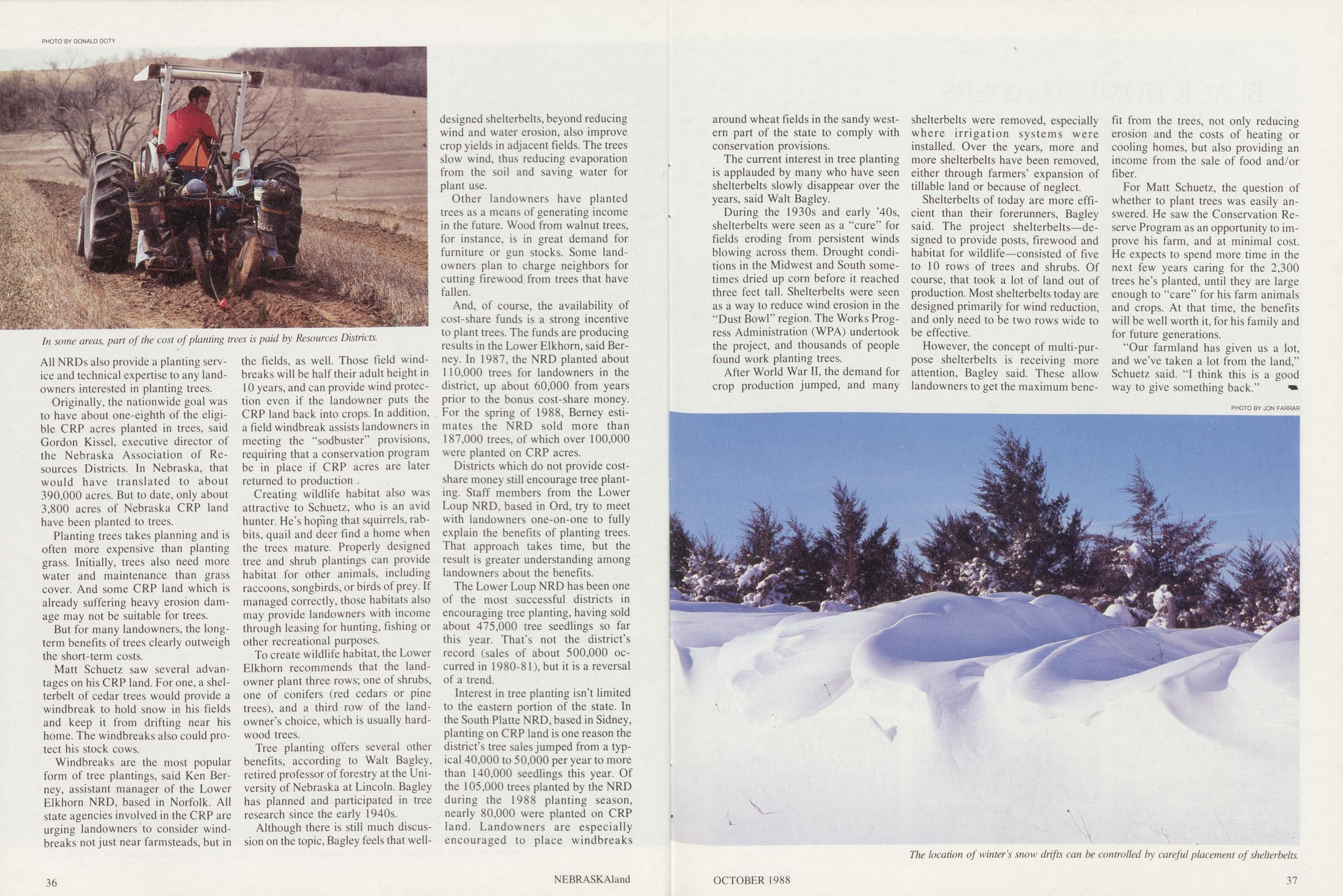
Originally, the nationwide goal was to have about one-eighth of the eligible CRP acres planted in trees, said Gordon Kissel, executive director of the Nebraska Association of Resources Districts. In Nebraska, that would have translated to about 390,000 acres. But to date, only about 3,800 acres of Nebraska CRP land have been planted to trees.
Planting trees takes planning and is often more expensive than planting grass. Initially, trees also need more water and maintenance than grass cover. And some CRP land which is already suffering heavy erosion damage may not be suitable for trees.
But for many landowners, the longterm benefits of trees clearly outweigh the short-term costs.
Matt Schuetz saw several advantages on his CRP land. For one, a shelter belt of cedar trees would provide a windbreak to hold snow in his fields and keep it from drifting near his home. The windbreaks also could protect his stock cows.
Windbreaks are the most popular form of tree plantings, said Ken Berney, assistant manager of the Lower Elkhorn NRD, based in Norfolk. All state agencies involved in the CRP are urging landowners to consider windbreaks not just near farmsteads, but in the fields, as well. Those field windbreaks will be half their adult height in 10 years, and can provide wind protection even if the landowner puts the CRP land back into crops. In addition, a field windbreak assists landowners in meeting the "sodbuster" provisions, requiring that a conservation program be in place if CRP acres are later returned to production .
Creating wildlife habitat also was attractive to Schuetz, who is an avid hunter. He's hoping that squirrels, rabbits, quail and deer find a home when the trees mature. Properly designed tree and shrub plantings can provide habitat for other animals, including raccoons, songbirds, or birds of prey. If managed correctly, those habitats also may provide landowners with income through leasing for hunting, fishing or other recreational purposes.
To create wildlife habitat, the Lower Elkhorn recommends that the landowner plant three rows; one of shrubs, one of conifers (red cedars or pine trees), and a third row of the landowner's choice, which is usually hardwood trees.
Tree planting offers several other benefits, according to Walt Bagley, retired professor of forestry at the University of Nebraska at Lincoln. Bagley has planned and participated in tree research since the early 1940s.
Although there is still much discussion on the topic, Bagley feels that well designed shelter belts, beyond reducing wind and water erosion, also improve crop yields in adjacent fields. The trees slow wind, thus reducing evaporation from the soil and saving water for plant use.
Other landowners have planted trees as a means of generating income in the future. Wood from walnut trees, for instance, is in great demand for furniture or gun stocks. Some landowners plan to charge neighbors for cutting firewood from trees that have fallen.
And, of course, the availability of cost-share funds is a strong incentive to plant trees. The funds are producing results in the Lower Elkhorn, said Berney. In 1987, the NRD planted about 110,000 trees for landowners in the district, up about 60,000 from years prior to the bonus cost-share money. For the spring of 1988, Berney estimates the NRD sold more than 187,000 trees, of which over 100,000 were planted on CRP acres.
Districts which do not provide cost share money still encourage tree planting. Staff members from the Lower Loup NRD, based in Ord, try to meet with landowners one-on-one to fully explain the benefits of planting trees. That approach takes time, but the result is greater understanding among landowners about the benefits.
The Lower Loup NRD has been one of the most successful districts in encouraging tree planting, having sold about 475,000 tree seedlings so far this year. That's not the district's record (sales of about 500,000 occurred in 1980-81), but it is a reversal of a trend.
Interest in tree planting isn't limited to the eastern portion of the state. In the South Platte NRD, based in Sidney, planting on CRP land is one reason the district's tree sales jumped from a typical 40,000 to 50,000 per year to more than 140,000 seedlings this year. Of the 105,000 trees planted by the NRD during the 1988 planting season, nearly 80,000 were planted on CRP land. Landowners are especially encouraged to place windbreaks 36 NEBRASKAland around wheat fields in the sandy western part of the state to comply with conservation provisions.
The current interest in tree planting is applauded by many who have seen shelter belts slowly disappear over the years, said Walt Bagley.
During the 1930s and early '40s, shelter belts were seen as a "cure" for fields eroding from persistent winds blowing across them. Drought conditions in the Midwest and South sometimes dried up corn before it reached three feet tall. Shelter belts were seen as a way to reduce wind erosion in the "Dust Bowl" region. The Works Progress Administration (WPA) undertook the project, and thousands of people found work planting trees.
After World War II, the demand for crop production jumped, and many shelter belts were removed, especially where irrigation systems were installed. Over the years, more and more shelter belts have been removed, either through farmers' expansion of tillable land or because of neglect.
Shelter belts of today are more efficient than their forerunners, Bagley said. The project shelter belts designed to provide posts, firewood and habitat for wildlife—consisted of five to 10 rows of trees and shrubs. Of course, that took a lot of land out of production. Most shelter belts today are designed primarily for wind reduction, and only need to be two rows wide to be effective.
However, the concept of multi-purpose shelter belts is receiving more attention, Bagley said. These allow landowners to get the maximum benefit from the trees, not only reducing erosion and the costs of heating or cooling homes, but also providing an income from the sale of food and/or fiber.
For Matt Schuetz, the question of whether to plant trees was easily answered. He saw the Conservation Reserve Program as an opportunity to improve his farm, and at minimal cost. He expects to spend more time in the next few years caring for the 2,300 trees he's planted, until they are large enough to "care" for his farm animals and crops. At that time, the benefits will be well worth it, for his family and for future generations.
"Our farmland has given us a lot, and we've taken a lot from the land," Schuetz said. "I think this is a good way to give something back."
BLACK HOMESTEADERS Scratching Out A Living
BY JON FARRAR To survive on a 640-acre Kinkaid claim in the Sandhills, settlers worked out whenever they could to supplement what the rangeland grudgingly provided.THE LESSON was quick and painful for settlers who came to the North Loup Valley during the early years of the 20th century—a free section of land was not enough for a cattle ranch, and the soil was too fragile for farming. Many, when faced with these prospects, pulled out after a year or two, some stayed long enough to gain a deed then sold out, and a few looked for ways to supplement what their claims provided. The unforgiving hills paid no heed to the color of the settler's skin.
Most of the blacks at the DeWitty settlement worked on neighboring ranches. Charles Speese, the father of Ava Day who chronicled the history of the black settlement, probably had more irons in the fire than most. In addition to farming, running cattle, and raising mules, he also freighted.
"Maybe he could have had a year-round job working for someone," Ava said in a 1987 interview, "but my dad was kind of an independent guy. Work for somebody else was not his cup of tea. He would do it if he had to, and every fall he did, but he was his own man when he freighted."
Speese hauled supplies, usually out of Seneca, for neighboring homesteaders, ranchers, schools, anyone who needed a job done. Ava recalls that he used a four-horse team and it took him four days to make a round trip. Coal delivered to the rural schools cost $22.50 per ton by the time it was freighted.
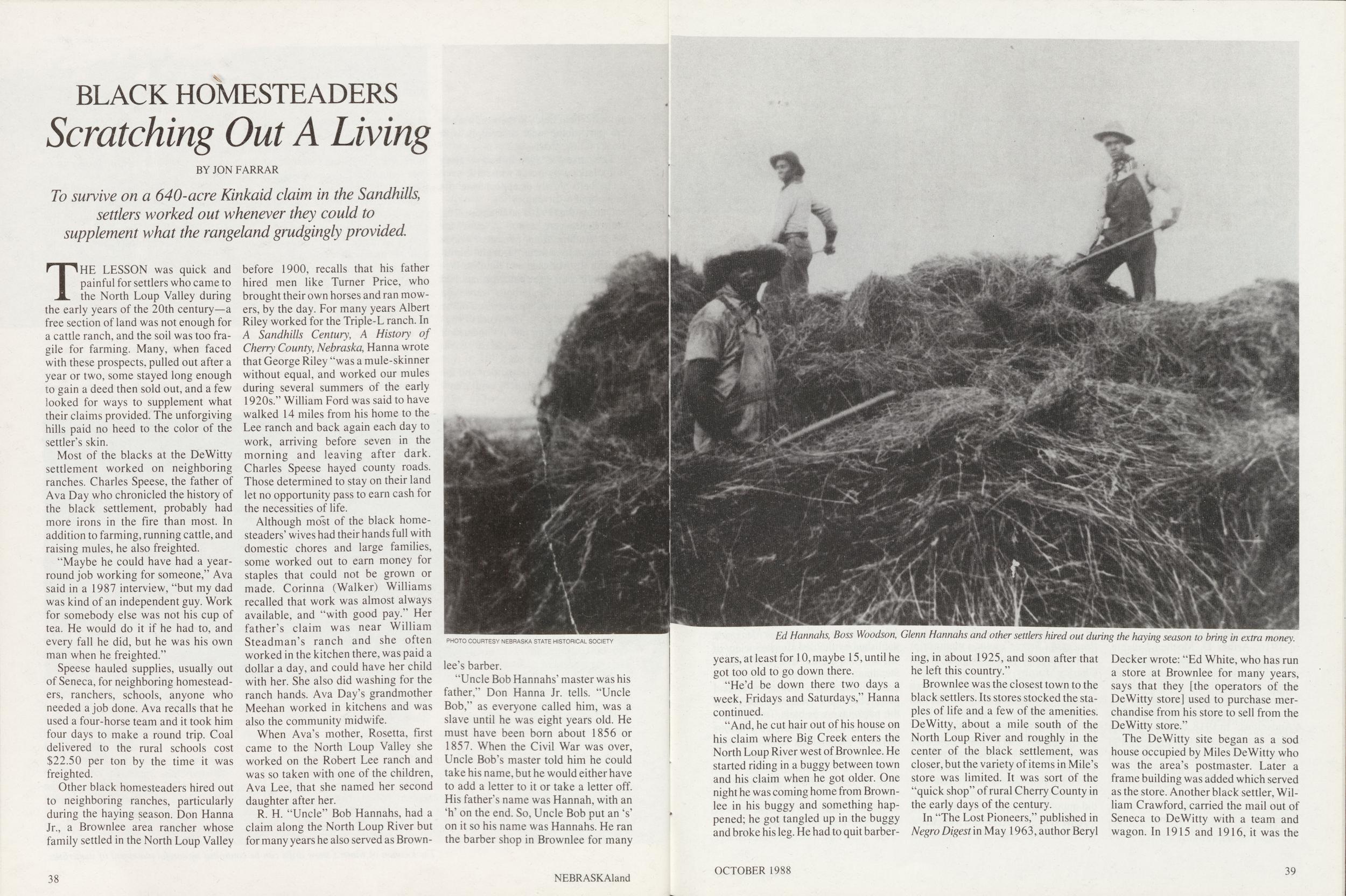
Other black homesteaders hired out to neighboring ranches, particularly during the haying season. Don Hanna Jr., a Brownlee area rancher whose family settled in the North Loup Valley before 1900, recalls that his father hired men like Turner Price, who brought their own horses and ran mowers, by the day. For many years Albert Riley worked for the Triple-L ranch. In A Sandhills Century, A History of Cherry County, Nebraska, Hanna wrote that George Riley "was a mule-skinner without equal, and worked our mules during several summers of the early 1920s." William Ford was said to have walked 14 miles from his home to the Lee ranch and back again each day to work, arriving before seven in the morning and leaving after dark. Charles Speese hayed county roads. Those determined to stay on their land let no opportunity pass to earn cash for the necessities of life.
Although most of the black homesteaders' wives had their hands full with domestic chores and large families, some worked out to earn money for staples that could not be grown or made. Corinna (Walker) Williams recalled that work was almost always available, and "with good pay." Her father's claim was near William Steadman's ranch and she often worked in the kitchen there, was paid a dollar a day, and could have her child with her. She also did washing for the ranch hands. Ava Day's grandmother Meehan worked in kitchens and was also the community midwife.
When Ava's mother, Rosetta, first came to the North Loup Valley she worked on the Robert Lee ranch and was so taken with one of the children, Ava Lee, that she named her second daughter after her.
R. H. "Uncle" Bob Hannahs, had a claim along the North Loup River but for many years he also served as Brownlee's barber.
'Uncle Bob Hannahs' master was his father," Don Hanna Jr. tells. "Uncle Bob," as everyone called him, was a slave until he was eight years old. He must have been born about 1856 or 1857. When the Civil War was over, Uncle Bob's master told him he could take his name, but he would either have to add a letter to it or take a letter off. His father's name was Hannah, with an 'h' on the end. So, Uncle Bob put an 's' on it so his name was Hannahs. He ran the barber shop in Brownlee for many 38 NEBRASKAland years, at least for 10, maybe 15, until he got too old to go down there.
"He'd be down there two days a week, Fridays and Saturdays," Hanna continued.
"And, he cut hair out of his house on his claim where Big Creek enters the North Loup River west of Brownlee. He started riding in a buggy between town and his claim when he got older. One night he was coming home from Brownlee in his buggy and something happened; he got tangled up in the buggy and broke his leg. He had to quit barbering, in about 1925, and soon after that he left this country."
Brownlee was the closest town to the black settlers. Its stores stocked the staples of life and a few of the amenities. DeWitty, about a mile south of the North Loup River and roughly in the center of the black settlement, was closer, but the variety of items in Mile's store was limited. It was sort of the "quick shop" of rural Cherry County in the early days of the century.
In "The Lost Pioneers," published in Negro Digest in May 1963, author Beryl Decker wrote: "Ed White, who has run a store at Brownlee for many years, says that they [the operators of the DeWitty store] used to purchase merchandise from his store to sell from the DeWitty store."
The DeWitty site began as a sod house occupied by Miles DeWitty who was the area's postmaster. Later a frame building was added which served as the store. Another black settler, William Crawford, carried the mail out of Seneca to DeWitty with a team and wagon. In 1915 and 1916, it was the hub and gathering place for the black settlers. Hanna recalls that the mail came twice a week back then, and on those days most settlers probably found a reason, or one of their neighbors found a reason, to swing by DeWitty on the way to somewhere else. Sometime in 1916, Arthur D. Meehan became postmaster and the post office was moved to his claim just west of DeWitty. Apparently in a flourish of optimism about the success of the settlement, he renamed the post office "Audacious." In 1918, though, the post office was again moved, several miles north of the river to the Triple-L ranch where it was known as "Gard," and remained until 1943.
OCTOBER 1988 39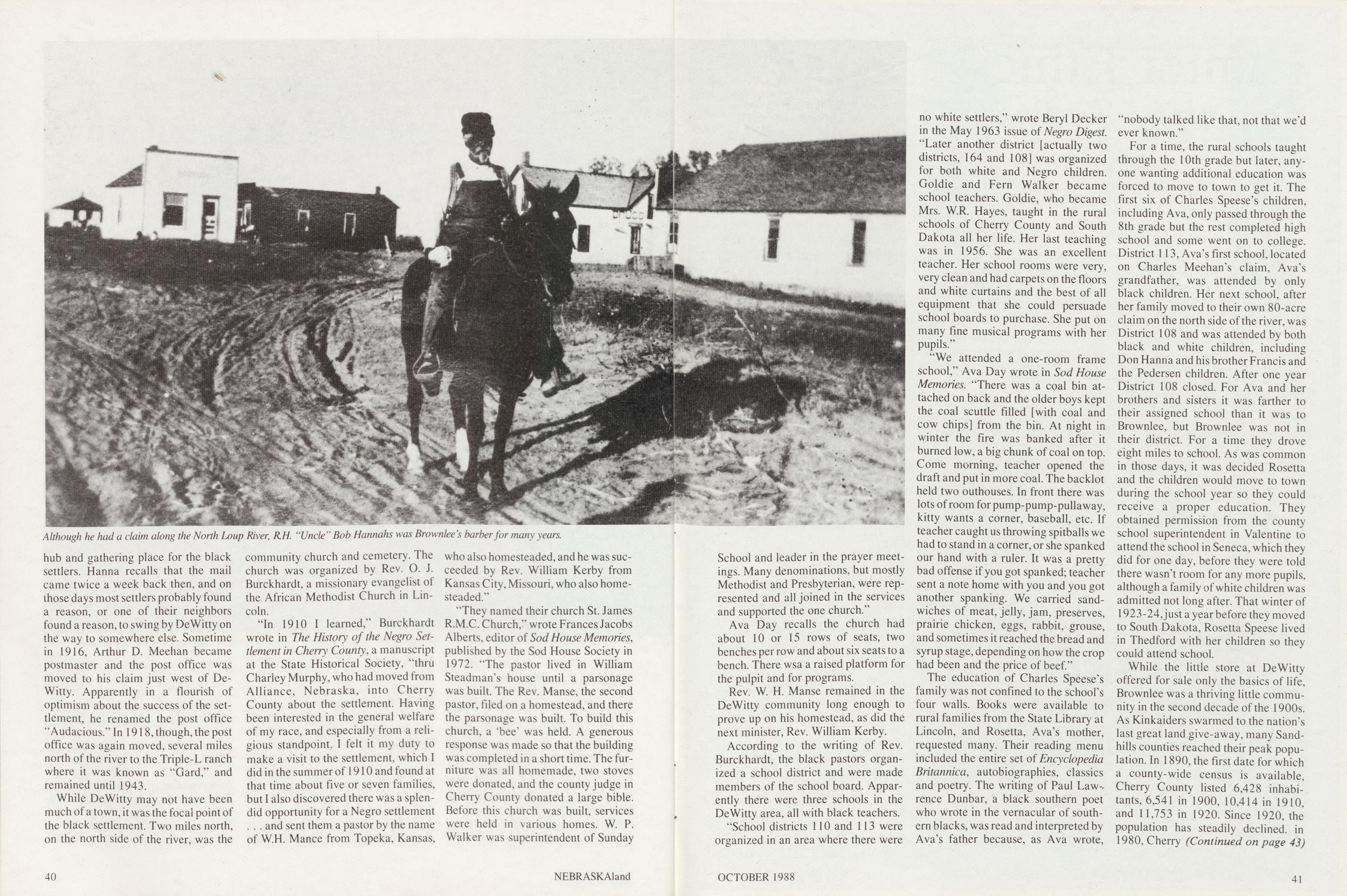
While DeWitty may not have been much of a town, it was the focal point of the black settlement. Two miles north, on the north side of the river, was the community church and cemetery. Th church was organized by Rev. O. J. Burckhardt, a missionary evangelist of the African Methodist Church in Lincoln.
"In 1910 I learned," Burckhardt wrote in The History of the Negro Settlement in Cherry County, a manuscript at the State Historical Society, "thru Charley Murphy, who had moved from Alliance, Nebraska, into Cherry County about the settlement. Having been interested in the general welfare of my race, and especially from a religious standpoint, I felt it my duty to make a visit to the settlement, which I did in the summer of 1910 and found at that time about five or seven families, but I also discovered there was a splendid opportunity for a Negro settlement and sent them a pastor by the name of W.H. Mance from Topeka, Kansas, who also homesteaded, and he was succeeded by Rev. William Kerby from Kansas City, Missouri, who also homesteaded."
They named their church St. James R.M.C. Church," wrote Frances Jacobs Alberts, editor of Sod House Memories, published by the Sod House Society in 1972. The pastor lived in William Steadman's house until a parsonage was built. The Rev. Manse, the second pastor, filed on a homestead, and there the parsonage was built. To build this church, a 'bee' was held. A generous response was made so that the building was completed in a short time. The furniture was all homemade, two stoves were donated, and the county judge in Cherry County donated a large bible. Before this church was built, services were held in various homes. W. P. Walker was superintendent of Sunday 40 NEBRASKAland School and leader in the prayer meetings. Many denominations, but mostly Methodist and Presbyterian, were represented and all joined in the services and supported the one church."
Ava Day recalls the church had about 10 or 15 rows of seats, two benches per row and about six seats to a bench. There was a raised platform for the pulpit and for programs.
Rev. W. H. Manse remained in the DeWitty community long enough to prove up on his homestead, as did the next minister, Rev. William Kerby.
According to the writing of Rev. Burckhardt, the black pastors organized a school district and were made members of the school board. Apparently there were three schools in the DeWitty area, all with black teachers.
"School districts 110 and 113 were organized in an area where there were no white settlers," wrote Beryl Decker in the May 1963 issue of Negro Digest. "Later another district [actually two districts, 164 and 108] was organized for both white and Negro children. Goldie and Fern Walker became school teachers. Goldie, who became Mrs. W.R. Hayes, taught in the rural schools of Cherry County and South Dakota all her life. Her last teaching was in 1956. She was an excellent teacher. Her school rooms were very, very clean and had carpets on the floors and white curtains and the best of all equipment that she could persuade school boards to purchase. She put on many fine musical programs with her pupils."
"We attended a one-room frame school," Ava Day wrote in Sod House Memories. "There was a coal bin at- tached on back and the older boys kept the coal scuttle filled [with coal and cow chips] from the bin. At night in winter the fire was banked after it burned low, a big chunk of coal on top. Come morning, teacher opened the draft and put in more coal. The backlot held two outhouses. In front there was lots of room for pump-pump-pullaway, kitty wants a corner, baseball, etc. If teacher caught us throwing spitballs we had to stand in a corner, or she spanked our hand with a ruler. It was a pretty bad offense if you got spanked; teacher sent a note home with you and you got another spanking. We carried sand- wiches of meat, jelly, jam, preserves, prairie chicken, eggs, rabbit, grouse, and sometimes it reached the bread and syrup stage, depending on how the crop had been and the price of beef."
The education of Charles Speese's family was not confined to the school's four walls. Books were available to rural families from the State Library at Lincoln, and Rosetta, Ava's mother, requested many. Their reading menu included the entire set of Encyclopedia Britannica, autobiographies, classics and poetry. The writing of Paul Law- rence Dunbar, a black southern poet who wrote in the vernacular of south- ern blacks, was read and interpreted by Ava's father because, as Ava wrote, "nobody talked like that, not that we'd ever known."
For a time, the rural schools taught through the 10th grade but later, any- one wanting additional education was forced to move to town to get it. The first six of Charles Speese's children, including Ava, only passed through the 8th grade but the rest completed high school and some went on to college. District 113, Ava's first school, located on Charles Meehan's claim, Ava's grandfather, was attended by only black children. Her next school, after her family moved to their own 80-acre claim on the north side of the river, was District 108 and was attended by both black and white children, including Don Hanna and his brother Francis and the Pedersen children. After one year District 108 closed. For Ava and her brothers and sisters it was farther to their assigned school than it was to Brownlee, but Brownlee was not in their district. For a time they drove eight miles to school. As was common in those days, it was decided Rosetta and the children would move to town during the school year so they could receive a proper education. They obtained permission from the county school superintendent in Valentine to attend the school in Seneca, which they did for one day, before they were told there wasn't room for any more pupils, although a family of white children was admitted not long after. That winter of 1923-24, just a year before they moved to South Dakota, Rosetta Speese lived in Thedford with her children so they could attend school.
While the little store at DeWitty offered for sale only the basics of life, Brownlee was a thriving little community in the second decade of the 1900s. As Kinkaiders swarmed to the nation's last great land give-away, many Sandhills counties reached their peak population. In 1890, the first date for which a county-wide census is available, Cherry County listed 6,428 inhabitants, 6,541 in 1900, 10,414 in 1910, and 11,753 in 1920. Since 1920, the population has steadily declined, in 1980, Cherry (Continued on page 43)
OCTOBER 1988 41
Hunter Ethics Something To Pass On
WHEN I WAS a kid, I lived in a town small enough that it was possible to go hunting without a lot of elaborate preparation or advance planning. As a matter of fact, there were several good spots we could get to on foot, and at a fairly early age our parents decided that one or two of my friends and I were responsible enough to go hunting by ourselves. So, sometimes alone, sometimes together, we often went hunting without adult supervision even before we were old enough to go hunting by ourselves.
So, sometimes alone, sometimes together, we often went hunting without adult supervision even before we were old enough to drive.
In retrospect, I can see that throughout that early period we hunted in several different ways. One was the way we hunted as a group of teenagers, and another was the way we hunted when we were with adults; that mode of behavior involved considerably less urgency, competition, and swaggering.
Fortunately, most of us now hunt quite a lot more like the adults we learned from than like we sometimes did as kids alone. Most of us look back on some of those experiences with at least a little sheepishness.
Now, as an adult, I am often embarrassed by the behavior of other hunters. I see them with their "Happiness is a Warm Gut-Pile'* tee-shirts and long belt-knives strutting around small-town cafes. I see them on the street wearing hats covered with mallard tailcurls, and I find road ditches and parking areas littered with shell boxes, lunch trash, and bird entrails. Only the littering is illegal; the rest of it is simply ethically questionable (or unacceptable), and at the least, bad public relations for hunters, and it casts us all in a bad light.
Worse are the stories I hear from land- owners; dead or wounded domestic animals, open gates, four-wheel-drive tracks through the winter wheat, coyotes chased through the pasture by oafs on snowmobiles, shotgun pellets clattering against the picture window, beer cans along the fencerows, and more.
And, there is the behavior I see in the field. Hunters in one blind shooting at ducks circling in response to a caller in another blind. Skybusting. Duck hunters in a cafe offering to give away one limit of birds so they can safely go out and shoot another. Hen mallards hidden in the weeds. Heavily hit quail thrown away so they won't have to be counted in a limit. Turkeys shot out of a roost tree before sunrise. Road hunting. Trespassing of every description. Running game in vehicles. Utter disregard for other hunters in the line of fire.
So what happened, you ask yourself? Why are these otherwise presumably responsible adults so shamelessly adolescent in their hunting behavior?
One part of the answer may be that they have missed having good models. Sometimes it seems to me that the worst adult offenders are hunters who took up the activity relatively late in life; hunters who had little opportunity to admire, and then emulate, an older, more experienced mentor. It probably should not really be surprising that when adults improvise, they often do very little better than children. This may be especially true when the activity is one such as hunting, which can become so charged with overtones of macho "masculinity." Boys can easily learn from older men that manhood is not defined by a mallard "body-count or the brand name on one's camo clothing, but if men have not learned it as boys, how do they learn it?
In any event, the lessons learned in the field from good, experienced hunters are not lessons as easily learned from hunter safety classes and magazine articles. None of the ranting and preaching in those forums, however useful as reinforcement, has as much force as the mildly stated but clear approval or disapproval of a respected adult. This is especially true if it can occur when a novice is still young enough to stand at least slightly in awe of the teacher.
Here is where the rest of us come in; this is the point at which those of us who think that how you hunt is more important than what you shoot, need to get involved.
We deserve the privilege of hunting only if we insist that hunting be practiced ethically. Hunting ethics are only real in practice, and they are best passed along by example. Being one of the good guys includes talking the right line, of course, because even tacit approval of slob behavior encourages slob behavior.
But the good you do by taking a new hunter with you on a hunt or two has the potential to shape a lifetime of behavior; kids have a tough time not growing up into slobs if they only have slobs for models.
Ethical hunting is sometimes difficult to define; when you try, you find yourself making long lists of "thou shalts" and "thou shalt nots." It is much easier, and probably much more effective, to pass along by example, and passing it along is part of the responsibility of the ethical hunter.
42 NEBRSAKAlandBlack Homesteaders... Scratching Out a Living
(Continued from page 41)County reported only 6,758 residents.
"There was somewhere between 100 and 150 people in Brownlee," Hanna said of the 1915 to 1920 period. "There were two grocery stores, and I mean they were general mercantile stores. They sold everything from ladies' hosiery to mowing machines. Shockley ran one of them, and A. P. Story the other. There was a bank, a good little bank, hotel, a doctor's office, blacksmith shop and livery barn, drug store, community hall and post office. It had the whole business."
"The town" in the region, though, was Seneca.
"It was a good town," Hanna says of Seneca. "There were a thousand people there. Eight passenger trains a day ran through Seneca, four each way, and every train changed crews in Seneca. It was a railroad town. There was a roundhouse there where they could be working on four of those big old steam engines at the same time. They had a turntable to turn an engine around. They had crews working in that roundhouse 24 hours a day.
When I was 10 or 12, Seneca was a great place. All the livestock was shipped on the railroad in those days, and thousands went out every fall. It was twice as large as Thedford and a better town than Mullen. Thedford wasn't much. All they had was the county seat. The trains used to just whistle right on through Thedford, but Seneca in those days was like going to North Platte is now, even moreso."
Bulky or heavy goods like lumber and coal came out of Seneca because it was the closest rail town to the black settlement. Ava Day said she and the other children seldom went to Seneca, but their father made frequent trips there freighting and it was from Seneca that some of the finer things in life came.
"Our dresses came from Seneca," Ava recalled, "except what we got from Sears or Montgomery Ward catalogs. I don't recall that Brownlee had dresses. Brownlee carried yard goods, a few dresses and blouses, and overalls. I know they carried all kinds of work shoes, especially those that were big with heavy soles. Some had copper toes. The kind I didn't want. Oh, I hated them."
"Every household made practically everything except for overshoes, shoes, coats, stockings and winter underwear," Ava wrote in Sod House Memories. "Often the mothers made coats, too. And in summer, 'Trisco' and 'Gold Medal' could be seen on the seat of the bloomers girls wore. Flour sacks were good for more than getting the product to you. We also wore many hand-me-downs, articles given to us by more affluent white people, or sent to us by relatives who told you to pass it on if you can't use it. The storekeepers got quite a kick out of Dad and Mom coming to buy their winter clothes. Shoes, overshoes, and 'two of this and two of that in each size.' It was a good day for the cash register. When we arrived in the Sandhills we were a family of six children, and when we left we numbered 12.
'We girls wore overalls part of the time, but Mom did not like to see patches on the seat of little girls' clothes. During World War I our Sunday dresses Mom made of overall material. The blouses of blue and white 'hickory' striped overall material but the skirt of regular navy blue denim, with suspenders to match. We never felt underprivileged; no one else had a dress like ours."
Ava recalls her mother painstakingly punching holes with an awl, then, using two needles back and forth, stitching the rips in her children's shoes.
"It seemed to us that Mom could fix anything, from kissing a cut or bump to make it well; fix the best tasting meal when it seemed there wasn't enough on the shelf to do so; ride side-saddle; even get 'Old Pitt' back in the pasture when he got loose; out-run us kids; know the difference between the truth and a story; pull a splinter without hurting; make you well when you got sick; find a few pennies for candy; tuck the whole household into bed, and you were sure 44 NEBRASKAland everything was all right for if you woke, Mom would be sitting in the lamplight mending, or baking bread, patching overalls, or making tiny stitches on ruffles for a new dress." m
Next month, in the conclusion of the story of the black settlement ofDeWitty, home doctoring, gathering 'Hereford coal," homegrown music, and the land reclaims its own.Reunion Hunt
(Continued from page 9)reminding Tom and me, about to leave for a morning of duck hunting, that the safety alone doesn't make a shotgun safe.
We hunted until mid-afternoon, aware of our expected arrival at Tom's parents' house, but liking the warm fall Sandhills day too much to hurry. Finally, just one bird short of two limits, we drove on, and arrived to the kind of welcome you can't help liking the best; the kind that comes from matter-of-fact people who are genuinely glad to see you, but not likely to make too much to-do about it. People who remember what you used to be, but are perfectly willing to take you for what you are now, if that is somehow different. Out in the garage beside the Model A, we got the field-dressed grouse ready for the freezer. Ken had been fishing, and we had rainbow trout for supper.
At 5:30 the next morning, with Tom's 19-year-old son Brad, a student at Nebraska Western in Scottsbluff, we drove out to Lemoine's place under starless skies which foretold an overcast sunrise. And there it all happened again: out to greet us came a handsome, distinguished looking man, gray, but moving with the easy grace of a dead shot from anywhere outside the free-throw line. Lemoine looked unfamiliar for about 30 seconds, and then he smiled and spoke, and the strangeness was gone.
The same was true 15 minutes later when Billy Schneider arrived; the last 30 years have given him a genuine 135-pounds-plus weight and a Ph.D. in animal science. The years haven't taken away his phrasing, his walk, his ironic sense of humor, his laugh.
Oh, yes, the hunt part of the story: we hunted, of course—after scrambled eggs and sausage in the Sauer's kitchen—we hunted pretty hard. We ranged out along the ditch banks, and through the corn, and yes, even coerced our middle-aged thighs through wet, waist-high sunflowers and sandburs around abandoned farm houses.
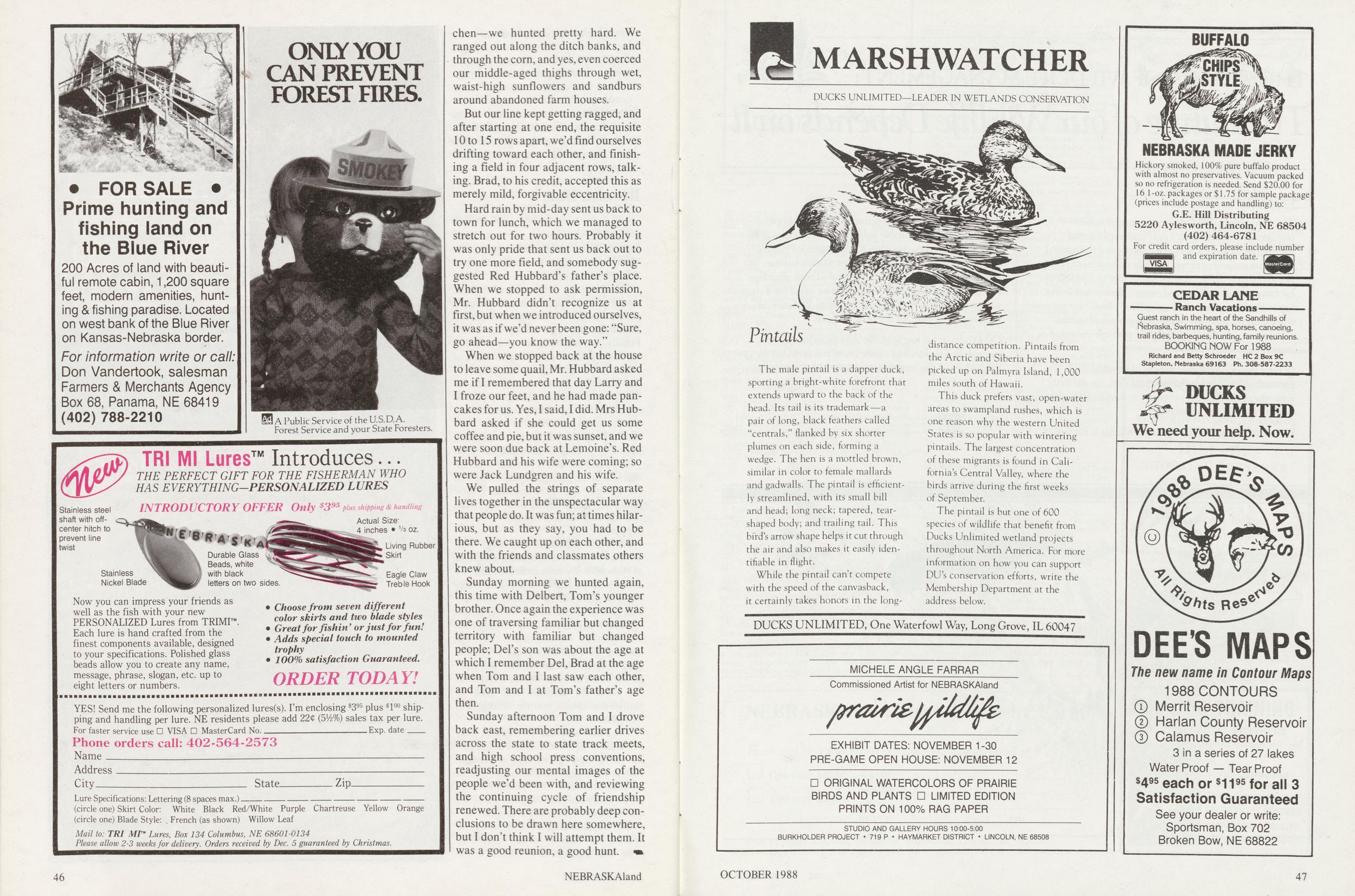
But our line kept getting ragged, and after starting at one end, the requisite 10 to 15 rows apart, we'd find ourselves drifting toward each other, and finishing a field in four adjacent rows, talking. Brad, to his credit, accepted this as merely mild, forgivable eccentricity.
Hard rain by mid-day sent us back to town for lunch, which we managed to stretch out for two hours. Probably it was only pride that sent us back out to try one more field, and somebody suggested Red Hubbard's father's place. When we stopped to ask permission, Mr. Hubbard didn't recognize us at first, but when we introduced ourselves, it was as if we'd never been gone: "Sure, go ahead—you know the way."
When we stopped back at the house to leave some quail, Mr. Hubbard asked me if I remembered that day Larry and I froze our feet, and he had made pancakes for us. Yes, I said, I did. Mrs Hubbard asked if she could get us some coffee and pie, but it was sunset, and we were soon due back at Lemoine's. Red Hubbard and his wife were coming; so were Jack Lundgren and his wife.
We pulled the strings of separate lives together in the unspectacular way that people do. It was fun; at times hilarious, but as they say, you had to be there. We caught up on each other, and with the friends and classmates others knew about.
Sunday morning we hunted again, this time with Delbert, Tom's younger brother. Once again the experience was one of traversing familiar but changed territory with familiar but changed people; Del's son was about the age at which I remember Del, Brad at the age when Tom and I last saw each other, and Tom and I at Tom's father's age then.
Sunday afternoon Tom and I drove back east, remembering earlier drives across the state to state track meets, and high school press conventions, readjusting our mental images of the people we'd been with, and reviewing the continuing cycle of friendship renewed. There are probably deep conclusions to be drawn here somewhere, but I don't think I will attempt them. It was a good reunion, a good hunt, m
46 NEBRASKAlandMARSHWATCHER
DUCKS UNLIMITED—LEADER IN WETLANDS CONSERVATIONThe male pintail is a dapper duck, sporting a bright-white forefront that extends upward to the back of the head. Its tail is its trademark—a pair of long, black feathers called "centrals," flanked by six shorter plumes on each side, forming a wedge. The hen is a mottled hrown, similar in color to female mallards and gadwalls. The pintail is efficiently streamlined, with its small hill and head; long neck; tapered, tear-shaped body; and trailing tail. This bird's arrow shape helps it cut through the air and also makes it easily identifiable in flight.
While the pintail can't compete with the speed of the canvasback, it certainly takes honors in the long-distance competition. Pintails from the Arctic and Siberia have been picked up on Palmyra Island, 1,000 miles south of Hawaii.
This duck prefers vast, open-water areas to swampland rushes, which is one reason why the western United States is so popular with wintering pintails. The largest concentration of these migrants is found in California's Central Valley, where the birds arrive during the hrst weeks of September.
The pintail is but one of 600 species of wildlife that benefit from Ducks Unlimited wetland projects throughout North America. For more information on how you can support DU's conservation efforts, write the Membership Department at the address below.
DUCKS UNLIMITED, One Waterfowl Way, Long Grove, IL 60047
MICHELE ANGLE FARRAR Commissioned Artist for NEBRASKAIand EXHIBIT DATES: NOVEMBER 1-30 PRE-GAME OPEN HOUSE: NOVEMBER 12 D ORIGINAL WATERCOLORS OF PRAIRIE BIRDS AND PLANTS □ LIMITED EDITION PRINTS ON 100% RAG PAPER STUDIO AND GALLERY HOURS 1000-5:00 BURKHOLDER PROJECT • 719 P • HAYMARKET DISTRICT • LINCOLN, NE 68508 BUFFALO NEBRASKA MADE JERKY Hickory smoked, 100% pure buffalo product with almost no preservatives. Vacuum packed so no refrigeration is needed. Send $20.00 for 16 1 -oz. packages or $ 1.75 for sample package (prices include postage and handling) to: G.E. Hill Distributing 5220 Aylesworth, Lincoln, NE 68504 (402) 464-6781 For credit card orders, please include number and expiration date. MoiierCoifl CEDAR LANE - Ranch Vacations Guest ranch in the heart of the Sandhills of Nebraska, Swimming, spa, horses, canoeing, trail rides, barbeques, hunting, family reunions. BOOKING NOW For 1988 Richard and Betty Schroeder HC 2 Box 9C Stapleton, Nebraska 69163 Ph. 308-587-2233 DUCKS UNLIMITED We need your help. Now. DEE'S MAPS The new name in Contour Maps 1988 CONTOURS 0 Merrit Reservoir © Harlan County Reservoir © Calamus Reservoir 3 in a series of 27 lakes Water Proof — Tear Proof $495eachor*1195forall3 Satisfaction Guaranteed See your dealer or write: Sportsman, Box 702 Broken Bow, NE 68822 OCTOBER 1988 47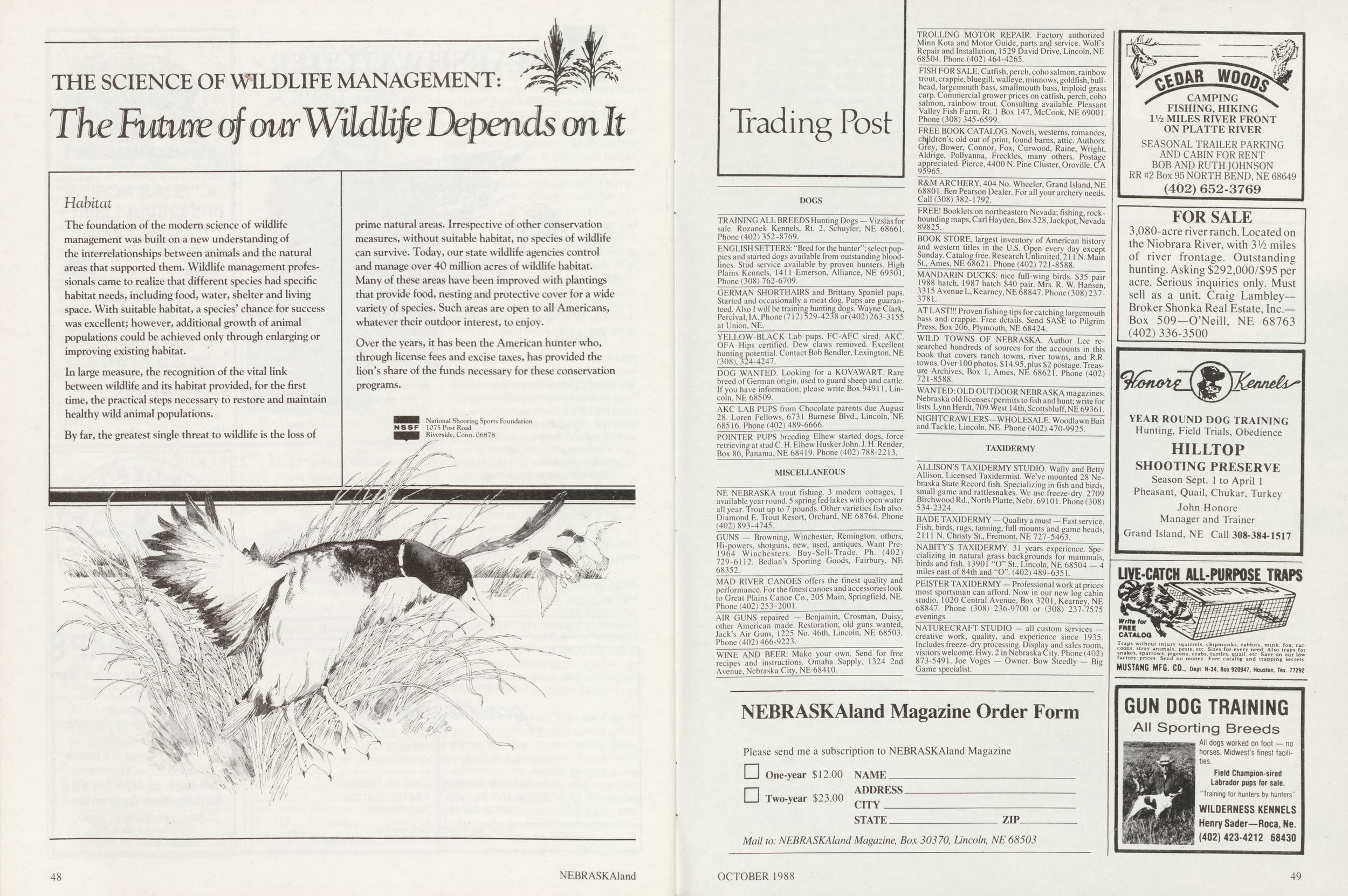
THE SCIENCE OF WILDLIFE MANAGEMENT: The Futuve of our WMMfe Depends on It
The foundation of the modern science of wildlife management was built on a new understanding of the interrelationships between animals and the natural areas that supported them. Wildlife management profes^ sionals came to realize that different species had specific habitat needs, including food, water, shelter and living space. With suitable habitat, a species' chance for success was excellent; however, additional growth of animal populations could be achieved only through enlarging or improving existing habitat.
In large measure, the recognition of the vital link between wildlife and its habitat provided, for the first time, the practical steps necessary to restore and maintain healthy wild animal populations.
By far, the greatest single threat to wildlife is the loss of prime natural areas. Irrespective of other conservation measures, without suitable habitat, no species of wildlife can survive. Today, our state wildlife agencies control and manage over 40 million acres of wildlife habitat. Many of these areas have been improved with plantings that provide food, nesting and protective cover for a wide variety of species. Such areas are open to all Americans, whatever their outdoor interest, to enjoy.
Over the years, it has been the American hunter who, through license fees and excise taxes, has provided the lion's share of the funds necessary for these conservation programs.
National Shooting Sports Foundation NS8F 1075 Post Road Riverside, Conn. 06878Trading Post
DOGSTRAINING ALL BREEDS Hunting Dogs — Vizslas for sale. Rozanek Kennels, Rt. 2, Schuyler, NE 68661. Phone(402)352-8769.________________________
ENGLISH SETTERS: "Bred for the hunter"; select puppies and started dogs available from outstanding bloodlines. Stud service available by proven hunters. High Plains Kennels, 1411 Emerson, Alliance, NE 69301, Phone (308) 762-6709._________________________
GERMAN SHORTHAIRS and Brittany Spaniel pups. Started and occasionally a meat dog. Pups are guaranteed. Also I will be training hunting dogs. Wayne Clark, PercivaUA. Phone (712) 529-4238 or(402) 263-3155 at Union, NE.___________________________
YELLOW-BLACK Lab pups. FC-AFC sired. AKC. OFA Hips certified. Dew claws removed. Excellent hunting potential. Contact Bob Bendler, Lexington, NE (308), 324-4247.______________________________
DOG WANTED. Looking for a KOVAWART. Rare breed of German origin, used to guard sheep and cattle. If you have information, please write Box 94911, Lincoln, NE 68509. ___________________________
AKC LAB PUPS from Chocolate parents due August 28. Loren Fellows, 6731 Burnese Blvd., Lincoln, NE 685 16. Phone (402) 489-6666.___________________
POINTER PUPS breeding Elhew started dogs, force retrieving at stud C. H. Elhew Husker John. J. H. Render, Box 86, Panama, NE 68419. Phone (402) 788-2213.
MISCELLANEOUSNE NEBRASKA trout fishing. 3 modern cottages, 1 available year round. 5 spring fed lakes with open water all year. Trout up to 7 pounds. Other varieties fish also. Diamond E. Trout Resort, Orchard, NE 68764. Phone (402)893-4745.______________________________
GUNS — Browning, Winchester, Remington, others, Hi-powers, shotguns, new, used, antiques. Want Pre-1964 Winchesters. Buy-Sell-Trade. Ph. (402) 729-6112. Bedlan's Sporting Goods, Fairbury, NE 68352._______________________________
MAD RIVER CANOES offers the finest quality and performance. For the finest canoes and accessories look to Great Plains Canoe Co., 205 Main, Springfield, NE. Phone(402)253-2001._____________________
AIR GUNS repaired Benjamin, Crosman, Daisy, other American made. Restoration; old guns wanted, Jack's Air Guns, 1225 No. 46th, Lincoln, NE 68503. Phone (402) 466-9223.________________________
WINE AND BEER: Make your own. Send for free recipes and instructions. Omaha Supply, 1324 2nd Avenue, Nebraska City, NE 68410._______________
TROLLING MOTOR REPAIR. Factory authorized Minn Kota and Motor Guide, parts and service. Wolfs Repair and Installation, 1529 David Drive, Lincoln, NE 68504. Phone (402) 464-4265.
FISH FOR SALE. Catfish, perch, coho salmon, rainbow trout, crappie, bluegill, walleye, minnows, goldfish, bullhead, largemouth bass, smallmouth bass, triploid grass carp. Commercial grower prices on catfish, perch, coho salmon, rainbow trout. Consulting available. Pleasant Valley Fish Farm, Rt. 1 Box 147, McCook, NE 69001. Phone (308) 345-6599._________________________
FREE BOOK CATALOG. Novels, westerns, romances, chjldren's; old out of print, found barns, attic. Authors: Grey, Bower, Connor, Fox, Curwood, Raine, Wright, Aldrige, Pollyanna, Freckles, many others. Postage appreciated. Pierce, 4400 N. Pine Cluster, Oroville, CA 95965.______________________________________
R&M ARCHERY, 404 No. Wheeler, Grand Island, NE 68801. Ben Pearson Dealer. For all your archery needs. Call (308) 382-1792.__________________________
FREE! Booklets on northeastern Nevada; fishing, rock-hounding maps, Carl Hayden, Box 528, Jackpot, Nevada 89825.
BOOK STORE, largest inventory of American history and western titles in the U.S. Open every day except Sunday. Catalog free. Research Unlimited, 211 N. Main St., Ames, NE 68621. Phone (402) 721 -8588._______
MANDARIN DUCKS: nice full-wing birds. $35 pair 1988 hatch, 1987 hatch $40 pair. Mrs. R. W. Hansen, 3315 Avenue L, Kearney, NE 68847. Phone (308) 237-3781.
AT LAST!!! Proven fishing tips for catching largemouth bass and crappie. Free details. Send SASE to Pilgrim Press, Box 206, Plymouth, NE 68424.______________
WILD TOWNS OF NEBRASKA. Author Lee researched hundreds of sources for the accounts in this book that covers ranch towns, river towns, and R.R. towns. Over 100 photos. $ 14.95, plus $2 postage. Treasure Archives, Box 1, Ames, NE 68621. Phone (402) 721-8588.
WANTED: OLD OUTDOOR NEBRASKA magazines, Nebraska old licenses/permits to fish and hunt; write for lists. Lynn Herdt, 709 West 14th, Scottsbluff, NE 69361. NIGHTCRAWLERS—WHOLESALE. Woodlawn Bait and Tackle, Lincoln, NE. Phone (402) 470-9925.
TAXIDERMYALLISON'S TAXIDERMY STUDIO. Wally and Betty Allison, Licensed Taxidermist. We've mounted 28 Nebraska State Record fish. Specializing in fish and birds, small game and rattlesnakes. We use freeze-dry. 2709 Birchwood Rd., North Platte, Nebr. 69101. Phone (308) 534-2324.___________________________________
BADE TAXIDERMY — Quality a must — Fast service. Fish, birds, rugs, tanning, full mounts and game heads, 2111 N. Christy St., Fremont, NE 727-5463.________
NABITY'S TAXIDERMY. 31 years experience. Specializing in natural grass backgrounds for mammals, birds and fish. 13901 "O" St., Lincoln, NE 68504 — 4 miles east of 84th and "O". (402) 489-6351.________
PEISTER TAXIDERMY — Professional work at prices most sportsman can afford. Now in our new log cabin studio, 1020 Central Avenue, Box 3201, Kearney, NE 68847. Phone (308) 236-9700 or (308) 237-7575 evenings.____________________________________
NATURECRAFT STUDIO — all custom services — creative work, quality, and experience since 1935. Includes freeze-dry processing. Display and sales room, visitors welcome. Hwy. 2 in Nebraska City. Phone (402) 873-5491. Joe Voges — Owner. Bow Steedly — Big Game specialist.
NEBRASKAland Magazine Order Form Please send me a subscription to NEBRASKAland Magazine One-year $12.00 NAME □ LJ Two-year $23.00 ADDRESS CITY____ STATE ZIP. Mail to: NEBRASKAland Magazine, Box 30370, Lincoln, NE 68503 CEDAR WOODS CAMPING FISHING, HIKING 1V2 MILES RIVER FRONT ON PLATTE RIVER SEASONAL TRAILER PARKING AND CABIN FOR RENT BOB AND RUTH JOHNSON RR #2 Box 95 NORTH BEND, NE 68649 ______(402) 652-3769 FOR SALE 3,080-acre river ranch. Located on the Niobrara River, with 3xh miles of river frontage. Outstanding hunting. Asking $292,000/$95 per acre. Serious inquiries only. Must sell as a unit. Craig Lambley— Broker Shonka Real Estate, Inc.— Box 509—O'Neill, NE 68763 (402) 336-3500 Honore Kennels YEAR ROUND DOG TRAINING Hunting, Field Trials, Obedience HILLTOP SHOOTING PRESERVE Season Sept. 1 to April 1 Pheasant, Quail, Chukar, Turkey John Honore Manager and Trainer Grand Island, NE Call 308-384-1517 LIVE-CATCH ALL-PURPQSE TRAPS Wrlto FREE CATALOG Traps without injury squirrels, chipmunks, rabbits, mink, fox, raccoons, stray animals, pests, etc Sires for every need. Also traps for snakes, sparrows, pigeons, crabs, turtles, quail, etc Save on our low factory prices Send no money Free catalog and trapping secrets MUSTANG MFG. CO., Dept. N-34, Box 920947, Houston, Tex. 77292 GUN DOG TRAINING All Sporting Breeds All dogs worked on foot — no horses. Midwest's finest facilities. Field Champion-sired Labrador pups for sale. "Training for hunters by hunters" WILDERNESS KENNELS Henry Sader—Roca, Ne. (402)423-4212 68430 OCTOBER 1988 49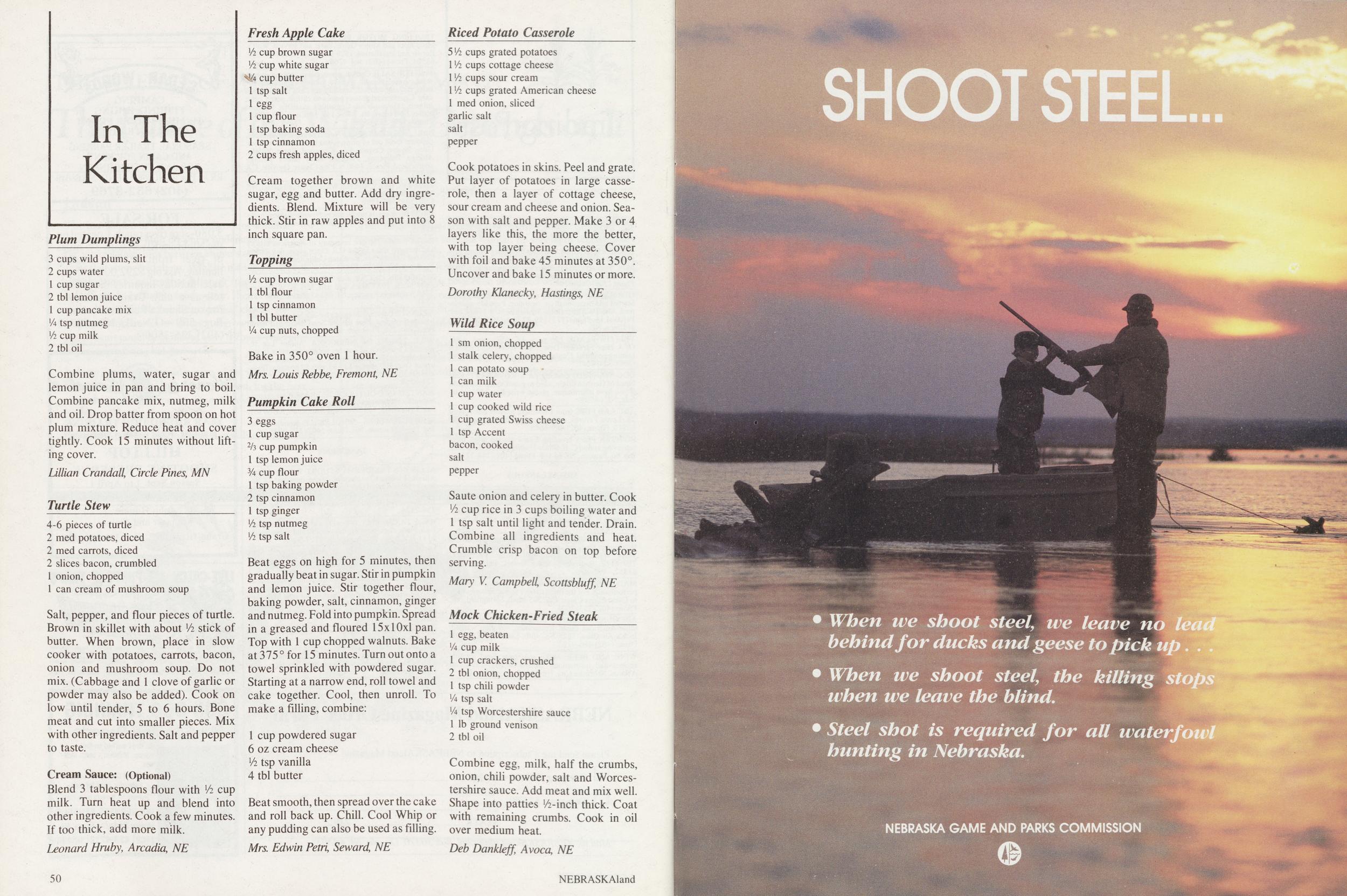
In The Kitchen
Plum Dumplings 3 cups wild plums, slit 2 cups water 1 cup sugar 2 tbl lemon juice 1 cup pancake mix Va tsp nutmeg Vi cup milk 2 tbl oilCombine plums, water, sugar and lemon juice in pan and bring to boil. Combine pancake mix, nutmeg, milk and oil. Drop batter from spoon on hot plum mixture. Reduce heat and cover tightly. Cook 15 minutes without lifting cover.
Lillian Crandall, Circle Pines, MN Turtle Stew______________________ 4-6 pieces of turtle 2 med potatoes, diced 2 med carrots, diced 2 slices bacon, crumbled 1 onion, chopped 1 can cream of mushroom soupSalt, pepper, and flour pieces of turtle. Brown in skillet with about Vi stick of butter. When brown, place in slow cooker with potatoes, carrots, bacon, onion and mushroom soup. Do not mix. (Cabbage and 1 clove of garlic or powder may also be added). Cook on low until tender, 5 to 6 hours. Bone meat and cut into smaller pieces. Mix with other ingredients. Salt and pepper to taste.
Cream Sauce: (Optional)Blend 3 tablespoons flour with Vi cup milk. Turn heat up and blend into other ingredients. Cook a few minutes. If too thick, add more milk.
Leonard Hruby, Arcadia, NE Fresh Apple Cake Vi cup brown sugar !/2 cup white sugar 44 cup butter 1 tsp salt 1 zgg 1 cup flour 1 tsp baking soda 1 tsp cinnamon 2 cups fresh apples, dicedCream together brown and white sugar, egg and butter. Add dry ingre- dients. Blend. Mixture will be very thick. Stir in raw apples and put into 8 inch square pan.
Topping Vi cup brown sugar 1 tbl flour 1 tsp cinnamon 1 tbl butter lA cup nuts, choppedBake in 350° oven 1 hour.
Mrs. Louis Rebbe, Fremont, NE Pumpkin Cake Roll________ 3 eggs 1 cup sugar 2h cup pumpkin 1 tsp lemon juice 3/4 cup flour 1 tsp baking powder 2 tsp cinnamon 1 tsp ginger !/2 tsp nutmeg Vi tsp saltBeat eggs on high for 5 minutes, then gradually beat in sugar. Stir in pumpkin and lemon juice. Stir together flour, baking powder, salt, cinnamon, ginger and nutmeg. Fold into pumpkin. Spread in a greased and floured 15x10x1 pan. Top with 1 cup chopped walnuts. Bake at 375 ° for 15 minutes. Turn out onto a towel sprinkled with powdered sugar. Starting at a narrow end, roll towel and cake together. Cool, then unroll. To make a filling, combine:
1 cup powdered sugar 6 oz cream cheese Vi tsp vanilla 4 tbl butterBeat smooth, then spread over the cake and roll back up. Chill. Cool Whip or any pudding can also be used as filling.
Mrs. Edwin Petri, Seward, NE Riced Potato Casserole 5 Vi cups grated potatoes 1 Vi cups cottage cheese 1 Vi cups sour cream 1 Vi cups grated American cheese 1 med onion, sliced garlic salt salt pepperCook potatoes in skins. Peel and grate. Put layer of potatoes in large cassrole, then a layer of cottage cheese, sour cream and cheese and onion. Season with salt and pepper. Make 3 or 4 layers like this, the more the better, with top layer being cheese. Cover with foil and bake 45 minutes at 350°. Uncover and bake 15 minutes or more.
Dorothy Klanecky, Hastings, NE Wild Rice Soup__________________ sm onion, chopped stalk celery, chopped can potato soup can milk cup water cup cooked wild rice cup grated Swiss cheese tsp Accent bacon, cooked salt pepperSaute onion and celery in butter. Cook Vi cup rice in 3 cups boiling water and 1 tsp salt until light and tender. Drain. Combine all ingredients and heat. Crumble crisp bacon on top before serving.
Mary V. Campbell, Scottsbluff, NE Mock Chicken-Fried Steak 1 egg, beaten Va cup milk 1 cup crackers, crushed 2 tbl onion, chopped 1 tsp chili powder Va tsp salt Va tsp Worcestershire sauce 1 lb ground venison 2 tbl oilCombine egg, milk, half the crumbs, onion, chili powder, salt and Worces- tershire sauce. Add meat and mix well. Shape into patties V^-inch thick. Coat with remaining crumbs. Cook in oil over medium heat.
Deb Dankleff, Avoca, NE 50 NEBRSAKAland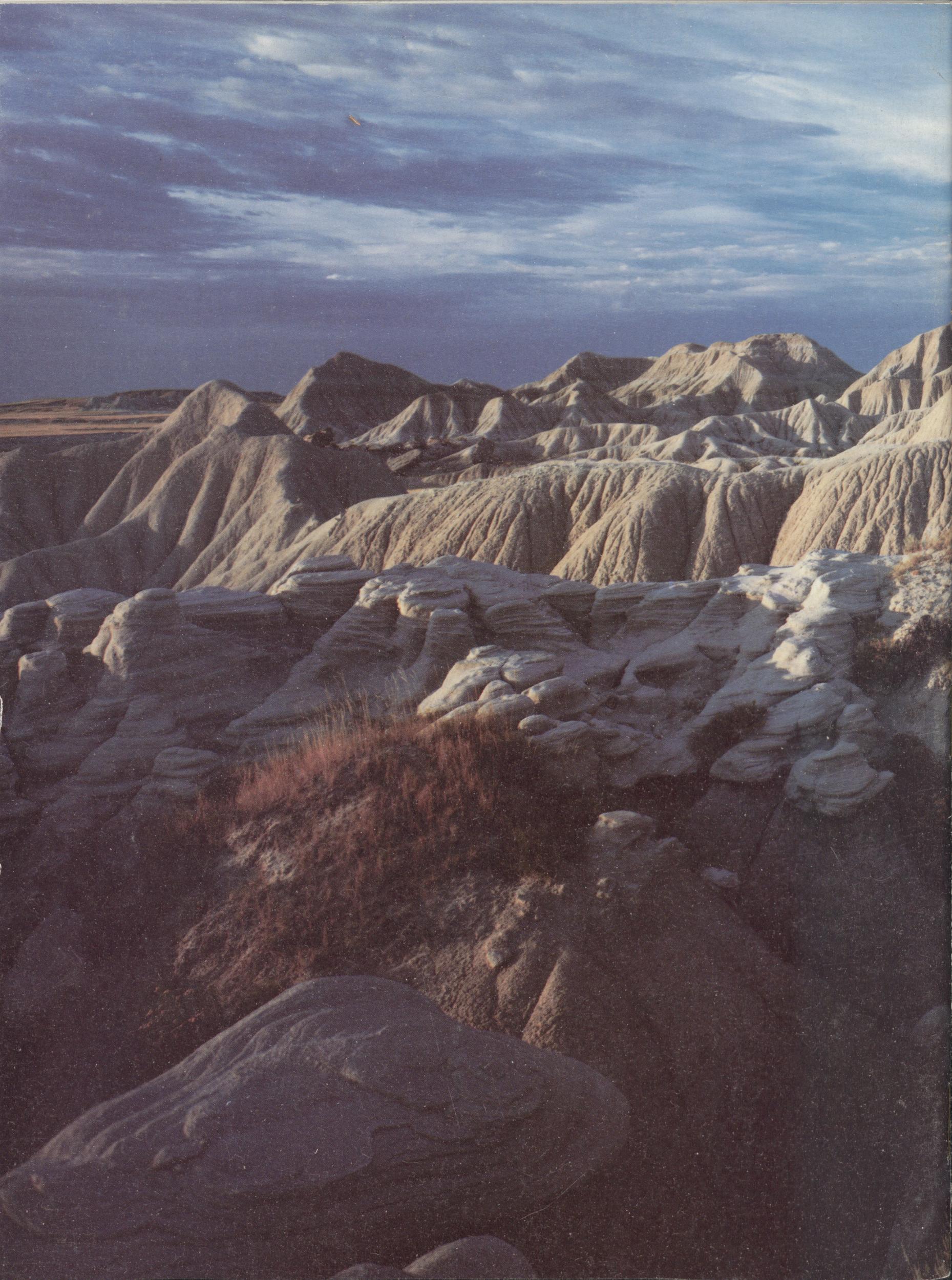
Position: 704 (16 views)